

Close Menu
FlyMarshallFlyMarshall
  • Aviation
    • AeroTime
    • Airways Magazine
    • Simple Flying
  • Corporate
    • AINonline
    • Corporate Jet Investor
  • Cargo
    • Air Cargo News
    • Cargo Facts
  • Military
    • The Aviationist
  • Defense
  • OEMs
    • Airbus RSS Directory
  • Regulators
    • EASA
    • USAF RSS Directory
What's Hot

BermudAir’s Huge, Random Expansion: Hello St. Petersburg To Belize City!

June 3, 2026

End of an Era: U.S. Marine Corps Celebrates AV-8B Harrier II Sundown

June 3, 2026

150-Seat United Airbus A321XLR Joins Fleet, With New Polaris Seats, Snack Bar

June 3, 2026
Facebook X (Twitter) Instagram
Demo
  • Aviation
    • AeroTime
    • Airways Magazine
    • Simple Flying
  • Corporate
    • AINonline
    • Corporate Jet Investor
  • Cargo
    • Air Cargo News
    • Cargo Facts
  • Military
    • The Aviationist
  • Defense
  • OEMs
    • Airbus RSS Directory
  • Regulators
    • EASA
    • USAF RSS Directory
Facebook X (Twitter) Instagram
Demo
Home » Common Cross-Sectional Shapes for Washers
Airbus RSS Directory

Common Cross-Sectional Shapes for Washers

FlyMarshall NewsroomBy FlyMarshall NewsroomJune 3, 2026No Comments2 Mins Read
Share
Facebook Twitter LinkedIn Pinterest Email

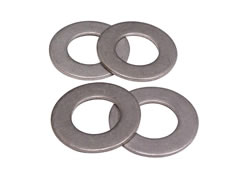
Washers by Monroe

Are you familiar with the different cross-sectional shapes in which washers are made? All washers have a cross-sectional shape. It represents the shape of a washer if you cut it straight through the middle and view it from the side. Different types of washers, however, have different cross-sectional shapes. Below is a list of some of the most common cross-sectional shapes for washers.

Rectangular

You can find washers with a rectangular cross-section. It’s the most common cross-sectional shape in which washers are made. Most round and flat washers, for instance, feature a rectangular cross-section. They are typically used to distribute the load of a threaded fastener, such as a bolt. When a fastener is driven into an object, the head will press against the washer, thereby protecting the object from load-related damage.

Beveled

Another common cross-sectional shape for washers is beveled. Washers with a beveled cross-section don’t have a completely straight profile. Instead, they have an angled or slanted profile. Beveled washers are often used in applications involving similar angled surfaces. They allow fasteners to sit flush against nonuniform surfaces.

Wave

Some washers have a wave-shaped cross-section. They aren’t completely straight. Instead, washers with a wave-shaped cross-section have an irregular profile that mimics the appearance of a wave. Wave spring washers, for instance, feature this unique cross-sectional shape. Their wave-shaped cross-section acts as a spring to resist vibrations. As you drive a fastener into an object, the wave spring washer will flatten — much like a traditional compression spring under a load.

Conical

Another common cross-sectional shape for washers is conical. It’s a distinguishing characteristic of Belleville washers and conical spring washers. Belleville washers and conical spring washers are essentially cupped. Like with wave spring washers, they are designed to resist vibrations. Cupped washers such as these will flatten during installation, which causes them to resist external forces by pushing outward towards the fastener.

Why the Cross-Sectional Shape Is Important

You can’t ignore the cross-sectional shape when choosing a washer. It’s not just an aesthetic feature. Rather, it will affect the washer’s performance and utility.

Washers with a straight, rectangular cross-sectional shape offer superior load distribution. Washers with a beveled cross-sectional shape are better suited for angled surfaces. Washers with a wave or conical cross-sectional shape are designed to resist vibrations. Hopefully, this will give you a better understanding of the different cross-sectional shapes and how they affect washers.

source

FlyMarshall Newsroom
  • Website

Related Posts

6 Fun Facts About Crop Dusters

June 1, 2026

Understanding the Blade Root on Turboprop Airplanes

May 29, 2026

Why Sheet Metal Screws Have Sharp Threads

May 27, 2026

Mitre vs Square Cut Cotter Pin Ends: What’s the Difference?

May 25, 2026
Add A Comment
Leave A Reply Cancel Reply

Latest Posts

BermudAir’s Huge, Random Expansion: Hello St. Petersburg To Belize City!

June 3, 2026

End of an Era: U.S. Marine Corps Celebrates AV-8B Harrier II Sundown

June 3, 2026

150-Seat United Airbus A321XLR Joins Fleet, With New Polaris Seats, Snack Bar

June 3, 2026

Two U.S. Air Force KC-135s Damaged During Towing Accident At RAF Mildenhall

June 3, 2026

Subscribe to Updates

Please enable JavaScript in your browser to complete this form.
Loading
About Us

Welcome to FlyMarshall — where information meets altitude. We believe aviation isn’t just about aircraft and routes; it’s about stories in flight, innovations that propel us forward, and the people who make the skies safer, smarter, and more connected.


Useful Links
  • Business / Corporate Aviation
  • Cargo
  • Commercial Aviation
  • Defense News (Air)
  • Military / Defense Aviation
Quick Links
  • About Us
  • Contact Us
  • Disclaimer
  • Privacy Policy
  • Terms and Conditions

Subscribe to Updates

Please enable JavaScript in your browser to complete this form.
Loading
Copyright © 2026 Flymarshall.All Right Reserved
  • About Us
  • Contact Us
  • Disclaimer
  • Privacy Policy
  • Terms and Conditions

Type above and press Enter to search. Press Esc to cancel.

Go to mobile version