



The U.S. Marine Corps honored the legacy of the AV-8B Harrier II and the Marines who served with it in a ‘Sundown Ceremony’ at MCAS Cherry Point, home to the type’s last operational unit.
The U.S. Marine Corps said goodbye to the iconic AV-8B Harrier II, which has supported joint and Marine operations for over 40 years. The service held a “Sundown Ceremony” on June 3, 2026, at Marine Corps Air Station (MCAS) Cherry Point, North Carolina, home to the “Bulldogs” of Marine Attack Squadron (VMA) 223, the type’s last operational unit.
The British-designed “jump jet” was born as the Hawker Siddeley Harrier, and initially entered service in the USMC as AV-8A Harrier in 1971. The aircraft was later introduced in 1985 as the improved AV-8B Harrier II and later the radar-equipped AV-8B+ variants which served until the retirement.
A number of events have been planned to honor the legacy of the AV-8B Harrier II and the Marines who served with it. These span four days from June 1 to 4, including the day of the actual farewell on June 3.
The ceremony, which was also live-streamed on the DVIDS network, included a five-ship formation flyover, with the Harriers later landing in front of the crowd. The aircraft – four single seaters and a twin seater TAV-8B – were met by the celebratory water cannon salute.
Although the Jun. 3 flight marked the end of Marine Corps Harrier operations, the aircraft may still be seen flying in the coming months as remaining examples are ferried to museums and the “boneyard.” VMA-223 is expected to remain active until later this year, before its deactivation in September.
The AV-8B Harrier II
The Harrier occupies a unique place in military aviation history as the world’s first operational vertical and short takeoff and landing (V/STOL) jet fighter. The aircraft was developed from the British Hawker Siddeley Harrier and later evolved into the AV-8B through a U.S.-British partnership, which transformed it in much more capable aircraft to satisfy the USMC’s needs.
The aircraft gave Marine commanders a capability unavailable to most other tactical air forces: the ability to operate fixed-wing attack aircraft from austere locations, forward operating bases, expeditionary airfields, and amphibious assault ships. This allowed to support Marines in a unique way, with the aircraft often deployed on the same amphibious assault ships used by the Marines’ ground units and cementing the bond between air and ground elements.
The AV-8B introduced significant improvements over earlier Harrier variants, including a redesigned wing, greater payload capacity, enhanced avionics, and improved combat endurance. Later AV-8B+ aircraft received the same radar system used by the F/A-18 Hornet, the AN/APG-65, expanding their capability in both air-to-air and precision-strike missions.
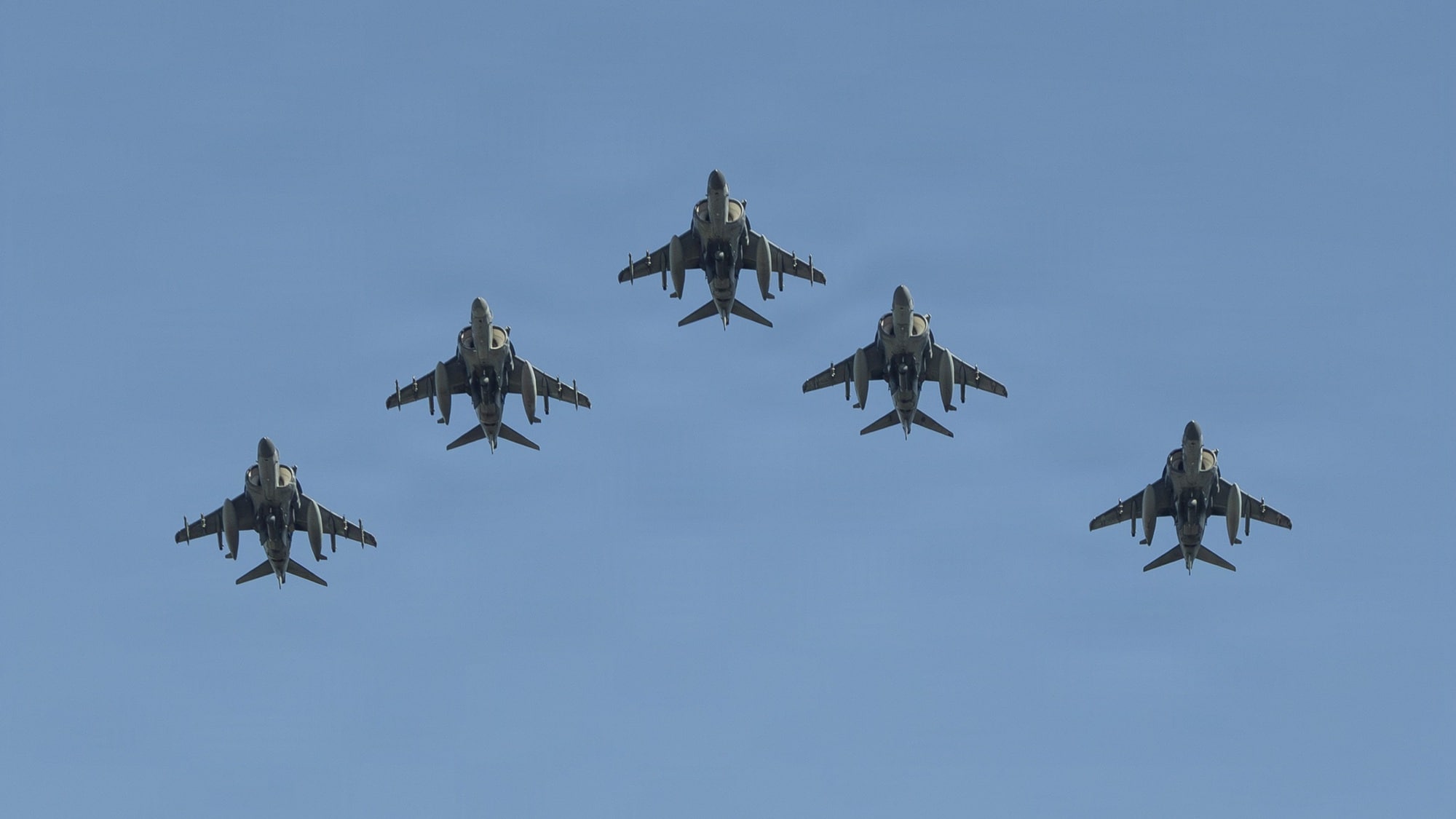
Throughout its service, the Harrier became synonymous with Marine expeditionary operations. The aircraft participated in numerous conflicts and combat deployments, including Operations Desert Shield and Desert Storm, operations in the Balkans, campaigns in Iraq and Afghanistan, and more recent missions in the Caribbean and the Middle East.
Even during the final years of its service life, Marine Harriers continued conducting operational deployments and combat missions. VMA-223, the Harrier’s last operational unit, returned from the final deployment on May 20, 2026.
While the Harrier’s service with the Marine Corps has come to an end, its influence on expeditionary aviation remains significant. For more than 40 years, the aircraft provided Marines with a unique ability to project airpower from locations inaccessible to conventional fighters, shaping operational concepts that continue to influence modern distributed aviation operations.
The F-35B Lightning II, the Short Take Off and Vertical Landing (STOVL) variant of the Joint Strike Fighter, is set to continue the Harrier’s legacy. Many of the squadrons which operated the Harrier have already transitioned to the F-35B, with VMA-223 also expected to begin this transition soon.
Like the Harrier, the F-35B retains STOVL capability, allowing it to operate from amphibious assault ships and expeditionary bases. However, it combines that flexibility with stealth characteristics, advanced sensors, sensor fusion, and significantly greater survivability in contested environments.
The Harrier’s retirement leaves only a handful of operators worldwide. In fact, the aircraft continues to serve with the Italian and Spanish navies until 2030, with the Italian Navy already taking deliveries of F-35Bs to replace the Harrier.
From British Innovation To A Marine Corps Mainstay
The Harrier’s story began in the UK during the late 1950s and early 1960s, when British engineers sought to develop a combat aircraft capable of operating without conventional runways. The result was the Hawker Siddeley Harrier, which employed the revolutionary Rolls-Royce Pegasus turbofan engine and its four swiveling exhaust nozzles to achieve vertical and short takeoff and landing (V/STOL) capability.
The aircraft entered service with the Royal Air Force in 1969, and quickly demonstrated that fixed-wing jets could operate from dispersed locations, reducing their dependence on vulnerable air bases. This was a highly sought capability during the Cold War, with European countries looking to solutions to preserve combat air power in the event of a conflict between the two blocks.
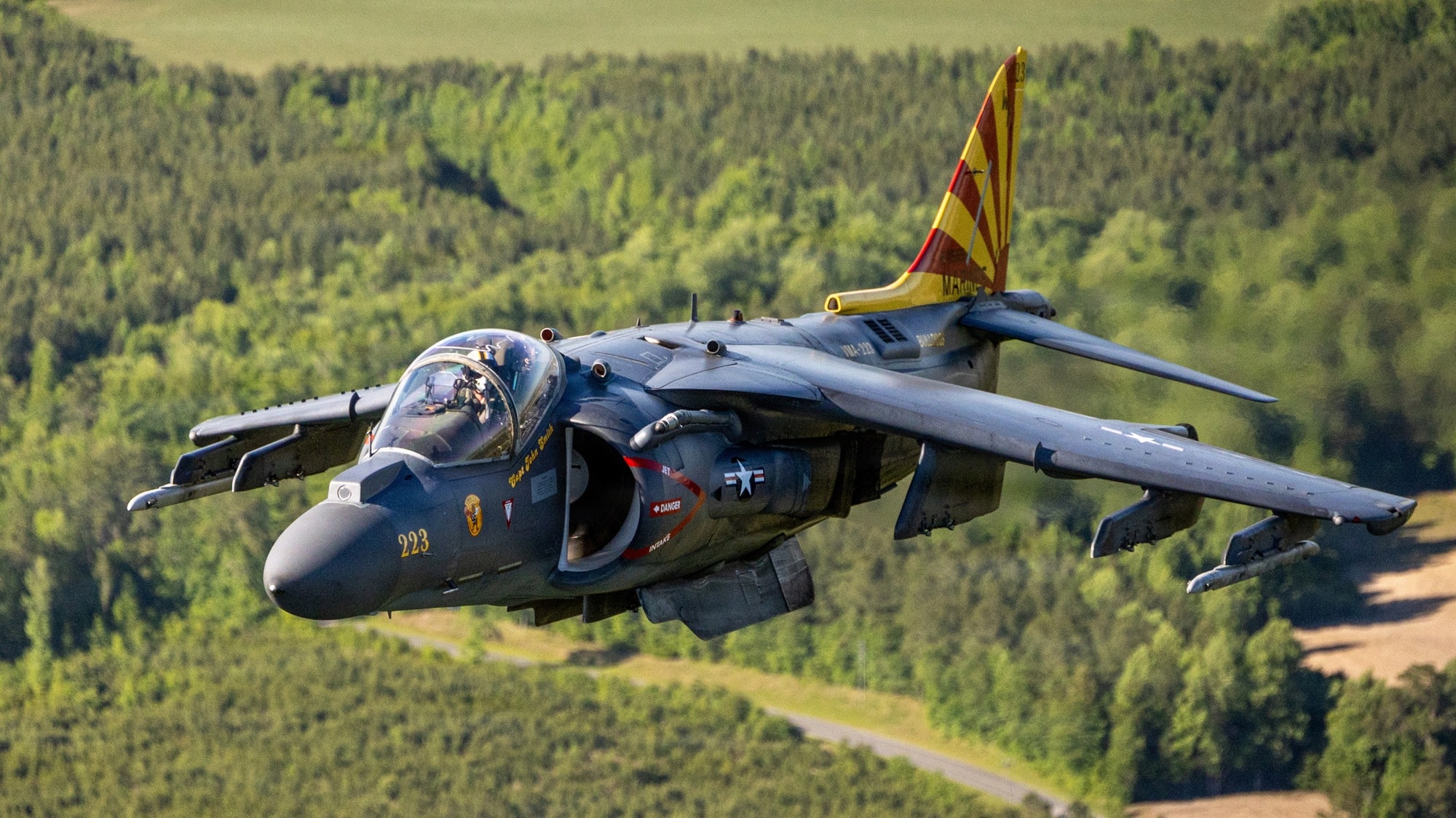
The U.S. Corps, which had long emphasized expeditionary warfare and the ability to deploy forces rapidly from austere locations, recognized the potential of the Harrier concept. In 1971, the service adopted the AV-8A Harrier, becoming the first and largest foreign operator of the aircraft.
Following the positive feedback, the Marine Corps sought a more capable aircraft with greater range, payload, and survivability. This led to the development of the AV-8B Harrier II, a significantly redesigned variant created through cooperation between McDonnell Douglas and British Aerospace.
First flying in 1981 and entering Marine Corps service in the 1985, the AV-8B featured a larger composite wing, improved cockpit, greater fuel capacity, and enhanced performance compared with earlier models. Over the following decades, the Harrier II became a central component of Marine aviation.
The aircraft participated in Operation Desert Storm in 1991, where it flew hundreds of combat sorties in support of coalition ground forces. It later saw action during operations over the Balkans, the invasions of Afghanistan and Iraq, counterinsurgency campaigns throughout the Middle East, and numerous Marine Expeditionary Unit deployments aboard amphibious assault ships.
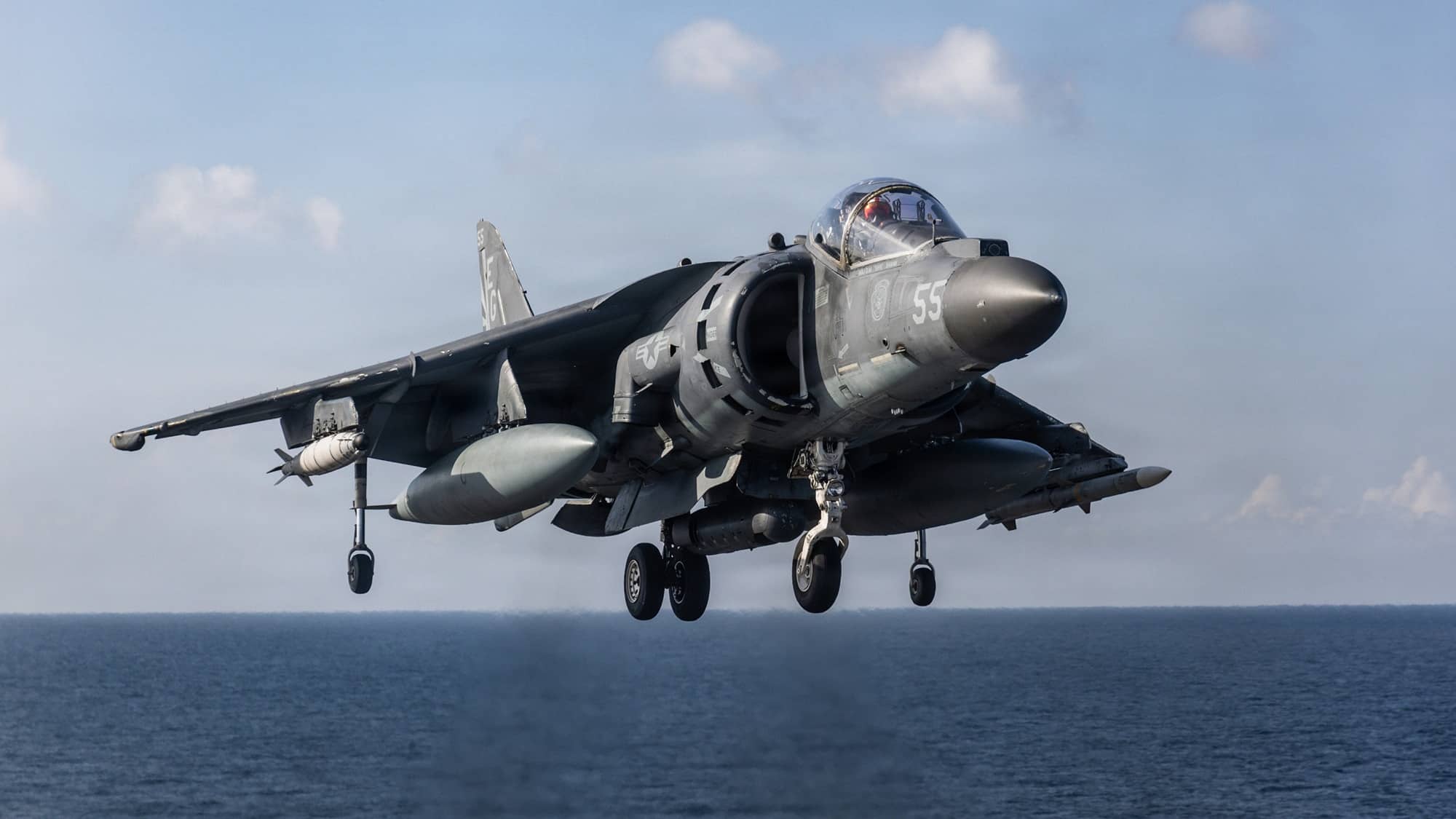
Continuous upgrades kept the platform relevant well into the 21st century. The AV-8B Night Attack variant introduced advanced sensors for round-the-clock operations, while the AV-8B Harrier II Plus incorporated the AN/APG-65 radar, providing improved targeting and air-to-air capabilities.
These enhancements allowed the aircraft to remain operationally effective until the arrival of its successor, the F-35B Lightning II. The jet now fully inherited the Marine Corps’ requirement for short takeoff and vertical landing operations while bringing fifth-generation capabilities to the mission.
The replacement of the Harrier was planned for several years as part of the Marine Corps Aviation Plan and the broader Tactical Aircraft Transition Plan. The service determined that the AV-8B reached the end of its planned service life, paving the way for a complete transition to fifth-generation aircraft.
Harrier squadrons gradually stood down over the past decade. By 2026, VMA-223 remained the only operational AV-8B squadron, with a detachment supporting Marine Expeditionary Unit operations in the Caribbean as part of the type’s final deployment.
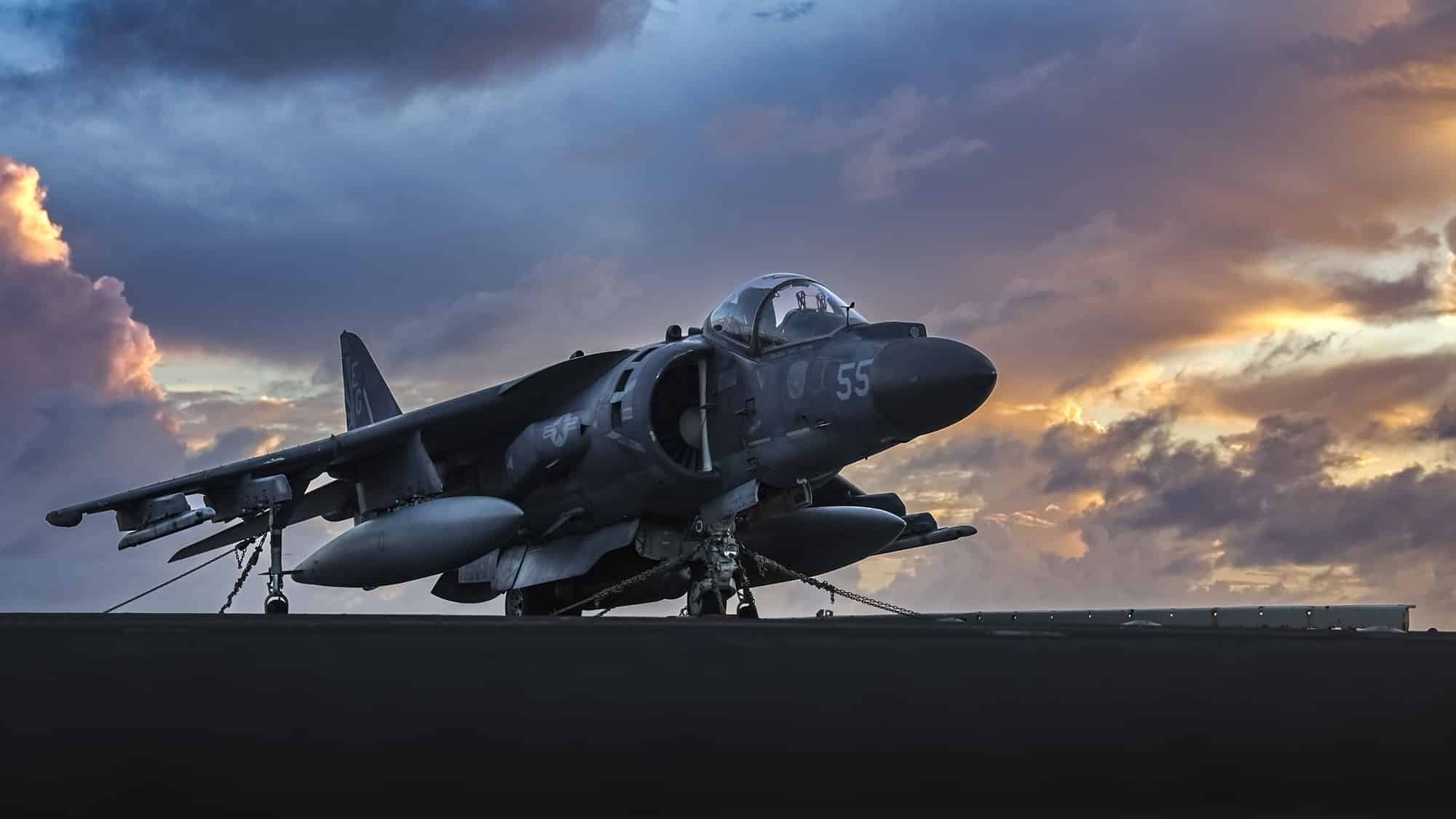
Over its service life, the Harrier II became a synonym of USMC aviation. For the public, the iconic “jump jet” was also an attraction at airshows, hovering in front of the crowd like an helicopter can do, and saluting at the end of the demonstration with the “Harrier Bow.”
For many Marines, however, the Harrier’s retirement represents more than the loss of an aircraft type. The platform developed a dedicated community of pilots and maintainers who mastered one of the most demanding aircraft in military service, whose unique flight characteristics required specialized training and expertise that distinguished Harrier operators throughout the years.
