

Close Menu
FlyMarshallFlyMarshall
  • Aviation
    • AeroTime
    • Airways Magazine
    • Simple Flying
  • Corporate
    • AINonline
    • Corporate Jet Investor
  • Cargo
    • Air Cargo News
    • Cargo Facts
  • Military
    • The Aviationist
  • Defense
  • OEMs
    • Airbus RSS Directory
  • Regulators
    • EASA
    • USAF RSS Directory
What's Hot

Reader Comments-Open Forum, Week of June 1

June 1, 2026

easyJet notes ‘highly opportunistic’ nature of possible Castlelake takeover bid

June 1, 2026

Airbus Next New Airplane Part 3. The Airbus Technobricks

June 1, 2026
Facebook X (Twitter) Instagram
Demo
  • Aviation
    • AeroTime
    • Airways Magazine
    • Simple Flying
  • Corporate
    • AINonline
    • Corporate Jet Investor
  • Cargo
    • Air Cargo News
    • Cargo Facts
  • Military
    • The Aviationist
  • Defense
  • OEMs
    • Airbus RSS Directory
  • Regulators
    • EASA
    • USAF RSS Directory
Facebook X (Twitter) Instagram
Demo
Home » 6 Fun Facts About Crop Dusters
Airbus RSS Directory

6 Fun Facts About Crop Dusters

FlyMarshall NewsroomBy FlyMarshall NewsroomJune 1, 2026No Comments3 Mins Read
Share
Facebook Twitter LinkedIn Pinterest Email

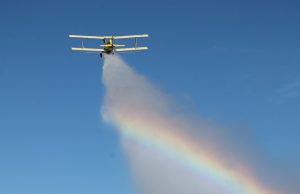
Airplanes aren’t used strictly for transportation. They have other applications, such as spraying crops with herbicides, pesticides and other protection products. Known as crop dusters, these specialized airplanes play an important role in the agriculture industry. Here are six fun facts about crop dusters.

#1) Early Models Were Converted WW1 Biplanes

Some of the first crop dusters were military biplanes used during World War I, such as the Curtiss JN4 Jenny. The Jenny was a two-seat, single-engine biplane used primarily to train pilots during World War 1. Following the war, many units were sold to private owners. The Jenny eventually found its way into the hands of farmers who modified it for use in agriculture.

#2) Originally Used to Distribute Powder

Most modern crop dusters are used to distribute liquid-based protection products over crops. During the early years of crop dusting, though, they were used to distribute powder-based protection products. The term “crop dusting” is a direct reference to these powder, dust-like products.

#3) Fly Low

Crop dusters aren’t designed to fly high like commercial jets. Rather, they are designed to fly very low — often at just 10 to 30 feet. Flying low allows these specialized airplanes to effectively distribute their products over the crop canopy. The higher they fly, the more distributed the products will be, meaning some herbicide or pesticide may land outside of the crops.

#4) Large Product Capacity

Because they are used to spray large crops spanning dozens or even hundreds of acres, it shouldn’t come as a surprise to learn that crop dusters have a large product capacity. Some of them can carry 100 to 200 gallons of product in specialized chemical hoppers. Others, though, can carry anywhere from 400 to 800 gallons of product.

#5) More Than Just Spray Crops

While crop dusters are used primarily to spray protection products over crops, that’s not their sole purpose. They are often used for seeding. Crop dusters can be fitted with seed-filled hoppers that distribute seeds over land. They can also be used to control invasive plant species, or even support wildfire-fighting efforts.

#6) Typically Powered By Turboprops

Most crop dusters don’t use jet engines. Instead, they are powered by turboprops. Turboprops are gas-fed turbine engines that turn a propeller. They lack the speed of jet engines, but they offer a lightweight and fuel efficient propulsion system. For crop dusting, this makes turboprops a popular choice.

In Conclusion

Crop dusters have come a long way from the modified World War I biplanes. Today, these specialized aircraft are an essential part of modern agriculture, helping farmers protect crops, plant seeds and manage large areas of land quickly and efficiently.

source

FlyMarshall Newsroom
  • Website

Related Posts

Understanding the Blade Root on Turboprop Airplanes

May 29, 2026

Why Sheet Metal Screws Have Sharp Threads

May 27, 2026

Mitre vs Square Cut Cotter Pin Ends: What’s the Difference?

May 25, 2026

What Are Engine Pylons on Airplanes?

May 22, 2026
Add A Comment
Leave A Reply Cancel Reply

Latest Posts

Reader Comments-Open Forum, Week of June 1

June 1, 2026

easyJet notes ‘highly opportunistic’ nature of possible Castlelake takeover bid

June 1, 2026

Airbus Next New Airplane Part 3. The Airbus Technobricks

June 1, 2026

Horizon Air unveils Toy Story 5 livery as its 10th Disney-themed aircraft

June 1, 2026

Subscribe to Updates

Please enable JavaScript in your browser to complete this form.
Loading
About Us

Welcome to FlyMarshall — where information meets altitude. We believe aviation isn’t just about aircraft and routes; it’s about stories in flight, innovations that propel us forward, and the people who make the skies safer, smarter, and more connected.


Useful Links
  • Business / Corporate Aviation
  • Cargo
  • Commercial Aviation
  • Defense News (Air)
  • Military / Defense Aviation
Quick Links
  • About Us
  • Contact Us
  • Disclaimer
  • Privacy Policy
  • Terms and Conditions

Subscribe to Updates

Please enable JavaScript in your browser to complete this form.
Loading
Copyright © 2026 Flymarshall.All Right Reserved
  • About Us
  • Contact Us
  • Disclaimer
  • Privacy Policy
  • Terms and Conditions

Type above and press Enter to search. Press Esc to cancel.

Go to mobile version