


A four-engined aircraft, also known as a quadjet, is, unsurprisingly, a jet aircraft powered by four jet engines. These four engines offer increased power and allow larger aircraft to carry heavier loads and be deployed on popular routes. Quadjets quickly rose in popularity through aircraft such as the Boeing 747, Airbus A340, and A380.
The first quadjet, was the Havilland Comet. This was the world’s first commercial jetliner, and following this aircraft’s introduction, several other aircraft adopted the four-engine design in the decades that followed. However, today, more airlines are considering twin-engine aircraft, as they move away from hub-to-hub flying, or for economic and sustainable reasons.
Characteristics Of A Quadjet

A four-engined aircraft (quadjet) usually has the design with two engines on each wing, mounted in pods underneath the wings. These engines not only provide the plane with more power, but also relieve the load and reduce structural stress on the wing. These are also in a perfect position for on-the-ground maintenance or replacement by airline personnel. In other aircraft, the additional engines could be attached to a rear fuselage (T-tail). This is common when looking to reduce cabin noise, freeing up additional wing space, as seen on the Iluyshin II-62 and Vickers VC10.
Looking at the de Havilland Comet, this unique aircraft had its turbojets buried inside the wing to reduce drag and the ingestion of foreign objects. While this design resembled something from the Jetsons, it increased the difficulty of maintenance tasks and also complicated the wing structure.
Today, as you look to the skies, the most common quadjet aircraft you can see at your local airport, is the Airbus A380 (which operates such as, but not limited to, Emirates, Asiana, Korean Air, Lufthansa and British Airways), the Boeing 747 (  Lufthansa, Korean Air), and Airbus A340 (Edelwiss Air, HiFly, Lufthansa, Mahan Air, and Philippine Airlines).
The Demise Of The Quadjet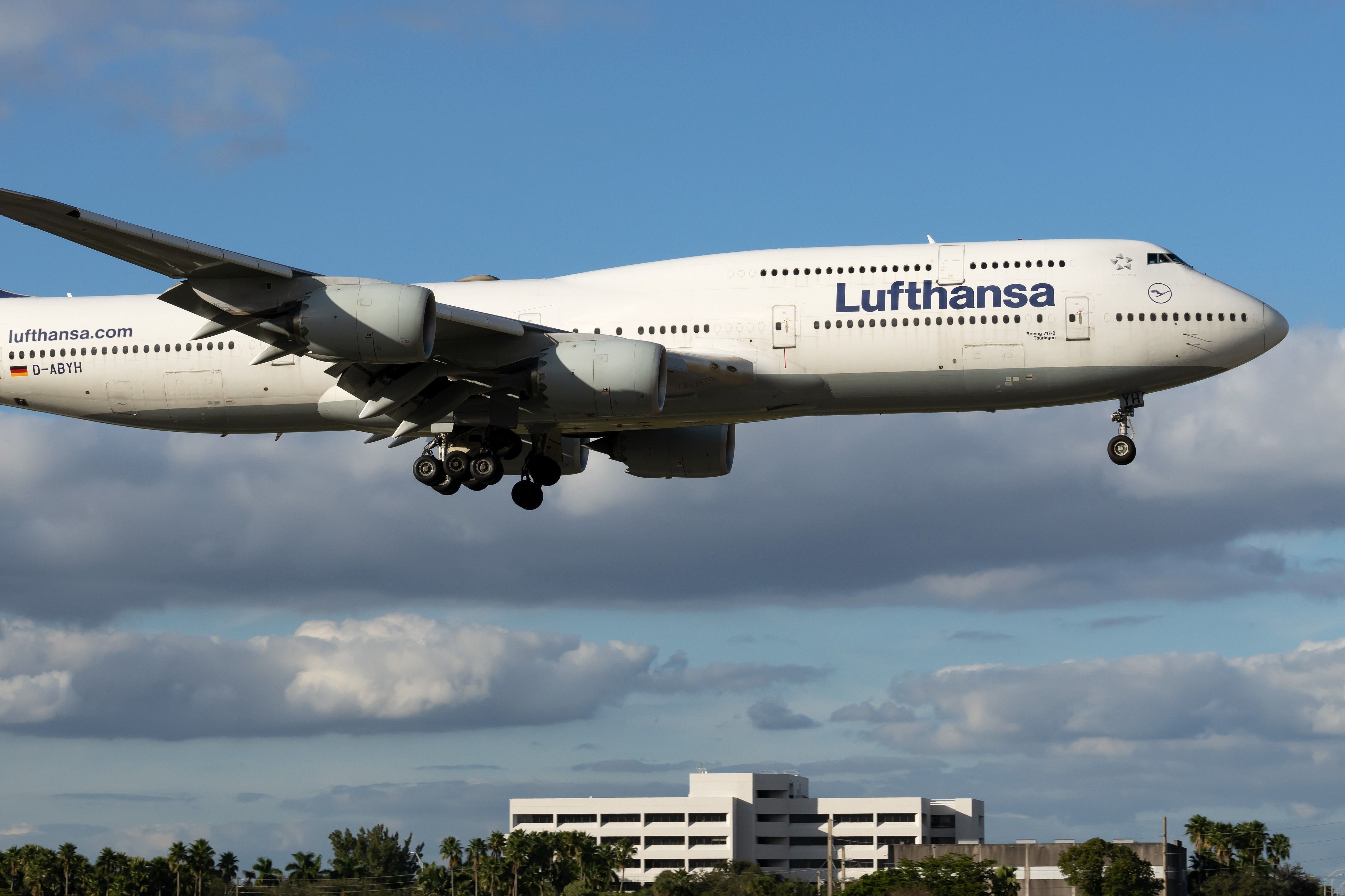
While we would love to see a resurgence of the quadjet in newer generation aircraft, the idea remains unlikely at this stage. The Boeing 747 and Airbus A380 were once the powerhouses of aviation, setting new standards for flying and operating the two largest commercial aircraft designs on the planet. However, their heavier loads and higher operating costs saw the business case for these aircraft plummet.
With both the A380 and 747 assembly lines now closed, these aircraft have become an odyssey, with just a handful of airlines continuing to operate them. Even for the world’s largest operator of the A380, Emirates, which has utilized these double-decker airplanes as the backbone of its long-haul fleet, has now committed to other, more cost-efficient aircraft, such as the Boeing 787 and Airbus A350. While these planes will carry fewer passengers, the cost to operate each flight will drop.
While the 747 and A380 were hugely successful during their time, the way people look to fly has evolved, and these two large, quadjet aircraft were best suited for hub-and-spoke operations. However, as airlines look to point-to-point flights (flying from one destination direct to the other without a layover required — i.e.  Barcelona-El Prat Airport to
  Boston Logan International Airport – without the need to transit via Madrid or New York, for example), they look for smaller aircraft that can operate more frequently, rather than flying a large aircraft, less often, which could be harder to fill.
Quadjets Still Flying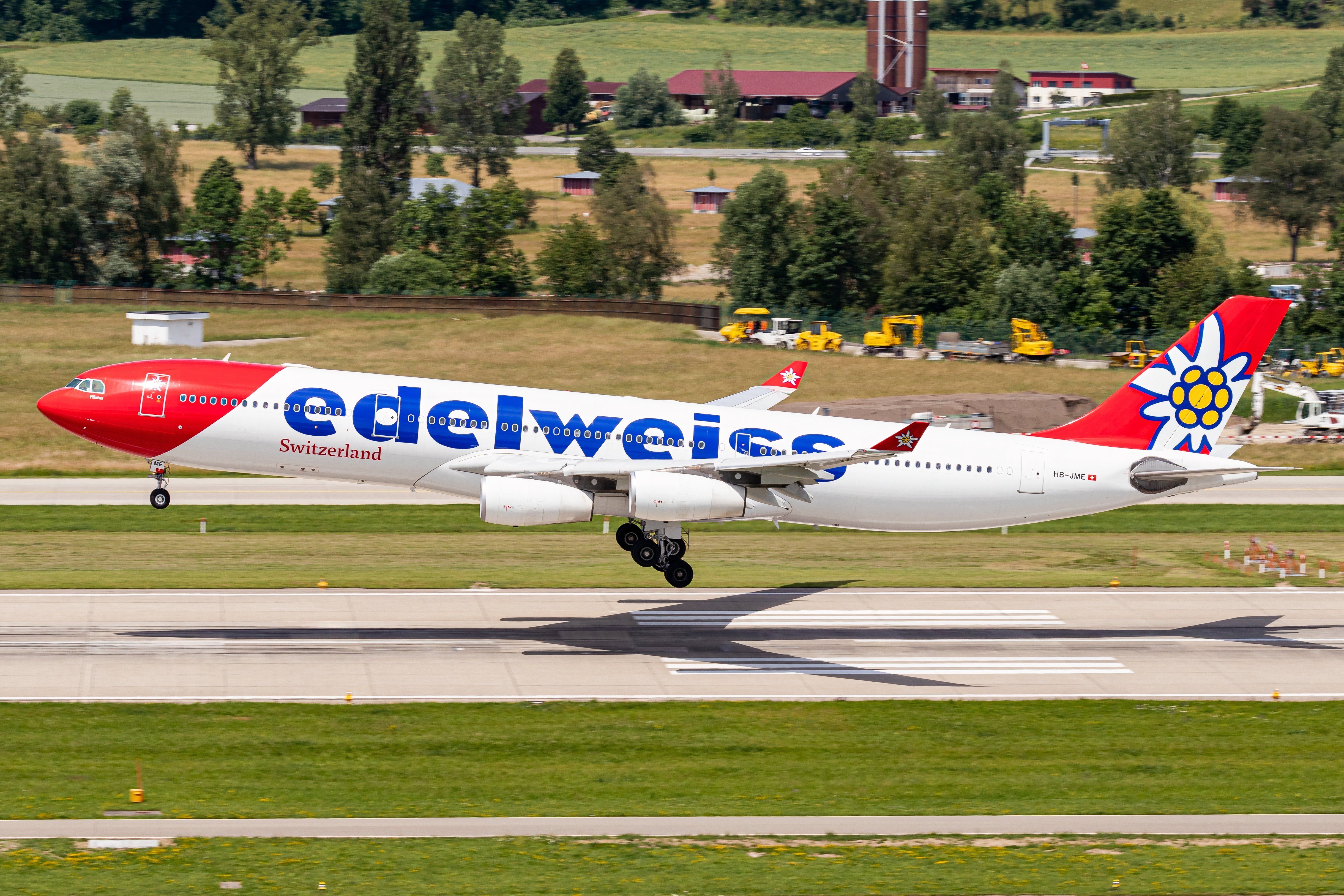
In the depths of the COVID-19 pandemic, airlines were looking to cut their losses fast, and the retirement of aging aircraft or those surplus to their requirements led to the rapid retirement of many of the world’s airline fleets. While some larger airlines have reinstated their quadjets, some remain destined for the scrapheap. Lufthansa, for example, has returned many of its Airbus A380s to commercial service after a long semi-retirement in locations such as Teurel, Spain.
In the past, the four-engine aircraft were a symbol of opulence and remained the perfect and most luxurious way to travel between continents. The ample space onboard would usually be complemented by fine dining, champagne, and caviar at 30,000 feet. Emirates took this one step further, installing showers onboard, while Etihad also created ‘The Residence’, a one-bedroom apartment in the sky, complete with a living area, an ensuite shower room, sleeping quarters, and even a dedicated butler. The total number of airframes built below, according to ch-aviation:
|
Aircraft |
Ended Production |
Total Number Built |
|---|---|---|
|
Airbus A380 |
2021 |
254 |
|
Boeing 747 |
2022 |
1,574 |
Unfortunately, today, operating the 747 and A380 is somewhat of a liability for airlines, compared to newer commercial jets. These four-engined airplanes are gas guzzlers and incredibly inefficient to operate unless they are fully occupied. Boeing axed its 747 operation in 2022, after more than 1,500 had been built, compared to Airbus, which had a 15-year run, selling 254 planes and closing up shop in December 2021.
Advantages Of A Quadjet

One key advantage of operating a quadjet was the increased safety if an engine were to fail. On a four-engine aircraft, a single-engine failure is less significant when compared to a dual-engine airplane that would rely on its sole remaining operational engine. When operating with three of four engines, this would allow the airplane to remain with enough power to reach a diversion airport comfortably, or even continue its flight to the intended destination, depending on factors like altitude, fuel load, or weather conditions.
Four-engine airplanes also have increased power, which could enable the transportation of additional passengers through larger airframes or more dense configurations. This would potentially offer heavier payloads and increased financial performance. This was important in earlier jetliners, as these engines were low-bypass turbofans, compared to the high-bypass turbofans that are much more powerful and modern today.
The Airbus A380 became popular for having high passenger capabilities. Air Austral, a French airline serving the French Overseas Department of Reunion, once floated the idea of operating a full economy class A380, which would have seated more than 800 passengers. Sadly, this never came to fruition, and the most common layout seen by other airlines was either with three or four classes (including First, Business, Premium, and Economy).
Disadvantages Of Operating A Quadjet

Evidently, having four engines means consuming more fuel than a dual-engine aircraft, which can quickly drive up operational costs. Jet fuel is a major part of airline operating costs, and in a time when airlines are looking to save every penny, a quadjet can easily become less attractive. This has been a major factor in the shift of airlines to more fuel-efficient aircraft with just two engines.
Maintenance, on four engines versus two, can also drastically drive up maintenance costs. Each of these engines must undergo frequent inspections and servicing to ensure they remain in tip-top condition. This can result in double the maintenance costs when compared to dual-engine aircraft.
Operating a quadjet can easily become a liability when not all seats can be filled. This emerging trend has seen airlines move from hub-and-spoke models to point-to-point flying, necessitating a search for smaller aircraft that can operate new, niche routes that previously may not have been financially viable. Such examples of this have been Qantas, operating nonstop services between Perth and Europe, or  United Airlines, becoming the first US carrier to fly direct to New Zealand’s South Island (Christchurch).
Could Planemakers Start Reproducing The Quadjet?

As already outlined, the likelihood of this occurring again remains slim, but if we were to remove many of those that have led to the demise of the quadjet, you could consider the necessity for new-generation quadjets on polar routes, where ETOPS regulations limit operational limits, or if these regulations were tightened, meaning that twinjet operations over remote areas could be prohibited.
A futuristic shift in propulsion technology, such as the adoption of hydrogen and hybrid systems, could necessitate the need for larger aircraft to be fitted with four smaller engines, which, as a result, could lead to a rebirth of the quadjet renaissance. The increased dominance of the twinjet engine design, seen on the likes of the Airbus A330, Airbus A350, Boeing 787, 767, 757, and 777, is an example of widebody aircraft operating with improved fuel efficiency and meeting new travel and infrastructure demands, which means that the likelihood of quadjets could only become a reality through new engine technologies.
One lifeline for the almighty quadjet is the Boom Overture, which could become the next commercial quadjet. This supersonic airline is being developed by Boom Technologies and is designed to carry between 64 and 80 passengers at speeds of up to Mach 1.7. The goal of this aircraft is to be faster, safer, and more sustainable by using 100% SAF. This plane is expected to enter commercial service by 2029.
- Crew
-
2
- Passengers
-
65–75
- Engine Count
-
3
- Engine Name
-
GE Affinity
- Engine Class
-
Low-bypass turbofan (supersonic optimized)
source
