

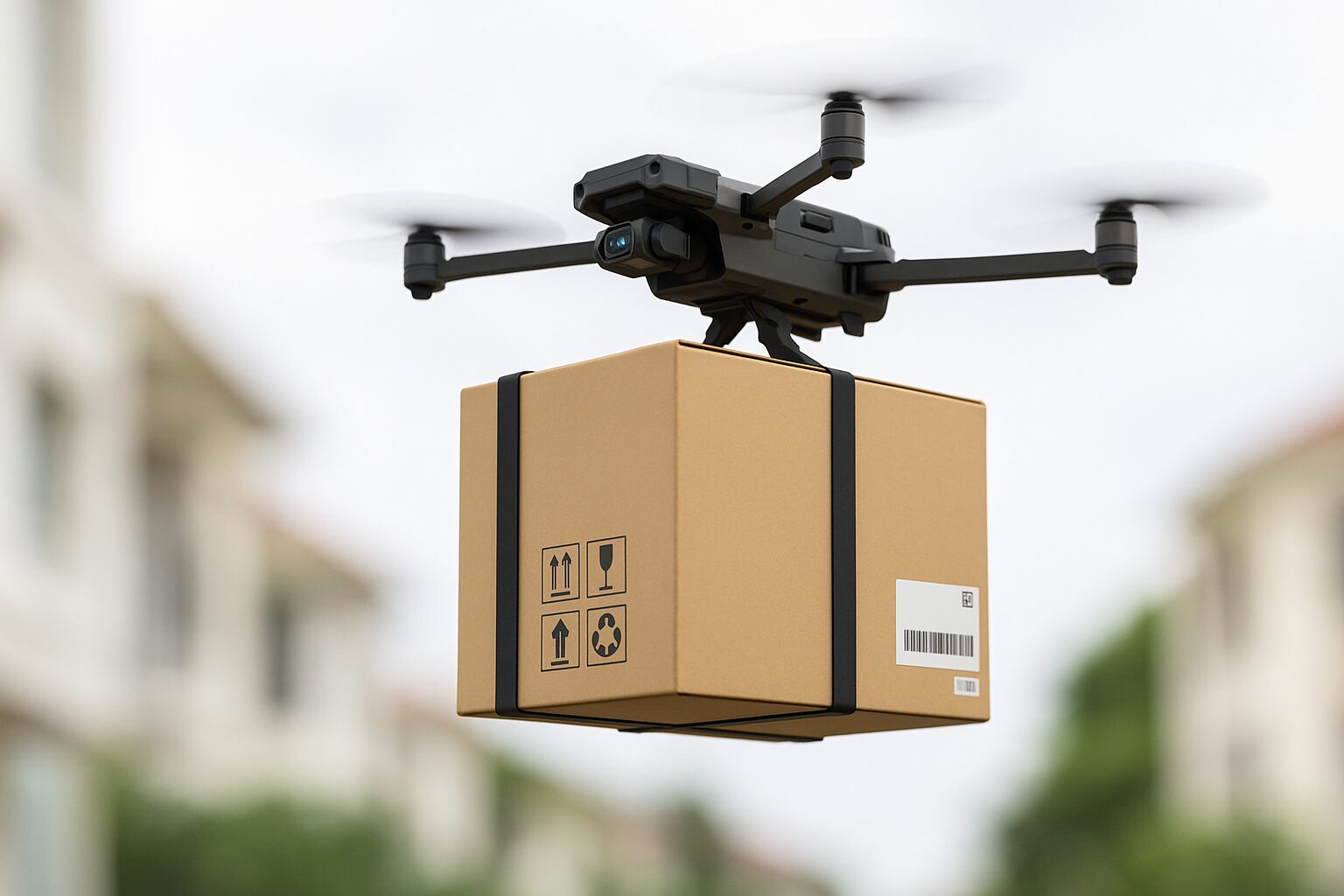
The public comment period for the Federal Aviation Administration’s proposed rule to permit drones to routinely fly beyond visual line of sight (BVLOS) in US airspace closed on October 6, 2025, drawing strong reactions from across the aviation community. Several aviation groups weighed in, with the National Business Aviation Association (NBAA) leading calls for a “safety first” approach to integrating unmanned aircraft into shared airspace.
The FAA’s proposed Part 108 regulation, released in early August 2025 and open for 60 days of public feedback, would for the first time allow certain BVLOS operations without individual waivers or exemptions. The rule is designed to cover low-altitude drone flights such as for package delivery, infrastructure inspection, agriculture, and public-safety missions. It was published jointly with the US Transportation Security Administration (TSA), which added proposed security requirements for some commercial operations.
In its formal comments submitted Monday, NBAA said the rule must ensure that “safety is the highest priority” as the FAA moves to normalize BVLOS activity. “Many of our members who have operated manned aircraft for decades are now adding UAS to their mission planning,” said Heidi Williams, NBAA’s Vice President of Air Traffic Services and Infrastructure. “The proposed rule is foundational to advancing integration of UAS and other emerging technologies into the National Airspace System, but several issues must be addressed.”
Among those issues, NBAA highlighted the need for “electronic conspicuity” — the digital sharing of aircraft position data — across all airspace users. The association said interoperable systems are essential for safe separation between drones and crewed aircraft.
The group pointed to ADS-B (Automatic Dependent Surveillance-Broadcast) as an example of technology already used by many aircraft to broadcast their position, but emphasized that future solutions should remain flexible. “ADS-B is one, but not the only means, of achieving effective electronic conspicuity,” Williams said. “Industry standards could be used to identify appropriate means of achieving electronic conspicuity. Universal position sharing through electronic conspicuity across all aircraft in the NAS would also negate the need for complex changes to the existing right-of-way regulations, since UAS would simply detect and avoid all other aircraft.”
NBAA also urged the FAA to retain the current criteria-for-making-decisions (CMD) process for determining airworthiness of uncrewed aircraft, calling it a proven method that “has contributed to a very high level of safety and should not be discarded without justification.” The group further asked the TSA to withdraw its portion of the joint proposal and conduct a separate, risk-based rulemaking for UAS security programs rather than combining it with the FAA’s operational framework.
The FAA received two formal requests to extend the 60-day comment period — one from independent aviation analyst Michael Ravnitsky and another from Sky Sail Balloons — but denied both on September 29. The agency cited the White House’s Executive Order 14307, “Unleashing American Drone Dominance,” which requires a final BVLOS rule within 240 days of the order’s June 6, 2025, issuance. The FAA said meeting that deadline “will require extraordinary measures,” leaving no room to extend the comment window.
Other major aviation organizations also weighed in as the deadline approached. The Aircraft Owners and Pilots Association (AOPA) said it opposed proposed right-of-way changes that could disadvantage general aviation aircraft not equipped with ADS-B or other approved position-sharing systems. The Experimental Aircraft Association (EAA) reminded members of the submission deadline and said it would continue monitoring how the new rules could affect low-level airspace users.
From the uncrewed sector, the Association for Uncrewed Vehicle Systems International (AUVSI) welcomed the proposed rule as an essential step toward scaling commercial drone operations, while urging the FAA to finalize it swiftly. Drone-software company Aloft.ai submitted its own comments urging flexibility for existing fleets already operating under BVLOS waivers.
With the comment period now closed, the FAA and TSA will begin reviewing thousands of submissions before issuing a final regulation, which under the executive order must appear by early 2026. The agencies say the rule aims to balance innovation and safety as drones, air taxis, and other new aircraft types move closer to routine integration into US airspace.
If adopted, Part 108 would mark the most significant regulatory expansion for uncrewed aircraft since Part 107, the 2016 rule that first established nationwide commercial drone operations — potentially transforming how drones share the sky with general and business aviation.
source
