


In the second part of this story, we cover the day Soviet Air Force Captain Alexander M. Zuyev defected in a MiG-29 fighter after executing a brilliant and bold plan in 1989, landing at a coastal airport in Turkey.
This article is the second of a two-part story covering the prepararations and then the defection of Alexander Zuyev. You can find the first part here.
Making an Escape
Returning to the dormitory, everyone was still sleeping, and Zuyev waited as the alert guard was relieved late at 0420. Zuyev went to the armory padlock and rammed a file into the keyhole of the padlock, breaking it off and jamming it. He then went outside and removed the keys from the fuel truck and a van, dropping them in the sewer. This prevented them from being used to block the runway.
At 0506 Zuyev cut all six phone lines from the control tower junction box and waited ten minutes to insure cutting them hadn’t triggered any alarms. Nothing happened; the tower and alert building were still quiet. The first patches of dawn were beginning to appear.
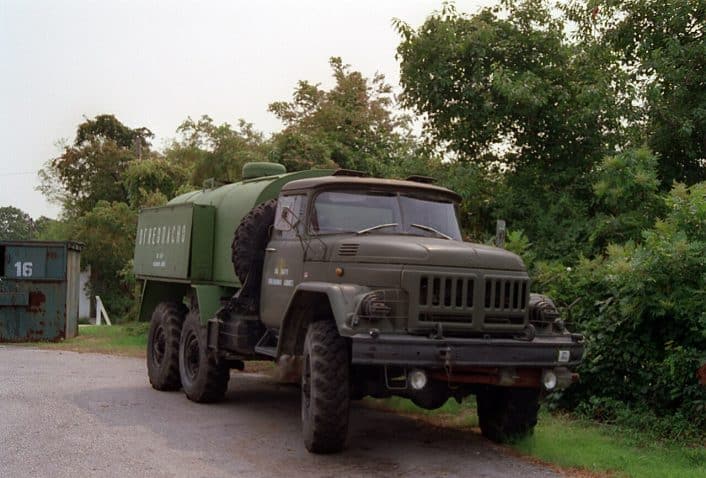
Zuyev then entered the dining room quietly finding the communication wires again. One by one he sliced them with cutters, with the last one triggering a sound from the phone in the dormitory, another thing he hadn’t thought about. The broken circuit caused a single ding from the bell. He grabbed his helmet bag and papers. It was time to go.
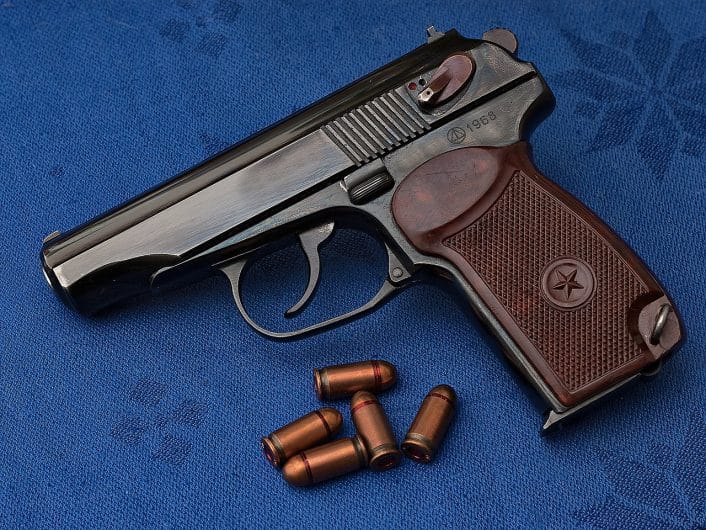
Approaching the alert apron, Zuyev pulled his Makarov pistol from his flight jacket and cocked it. One round was in the chamber and seven in the magazine of the small handgun. He saw the outline of the guard carrying an AKM rifle. It was a stocky Asian named Corporal Chomayev. He respected him as one of the better guards and hoped to disarm him without harming him.
Four MiG-29s sat in pairs on the alert area with canopies and instrument probes covered in canvas while sharing generator trucks connected to start cables. Zuyev confronted the guard questioning his earlier tardiness. Then producing the pistol, Zuyev demanded the guard put his hands up. Instead the guard lunged at Zuyev, forcing the small the small automatic from his face.
A wrestling and fighting match ensued, with both men becoming disarmed and trading blows, as both were skilled adversaries. Zuyev was a highly trained and experienced wrestler, Chomayev was experienced in self-defense. Neither refused to go down, and when Chomayev began yelling for help. Zuyev produced a knife.
Chomayev, at the sight of the knife blade, dove for his AKM on the ground as Zuyev then scrambled to retrieve his Makarov, hearing the bolt of the AKM cocking while he bent to grab the pistol. Chomayev was crouched beneath the nose of a MiG three yards away bringing the rifle to Zuyev’s chest level. Knowing Chomayev was not properly braced to fire the full-auto rifle and that it would pull up towards the right when fired, Zuyev dived to his own right the moment Chomayev fired. Chomayev missed to the left and Zuyev fired repeatedly at Chomayev, with one bullet hitting its mark. Chomayev dove under a MiG, and fired another burst. Zuyev having fired eight rounds, now had an empty gun.
Alexander ran around the nose of the aircraft and ran toward another MiG, with Chomayev firing a burst at him. Suddenly Zuyev felt a sharp pain in his upper right bicep. A round from the AKM had passed through it as jet fuel from a MiG that had been hit leaked onto the concrete. Chomayev had now emptied his 30 round magazine. Zuyev had one 7 round magazine left.
Zuyev would take the number one alert aircraft 400 yards away. He ran to it and quickly removed the heavy metal right wheel chocks, throwing them up on the wing to prevent anyone from placing them back under the wheels while he was in the cockpit. He removed the inlet covers and the left wheel chock, realizing his wounded arm was now going numb and he didn’t have the strength to lift the second chock onto the wing, he tossed it back by the tail of the aircraft.
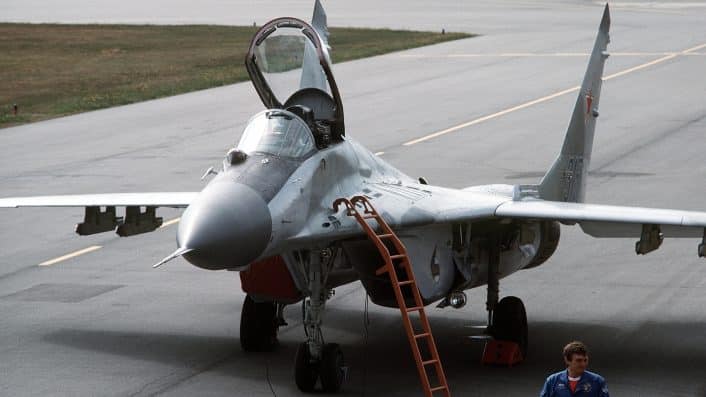
The alert MiG-29 was armed with missiles, their sensors covered with canvas ground caps and the pylon release points locked with pins. There was no time to remove these things, if Zuyev had to fight another aircraft in the air, he’d have to use the cannon. He failed to remove the aircraft’s pitot cover after tugging on it as well. He would have to fly without major instruments or target acquisition systems as there was just not enough time to remove all the coverings. The radar altimeter and a magnetic compass though would have to do.
He climbed the ladder to the cockpit scanning his surroundings and spotted Chomayev behind the tail of a plane. Zuyev raised the Makarov and fired, causing Chomayev to retreat. Zuyev was concerned all the shooting was going to wake up someone. He had four minutes at the most before the response team might show up on the apron.
The canopy was covered and Zuyev unfasted one side of the cover and shoved it back, realizing it would blow off later. The generator truck cable was still plugged in as well, but it too would release under the power of the huge jet engines.
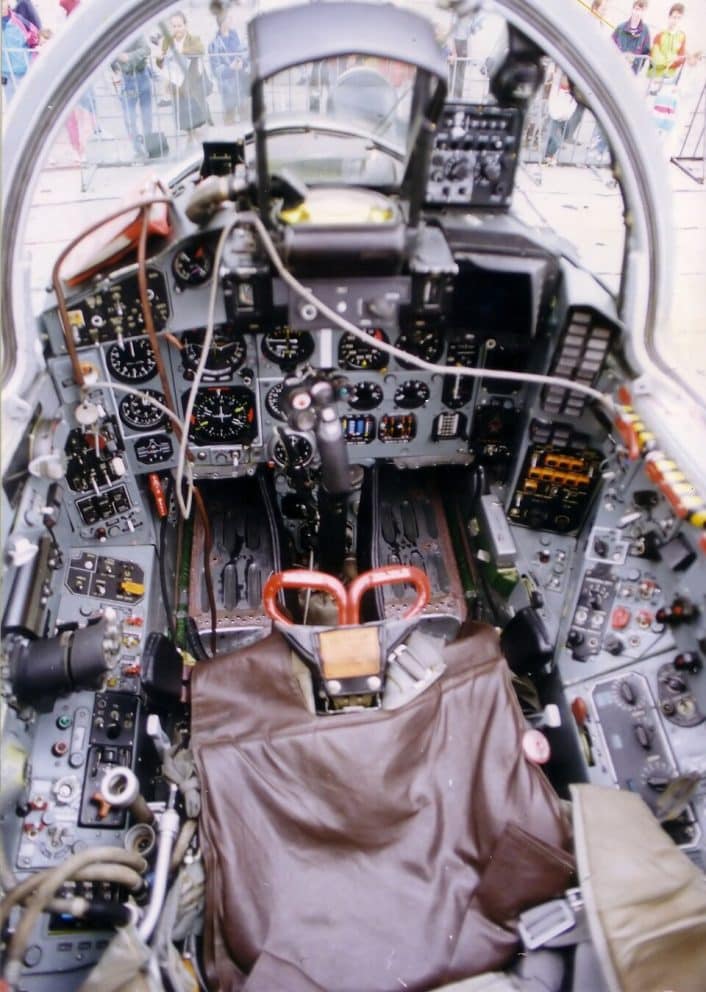
Now in the cockpit and utilizing only his left hand, Zuyev went through the automatic starting procedures for the MiG. However, when attempting to start the number two engine, he only heard a dry clicking sound. Checking the battery voltmeter which showed fully charged he hit the starter a second time. And a third time, only to hear the same click.
Fearing the tower had already used the one form of communication left, the emergency radio, to call for help, Zuyev felt he had failed. With his head cloudy from blows from the previous fight and his right arm numb from a bullet wound, he tried not to panic. He looked across the apron and realized he had dropped his helmet bag full of papers during the fight. He began thinking of his backup plan and escaping on foot.
Zuyev examined all the settings on the panel once again, realizing the throttles were in full stop — he had failed to move them to idle! He pushed them to the idle position and hit the start button once more and the number two engine roared to life. Attempting to move, he realized the cable from the generator was holding the plane back. Alexander slid the throttle forward and managed to free the aircraft from the generator and at the same time prevented the aircraft from shooting into the soggy grass off the taxi ramp and becoming bogged down. He looked back to see the generator cart tumbling end over end in the jet blast. Number one engine then came to life.
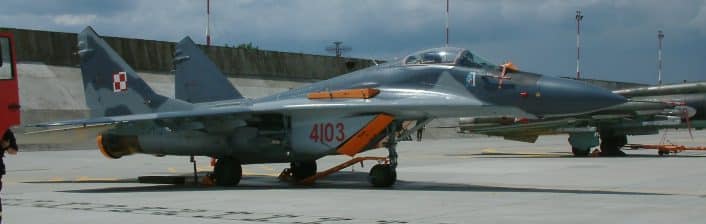
In his rush to get airborne, Zuyev had not properly strapped into the ejection seat, and now the aluminum warning plate that was to be removed before flight jabbed at the base of his spine. If he could get airborne now, he would have about a seven minute lead on the alert pilots should they also get airborne.
As soon as he could, he jammed the throttle all the way forward to maximum afterburner, which seemed excessively loud without a flight helmet. All he had to do was to wait for the airspeed needle to hit the required kilometers per hour (Soviet aircraft did not use knots to measure airspeed). Except the instrument was dead due to the covers still being in place, and Zuyev instead watched the upper inlet louvers close and the lower ones open at what he knew would be approximately 200 km/h (108 knots). Zuyev realized he’d need adequate speed with a full belly tank and weapons load so he held the nose down a couple more seconds and then lifted off smoothly. It was now 0524.
Zuyev climbed, burning fuel from the centerline tank before dropping it in an empty swamp to avoid houses and people. The MiG shot up rapidly with the loss of the heavy tank, almost causing a stall, but Zuyev’s quick actions prevented disaster. It was now time to strafe the MiG-29s on the ground.
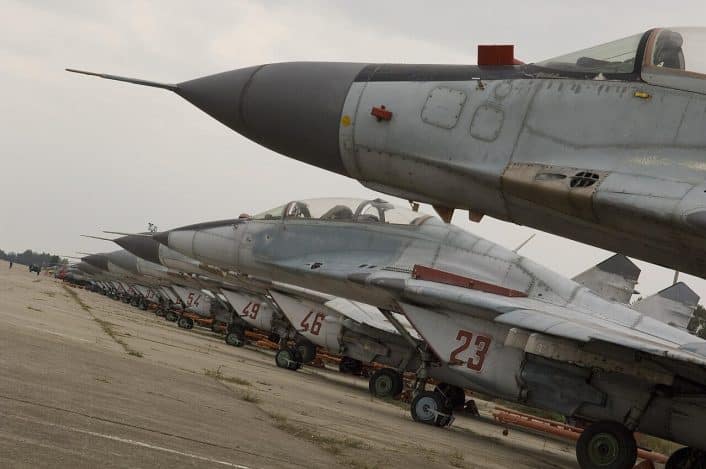
Zuyev lined his MiG up on the line of gray MiGs on the ground and squeezed the cannon trigger. Nothing happened. He had no functioning weapons. Frustrated and confused, it was time for him to head for Turkey. Zuyev flew past the control tower and rocked his wings in farewell.
He had never flown so low and so fast. As Zuyev kept the aircraft at Mach .95 at 90 ft altitude, he was avoiding radar, but dodging high tension power lines near the coast of the Black Sea momentarily exposed him to the radar of a nearby missile system. Alexander tripped the chaff dispenser switch, popping chaff packets every 1.5 seconds, confusing the radar and its operators. The radar warnings in his cockpit disappeared.
Flying low and fast over the water began to confuse Zuyev; he felt the aircraft was not flying straight and level as lack of landmarks created a loss of orientation. The adrenaline was wearing off, his wounded arm was useless and he felt sick. The missing adrenaline would soon be replaced however.
Radar warnings once again flashed, this time from behind, forcing Zuyev to fly even closer to the sea and trip the chaff dispenser. All he could do was hang on. The radar warning flashed once more then went dark. Zuyev began to feel as if he might pass out, and moved up to 1,500 ft. He managed to finally get strapped into the ejection seat after climbing another 600 ft. These altitudes were risky but he felt he may be too weak or groggy to land and may have to eject. While he was battling the ejection harness and safety pins, he had moved into Turkish airspace.
Zuyev eased back the throttle and climbed to 3,000 ft. As he flew on he found Trabzon and its winding streets lined with shade trees leading down to the coast. He noticed a long highway east of the city, and then realized it was the single runway of the airport. The airspace was clear of other traffic.
Zuyev steadied the stick with his knees and dropped the landing gear and flaps. All he had for instruments was the radar altimeter and the angle-of-attack gauge. He set the aircraft down on what was an unbelievingly smooth concrete runway regardless, and let the MiG roll past the terminal and tower. The airport seemed deserted. He parked the aircraft and opened the canopy.
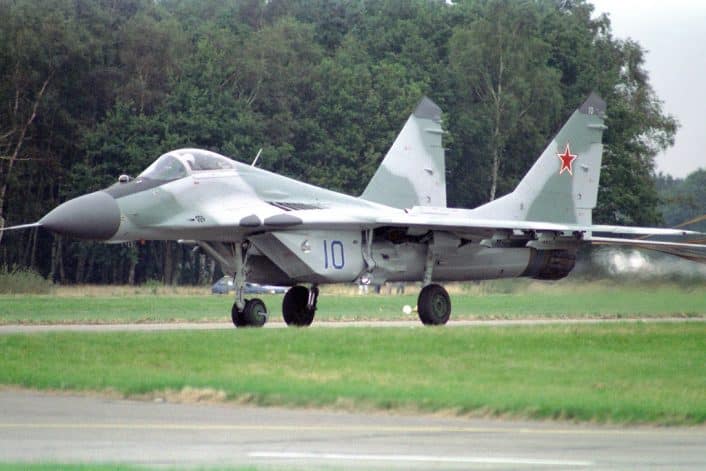
He could see double-trailer trucks in the distance on the coastal highway as he took in the cool clean air. The trucks were brightly painted, not like the drab trucks of the Soviet Union. He saw them as a sign of wealth and commerce. He noticed billboards along the road as well, one portraying a happy man driving a car. He knew these were advertisements, not propaganda pieces. He laughed with joy.
As he went to work shutting down systems on the aircraft, he noticed the master weapons system panel switch was still off and that is why the cannon would not fire. Soviet bureaucracy had ordered an anti-glare curtain be installed over the panel to prevent instrument light from glaring on the HUD (Heads Up Display), and the curtain hid the switch from Zuyev’s view in his rushed and excited state. Bureaucracy had just inadvertently saved 12 MiGs.
It was now 0547, and Zuyev’s pain was increasing. No one was coming to get him and he would need a ladder to get out of the aircraft. He finally spotted three men watching him from the terminal door. One finally came out to the MiG, the oldest of the three, a watchman, and stood by the left wing staring up at the red stars on the tail.
Zuyev shouted “American! I am American!” – English words he had memorized for this occasion. The old man smiled.
An American
It was June 17 and Zuyev had been in Turkey for about a month, receiving treatment for his wounds. He had made a formal request for political asylum and asked the Turks to contact the Americans.
The Soviets sent a delegation and a huge Il-76 transport plane to Turkey to reclaim the MiG-29. The Turks had intentions of keeping decent relations with their neighbors and agreed to return the aircraft. However they would not surrender its pilot.
Turkey did contact the United States State Department concerning asylum for Alexander Zuyev. An American convoy consisting of two vans and a sedan picked him up. Zuyev took a seat in the backseat of the sedan, of such luxury he had never seen before. There he was granted asylum and welcomed to the United States of America.
Zuyev would watch the Berlin Wall fall and the Soviet Empire crumble from the luxury of his home in Virginia on a color television set with his mother and younger brother.
He would go on to help train American pilots prepare to encounter Iraqi pilots who had been trained by the Soviets and flew Soviet supplied aircraft. He assisted in detecting the radars of MiG-29s and worked as a consultant for the CIA and the Pentagon.
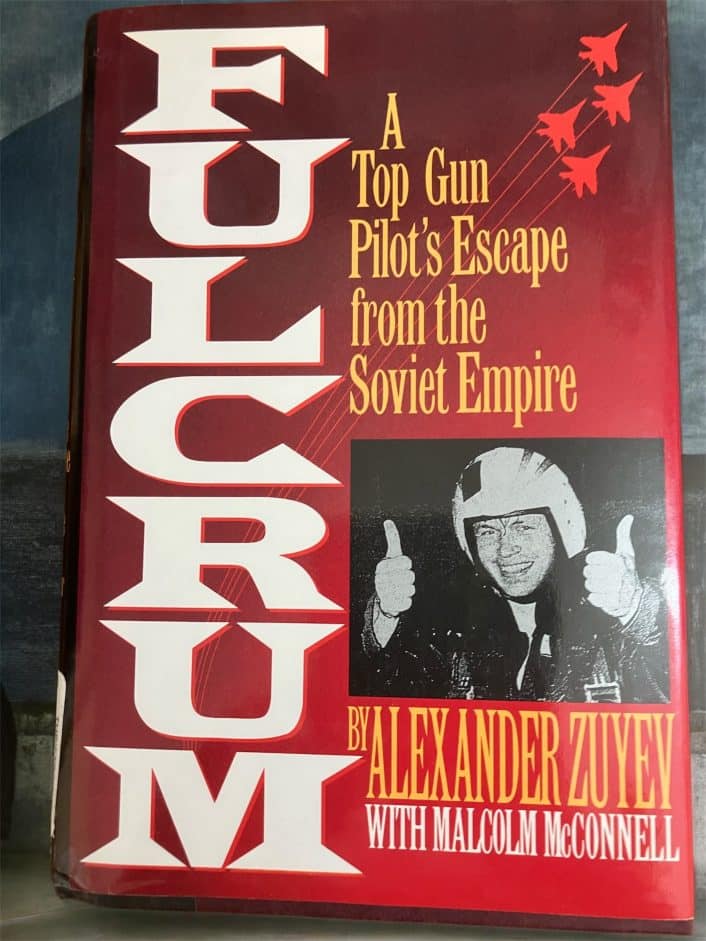
Alexander Zuyev wrote a book, published in 1992, titled Fulcrum: A Top Gun Pilot’s Escape from the Soviet Empire. Much of the information for this article was gleaned from his first-hand accounts described in his book.
On June 10, 2001, Alexander M. Zuyev was killed when his and Jerry Warren’s Yakolev Yak-52 crashed.
source
