

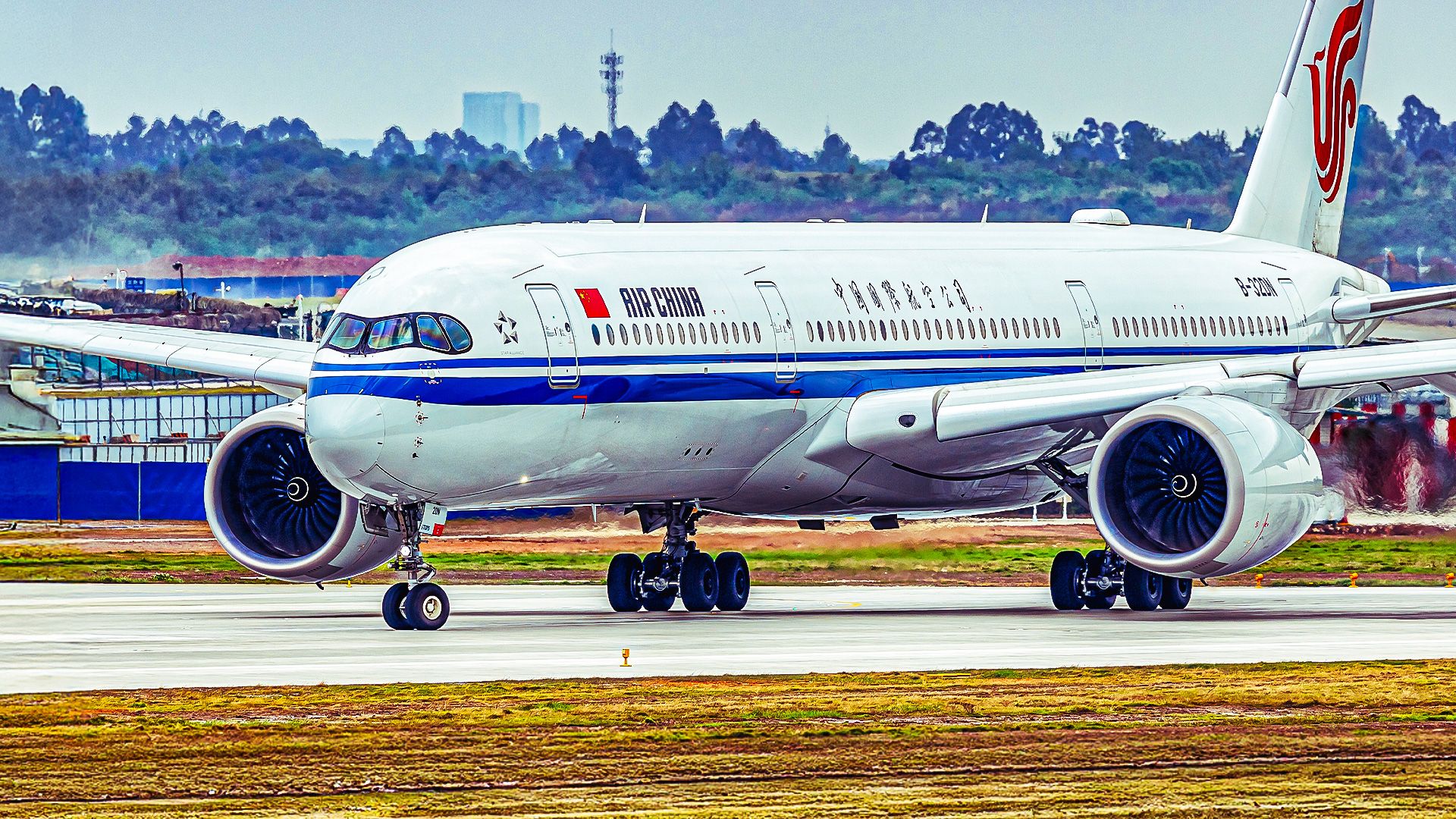
When Russia closed off its airspace to airlines from Western-friendly nations in the wake of the War in Ukraine, it caused a landslide of operational complications for airlines, which shifted industry dynamics. For starters, US and European-oriented carriers were forced to begin serving destinations in Asia via circuitous routes that avoided flying directly over Russia, something which had been the norm for decades. These longer flight routes are more expensive, and they both add additional fuel costs and more flight time to individual routes, both of which make it much more complicated for airlines to compete. However, it would be an even playing field if Chinese airlines played by the rules that everybody else has to play by.
However, Chinese carriers continue to be able to overfly Russia, meaning that they can fly both faster and cheaper between East Asia and the US or Europe. As many industry analysts have highlighted, this provides Chinese airlines with a unique advantage on many kinds of routes, harming the margins and competitiveness of US and European carriers. New proposals from the United States Department of Transportation could see Chinese airlines stop overflying Russia. We analyze the recent moves made by the Trump Administration to try and level the playing field, specifically on flights between the United States and Eastern Asia.
A Brief Look At Exactly What Is Being Proposed

Reuters has reported that several major Chinese airlines recently urged the US Department Of Transportation to drop a proposed rule that would bar them from flying over Russian airspace on routes to and from the United States. The DOT’s proposal, which was announced last week, argues that Chinese carriers will gain an unfair advantage by using shorter great-circle routes across Russia that are currently closed to US-based airlines. In filings to the DOT, China Eastern said such a ban would add two to three hours to key routes, raising fuel burn, missed-connection risks, and fares.
Air China and China Southern said that this change would harm large numbers of travelers between the United States and China. At the same time, China Southern estimated that at least 2,800 passengers scheduled to travel between November 1 and December 31 would need rebooking as a result of the new regulations being enacted. Separately, United Airlines asked the administration to apply these same restrictions to Hong Kong’s Cathay Pacific and other Hong Kong-based carriers that still overfly Russia, ultimately warning that current limits prevent the airline from resuming nonstop services to China from cities like Newark (EWR), Washington, D.C. (IAD), and Chicago (ORD).
This airspace dispute stems from the Russian 2022 decision to bar the United States and many foreign airlines from flying in its skies after the White House and European leaders banned Russian flights over US and EU airspace. Chinese airlines, however, were not included in Moscow’s ban and have thus expanded their market share by operating these shorter, more convenient, and more affordable services. The Chinese foreign ministry said that this US proposal is not conducive to continued international cooperation. A trade group for US-based carriers, however, praised the decisions, and it encouraged the Department of Transportation to actually align capacity with travel demand, according to reports from Reuters.
A Deeper Look At The US-China International Air Travel Market

On the United States side, the market between the two countries is dominated by  United Airlines,
  Delta Air Lines, and
  American Airlines, all of which are rebuilding their China networks under political and operational constraints. United Airlines currently sells nonstop services from San Francisco International Airport (SFO) to Beijing and Shanghai, as well as flights from its Los Angeles International Airport (LAX) hub to Shanghai. This reflects the broadest US-China service footprint. Delta Air Lines also recently restored service from Los Angeles to Shanghai with Airbus A350 jets, and it continues to fly from Shanghai to other hubs.
Like its peers, the airline’s network is limited significantly by policy. American Airlines continues to operate services from Dallas/Fort Worth International Airport (DFW) to Shanghai, demonstrating the airline’s fundamental inability to compete with the premium-oriented airlines. The Russian airspace ban remains a fundamental barrier for the airline, as it forces longer routes that raise block times and costs versus competitors that actually can overfly Russia. Regulators have let Chinese carriers grow their capacity to as many as 50 weekly flights since March 2024, with an expectation of parity for US-based airlines.
US-based carriers have argued against further increases until competitive conditions begin to improve. This current policy debate includes the recent proposal to bar Chinese airlines from using Russian routes on US-bound flights to level the playing field. Most US airlines are in favor of the rule.
The Chinese Side Of The Market

Across the Pacific Ocean, three Chinese carriers (often referred to by industry analysts as the “big three” dominate traffic). These are  Air China, China Eastern, and China Southern, which are respectively based out of Beijing, Shanghai, and Guangzhou. These airlines have regained market share partly because they can still overfly Russia on US routes, ultimately saving time and fuel relative to US-based rivals.
Hainan and Xiamen continue to add selective long-haul links when bilateral caps allow them to do so, but flight frequencies between the United States and China are influenced mostly by politics and regulations rather than the free market. Alliances also shape connectivity, with both Air China and United operating in the global Star Alliance. Delta’s restored service from Los Angeles complements a broader SkyTeam service web that is centered around China Eastern’s hub at Shanghai Pudong Airport (PVG).
|
Category: |
Airlines: |
|---|---|
|
US-based carriers: |
|
|
Chinese legacy airlines: |
|
China Southern’s Guangzhou-based routes and American’s single frequency from Dallas are also unique spokes in the large wheel that is this complex network of flights. Ultimately, the shifts that could occur in this market will likely be the result of large-scale global events.
A Brief Look At The Strange Role Cathay Pacific Plays In All Of This

Cathay Pacific is an odd swing player in the US-China air travel landscape because it is not exactly a mainland Chinese airline, but, unlike US airlines, it can still operate flights directly over Russia. This also gives the unique Hong Kong-based carrier access to shorter block times and lower overall operating costs. The US proposal to bar Chinese airlines from Russian overflight initially excluded Cathay Pacific.
This created a loophole that preserved the airline’s competitive edge on certain city pairs. United Airlines has urged regulators to include Hong Kong carriers so that any rule truly levels the playing field across the board. This is pivotal for Cathay Pacific, as, if not exempted, it would be in a very disadvantaged position.
However, there has been some debate about this because nonstop services from the United States to Hong Kong are seldom operated by U.S.-based airlines. This makes the question regarding the competitive landscape a little more complicated to directly answer.
What Principal Impacts On The Market Would This Have?

If enacted, this rule would likely lengthen most China-US flight times by two to three hours for Chinese (and potentially Hong Kong) carriers, ultimately raising fuel burn figures and operating costs. This could push fares higher and increase the risk of missed connections for passengers. Near-term capacity could fall as schedules are slowly rebuilt, ultimately producing tighter seat supply and increasing yields on key trunk routes.
Some passengers would face mandatory rebookings and longer itineraries. However, competitive parity would improve for US-based airlines that are currently avoiding Russian airspace, narrowing overall block times and cost gaps that have shifted market share towards Chinese carriers since 2022.
If the restriction ultimately expands to include Cathay Pacific, trips between the United States and Hong Kong would also lengthen, and this would dent one of the region’s most efficient connecting hubs and reshape flows to broader Asia. Trade groups have supported leveling the playing field, but they also want total US-China capacity to be calibrated to demand, something which suggests only gradual frequency increases even after parity in the market actually improves.
What Is The Bottom Line?

At the end of the day, this is yet another story about how Russian airspace closures have had a major impact on the commercial aviation industry. For Western carriers, operational restrictions today look much like those of the time of the Soviet Union, when passenger airlines were fully restricted from flying over Russian airspace.
Several legacy airlines, including United Airlines, Delta Air Lines, and American Airlines, have become victims of this airspace closure. Airlines like China Southern, China Eastern, and Air China can reap the advantages of being international long-haul airlines operating directly over Russia.
However, US carriers have struggled to compete, and this latest set of policy alterations could potentially shift that balance back in favor of US carriers. The ultimate end to this situation would be the reopening of Russian airspace to all carriers. However, it is highly unlikely that this would happen without a definitive conclusion to the conflict in Ukraine.
source
