


MANILA, Philippines — Japan plans to rapidly deploy autonomous interceptor drones to complement emerging standoff-strike capabilities, as reports surfaced that Tomahawk missile orders could face delays after U.S. stockpiles come under strain following the Iran war.
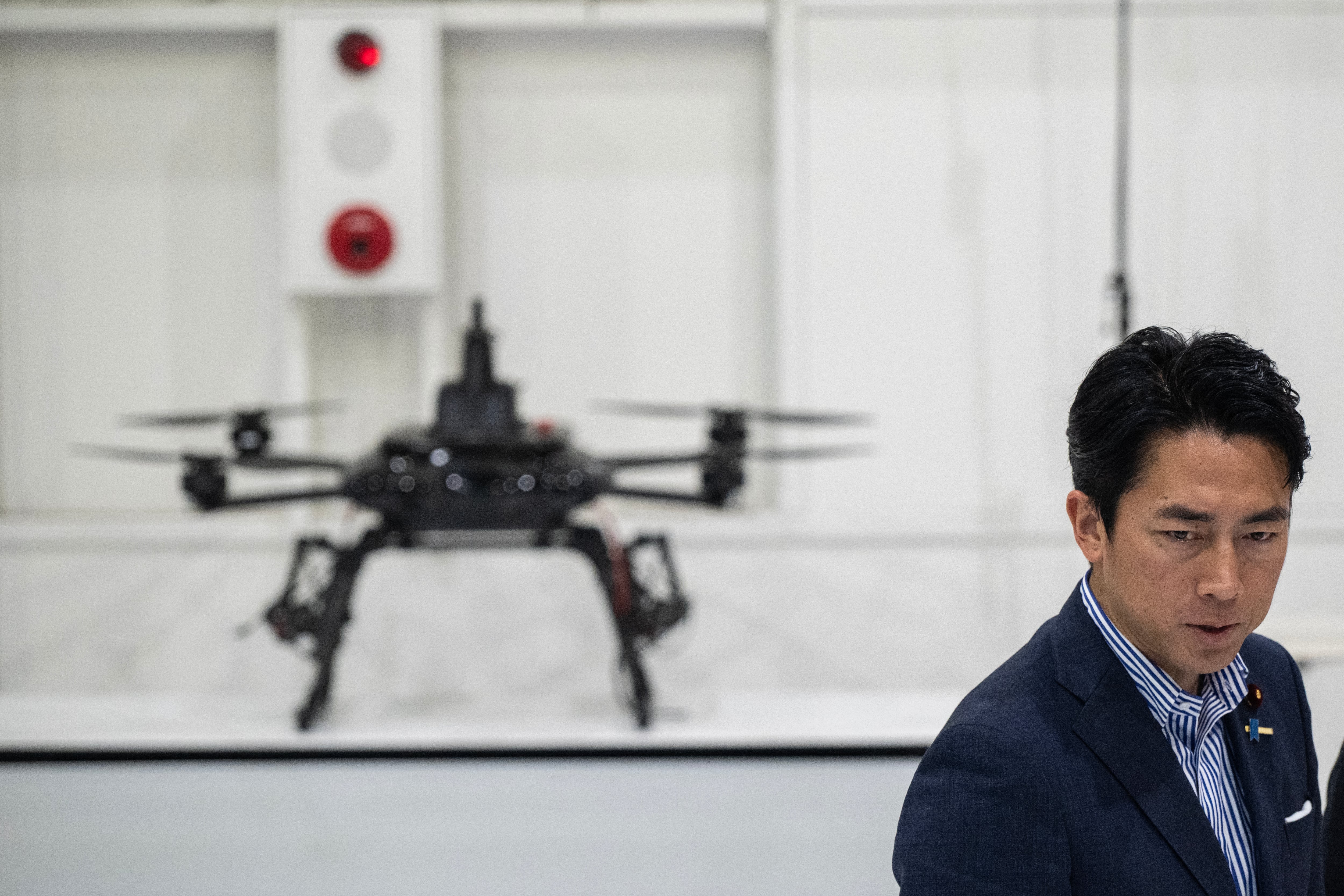
State procurement agency Acquisition, Technology and Logistics Agency has released notices for a demonstration schedule next month with the goal of fast-tracking acquisitions and expediting mass production and deployment.
The interceptor drone systems are expected to be installed by 2027 near radar sites, bases, vessels and other critical locations, the agency stated.
This follows an earlier notice released by the Ministry of Defense late last month for autonomous unmanned systems that could detect and counter swarms of “multiple long-range suicide UAVs … such as the Shahed-136.”
The envisioned craft should already be in use by other armed forces and have successfully shot down Shahed-like drones, according to the notice. In addition, they must be able to connect with existing radars and command-and-control systems, require two or fewer personnel for stand-off launch and flight management, and need minimal and simple maintenance.
The interceptor drones are recent additions to Japan’s massive UAV fleet plan. The ministry had been in talks with drone firm Terra Drone since the company fielded two types of interceptor drones in Ukraine through Kyiv-based startups.
In March, Terra Drone divulged investments in Amazing Drones to field Terra 1, a rocket-type interceptor, and two months later launched fixed-wing variant Terra 2 through Ukrainian defense tech firm WinnyLab.
The feedback is “very much positive,” company CEO Toru Tokushige told Defense News. He said there had been great interest in the interceptors, especially within the Japanese defense ministry.
Drone technology is quickly evolving in Ukraine, affirming the importance of interceptor drones as low-cost alternatives to interceptor missiles, Tokushige said.
Meanwhile, the conflict in the Middle East has shown the lethality of Shahed-like drones, which have been used more extensively than missiles.
The extended reach of the Shahed drones has also raised the stakes in East Asia. The aircraft flew as far as 1,100 miles from Tehran to Tel Aviv, and while battlefield circumstances and geography vary, the distance means such weapons launched in Northeast Asia could reach Japan, South Korea and the Philippines.
“Originally my image of the defense industry is that it’s very much traditional, very much bureaucratic, very slow. But after visiting Ukraine, and also because of the war in the Middle East, everybody understands the value of drones and the value of investing in drones,” Tokushige said.
The Japanese government’s urgent call for proposals comes after reports that the U.S. military’s 38-day Iran campaign under Operation Epic Fury has strained missile stockpiles.
The Center for Strategic and International Studies (CSIS) think tank warned of a “near-term risk” munitions shortage after the Iran campaign, which has already delayed U.S. supply contracts with European allies, raising worries that it could also push back Tomahawk deliveries for Japan.
U.S. Defense Secretary Pete Hegseth and Japanese Defense Minister Shinjiro Koizumi both denied the Tomahawk conundrum, but Koizumi said the ministry plans to develop more domestic missile systems. This comes on top of a recent production agreement under Operation Supercharge, which will see the U.S. and Japan jointly manufacture interceptor missiles such as the SM-6 and SM-3.
Japan’s defensive umbrella, set to be completed in 2027 after five years, includes fielding standoff capabilities, missile defense networks, and unmanned systems such as drones, ground vehicles, and submarines.
Budget allocated for unmanned defense capabilities alone leaped this year to 277 billion yen ($1.72 billion) from 111 billion yen ($690 million) in 2025.
And the government’s move to increase defense spending up to 3.5% of GDP will likely see more investments in unmanned systems. The ruling Liberal Democratic Party on June 9 approved a proposal to produce some 80,000 drones annually by 2030, though allocations have not been finalized.
Leilani Chavez is an Asia correspondent for Defense News. Her reporting expertise is in East Asian politics, development projects, environmental issues and security.
source
