


ST Engineering is paving the way for the next generation of drone innovations, and the engineering company chose the Singapore Airshow 2026 to demonstrate that claim.
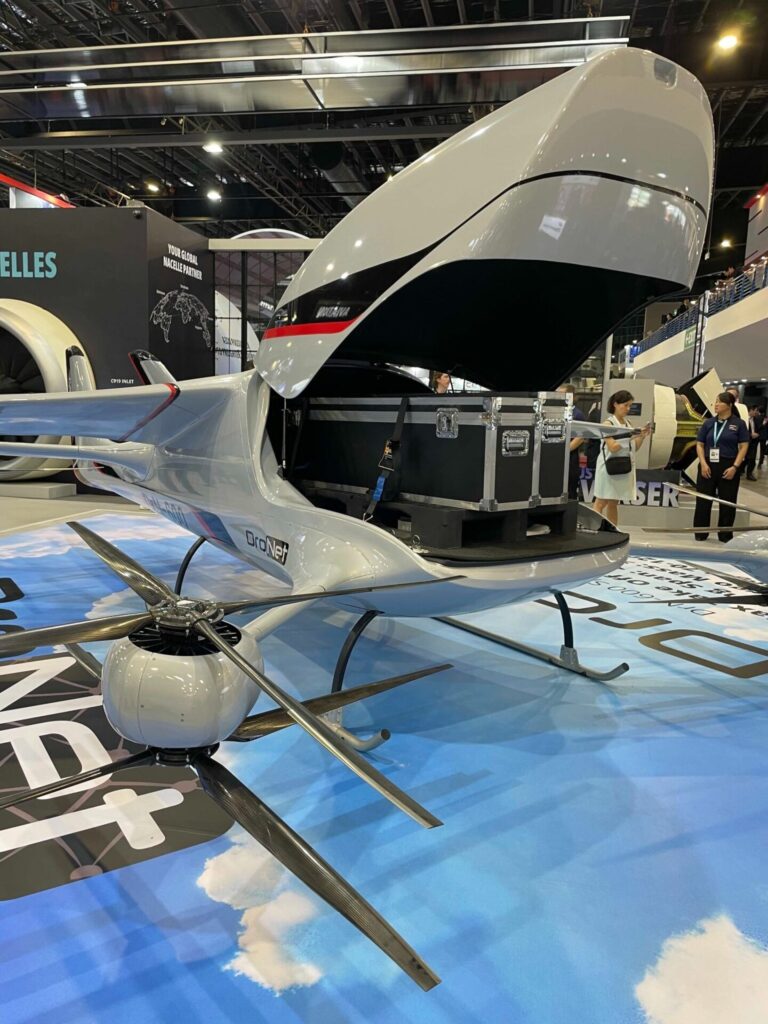
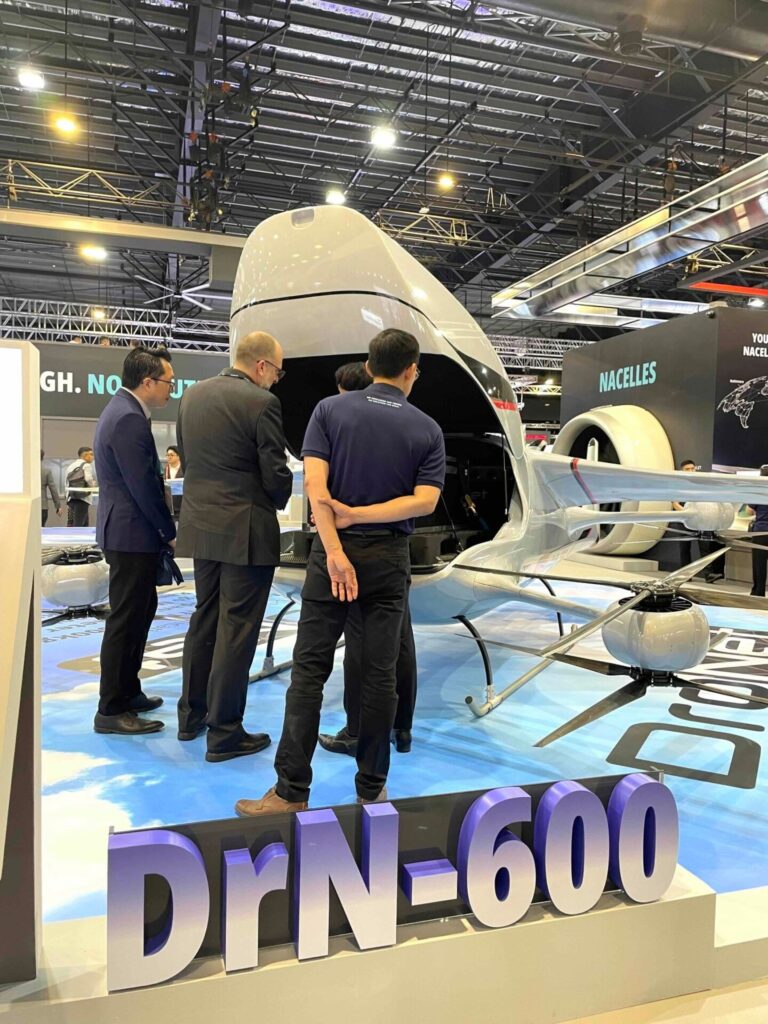
At the media preview on February 3, 2026, the Singaporean aerospace and defense giant officially unveiled the DrN-600, a medium-lift cargo drone with an eight-meter wingspan and a maximum takeoff weight just under 600 kilograms.
It is, by a comfortable margin, the largest unmanned aircraft the company has ever built, and it marks a turning point not just for ST Engineering but for Singapore’s broader push into autonomous air logistics.
The unveiling carried weight beyond the spec sheet. Singapore has spent the better part of a decade cultivating its unmanned aviation sector, and the DrN-600 is indication that those ambitions have matured well past the small delivery drones that once defined the conversation.
From food drops to hundred-kilogram payloads
ST Engineering is no newcomer to the drone business. The company has been developing unmanned systems since 2018 under its DroNet program, a drone-agnostic operating platform built for Beyond Visual Line of Sight (BVLOS) flights in urban settings.
DroNet was, in fact, the first system in Singapore to receive approval for BVLOS operations.
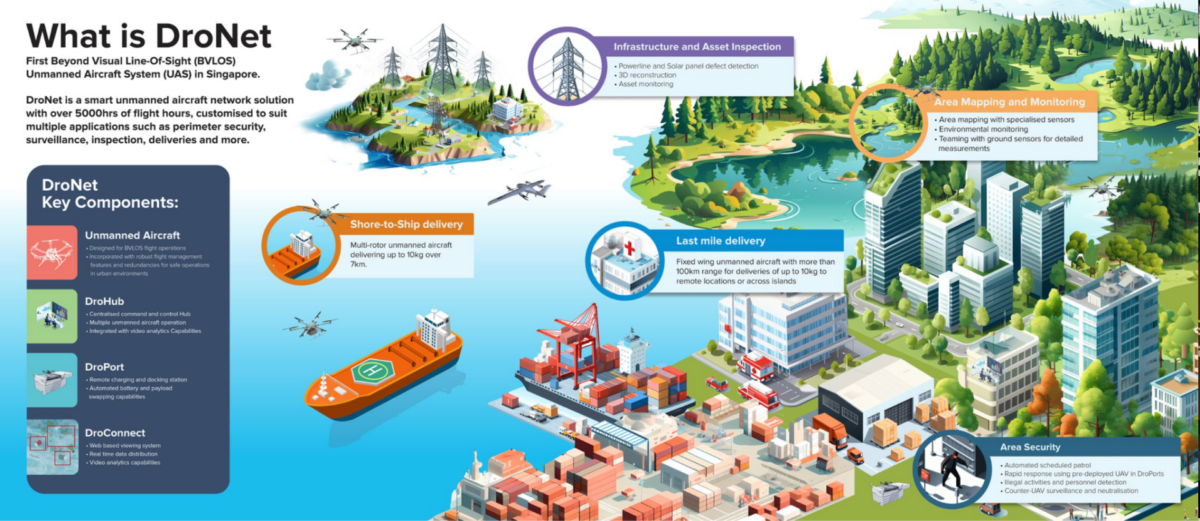
At its core, DroNet is less about any single aircraft and more about the ecosystem around it. The platform revolves around a centralized command hub called DroHub, which allows a small crew to manage multiple drones simultaneously across different missions.
Paired with DroPort, an all-weather docking and charging station capable of swapping batteries and payloads on the fly, the system was designed from the start to keep aircraft in the air rather than sitting idle on the ground.
Over the years, the platform has been put to work in ways that go well beyond simple point-to-point delivery.
ST Engineering has used it for powerline and solar panel inspections, reservoir monitoring, perimeter security, and even a proof-of-concept for real-time water quality analysis using hyperspectral sensors. The company partnered with food delivery app Grab in January 2026 for a food delivery trial across Singapore’s Kallang River in Tanjong Rhu, and as far back as 2020, the company ran tests with Foodpanda to ferry meals to ships anchored offshore.
However, these were all carried out with the lighter DrN-series drones. The DrN-600 is in a different class.
What the DrN-600 actually brings to the table
The aircraft is a lift-and-cruise design, meaning it takes off and lands vertically like a multirotor but transitions to wing-borne flight for longer, more efficient stretches. Its distributed electric propulsion runs on lithium-polymer batteries, and the battery packs are swappable. This is a feature ST Engineering considers essential for keeping turnaround times short enough to make the economics work.
Inside, the cargo bay offers roughly 1.5 cubic meters of usable space and accepts standardized front-loading pallets. Rather than forcing logistics operators to rethink their ground handling, the DrN-600 is built to slot into supply chains that already exist. It can haul up to 100 kilograms of cargo over a range of 70 to 100 kilometers.
In an exclusive interview, Teong Soo Soon, Senior Vice President and Head of Unmanned Air Systems in the Commercial Aerospace division at ST Engineering, told AeroTime that the aircraft was conceived around three persistent problems in cargo logistics.
“The problem that we are trying to solve is about the volume as well as the simplicity and the turnaround time for cargo logistics,” Teong said.
He pointed to the DrN-600’s oversized cargo bay as a direct answer to a limitation most drones share.
“You could see that we have a big volume — even if we have a heavy or light cargo load, sometimes the cargo requires a larger volume, which many drones will not have,” he added. “So this solves the volume problem.”
On the question of downtime, Teong was direct.
“We design it with swappable batteries so that we could reduce the turnaround time between flights. That is very important, because you want the aircraft to be working all the time,” he explained. “If it’s your electric vehicle, you need to charge for three to four hours. That will degrade the economics of logistics.”
The third pillar, he said, is resilience. “We design it to be resistant to weather: lightning, cold weather or hot weather. We want this aircraft to be operating 24/7.”
Certification first, spectacle later
One thing that distinguishes the DrN-600 program from many of its competitors is its early emphasis on regulatory compliance.
The aircraft has been engineered from the ground up to align with European Aviation Safety Agency (EASA) requirements for unmanned systems, a move that positions it not just for regional contracts but for European tenders and broader international markets.
Flight testing is expected to begin in the second quarter of 2026, though not in Singapore itself. The city-state’s tightly controlled airspace makes it impractical to test a 600-kilogram unmanned aircraft domestically, so, according to ST Engineering, trials will take place at a location abroad. Certification is targeted for 2028, with commercial operations planned to follow shortly after.
ST Engineering officials have said the test program will lean heavily on lessons from earlier DrN platforms, particularly around operational resilience, command-and-control reliability, and long-term maintainability. These are critical factors that tend to determine whether a drone program graduates from demonstration to daily use.
A crowded market, but a gap in the middle
The global cargo drone sector is growing fast, but it remains fragmented. Most available platforms cluster at either end of the spectrum: lightweight multirotors suited to short-range parcel drops, or experimental heavy-lift designs that remain years from certification.
The DrN-600 is aimed squarely at the gap between those two extremes.
For comparison, DJI’s FlyCart 100 matches the DrN-600’s 100-kilogram payload capacity, but its range tops out at roughly 12 kilometers and it relies on an external sling to carry loads. The DrN-600’s enclosed cargo bay, longer range, and vertical take-off capability are intended to handle more complex missions suited for island resupply, mountain logistics, or last-mile delivery in areas where roads simply do not reach.
Co-developed with AIR, a US-based electric aircraft manufacturer, the drone also reflects a broader trend in aerospace for partnerships that combine local operational expertise with overseas propulsion and airframe know-how.
Beyond parcels
Though the DrN-600 is being positioned primarily as a commercial logistics platform, ST Engineering has been open about its dual-use potential. The aircraft’s modular architecture, spanning its propulsion, autonomy systems, and payload bays, could be adapted for disaster relief, humanitarian aid, or military resupply in contested or infrastructure-poor environments.
That versatility tracks with the broader DroNet philosophy. The platform already supports military applications alongside its civilian portfolio, and its AI-driven analytics suite can be trained for tasks ranging from infrastructure defect detection to public security monitoring.
For now, though, the immediate priority is proving that a drone of this size and ambition can operate reliably and affordably enough to justify routine commercial use. Operational trials with prospective customers are expected to shape the aircraft’s final configuration before entry into service.
If everything goes to plan, the DrN-600 could be ferrying cargo commercially by 2028, and Singapore will have staked its claim at the frontier of autonomous air logistics.
source
