

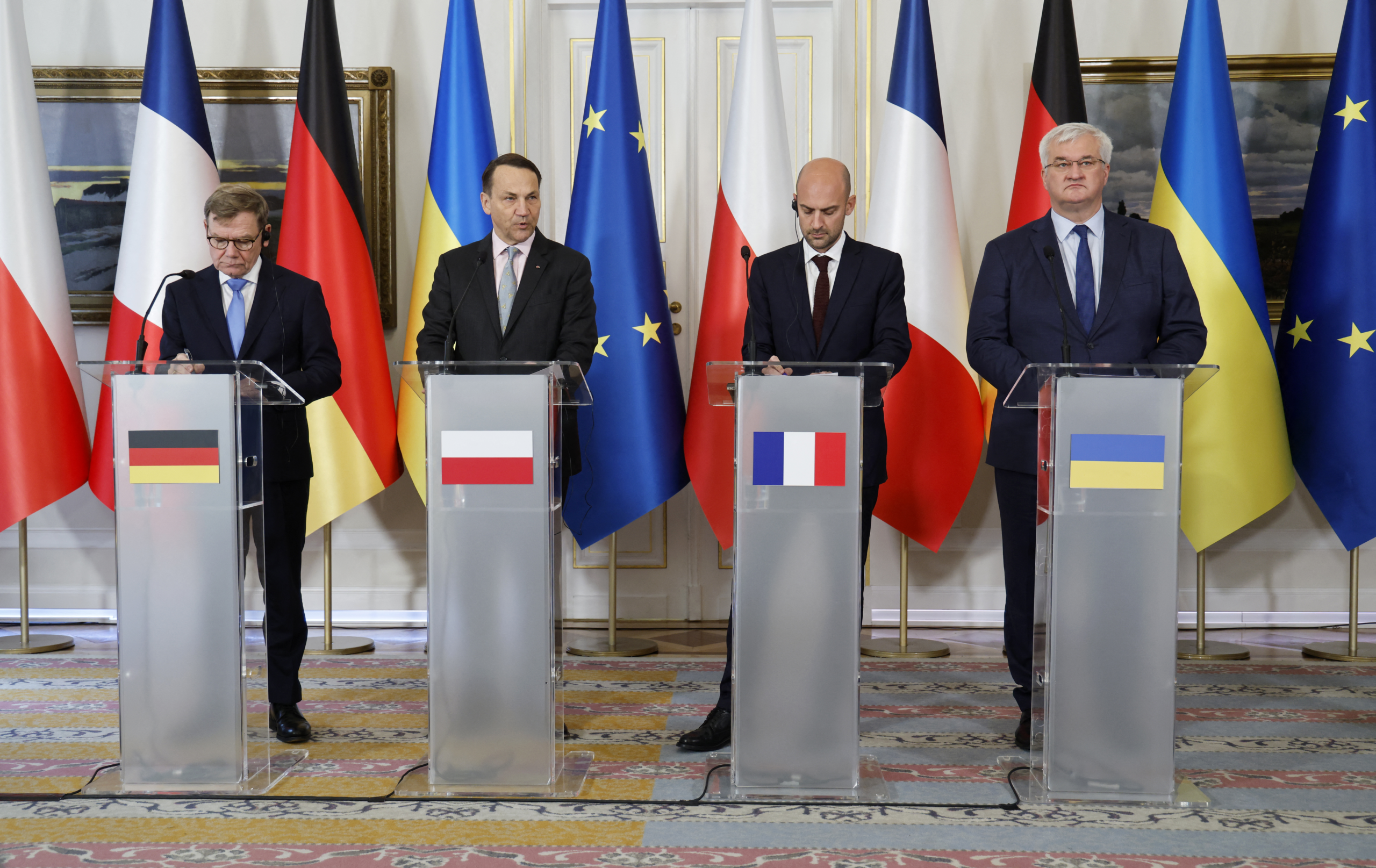
BERLIN — Germany, France and Poland support stronger European integration to counter Russia, potentially mobilizing frozen Russian financial assets to support Ukraine under an EU-proposed scheme, as well as deeper defense integration with Kyiv.
The announcements, delivered in the form of a joint statement on Tuesday, came following a trilateral meeting held the prior day in Poland’s capital Warsaw.
The nations’ three foreign ministers called for swift progress in the EU accession negotiations with Ukraine, suggesting the opening of a negotiation cluster dubbed “fundamentals.” This would be a significant procedural step forward, as this cluster — which includes rule of law, financial control, and anti-corruption measures — is the first to be opened and the last to be closed in the process of joining the Union.
The top diplomats also cited Moscow’s recent massive airstrikes against Ukraine, which the group of three said “would not go unanswered.” They vowed continued and expanded support for Kyiv, including through the provision of more air defense systems, until a “just and lasting peace in Europe” is secured. This would require “that financing for both short- and long-term military support must be significantly increased,” the foreign ministers said, while pushing for the “rapid integration” of Ukraine into the European defense technological and industrial base.
The group of three countries, known as the Weimar Triangle, supported the quick adoption of the EU’s proposed 19th sanctions package, which will, for the first time, sanction companies in third countries that financially support Russia’s war efforts, such as oil refineries processing Russian oil. It also proposes implementing a full EU embargo on Russian liquefied natural gas. A blanket embargo does not yet exist, although significant restrictions have been put in place.
Poland, Germany and France also announced they would intensify their efforts to counter Russia’s shadow fleet of ageing and often unregistered tankers in the Baltic Sea, which it uses to circumvent sanctions on its oil industry, which provides crucial revenue for the government. They called on their partners to do the same and ensure that sanctions are fully enforced.
Despite historic tensions between Poland and Ukraine over grain exports, and the ongoing Franco-German drama surrounding cooperation on the Future Combat Air System project, the joint declaration by the three countries lent strong support to the idea of deeper European integration.
Historically, EU action on defense matters has been viewed with great suspicion by individual capitals, as security was considered a national prerogative. The mood changed following Russia’s full-scale invasion of Ukraine three years ago and unprecedented tensions with the U.S., allowing for a dramatic deepening of European integration in the military realm and of EU power in defense matters.
Linus Höller is Defense News’ Europe correspondent and OSINT investigator. He reports on the arms deals, sanctions, and geopolitics shaping Europe and the world. He holds a master’s degrees in WMD nonproliferation, terrorism studies, and international relations, and works in four languages: English, German, Russian, and Spanish.
source
