



By Bjorn Fehrm
April 17, 2026, ©. Leeham News: We have started a series of articles on the Blended Wing Body (BWB) as a potentially more efficient design for passenger-carrying airliners than the classical Tube-And-Wing (TAW) configuration.
In the fifth article last week, we discussed how the drag characteristics of the BWB are different from a classical Tube-And-Wing airliner. The dominance of air-friction drag over induced drag results in a 10,000ft higher optimal cruise altitude compared with an equal-capacity TAW.
We compared JetZero’s Z4 project to a 250-seat variant of Boeing’s NMA that we have analyzed several times with our Aircraft Performance and Cost Model, APCM. Both aircraft use modern composite structures, aerodynamics, and systems, resulting in similar overall weights and drag.
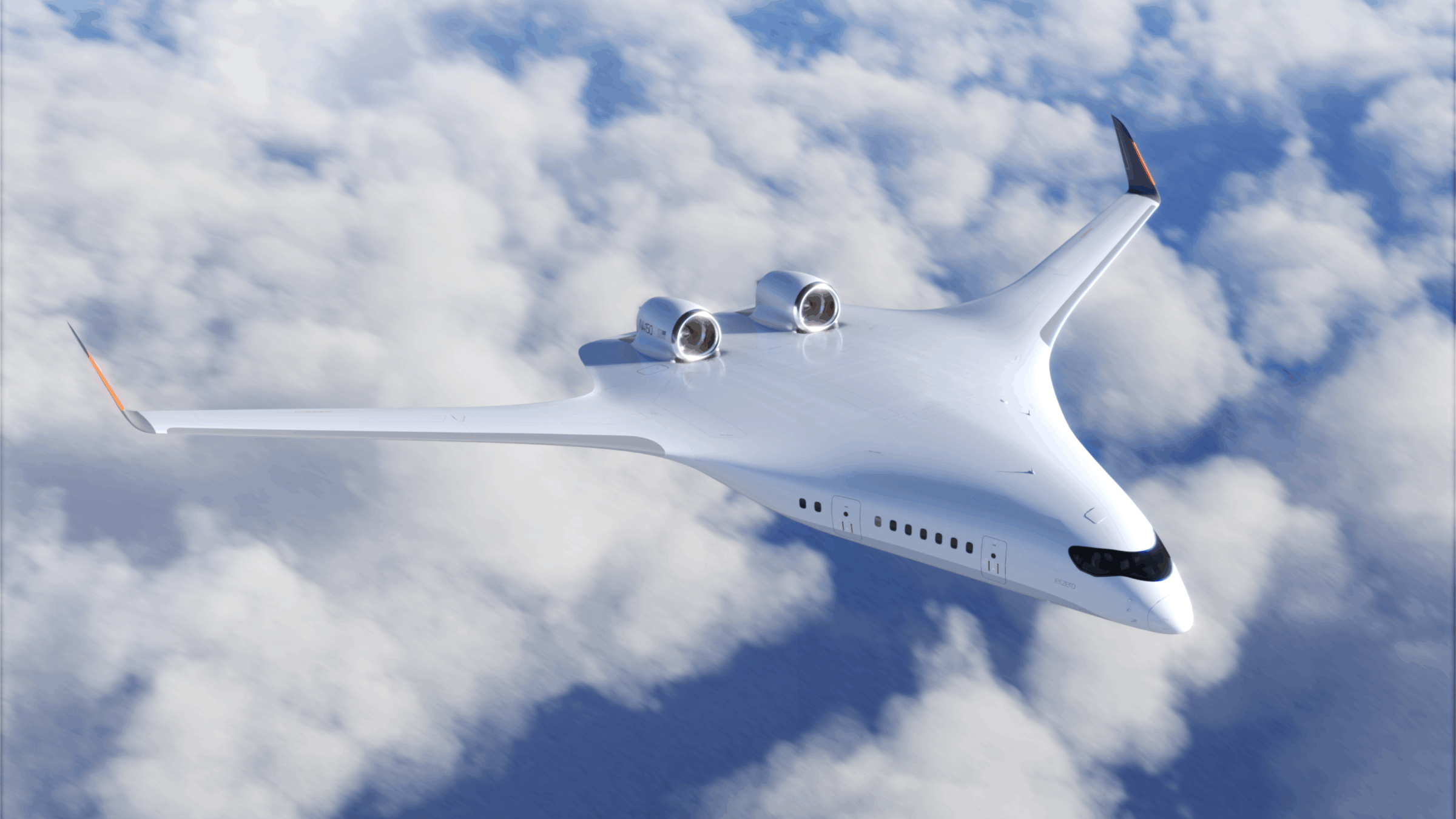
Figure 1. The JetZero Z4 BWB. Source: JetZero.
The difference is how the drag is partitioned between the wetted area caused drag (air friction drag) and drag due to weight (induced drag). The difference between drag and optimal cruise altitudes has consequences for engine choice. Here is how.
Engines for a BWB
To determine which engines are needed for a BWB, we need to understand the fundamentals of airplane engines.
The overall function is that of an air pump. Air is reasonably heavy (1.2kg/m3 at sea level, 0.4kg/m3 at 35,000ft), and by accelerating it backward with a speed faster than the airplane (the difference we call Air-overspeed, the engine people call it Specific Thrust), it generates a forward force on the airplane called engine thrust.
We can write this force as:
Thrust = Air-massflow * Air-overspeed
The engine thrust of an airplane declines during flight, a phenomenon called thrust lapse. It’s caused by the decline in air density with altitude, affecting the Air-massflow part, and by the aircraft’s forward speed, affecting the Air-overspeed part.
The Air-massflow hit from increasing airplane altitude is given by the diagram in Figure 2.
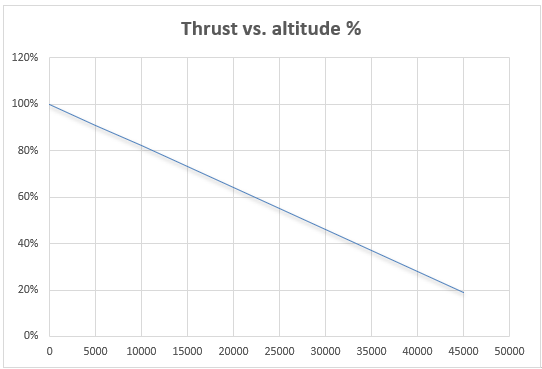
Figure 2. Thrust lapse with altitude. Source: Leeham diagram from Raymer data.
This diagram maintains the same forward speed and shows only the effect of declining air density with altitude. We see that thrust lapse due to increased altitude reduces the thrust to one-fifth at 45,000ft.
The forward speed of the aircraft reduces the Air-overspeed as this is the speed difference between the engine exhaust flow and the aircraft’s speed. The thrust-lapse sensitivity to forward speed increases with increasing bypass ratio (BPR), as you increase BPR to increase the Air-massflow and decrease the Air-overspeed for the same thrust, to gain propulsive efficiency.
The result is that increasing engine BPR increases the thrust lapse due to forward speed (Figure 3).
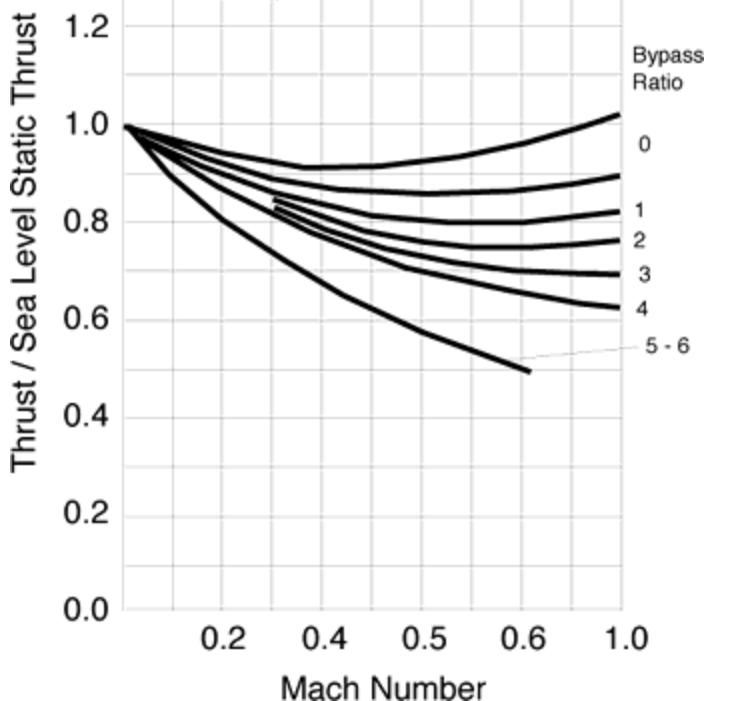
Figure 3. Thrust lapse due to forward speed at different BPRs. Source: Stanford airplane design course.
It’s easy to understand the effect. Let’s compare a Turbofan with a Specific Thrust of 650kts (BPR around 5) to one with 450kts (BPR 10). At rotation at 100kts, the BPR 5 engine has a 550kts Air-overspeed, a 15% decline, whereas the BPR 10 has an Air-overspeed of 350kts, a decline of 22%.
The BWB engine
The development of turbofans for our airliners has gone from BPRs of around 5 in the 1990s to around 10 for the present generation introduced from 2010 to a projected 15 for the next generation. This increases the thrust lapse as speed increases.
The TAW airliners can accommodate this by designing the airframe to cruise efficiently between 30,000 and 40,000 ft. The BWB, which has to reach above 40,000ft, has lost another 18% of thrust due to altitude lapse before it can reach its cruise altitude.
The increased altitude lapse means the thrust lapse dude to forward speed needs to be minimized, or there won’t be enough climb thrust to get to 40,000ft. JetZero therefore chooses BPR 5.5 engines from the Pratt & Whitney PW2040 series for the Z4. This is a 40-year-old engine. If JetZero should need to switch to a modern engine to improve fuel efficiency, the current trend from BPR 10 to BPR 15 is going in the wrong direction for the needs of the BWB.
It needs engines with more thrust at altitudes above 40,000ft, which is the area of the Biz jet engines. These are, however, below half of the thrust needs of the Z4.
Related
source
