

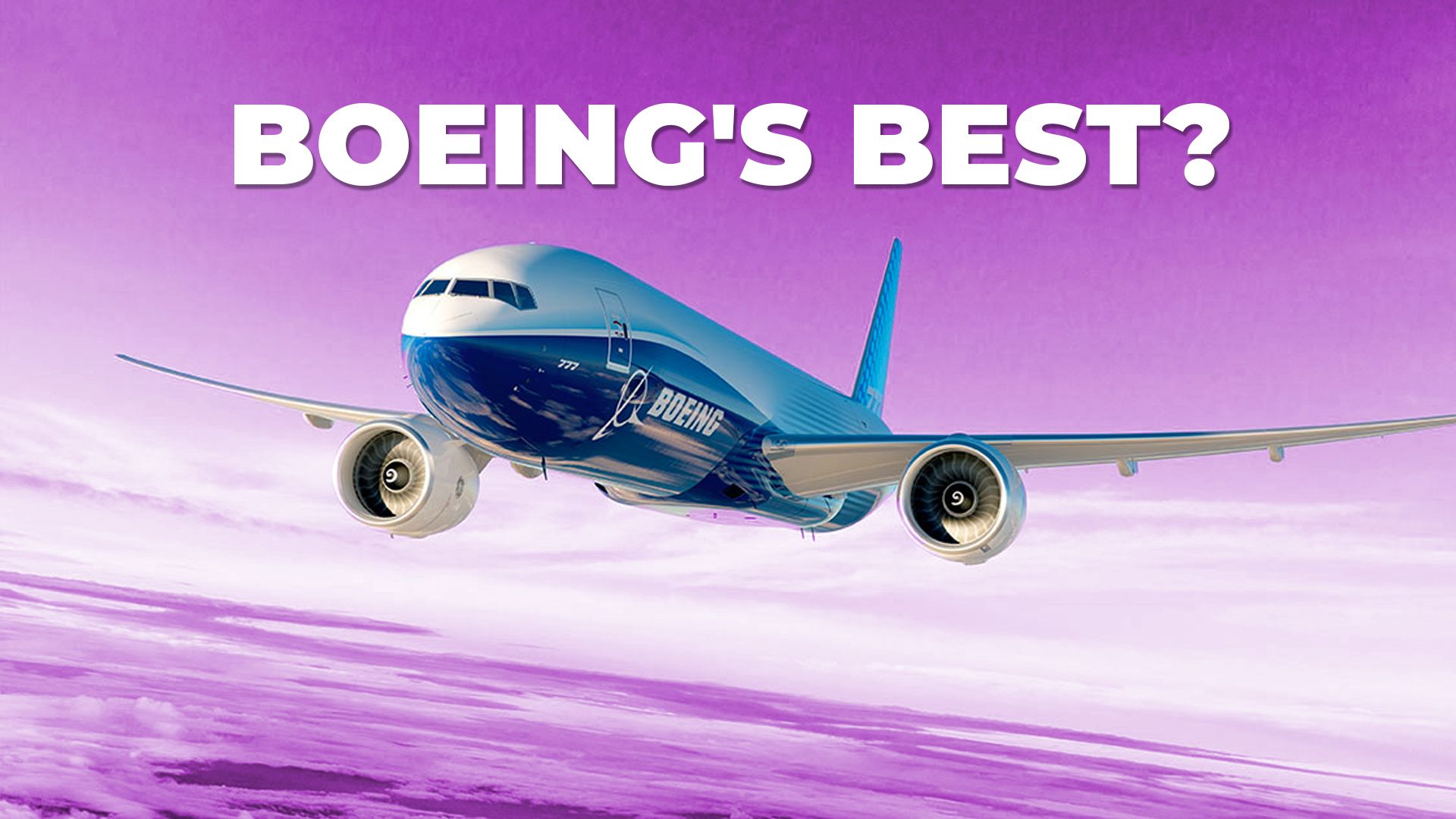
The Boeing 777F has been in service for over 15 years, operating over 4 billion flight miles and 8.5 million flight hours during these years. The large freighter has given operators a reliable and efficient long-haul cargo hauler to open up more cargo pairings than ever before. The 777F has flown with over 35 customers since its debut in 2009, becoming the most popular dedicated freighter in history with over 300 deliveries.
With the aviation industry becoming increasingly dependent on lowering fuel costs and meeting sustainability targets,  Boeing designed the 777F with low operating costs and reliability in mind. With much of the cargo industry relying on older platforms like the MD-11 or Boeing 747 for large freight needs, the 777F arrived as an ideal replacement. It remains the longest-range twinjet freighter on the market today, although it will be overtaken by the Airbus A350F in the coming years.
Backstory Of The 777F

The 777F was born out of the success of the passenger models of the Boeing 777, which had taken the long-haul market by storm since the mid-1990s. While the 777F wouldn’t enter service for another 14 years, the original 777-200 debuted with United Airlines in 1995 and established the 777 family as the leading long-haul twinjet of its time. Up until this point, long-haul flights had been flown by larger aircraft with three or four engines, adding to operating costs at a time when fuel prices were soaring.
Aided by the relaxation of ETOPS regulations, airlines could now fly two-engined planes like the 777 on more overwater routes, rather than incurring the high operating costs of trijet or quadjet planes. But while passenger operators reaped the rewards of flying long-haul twinjets, cargo carriers did not have a suitable aircraft to replace their aging fleets of large freighters. Most of these freighters were aging platforms with high operating costs, so a leap forward like the 777F was clearly of great interest.
Boeing’s 767-300F was relatively successful, but it only offered around half the payload of the 777F and had a shorter range of up to 3,300 NM. And with Airbus also lacking a long-haul twinjet freighter at the time, Boeing correctly anticipated high demand for such an aircraft. With a development cost estimated at around $2 billion, the 777F completed its maiden flight in 2008 before the inaugural delivery to Air France the following year.
The 777F Was A Leap Forward

Boeing officially announced the 777F program in 2005, unveiling a large freighter that would be based on the Boeing 777-200LR airframe. The aircraft would give operators high-capacity hauling space with the low economics of a twinjet, helping to drive down costs on long intercontinental routes. Flying up to 4,900 NM with a full payload, the 777F delivered a 30% reduction in fuel use and CO2 emissions compared to the 747-400F. As explained by Boeing,
“The payload, range and tonne-kilometer economics of the 777 Freighter allow for more long-range, nonstop freighter flights than ever, connecting markets such as Asia with the United States and Europe, and linking critical high-value cargo markets without the need for a refueling stop.”
The 777F was a step forward in terms of operational reliability, and its passenger platform had already proven itself in the global commercial fleet. Equipped with the GE90-110B1 engine, the aircraft has multiple system redundancies and incorporates Boeing’s Airplane Health Management (AHM) system. Compared to the large freighters in service, the 777 was a major step up in technology, all of which ultimately translated to greater aircraft availability.
|
Boeing 777F |
|
|---|---|
|
Overall Length |
209 feet 1 inch (63.7 meters) |
|
Tail Height |
63 feet 7 inches (19.4 meters) |
|
Wingspan (with raked tips) |
212 feet 7 inches (64.8 meters) |
|
Engines |
2 × GE90-110B1 turbofans |
|
Range with Full Payload |
4,900 nautical miles (9,070 kilometers) |
|
Maximum Takeoff Weight (MTOW) |
766,000 pounds (347,810 kilograms) |
|
Payload Capacity |
103.9 tonnes |
|
Dispatch Reliability |
Over 99% |
Dispatch reliability is a key metric for freighter aircraft, with the cargo industry placing a huge premium on timing and avoiding delays. Ease of maintenance was at the heart of Boeing’s design philosophy on the 777, with a modular architecture and redundant systems minimizing time spent on the ground. The result is a highly dependable freighter that has maintained industry-high dispatch reliability rates of over 99%, matching its passenger versions in dependability.
An Efficient Twinjet Freighter

Before the arrival of the 777F, airlines faced operating trijet or quadjet aircraft on long-haul intercontinental routes. While these planes offered sizable cargo capacity, their engines were fuel-intensive and increasingly uneconomical as fuel costs shot up. The 777F would be powered by the highly reliable GE90 engine, and with only two equipped, fuel consumption was approximately 30% lower than the 747-400F.
It wasn’t just the fuel-efficient engines that helped drive down costs. The 777F’s exceptional range allowed many routes to be flown nonstop, eliminating the need for expensive refueling stops. At its entry, it became the only twin-engined 100-plus tonne freighter on the market, helping Boeing to achieve over 300 sales.
Many of the world’s largest 777F operators today also fly the passenger models of the 777 family. This fleet commonality makes the cost of pilot training and other overheads lower to further drive up trip yields. For example, Qatar Airways operates a fleet of over 60 passenger variants of the 777, as well as 28 777F aircraft in its cargo division.
In A League Of Its Own

Besides the 747-400F, the 777F would be going up against large platforms like the MD-11, as well as smaller twinjets like the 767-300F and Airbus A330-200F. The 777F effectively combined low operating costs with high payload and distance, providing operators the best of both worlds.
With a maximum payload of over 100 tonnes, the 777F wasn’t quite as large as the 747-400F, which could carry up to 124 tonnes. But it was ahead of the MD-11F’s payload of 90 tonnes, and its 4,900 NM range significantly exceeded both freighters. Arriving at a time when global air freight had been growing rapidly, the 777F proved a far superior aircraft for long-haul freight markets.
Another advantage of the 777F was its greater compliance with tightening environmental restrictions. Its newer GE90 engines cut down on carbon emissions and were also quieter than older-generation jets, ensuring compliance with noise regulations.
How Popular Is The 777F?

With over 300 deliveries, the 777F established its own category of freighters and has dominated this market for over 15 years. While it will soon be facing competition from the Airbus A350F, it now has over 35 operators, including both dedicated cargo carriers and passenger airlines.
The world’s largest fleet of 777Fs is operated by FedEx Express, which has 51 aircraft. It is flown by a diverse range of global carriers, including China Southern, Korean Air, Lufthansa and Turkish Airlines. The freighter has now been in service for over 16 years, with Boeing stating last year that it had exceeded 4 billion combined flight miles.
|
Airline |
No. of 777F |
|---|---|
|
FedEx Express |
51 |
|
Qatar Airways |
28 |
|
AeroLogic |
22 |
|
China Southern Airlines |
19 |
|
China Cargo Airlines |
15 |
The freighter’s reliability has proven a powerful asset to operators, with the 777F continuing to maintain its industry-leading availability. Looking at data from ch-aviation, there are 295 aircraft listed as active and another nine listed as under maintenance or stored. As promised, Boeing delivered a dependable aircraft that keeps the long-haul freight market ticking.
What Will Replace The 777F?

The 777F is more than 15 years old, which is still fairly young for a dedicated freighter, and it has enjoyed dominance in its class ever since its introduction. While most passenger aircraft have a typical service life of 25-30 years, freighters last much longer than that. This means it is likely we will see the 777F remain in the backbone of the global freighter fleet for decades to come, despite multiple replacement aircraft in the pipeline.
One of its biggest competitors will be the Airbus A350F, developed from the company’s highly successful A350 family of passenger jets. Offering similar capacity and range, the A350F will be a more economical aircraft to fly and has so far attracted almost 70 orders ahead of its expected entry into service in 2027. Notable future operators of the A350F include Etihad Airways, Starlux and Singapore Airlines.
The 777F is soon to be replaced by the 777-8F, which is Boeing’s next-generation freighter that will be able to carry greater payloads over longer distances. With the planemaking due to launch its newest widebody – the 777X – in the next 18 months, the 777-8F is likely to enter service in 2028. Qatar Airways will be the launch customer and has an order for up to 50 freighters.
source
