

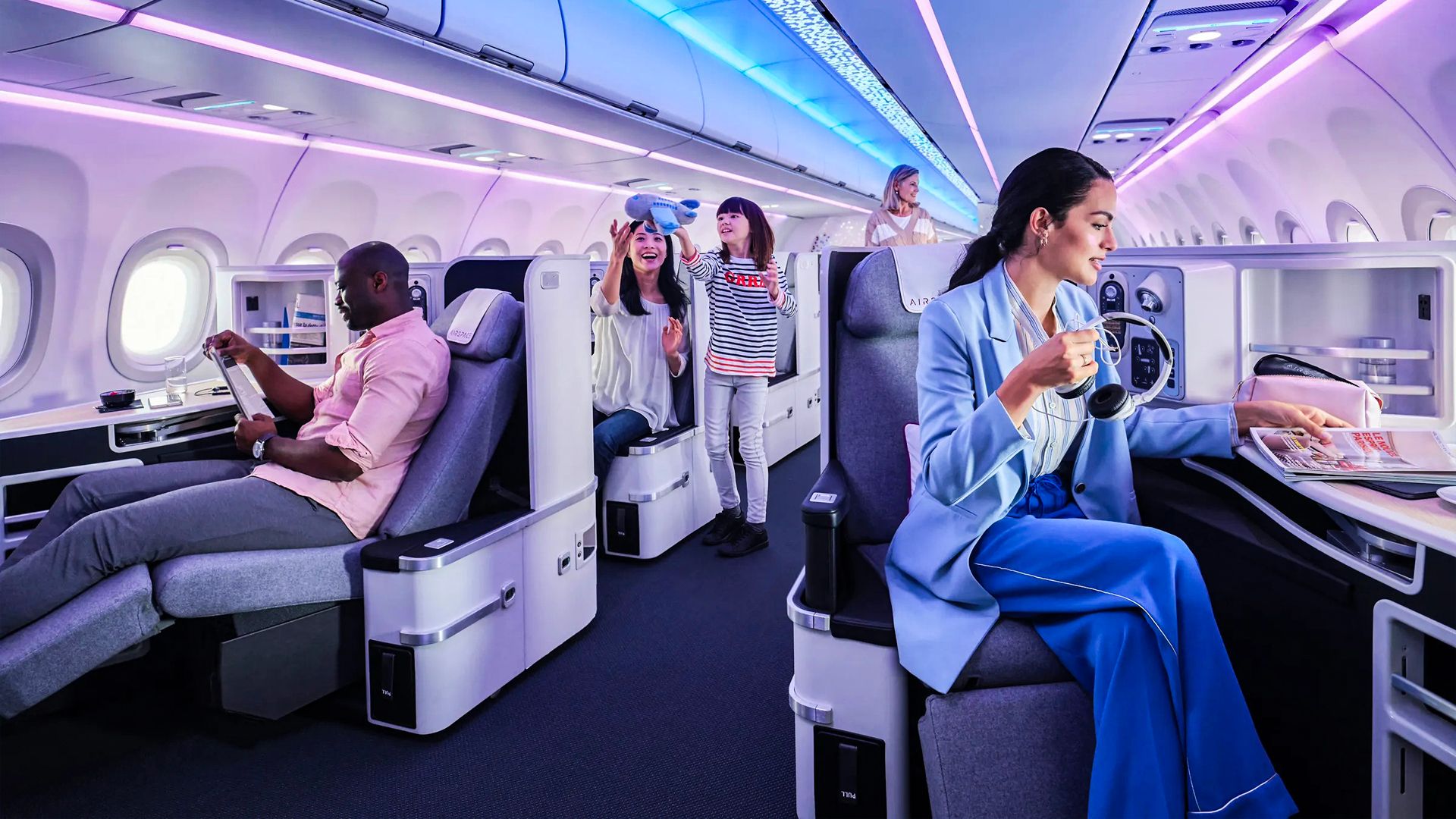
Airspace is Airbus‘ innovative cabin brand, which was launched in 2016, was first delivered on the Airbus A330neo and A350XWB, but is also being rolled out on the A320neo family. It was built around four main pillars: comfort, services, ambience and design. The Airspace cabin offers more personal and storage space as well as contemporary lavatories and LED lighting. Why did Airbus build the Airbus A321XLR with a new cabin design?
Benefits include increased passenger comfort with wider seats and larger overhead storage bins. For the airlines, it offers the ultimate in flexibility and with lower operating costs. The award-winning cabin design delivers space, comfort and convenience usually only found on widebody jets. Let’s find out more details in this guide.
The Comfort Of Long Haul

Airbus built the Airbus A321XLR with the Airspace cabin to provide a better, more spacious cabin for passengers, as well as for airlines, making it flexible to fly on short-haul, medium-haul, or long-haul routes. The two combined enhance the passenger experience and provide airlines with a financial advantage, offering them a low-risk solution for operating new long-haul routes. In short, bringing long-haul comfort to a single-aisle aircraft, which costs less to operate than a widebody jet.
The Airbus A321XLR features the widest single-aisle cabin and the Airspace design makes it look modern and stylish. The larger windows allow for natural light in the cabin. The cabin altitude can be set at 6,000 feet when cruising at 33,000 feet, which makes the cabin much more comfortable and lessens fatigue for both crew and passengers. The overhead bins are 60% larger, which leads to faster boarding and disembarking and a less crowded feeling in the cabin, as well as offering the airline faster turnarounds on the ground.
The cabin was designed with a focus on passenger well-being, and cabins are tailor-made. The customizable LED lighting gives a premium ambience and helps set the mood as well as reducing jet lag. There is seamless connectivity with in-seat wireless in-flight entertainment. Sustainability and innovation are key to the Airbus A321XLR; it uses less fuel and is a quieter aircraft, and reduces CO2 emissions. Aircraft noise has been reduced by 50%.
Benefits For Passengers

Seats are wider than normal economy seats at 18 inches and in a 3-3 configuration. Airbus says that they bring long-haul style comfort with lie-flat beds in the business class cabin with a single aisle and 1-1 configuration. The Airbus A321XLR can be fully configured in economy seats or can have 16 lie-flat business seats and 168 economy seats.
The business class seats are by Thomson Aero Seating. They are ergonomically designed and have a 22-inch width and a 46-inch pitch. The lie-flat seats also have a massage function, and there are USB, USB-C and power outlets. There is a large retractable table and storage space for a laptop, phone and shoes. The latest in-flight entertainment is fitted with a 4K Ultra High Definition 18-inch touchscreen and there is Bluetooth connectivity for personal headphones.
In the economy cabin, the seats are by Recaro. They are ergonomically designed in a reclining position and have premium cushioning. The pitch of the seats is 30 inches with a width of 18 inches. The seats have a wider back and a six-way adjustable headrest. The seatback inflight entertainment screen is 12 inches and a high-definition touchscreen. There are also charging points and a device holder.
Why Is It Beneficial To Airlines?

The cabin design is quite flexible, so Airbus can move the cabin ‘monuments’ based on the airline’s needs. For example, having two or three class seating and an open welcome area at the front of the aircraft. Airbus can change the cabin configuration to meet the airline’s business model. It can fly for between 10 and 12 hours, making it viable for transatlantic or transcontinental routes. It uses less fuel, so it costs less to operate than a widebody jet.
Airlines can look at operating new routes with less risk and have fewer seats to fill. We may see competitive fares on these routes as the airlines do not have to fill a widebody aircraft. It is a low-risk approach to flying long-haul when an airline doesn’t have hubs or a network to do so. The maximum range of the aircraft reduces the aircraft’s operating costs. Maximum revenue can be made by adding more premium seats or by increasing capacity.
In terms of cost per seat, it is the lowest you can find. Therefore, airlines can be profitable and competitive and save money operationally because the aircraft is fuel efficient. It is also extremely flexible as the aircraft can operate on short-haul, mid-haul or long-haul routes. It can operate on ‘long thin’ routes and still be profitable. The Airbus A321XLR is seen as cost-effective and sustainable.
About The Airbus A321XLR

The Airbus A321XLR is a variant of the A321LR with an increased Maximum Take Off Weight (MTOW). It was intended to compete with the  Boeing NMA (New-Midsized Aircraft), which was put on hold. The aircraft was launched at the Paris Air Show in 2019 and first flew in June 2022. The launch customer was originally Aer Lingus, but due to internal issues with pilot contracts, the first aircraft was instead delivered to Iberia in November 2024. It took its first long-haul passenger flight shortly after, from Madrid to Boston.
The aircraft has a new lightweight landing gear, modified fuel tanks and an optimized wing training edge flap configuration. The maximum range is 4,700 nautical miles and can operate for 10 to 12 hours. However, according to CNN, safety modifications required by European regulators were made to the aircraft adding weight, which has reduced its range to 4,500 nautical miles.
The aircraft is made of lightweight materials and uses new technology to minimize fuel burn. It can operate with Sustainable Aviation Fuel (SAF) which reduces emissions by 30%. Aircraft noise has been reduced by 50%.
Which Airlines Have Chosen The Airbus A321XLR

JetBlue led the way with the Airbus A321LR fitted with the Airspace cabin, in August 2021. The low-cost carrier started flights from New York to London and Paris, to see if the transatlantic routes could work for them. The state-of-the-art cabin design with business class lie-flat beds and an economy cabin offered an upgraded experience. TAP Portugal used the same type to create a new hub to fly routes it could not normally sustain, for example, Montreal and Washington DC.
 Aer Lingus was the original launch customer for the newly outfitted Airbus A321XLR and described it as a narrowbody aircraft with a widebody feel. It could fly from Ireland to destinations in North America and was one of the first airlines to operate the next-generation aircraft. It now has two of the aircraft with four more due by the end of the year. Instead, Iberia received the first Airbus A321XLR and remains the largest operator of the aircraft, according to data at ch-aviation.
Qantas announced in September that it had received its first Airbus A321XLR and as the fleet expands, it will phase out the Boeing 737. The airline has 48 of the new aircraft on order and expects delivery over the next three years. United Airlines will use the A321XLR to replace its Boeing 757s and should receive its first aircraft early next year. American Airlines received its first A321XLR this year. Orders have been placed by airlines such as American Airlines, JetBlue, Indigo, Saudia and Air Canada.
Final Thoughts

Airbus has over 500 A321XLRs on order, according to data at Cirium, and the main appeal to airlines is that they can expand their network. The cabin offers the comfort of long-haul without the need for a widebody jet. The airlines like the Airbus A321XLR because it is a smaller aircraft and uses less fuel. There are fewer seats to sell on any route it’s used, so it’s less risky but can be profitable with premium seats. The cabin is flexible, in that Airbus can change it based on passenger demand, for example, to just business class and premium economy.
For the passenger, this could, in time, mean cheaper fares on long-haul flights, which is always a bonus. Airlines may offer more unusual routes that would usually be operated by a widebodied aircraft, so opens up more cities that would not be viable previously. Low-cost carriers, which are predominantly short to medium-haul, can now feasibly offer long-haul flights. Passengers can avoid layovers or transfers when traveling long-haul, which saves time.
Although saving time, more comfortable, luxurious cabins and lower fares sound appealing, will that appeal to the normal economy passenger? Business class lie-flat beds will be popular with business travelers, who will also save time on their journey. The question is would economy passengers be happy to spend nine hours or so on a single-aisle aircraft? That remains to be seen and time will tell.
source
