

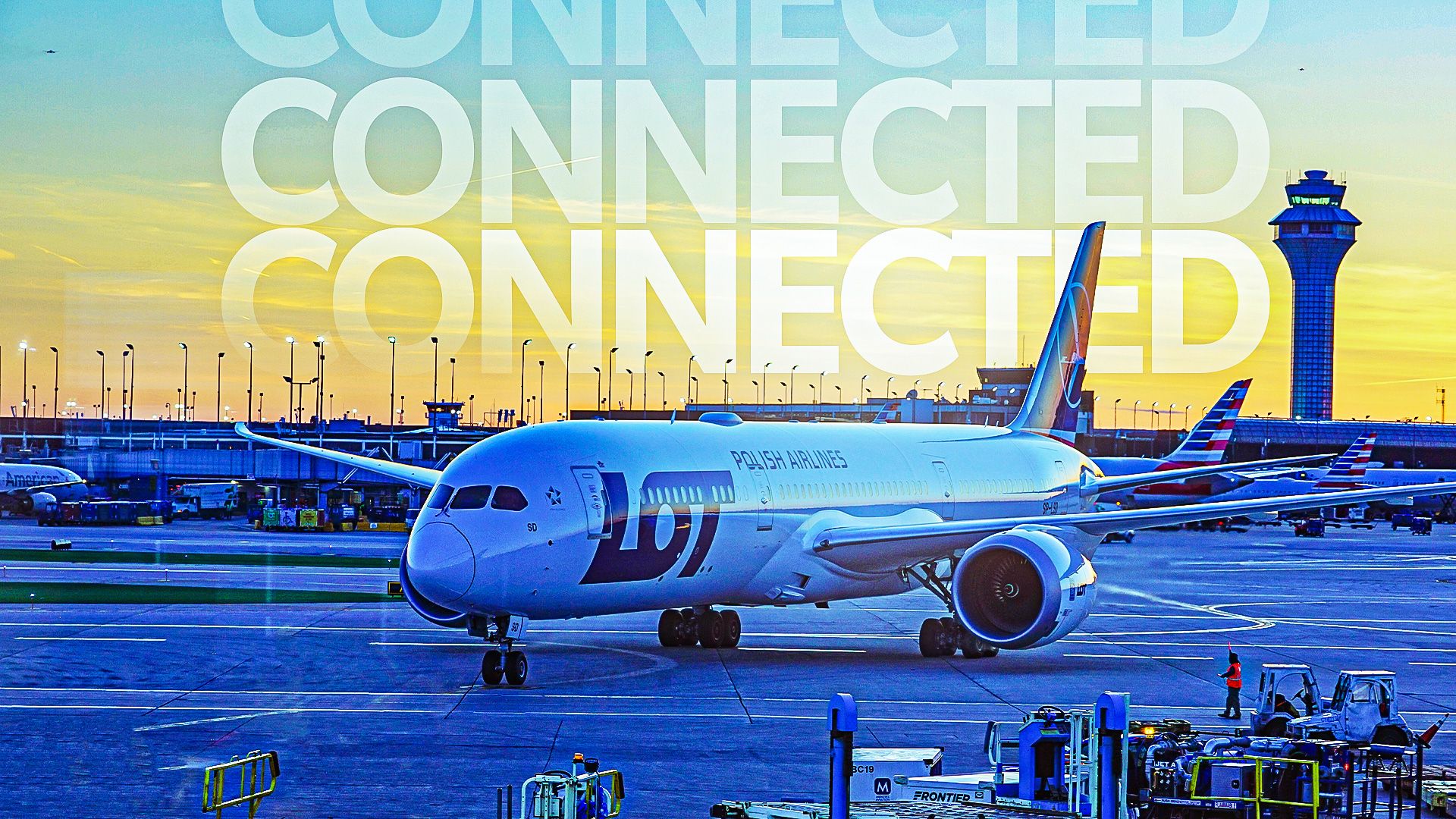
 Chicago O’Hare International Airport (ORD) was named the number one most connected airport in the United States and seventh worldwide, according to data from the Official Aviation Guide (OAG) 2025 Megahubs Index. On the airport’s busiest day of the year, Chicago O’Hare offers connections to 214 domestic destinations, more than any other airport in the US. The airport receives more than 100 million passengers per year. Let’s find out why this is the case.
Looking further afield, the airport is the seventh most connected airport in the world, and held ninth position the previous year. In comparison, the city’s Midway International Airport (MDW) was ranked twenty-second, just behind New York’s John F. Kennedy International Airport. Chicago O’Hare International Airport can be seen as a gateway to almost anywhere in the world.
Why Is The Airport So Well Connected?

A hub’s connectivity depends on the number of connections available for travelers to and from domestic and international destinations. With worldwide data from OAG, we see that in 2024, there were 65,141 connections through Chicago O’Hare to 297 destinations (including international routes), compared to 53,374 through Atlanta Hartsfield-Jackson to 251 destinations. United Airlines has its main hub at the Chicago airport and operates almost half of all flights. In comparison, Delta Air Lines base in Atlanta has a 79% share of flights.
In 2025, the top 25 US airport megahubs index showed that Chicago O’Hare saw 76,244 connections on its busiest day to 214 domestic destinations. Atlanta Hartsfield-Jackson had 54,533 connections to 161 domestic destinations. According to Fly Chicago, there are over 1,040 daily flights to more than 171 US cities and approximately 113 daily direct flights to 65 international destinations.
Chicago O’Hare International Airport is the most connected airport in the US, according to the latest data, and is seventh globally. It is one of the largest airports in the US with 201 gates and four terminals, and covers 7,627 square acres. In August 2025 alone, the airport saw over eight million flyers.
High Praise

Both Chicago O’Hare and Midway airports serve as vital gateways to final destinations and provide travelers with a wide range of flight connections. Chicago’s central location and extensive air service ensure that the city attracts more than 100 million passengers per year. O’Hare has the strongest passenger volume, welcoming more than 8.26 million passengers in July 2025, its busiest month in the airport’s history.
Commissioner Michael McMurray of the Chicago Department of Aviation (CDA) said in a press release:
“Chicago is second to none in American aviation, and this ranking proves that our sustained investments in both O’Hare and Midway are paying off. From modernizing terminals to expanding capacity, we are building the infrastructure that will keep Chicago competitive for the next decade and beyond. I thank our airline partners for continuing to choose O’Hare and Midway as their midcontinent hubs and for helping us connect people, goods, and ideas from Chicago to the world.”
Furthermore, Mayor Brandon Johnson said that “The strength of Chicago’s aviation market isn’t just a point of pride, it’s a competitive advantage for our city and our region. Being named the best-connected airport in the nation means Chicagoans have more choices, airlines have more opportunities, and our city continues to stand out as a premier global hub for business and tourism.”

The 10 Largest Airline Megahubs In 2025
How many of the airports on the list do you know?
The Top Ten US Airport Megahubs

Chicago O’Hare International Airport takes the first place in the US Airport Megahubs Index, just ahead of Atlanta Hartsfield-Jackson International Airport, after sharing the top spot last year. On the airport’s busiest day for domestic travel, July 18, the airport offered more potential connections than any other airport in the US. It also serves more domestic destinations than any other airport, making it easier for travelers in the US to connect to their preferred destinations more easily.
The airport offers nonstop flights to 249 destinations. It is the world’s fourth-busiest airport and the 16th largest airport, with more runways than any other in the world. It is a hub for American Airlines and United Airlines and an operating base for Frontier Airlines and Spirit Airlines. Its central geographic location makes it the perfect midpoint between the East and West coasts. For US domestic travel, the top ten airports have remained unchanged over the last few years, but the order of ranking has somewhat shuffled.
|
1. |
Chicago O’Hare International Airport |
ORD |
|---|---|---|
|
2. |
Atlanta Hartsfield-Jackson International Airport |
ATL |
|
3. |
Dallas Fort Worth International Airport |
DFW |
|
4. |
Denver International Airport |
DEN |
|
5. |
Charlotte Douglas International Airport |
CLT |
|
6. |
Seattle Tacoma International Airport |
SEA |
|
7. |
Boston Logan International Airport |
BOS |
|
8. |
Detroit Metropolitan Wayne County Airport |
DTW |
|
9. |
Houston George Bush International Airport |
IAH |
|
10. |
Los Angeles International Airport |
LAX |
Data: OAG
Although it is considered the most connected airport in the US, unfortunately, it is also one of the five US airports with the most delayed flights during the holiday season, just behind other hubs such as Miami and San Francisco. However, Chicago O’Hare went 100% carbon-free this year, making it a frontrunner for sustainable air travel in the future. Atlanta Hartsfield-Jackson, and home to Delta Air Lines, had higher on-time performance, according to the OAG monthly analysis.
The Top Ten Global Airport Megahubs

Looking at worldwide figures, London Heathrow is the world’s most connected airport for the third consecutive year. The airport has a possible 59,000 connections to 226 destinations on its busiest day and is also the busiest airport by seat capacity. It is the only airport to retain its ranking from the previous year. All other airports in the top ten megahubs moved positions positively or negatively.
Istanbul saw one of the biggest increases globally due to a 25% increase in connections. Amsterdam Schiphol moved up one place on last year. Kuala Lumpur is the highest-ranked airport in Asia for connectivity. Frankfurt climbed from tenth place last year to fourth place this year because of a 21% increase in connections. Tokyo Haneda dropped significantly in the rankings due to a 10% decline in connections.
London Heathrow’s dominance as the most connected airport in the world reflects its role in global travel. Istanbul Airport has risen in the ranks as a global connecting hub over the last ten years. Both hubs have evolved to meet growing demand. They show a balance of well-established gateways as well as new hubs for global connectivity.

The Busiest Airports In The World In 2025
Here are the six busiest airports of the year so far, and a look at how the list has changed from 2024.
In Comparison, Worldwide

The OAG Megahubs Index, at its core, identifies the world’s most connected airports and ranks them each year. The report, in its tenth year, shows the growth of the aviation industry and the competitive options available for travelers. It compares the number of scheduled connections to and from international flights with the number of destinations served from the airport. The index shows that global seat capacity surged by a third over the last decade, reaching more than 6 million seats per year.
The report shows the most internationally connected airports as well as the most domestically connected airports, while also looking at the most connected low-cost carrier airports and the most connected airports by region. These can then be compared year by year, to see how flight connectivity changes and grows around the world. Here we can see the growth between 2015 and 2025.
|
Airport: |
Airport Name: |
Rank in 2025: |
Rank in 2015: |
Connections: |
Destinations: |
|---|---|---|---|---|---|
|
LHR |
London Heathrow |
1 |
1 |
-35% |
24% |
|
IST |
Istanbul |
2 |
4 |
2% |
24% |
|
AMS |
Amsterdam Schiphol |
3 |
7 |
-20% |
-5% |
|
KUL |
Kuala Lumpur |
4 |
5 |
-4% |
22% |
|
FRA |
Frankfurt |
4 |
3 |
-26% |
-2% |
|
ICN |
Seoul Incheon |
6 |
10 |
58% |
7% |
|
ORD |
Chicago O’Hare |
7 |
2 |
-32% |
16% |
|
ATL |
Atlanta Hartsfield-Jackson |
8 |
8 |
-6% |
|
|
HND |
Tokyo Haneda |
9 |
9 |
49% |
32% |
|
CDG |
Paris Charles de Gaulle |
10 |
6 |
-37% |
-4% |
Data: OAG
London’s Heathrow Airport saw a 24% increase in destinations over a decade and retained its number one spot. Amsterdam’s Schiphol has moved up the ranks, while Frankfurt and Paris have dropped the table over a decade, due to less domestic activity and other transportation options. Istanbul, Incheon, and Kuala Lumpur have moved up the ranks as their networks and connectivity grew.
Previous Statistics

Atlanta Hartsfield-Jackson held its eighth position worldwide over the last ten years, with only a small loss of connections and the same number of destinations spanning the decade. Chicago O’Hare has moved from second place to seventh place worldwide over ten years, with a decrease in connections but an increase in destinations. The airport offers nonstop routes to cities such as Delhi, Tokyo, and Istanbul. This Midwestern hub is now officially the most connected airport in the US.
In the last year, Atlanta Hartsfield-Jackson was the world’s largest airport by seat capacity and saw a rise of 14% in connections in 2025, adding eight more destinations. Chicago O’Hare, in comparison, climbed two places from last year to seventh place due to a 17% increase in connections and expanded its network by adding 15 more destinations. Dallas Fort Worth International Airport followed in at third place, and Denver International Airport in fourth place.
Although Atlanta has the busiest airport and Chicago has the most connected airport, both Chicago and Atlanta play a vital role in the US in connecting travelers around the world. The two airports have had the ability to expand their destinations and connections and this reflects heavily on how they are shaping the North American aviation network.
source
