

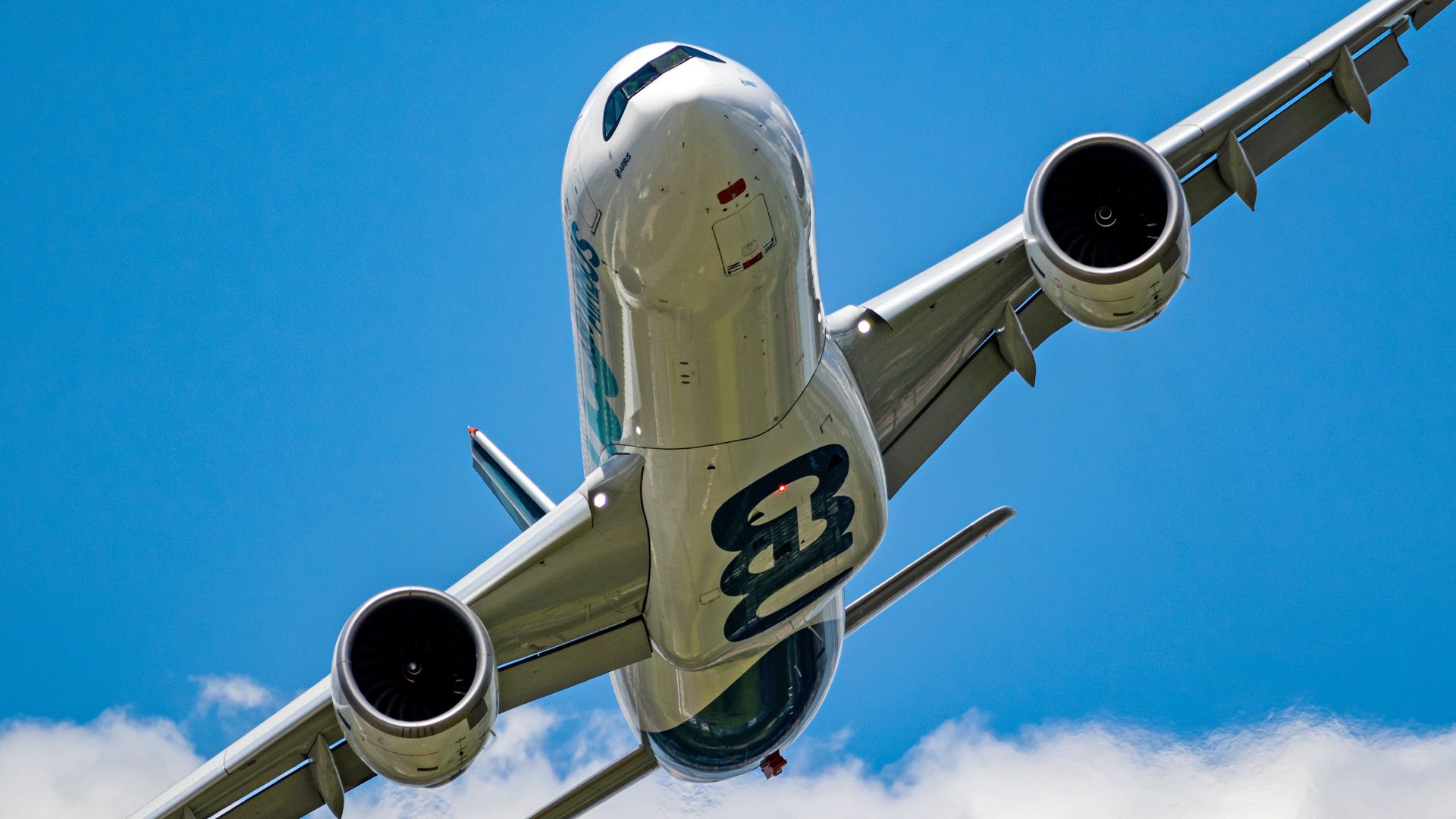
The Airbus A330neo is offered exclusively with the Rolls-Royce Trent 7000 engine due to a combination of commercial, financial, and technical factors. The decision was a strategic choice by Airbus and Rolls-Royce, rather than a lack of capability from other manufacturers.
The A330neo (new engine option) was made by Airbus to modernize and enhance an airframe that was already familiar and well-liked by many operators for its efficiency and reliability. The A350 has a clean sheet design and was launched before the A330neo. Airbus invested more resources in developing the A350 to satisfy customers with greater demands in terms of capacity and performance. So, the A330-900 (A330neo) replaced the smallest proposed variant of the A350, the dash 800.
The A330neo was not meant to be the flagship widebody aircraft of the Airbus product line. Simplifying the design with an airframe and systems tailored to just one engine not only reduced development time but also made it simpler for operators in terms of maintenance. Essentially, the engine is what makes the A330neo.
New Engine Option

The A330neo’s design was specifically optimized to take full advantage of the Rolls-Royce Trent 7000’s specific performance characteristics. An exclusive deal with Rolls-Royce was determined to be the most effective way to meet the A330neo’s performance goals and price point against its competitor, the Boeing 787 Dreamliner.
The single-engine option streamlined development and operations, offering a highly optimized and cost-effective package for the airlines that chose the A330neo. The most significant benefit is an 11% improvement in specific fuel consumption (SFC) compared to the Trent 700 on the A330ceo. The higher bypass ratio also leads to a significant reduction in noise, halving the perceived noise footprint, and the lower fuel burn directly results in fewer CO2 emissions.
Re-engining the aircraft made it dramatically more fuel efficient and improved performance across the board; just like the A320neo, which Airbus redesigned for new power plants alongside modernization throughout the cabin and cockpit. The business case for a clean-sheet widebody aircraft on the smaller end of the market was much weaker than simply enhancing a well-known airframe and instead going all in on the larger new jet.
Building on the proven reliability of the Trent XWB, the Trent 7000 has demonstrated high dispatch reliability in service. The Trent 7000 is the seventh member of the Trent engine family and combines the core architecture of the highly efficient Rolls-Royce Trent XWB engine used on the A350 with the latest intermediate compressor technology from the Trent 1000.
If It Ain’t Broke, Don’t Fix It

Airbus launched the A330neo to compete in a different market segment and to benefit from technologies, such as the new engine and aerodynamic improvements, developed for the A350 program. The A330neo also effectively replaced the smallest A350 variant (the A350-800) in the product lineup. The improved efficiency and the option for a higher maximum take-off weight allow the A330neo to fly further than its predecessor and without payload restrictions.
The A350 program was launched in 2004 (redesigned in 2006 into the all-new A350 XWB), with its first flight in 2013 and entry into service in 2015. The A330neo program was launched later, in 2014, with its first flight in 2017 and entry into service in 2018.
The Trent 7000’s thrust ratings (from 68,000 to 72,000 pounds) are specifically optimized for the A330neo’s performance requirements, ensuring an ideal power output for various routes and operating conditions. Ongoing durability enhancement packages and predictive health monitoring systems are designed to reduce maintenance costs and increase “time on wing.”
Airbus and Rolls-Royce partnered to offer integrated parts procurement services, which create a seamless supply chain for both airframe and engine components. This allows operators to procure parts through a single process, improving response speed and reducing operational impact for customer carriers.
The engine of the A330neo features a larger frontal fan area than its legacy predecessors. The Trent 7000 has a 112-inch (2.85 meters) diameter hollow titanium fan with a 10:1 bypass ratio. That is double the bypass volume of its predecessor, the Trent 700. More bypass is a major contributor to its efficiency in terms of fuel and performance, as well as noise mitigation.

Airbus A330neo Vs. Boeing 787: Which Aircraft Gets More Miles Per Gallon?
Which jet rules fuel efficiency? Discover real MPG, expert insights, and airline data in this in-depth comparison.
Selling Widebodies Like Hotcakes

Since the A330neo debuted in service in 2018, the aircraft has had steady sales, although not stunning in comparison to the 787 Dreamliner. That statistical comparison is a bit misleading, as the A350-900 directly competes with the mid-size Dreamliner, and the A350-1000 competes with the largest 787-10. At the same time, the global fleet has received acclaim from operators for its excellent performance, very high reliability, and outstanding cost value in terms of operating and maintenance expenses.
As of October 2025, the A330neo has received over 450 confirmed orders. Including the Legacy A330 variance brings the family grand total to over 1,800 historical orders. Initially, the jet was not received with fanfare, but more significant orders began to be placed in 2024 and continued this year. Some of the operators that have made the largest recent orders include:
|
Top recent Carriers To Order A330-900 (A330neo) Jets |
|---|
|
Delta Air Lines |
|
Cathay Pacific |
|
Virgin Atlantic |
|
flyadeal |
Etihad Airways also recently placed an order for 15 Airbus A330neos at the 2025 Dubai Airshow. The A330neo is prized for its ability to comfortably adapt to different missions, flying itineraries ranging from 30 minutes up to 17 hours with various payload options, making it a highly flexible asset for airlines. Airbus continues to invest in the program, announcing planned enhancements like a higher maximum take-off weight (MTOW) variant for 2026 and new interior features for 2027-2028.
Airbus currently has no plans to wind down the A330neo production line at any time in the near future. The colossal European plane maker is actually ramping up their production rate to strong demand and a gradually snowballing backlog of orders.

7 Ways Airbus Made The A330neo Different From The Original A330
The A330neo represents progress in seven key areas compared to the older A330ceo.
One Fleet To Rule Them All

Positioned under the A350 as an entry-level, long-range widebody, the plane is a great fit for airlines that are seeking to satisfy regional or medium-range high-density routes. The aircraft also offers a quick transition for pilots trained on the legacy A330 or even the A350 platform, not to mention the ease of transition for the maintenance department.
The design commonality extends to the cockpit, where both aircraft share a “same type rating,” allowing pilots to fly both the A330neo and A350 with minimal additional training. The A330neo incorporates several new technologies proven on the A350, including similar systems for the flight deck displays and the Runway Overrun Prevention System (ROPS).
The significantly higher fuel efficiency and much lower maintenance requirements of the latest and greatest A330 dramatically increase the jet’s versatility and flexibility. That is especially valuable to carriers in the post-COVID-19 aviation Market. The plane can be easily adapted depending on changing market conditions, and its commonality with other aircraft makes it both easier to operate and easier to sustain over its lifetime.
Rolls-Royce has become Airbus’s prime widebody engine partner, a position established over decades. The aircraft achieved a strong 99.5% operational reliability just two years after entry into service. The engine itself, the Rolls-Royce Trent 7000, has demonstrated an exceptional 99.9% dispatch reliability as of March 2024.
Airspace Cabin: It’s What’s Inside That Counts

Both the clean-sheet A350 and A330neo are built with the modern Airspace cabin, providing a consistent look and feel with modern, bright, and contemporary design elements. Both aircraft offer advanced options like the latest generation of electro-dimmable windows and customizable LED lighting.
The new air-conditioning is derived from the A350 with hospital-grade HEPA filters and improved air circulation that refreshes the entire cabin air supply every two to three minutes. Larger overhead bins on the A330neo compared to the A330ceo provide space for 66% more bags, allowing passengers to easily store carry-on luggage above their own seats.
Despite the A350 being a newer design with a composite fuselage that allows for better cabin pressurization (lower cabin altitude), many passengers and analysts note that the A330neo can often feel more comfortable in economy. This is because the A330neo’s slightly narrower fuselage is typically configured in a 2-4-2 layout by airlines.
That allows for wider seats (around 18 inches) and means no passenger is more than one seat away from an aisle. The A350, while wider overall, is typically configured in a 3-3-3 layout, often resulting in slightly narrower seats (around 17 to 17.5 inches). The plane also has straighter sidewall panels that provide an extra 5 mm of shoulder clearance for window passengers and 50 mm more foot space.

Is The Airbus A350 Bigger Than The A340?
Airbus A350 vs A340: Which one is truly bigger? Discover how range, capacity & efficiency redefine “size” beyond fuselage length.
A330neo Paving The Way

The A330neo’s success has helped mature the collaborative model between Airbus and Rolls-Royce and lay the groundwork for future projects aiming for more sustainable, next-generation propulsion. The two companies are currently jointly developing the Rolls-Royce Ultra fan demonstrator engine. That engine is intended to be a scalable design that can be applied to both future widebody and narrowbody aircraft. The performance target is a 25% fuel efficiency reduction compared to the first-generation Trent engine series.
The two companies also collaborated on the E-Fan X Program with Siemens. The project explored hybrid electric propulsion in flight demonstrators and served to establish a framework for the requirements of future certification that can be used on electrically powered aircraft.
The research and development collaboration also helped progress concepts related to training new engineers in the field of electric aircraft power plants. The ultimate goal is to achieve net-zero emissions by 2050.
source
