


Some time back, a reader asked me a question about why first and business class seats with doors are often referred to as “suites.” By definition, a suite is a succession of something, like two or more rooms forming a larger space. An airplane seat is generally just one space, but might be surrounded by walls and have some sort of a door, so where exactly does that expression come from?
It’s a fair question, and I think the backstory is quite interesting, so let’s discuss this a bit.
Airlines have conditioned us to use the term “suites”
On the most basic level, many airlines have marketed their premium airplane seats as suites. This is true in business class (British Airways Club Suites, Delta One Suites, Qatar Airways Qsuites, etc.) and first class (on more airlines than I can count).
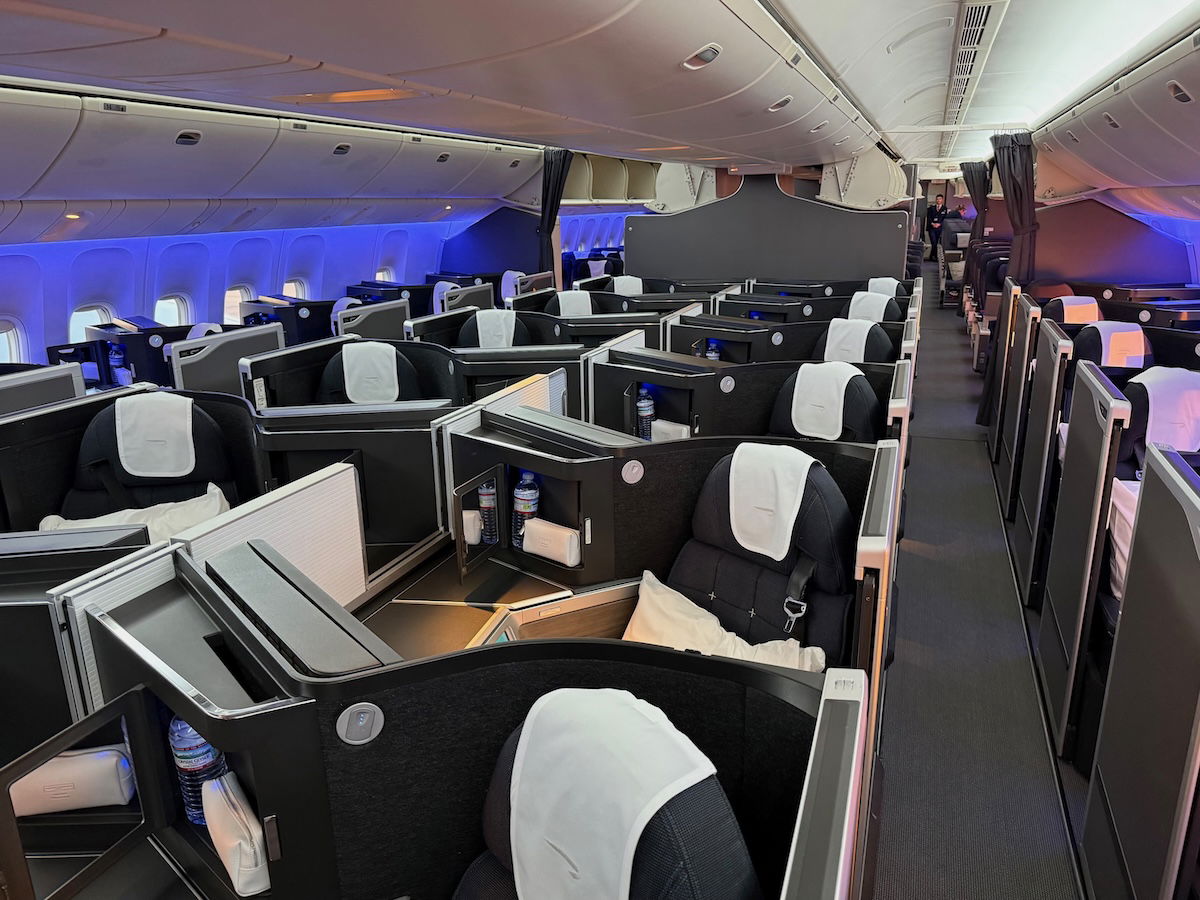
Generally this refers to seats that have doors, though there are exceptions, like Japan Airlines’ Sky Suites, which don’t feature doors.
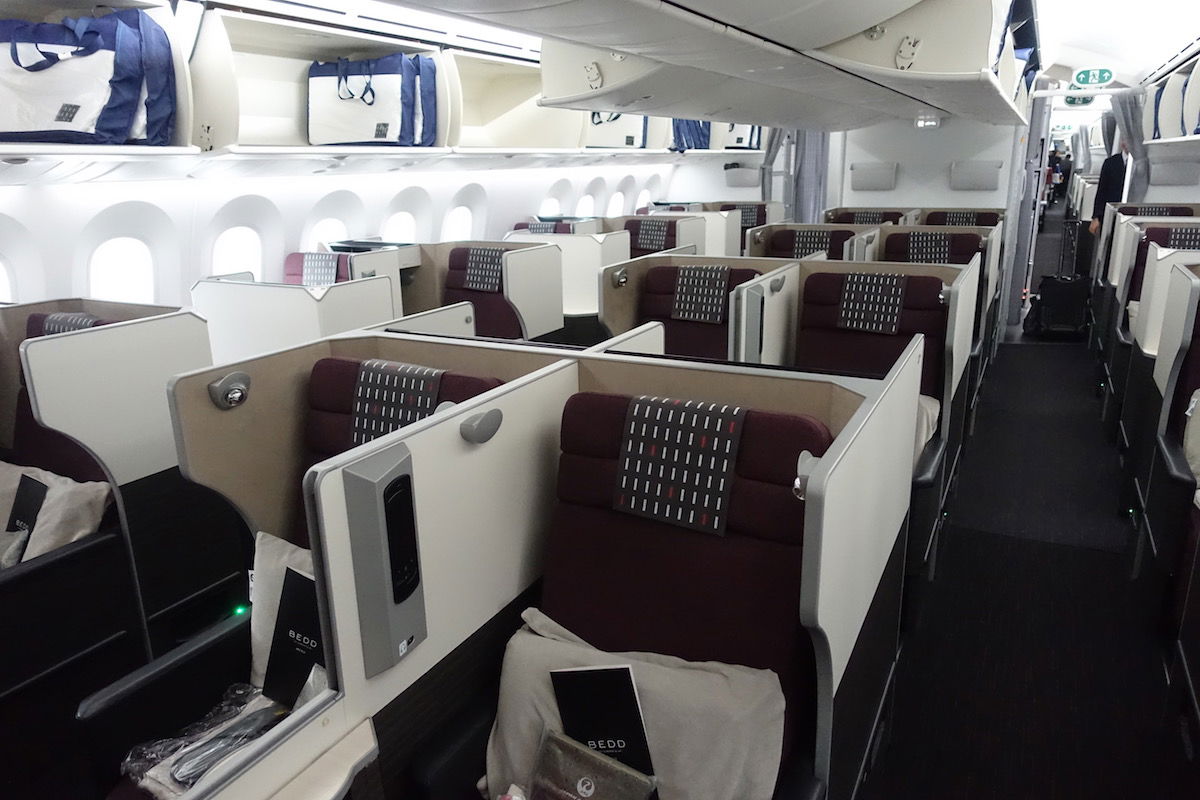
There’s no doubt that on some level the term has just been used long enough that we have come to accept it without questioning it much.
It’s not unlike how the term “social distancing” was used during the coronavirus pandemic, in place of physical distancing. When you get in an elevator and there’s signage, shouldn’t it ask you to maintain your physical distance, rather than social distance? That of course assumes elevators aren’t the center of your social life. I digress…
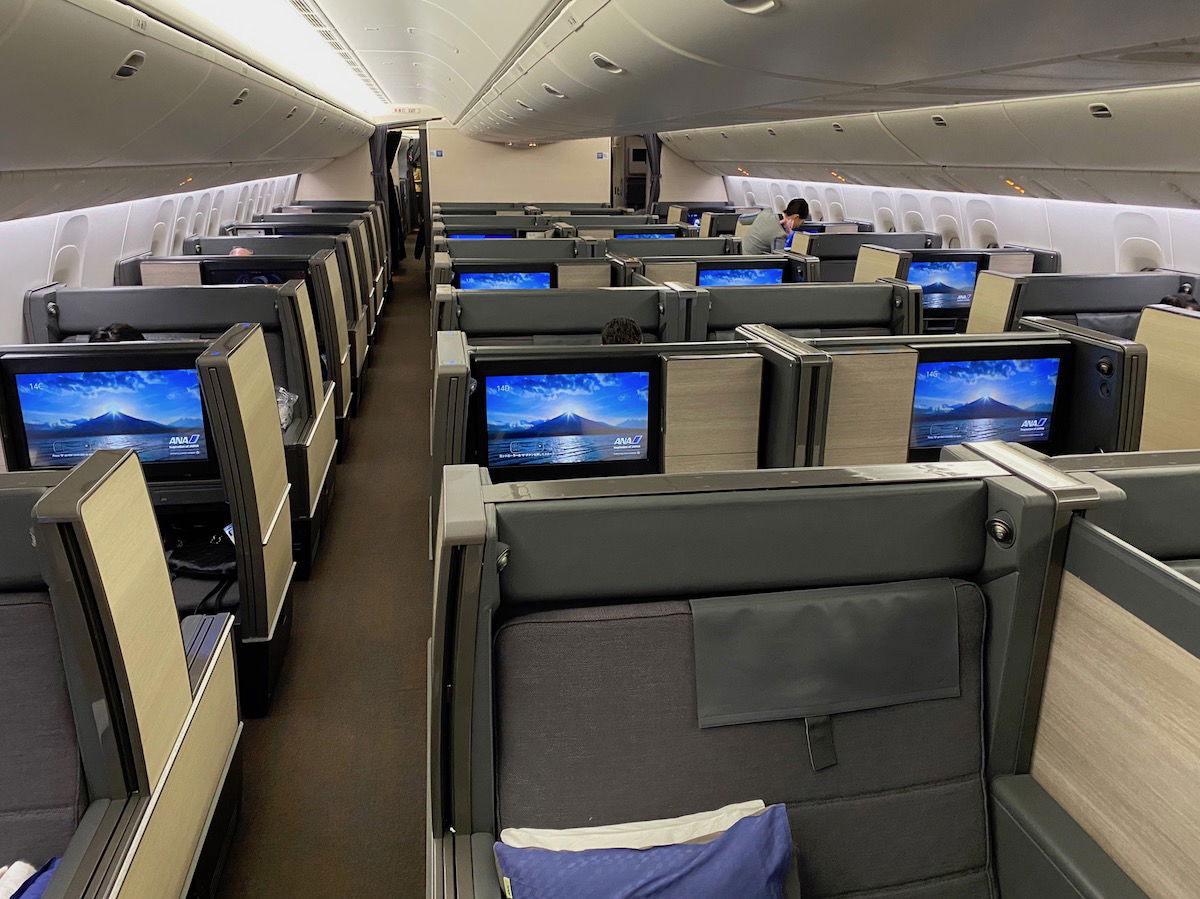
Some airlines deserve credit for marketing their premium products uniquely while still being accurate. For example, All Nippon Airways’ business class is called The Room, which I think is a fair descriptor for a business class seat with a door.
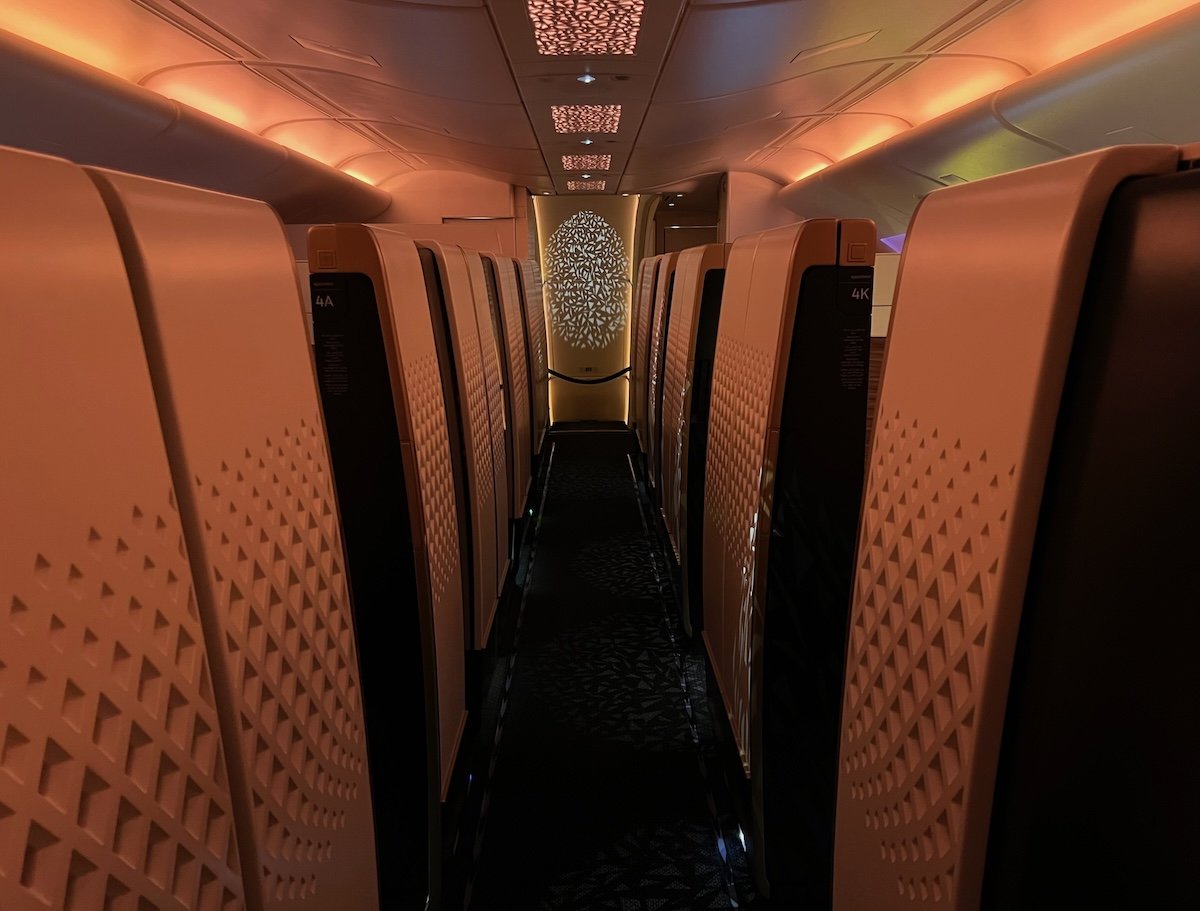
Meanwhile Etihad Airways’ A380 first class is called The Apartment, which also seems fair, since an apartment can be just one room.
However, neither “room” nor “apartment” strike me as terribly aspirational terms. Arguably the only “real” suite in commercial aviation is The Residence on Etihad Airways, which features three rooms — a living room, a bedroom, and a bathroom.
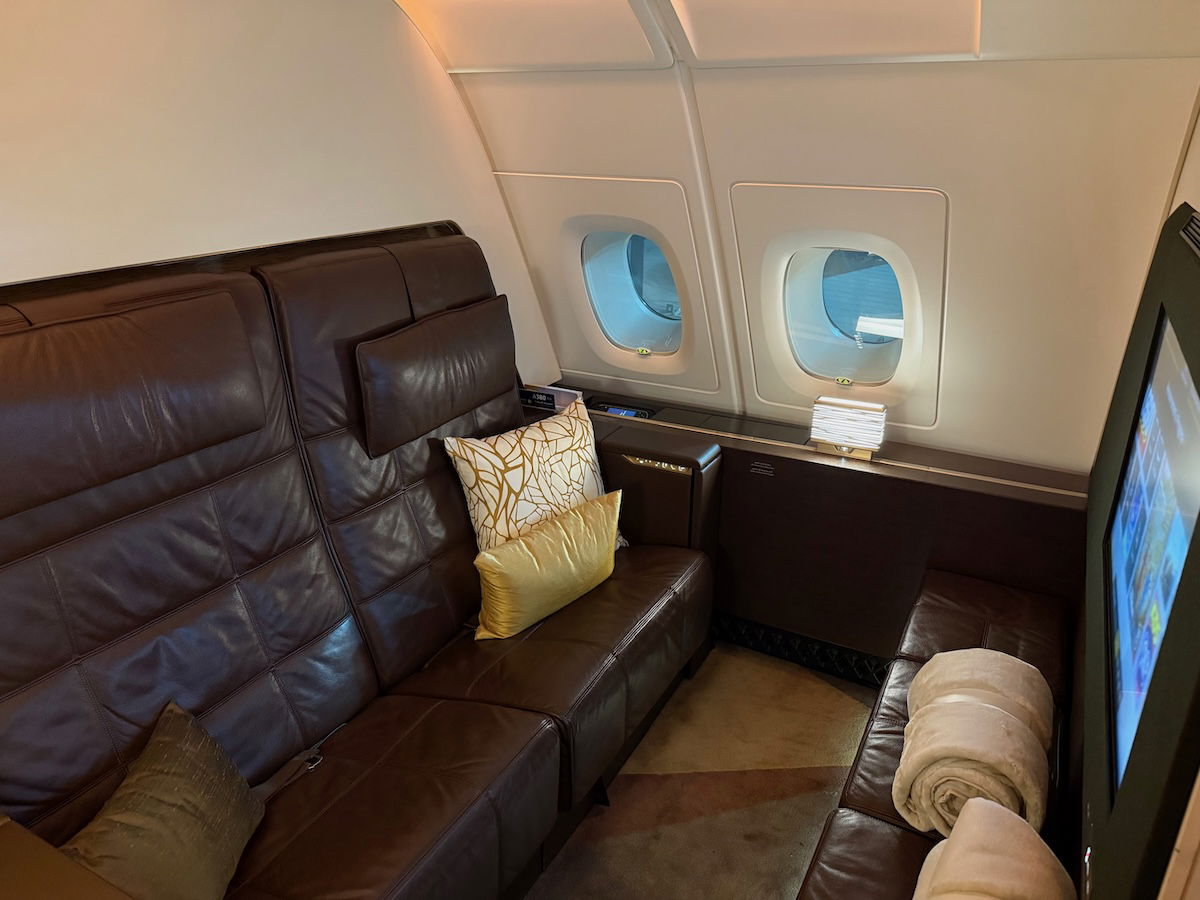
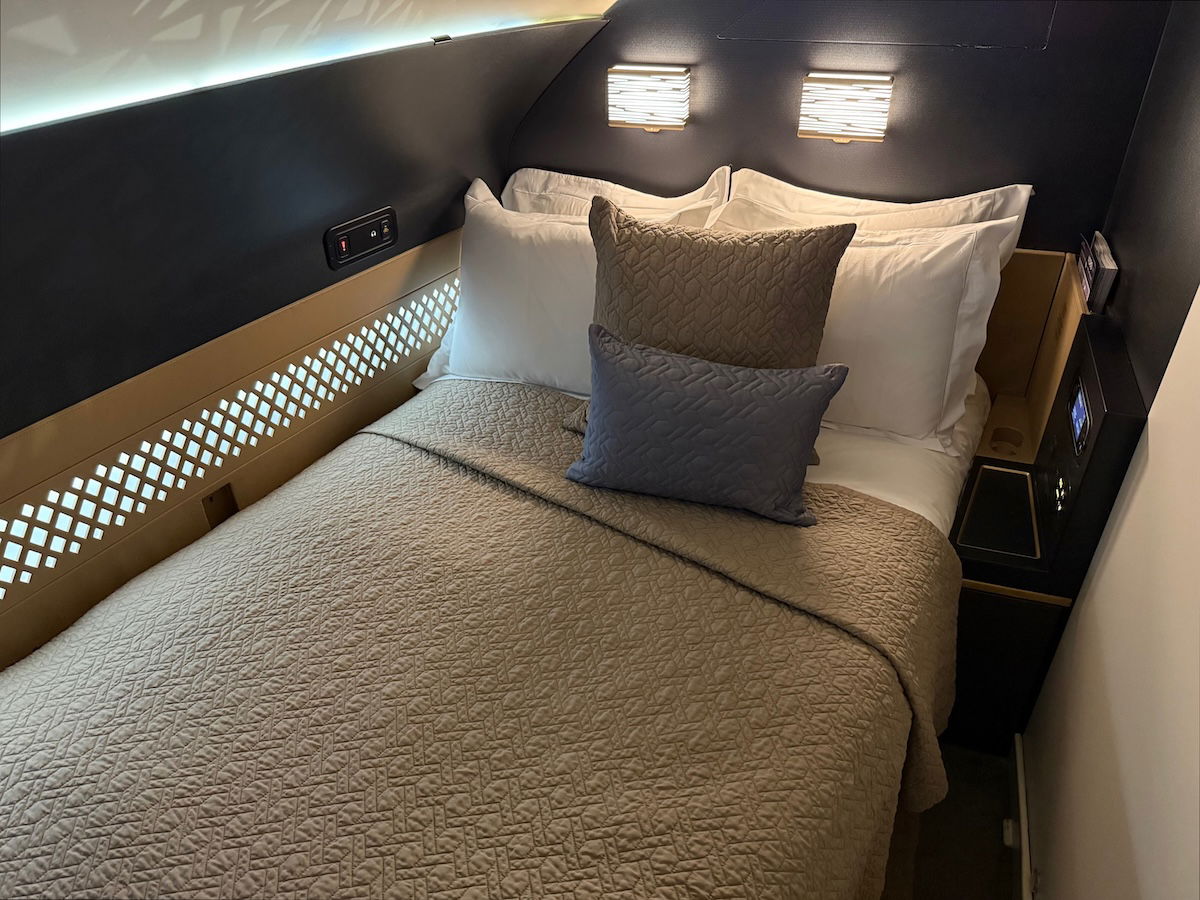
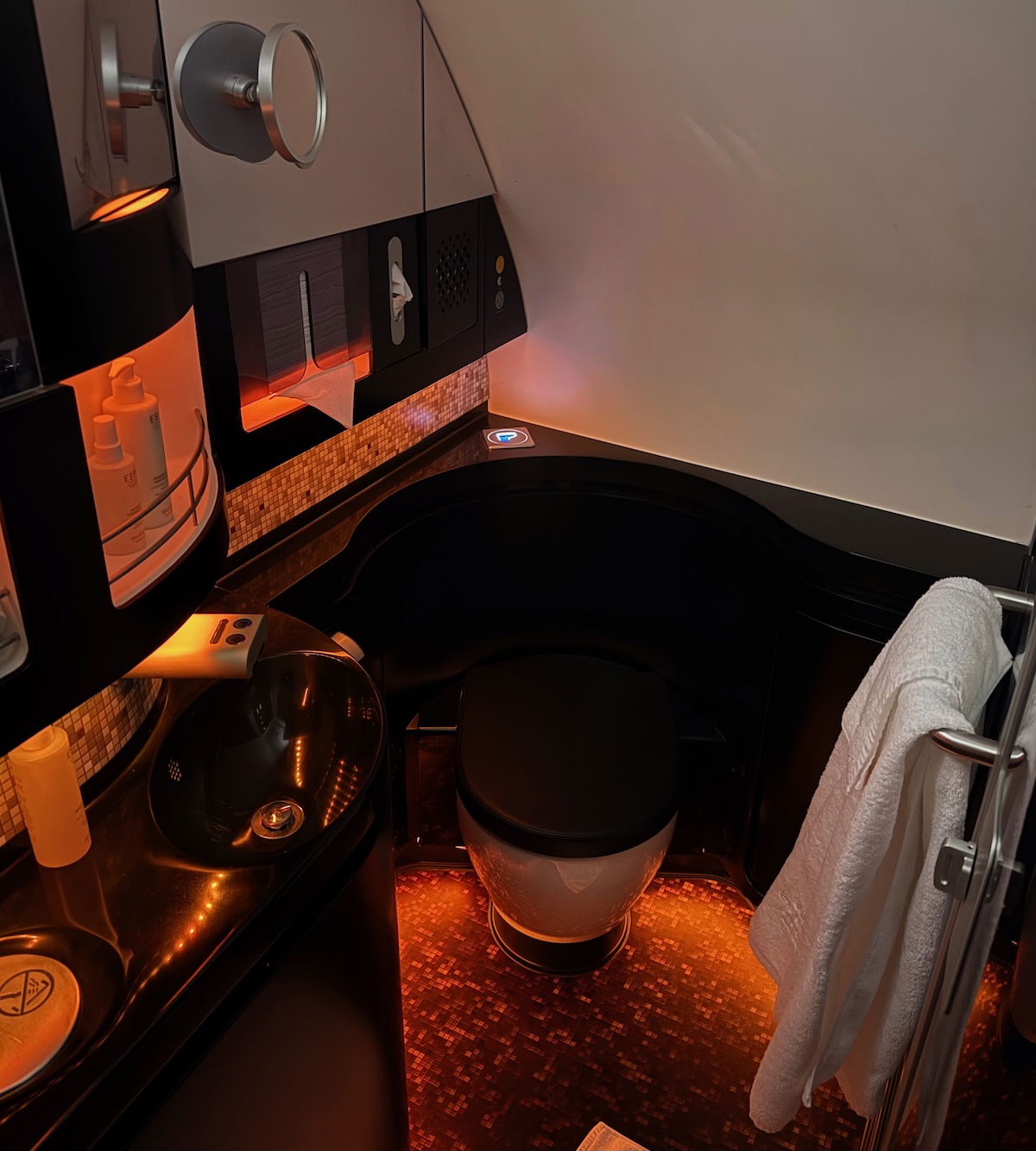
The first airlines to use “suite” to describe seats
So, which airlines were first to start referring to their airplane seats as suites? As far as I know, the very first airline was Emirates, around 2004, when it started flying the Airbus A340-500 with first class seats that had doors (it was honestly remarkably similar to the carrier’s first class product today).
I can kind of see how Emirates was the airline to make that jump, as it also installed minibars at all first class seats, and marketed its “dine on demand” as “room service.”
Singapore Airlines really took that to the next level in 2007, when it started taking delivery of its Airbus A380s. The airline marketed the forward cabin on these planes not as first class, but as Suites Class, so that’s really when the term truly went mainstream (the below cabin is the second generation “Suites Class” product).
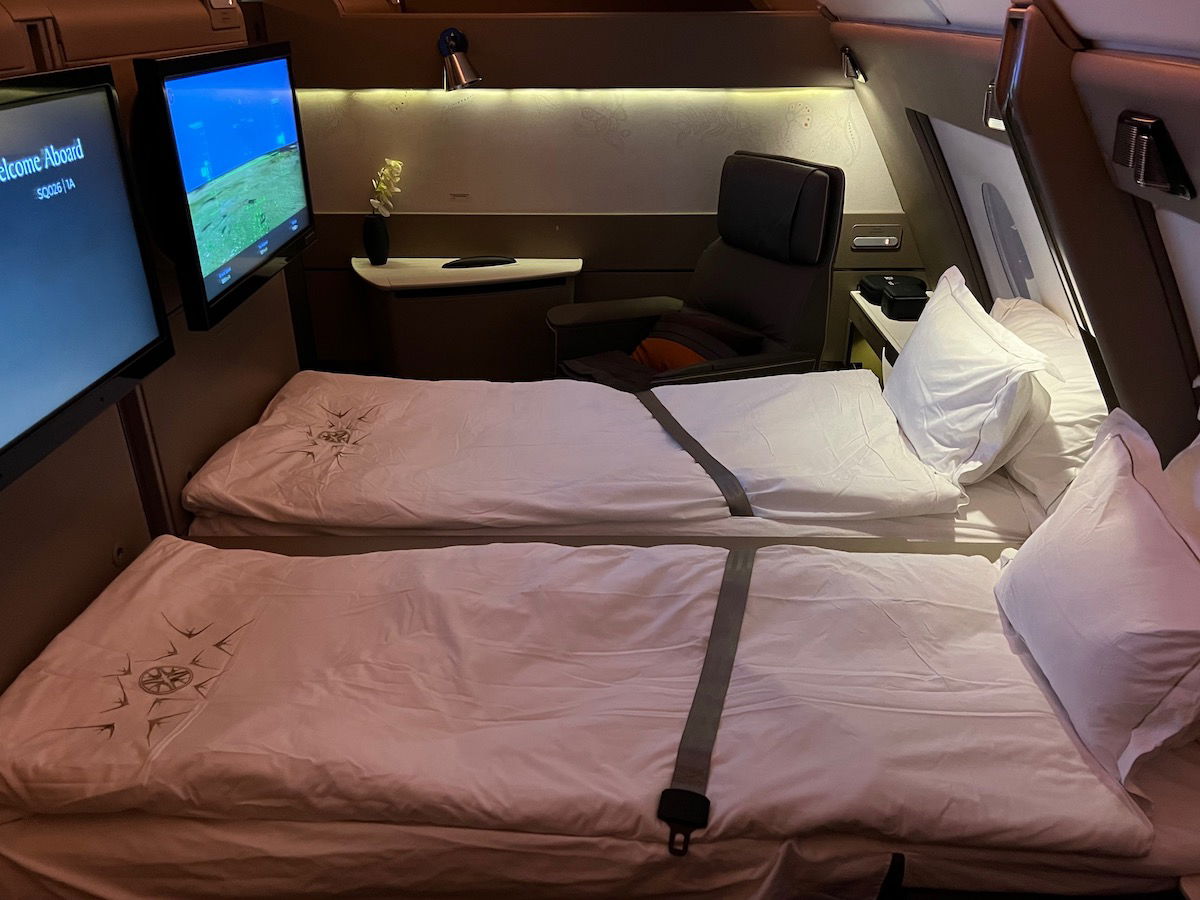
So that’s where the term originated, but of course over the past roughly two decades, we’ve seen the use of the term spread massively.
What’s the logic of the suites term, though?
For as long as flat beds have been around on airplanes, airlines have been trying to market a hotel-like experience. The idea is that you fall asleep in one city, and wake up in another, having gotten a good night of sleep. British Airways has been doing this for decades now, as you can see in the below ad.
Brussels Airlines even markets its long haul travel experience as “a boutique hotel in the air.”
I think the adaption of the term “suite” is simply an extension of that. Suites are (generally) the best accommodations you’ll find at hotels, so not only do airlines want you to believe that you’re in a hotel, but they want you to believe that you’re enjoying the best accommodation by being in a suite.
For that matter, I think both airlines and hotels misuse the term “suite” in the same way:
- A junior suite that has just one room without a separate living room isn’t really a suite, is it?
- If you’re going to consider it a suite because it has a bathroom, then isn’t every hotel room a suite?
- Instead hotels use the term suite to suggest that there’s a sleeping area and a living area (even if in the same room), and I think airlines are going for something similar; your “suite” can be used as a place to dine, lounge, relax, or sleep
Bottom line
It’s interesting how airlines widely use the term “suite” to describe first and business class seats on planes that (typically) have doors. I think it’s just a term we’ve come to accept even if it’s not terribly logical.
I’d speculate that the term comes from airlines trying to market their premium experiences as being hotel-like, and “suite” is a term that everyone is familiar with at hotels, and it sounds luxurious.
What’s your take on airplane seats being referred to as “suites?”
source
