

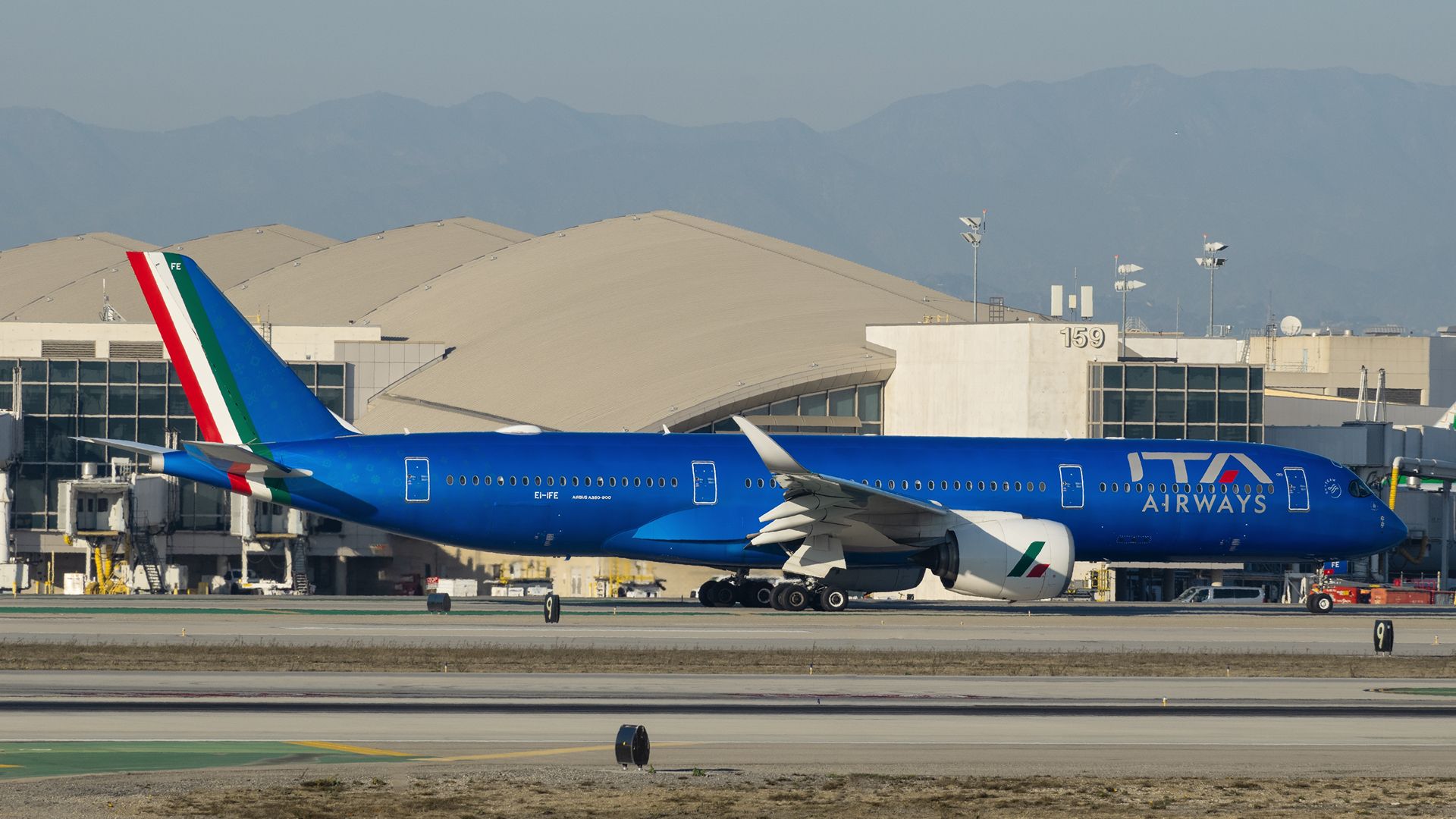
Members of the A++ transatlantic joint venture, which includes  United Airlines,
  Lufthansa and
  Air Canada, are seeking US regulatory approval to include ITA Airways. The three airlines have warned that ITA will face the same challenges that led to the downfall of its predecessor, Alitalia, if it is not able to join.
The Italian flag carrier is in the process of joining  Star Alliance, a move expected to be completed next year. Lufthansa Group finalized a 41% stake in the airline earlier this year and is expected to increase its ownership to 90% next year.
ITA Airways A++ Inclusion

As reported by Italian news outlet Corriere della Serra, Air Canada, Lufthansa and United have submitted a filing to the US Department of Transportation (DOT) to allow ITA to join its longstanding transatlantic joint venture. The A++ joint venture enables its member airlines to coordinate networks and share revenues, a key competitive advantage in their transatlantic operations.
Approximately 30% of transatlantic seat capacity to the US and Canada is operated by A++ airlines, closely followed by the Blue Skies venture — which includes Air France-KLM, Delta Air Lines and Virgin Atlantic — and the Atlantic Joint Business (AJB) with American Airlines, British Airways, Iberia and Finnair.
Without its involvement in A++, the three airlines said that ITA “would face the same inevitable commercial challenges that contributed to Alitalia’s failure.” This would force the airline either to abandon much of its transatlantic connectivity or require state subsidies. The filing said,
“Without the joint venture, the Italian airline cannot access the connecting traffic, coordinated pricing, and operational efficiencies essential to compete against low-cost carriers on domestic and short-haul routes and against integrated international alliances.”
Boosting Italian Connectivity

If ITA were to join A++, its Rome Fiumicino Airport (FCO) hub would become a key asset, opening up greater connectivity into Italy and the Mediterranean. This could transform FCO into a hub on the same level as other major European airports, such as Frankfurt. The filing stressed that ITA’s involvement would maintain “robust competition” across the Atlantic and allow the carrier to grow independently of state intervention.
The DOT recently approved a codeshare partnership between ITA and United, which followed a similar agreement signed with Air Canada in the summer. ITA currently serves seven key US airports as well as a seasonal service to Canada’s busiest airport, Toronto-Pearson.
|
Country |
Airport |
Service |
|---|---|---|
|
United States |
Boston (BOS) |
Year-round |
|
Los Angeles (LAX) |
Year-round |
|
|
Miami (MIA) |
Year-round |
|
|
New York–JFK (JFK) |
Year-round |
|
|
San Francisco (SFO) |
Year-round |
|
|
Chicago–O’Hare (ORD) |
Seasonal |
|
|
Washington–Dulles (IAD) |
Seasonal |
|
|
Canada |
Toronto–Pearson (YYZ) |
Seasonal |
The filing also claims that ITA’s inclusion would have a beneficial impact on consumers, resulting in millions of dollars of savings for passengers each season. A++ airlines have carried upwards of 325 million passengers between Europe and the US since it was established, while also facilitating 35 new direct transatlantic routes.
A Pivotal Time For ITA

ITA started the year by finalizing its transition to Lufthansa Group ownership. Lufthansa has initially acquired a minority 41% stake, with the remainder held by the Italian state. The German carrier always had ambitions of obtaining a controlling stake and is in preliminary negotiations for an additional 49% stake, taking it to 90% ownership.
ITA is also in the process of moving to Star Alliance, having officially exited SkyTeam earlier this year. Its acceptance into the airline alliance is likely to be finalized early next year.
Long-haul growth is very much on the agenda at ITA, with new routes to Africa, Asia, North America and South America in the pipeline. The Italian carrier is also incrementally adding new widebody aircraft to its fleet and currently boasts one of the most modern fleets in Europe.
source
