
Close Menu
  • AVIATION
    • US Airlines
    • Airports & Hubs
    • eVTOL & Urban Air
  • MILITARY
    • Air Force
    • Defense News
  • SPACE
    • SpaceX & Rockets
    • NASA
    • Commercial Space
  • CARGO
  • CORPORATE
  • TECH & OEMS
  • REGULATORS
    • FAA
    • NTSB
    • TSA
What's Hot

Air Canada Names SAS Chief Anko Van der Werff as New CEO 

July 8, 2026

Blue Origin, for the first time, is expected to raise private capital

July 8, 2026

Hubble Captures Star-Studded Cluster

July 8, 2026
Facebook X (Twitter) Instagram
Demo
  • AVIATION
    • US Airlines
    • Airports & Hubs
    • eVTOL & Urban Air
  • MILITARY
    • Air Force
    • Defense News
  • SPACE
    • SpaceX & Rockets
    • NASA
    • Commercial Space
  • CARGO
  • CORPORATE
  • TECH & OEMS
  • REGULATORS
    • FAA
    • NTSB
    • TSA
Facebook X (Twitter) Instagram
Demo
Home » UK And Dutch Partner On Next-Gen Amphibious Assault Ships
Military / Defense Aviation

UK And Dutch Partner On Next-Gen Amphibious Assault Ships

FlyMarshall NewsroomBy FlyMarshall NewsroomJuly 8, 2026No Comments7 Mins Read
Share
Facebook Twitter LinkedIn Pinterest Email

The TWZ Newsletter

Weekly insights and analysis on the latest developments in military technology, strategy, and foreign policy.

The United Kingdom and the Netherlands will jointly develop a new fleet of amphibious transport ships under a maritime partnership announced by the British government. Each country will operate four vessels, strengthening NATO’s amphibious capabilities and improving the alliance’s ability to respond rapidly to crises.

“Combining the U.K.’s industrial expertise with the Netherlands’ design and seafaring experience to deliver ‌first-rate platforms for our elite amphibious forces, this partnership will strengthen ⁠NATO,” U.K. Prime Minister Keir Starmer said in a statement issued while he attended the NATO Summit in Turkey.

Today the UK and Netherlands agreed to build a new generation of amphibious transport ships together, building on our historic 50-year partnership

These ships will be built in the UK and enable our @RoyalMarines to rapidly deploy and strike from the seahttps://t.co/aJtgbBuEah

— First Sea Lord and Chief of Naval Staff (@GenGJenkinsRM) July 7, 2026

The new landing platform docks (LPD) will be based on a Dutch design and will be built in U.K. shipyards “alongside Dutch industry,” as part of a deal worth £2.4 billion ($3.2 billion), covering the four ships for the U.K. Royal Navy and four for the Royal Netherlands Navy. These are expected to enter service from the early 2030s.

What the United Kingdom refers to as the Amphibious Transport Ship Program supersedes the previous Multi-Role Strike Ship (MRSS) program, which was judged “too complex” and not reflective of the future U.K. Commando Forces.

The arrangement has some parallels with the recently announced program to build five Type 26 frigates for Norway, with the warships coming out of British shipyards.

Although the final design has not been confirmed, Dutch shipbuilder Damen is widely expected to provide the design basis, likely drawing from its Enforcer amphibious ship family.
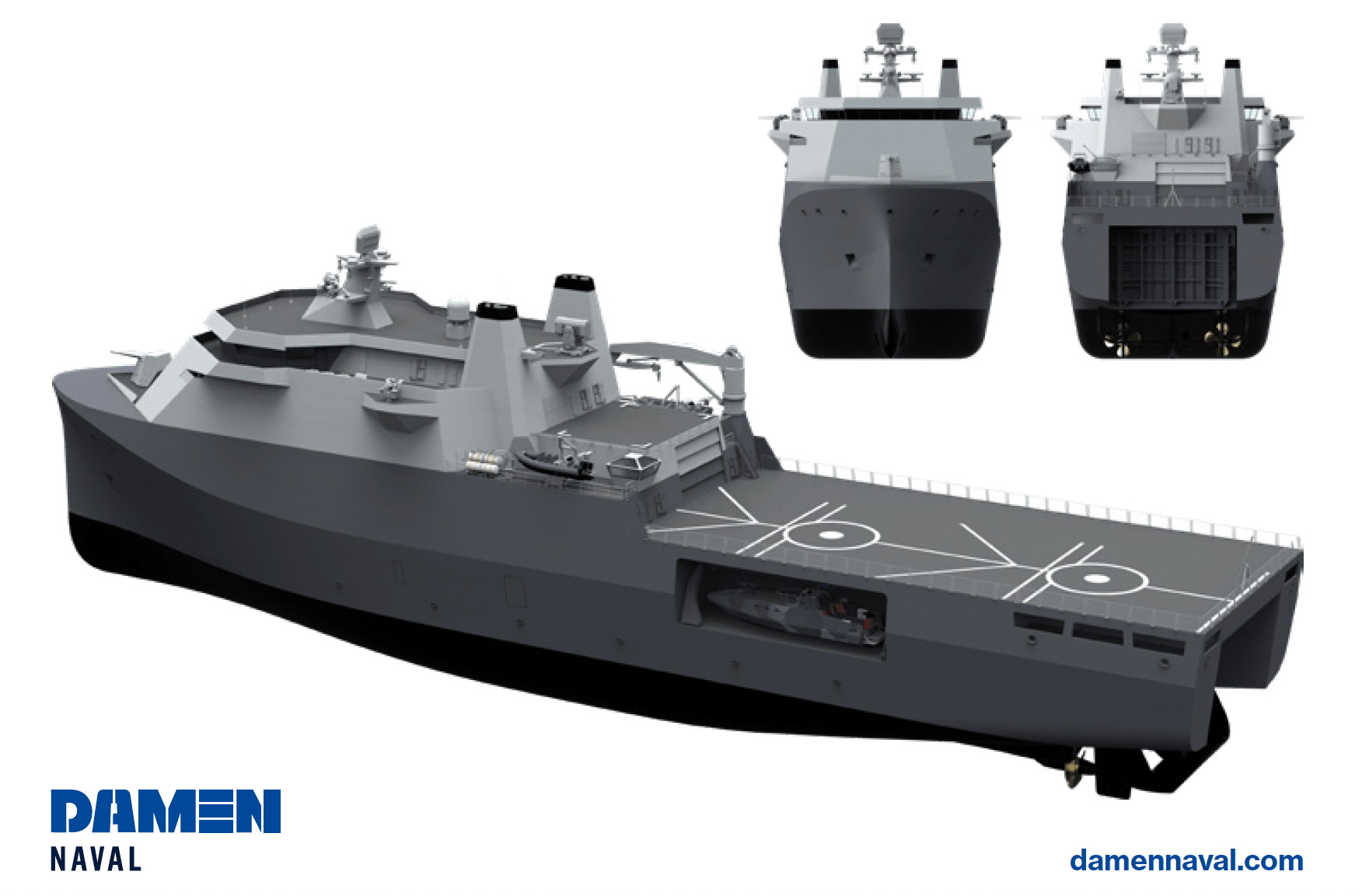
A three-view rendering of one of the Enforcer amphibious ship family. Damen

The U.K. government says the vessels will be 525 feet (160 meters) long and will have a displacement of 15,000 tonnes. Damen offers a total of seven different Enforcer designs, ranging in displacement from 9,000 tonnes to 17,000 tonnes. It is unconfirmed if the vessels will be of the conventional LPD-type layout, as seen at the top of this article, or if they will be of the through-deck type, providing a longer flight deck for helicopter and drone operations.

As well as transporting troops, vehicles, and equipment, the vessels will have flight decks designed to operate current and future long-range drones and autonomous systems. This is in line with the U.K. Royal Navy’s shift to what it describes as a ‘hybrid navy.’

Warfare is changing. It’s why we’re making the largest ever drone investment in our Armed Forces.

🚢 Autonomous submarine hunting frigates
✈️ Drone “wingmen” to fly alongside Apaches
💥 Thousands of low-cost kamikaze strike drones
🛰️ Surveillance drones to replace older systems pic.twitter.com/lQLxPjDLTS

— Ministry of Defence 🇬🇧 (@DefenceHQ) June 30, 2026

For construction, it appears that the program will rely upon the Harland & Wolff shipyard in Belfast, Northern Ireland. Navantia UK, the owner of Harland & Wolff, shared the following statement:

“Amphibious transport ships will be a vital component of Britain’s sovereign naval defense capability going forward. As outlined in the Defense Investment Plan, they will enable troops to be deployed around the world and are a necessary replacement for the Albion class assault ships.”
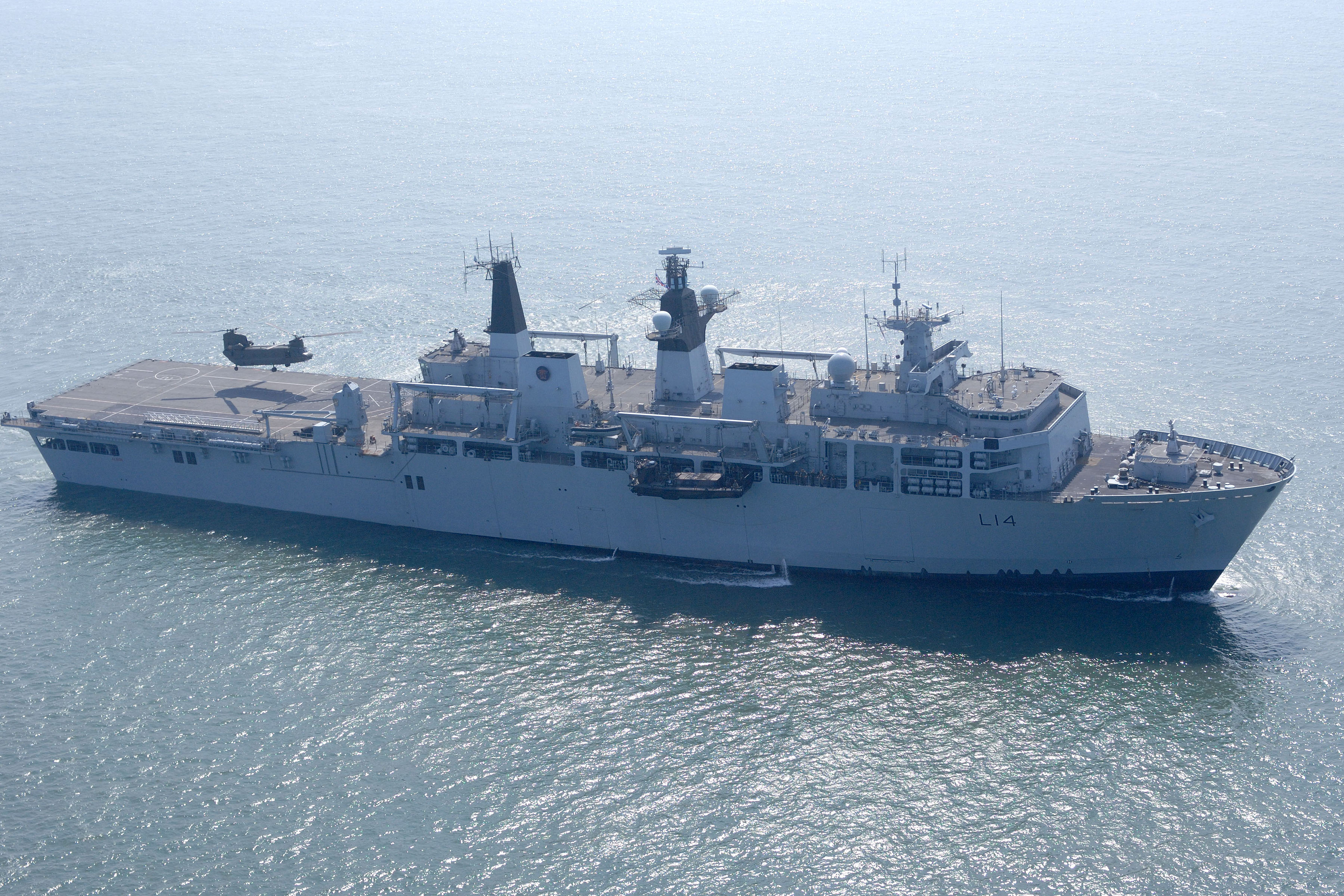
HMS Albion is pictured operating with Dutch Royal Marines. The Albion Class, Landing Platform Dock ships (LPD) primary function is to embark, transport, and deploy and recover (by air and sea) troops and their equipment, vehicles and miscellaneous cargo, forming part of an Amphibious Assault Force.
HMS Albion is pictured operating with Dutch Royal Marines. Crown Copyright LA(PHOT) Dan Hooper

After the United Kingdom officially decommissioned HMS Ocean in 2018 and sold it to Brazil, the Royal Marines had to rely on the Royal Navy’s two Albion class LPDs. However, in 2024, the U.K. Ministry of Defense announced that both Albion and Bulwark would be withdrawn from service the following year.
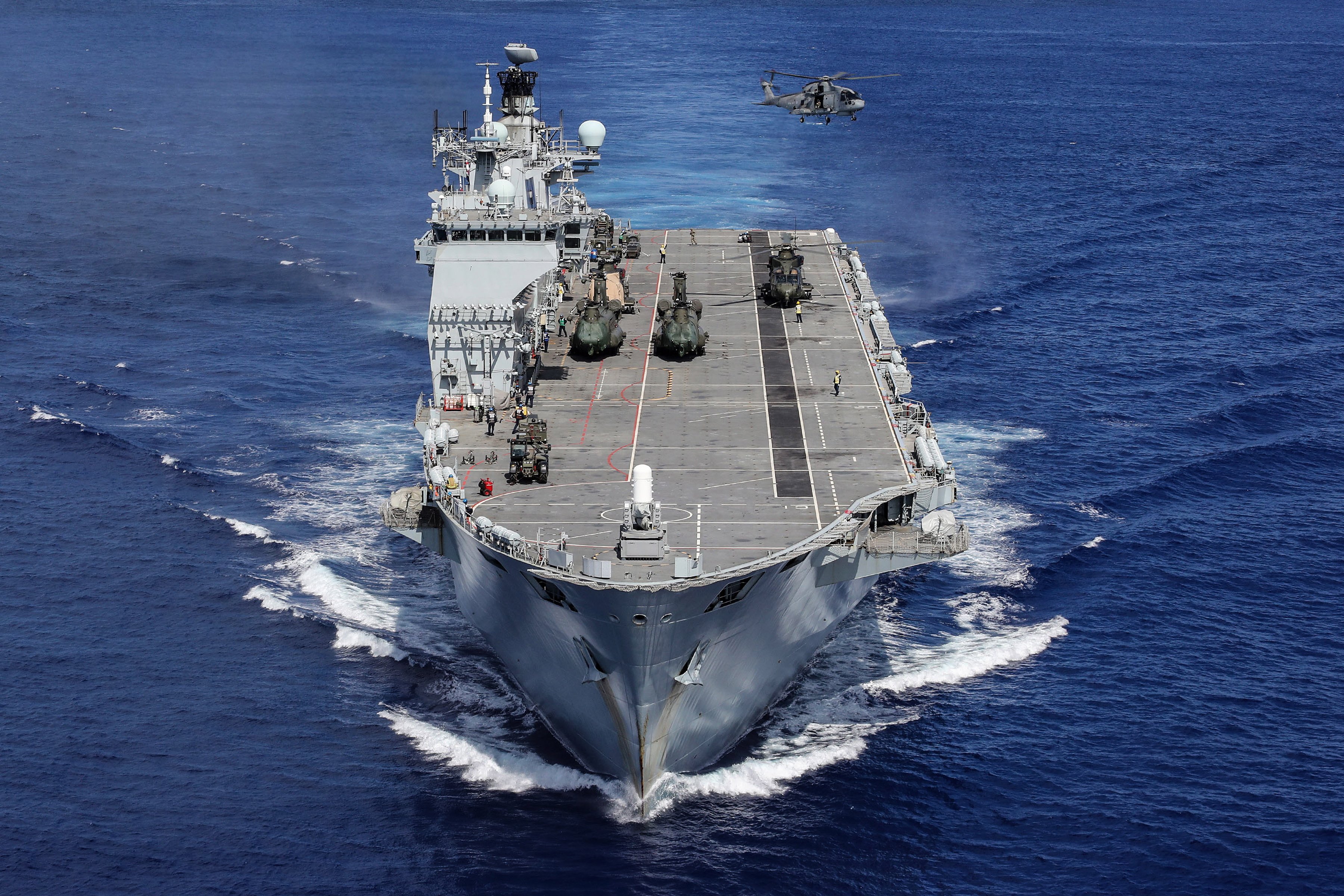
HMS Ocean's embarked helicopters carry out training whilst heading for the Caribbean during Op RUMAN. In 2017 HMS OCEAN was one of the ships to be tasked to support the government's Humanitarian Aid and Disaster Relief (HADR), providing assistance in the aftermath of Hurricanes IRMA, JOSE and MARIA in the Caribbean. The Royal Navy's flagship, a large helicopter carrier, HMS Ocean was diverted from her NATO deployment in the Mediterranean to provide assistance. The HADR team on board HMS OCEAN included Royal Marines, Medics, and Engineers, specialising in electronic, mechanical, structural disciplines as well as damage control experts. HMS OCEAN carried a large tailored Air Wing of Royal Navy and Joint Helicopter Command Helicopters and with four landing craft and was able to make a significant contribution to the recovery and reconstruction effort in the region. This image was part of the 2018 Royal Navy Photographic Competition, The Peregrine Trophy.
HMS Ocean is seen in 2017, before its transfer to Brazil. Crown Copyright LPhot Kyle Heller

Since then, the Royal Marines have made use of the three Bay class landing ship docks. The Royal Fleet Auxiliary (RFA), a civilian mariner service akin to the U.S. Military Sealift Command, operates these ships, which have more limited capabilities than the LPDs.
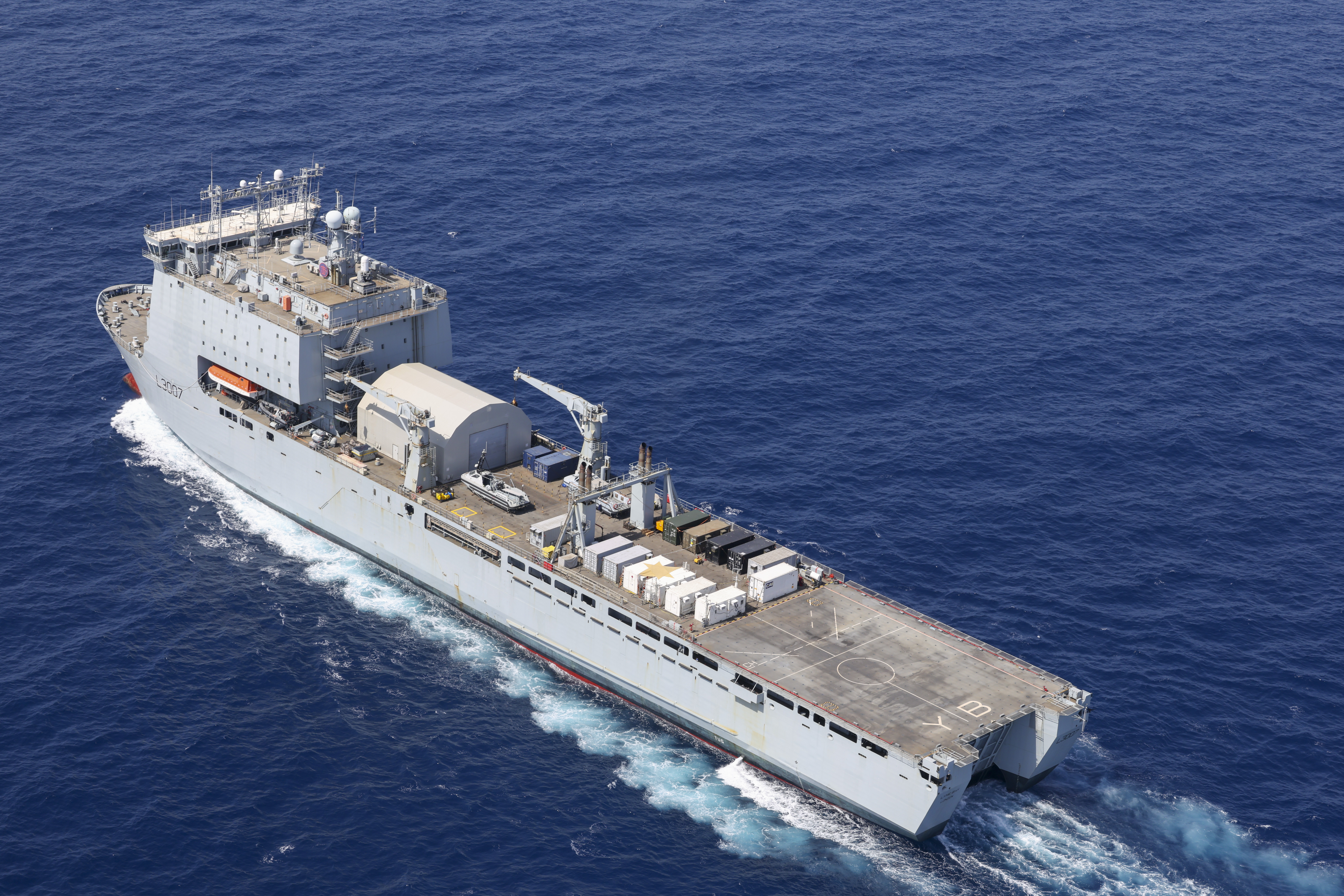
RFA Lyme Bay sails into the Red Sea for operations in the Gulf and Strait of Hormuz. Crown Copyright LPhot Damien Bye

At one point, the British were planning to procure up to six Multi-Role Strike Ships (MRSS) to replace the two Albion class, three Bay class, and the single RFA Argus. Budget pressures reduced those ambitions. While the Royal Navy will now get four new assault ships, they will form something like a joint force with the same number of Dutch vessels.

We will build up to 6 new warships capable of rapidly landing commandos onto beaches across the world, and we will save HMS Albion & HMS Bulwalk from being scrapped or mothballed. 

Together today’s announcement will secure the future of the @RoyalMarines for generations. pic.twitter.com/JkGBFb7f4K

— Rt Hon Sir Grant Shapps (@grantshapps) May 14, 2024

As for the Royal Netherlands Navy, it currently operates two Rotterdam class LPDs and a single Karel Doorman class multifunction support ship, also outfitted for amphibious operations. The new LPDs are expected to replace the Rotterdam class.
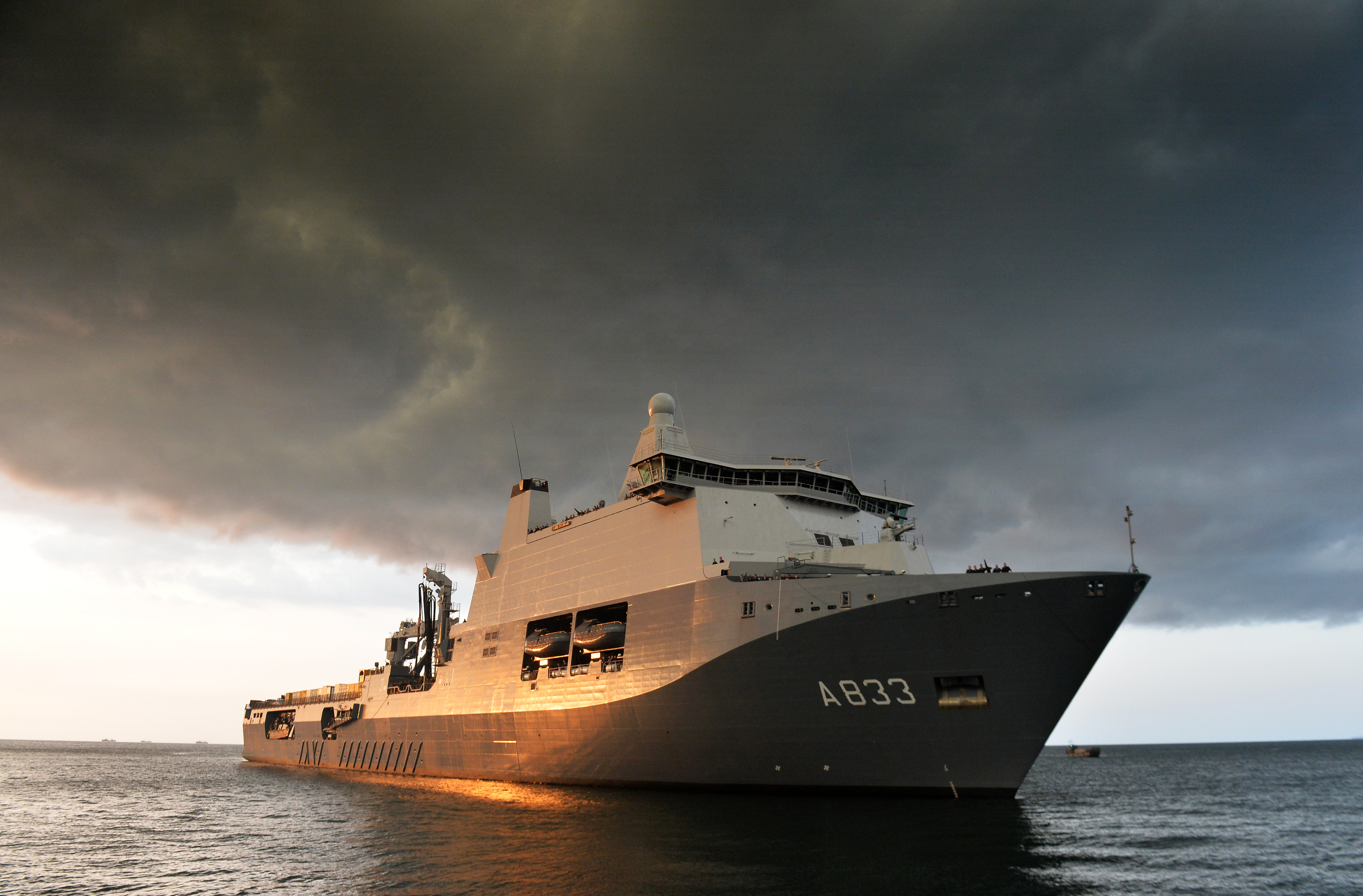
The Royal Netherlands Navy Joint Logistic Support Ship (JSS) Karel Doorman arriving in Freetown, Sierra Leone with a consignment of vehicles to help in the fight against Ebola in the region. The Karel Doorman is a support ship with the Royal Netherlands Navy and is equipped with a crane and lift to hoist heavy materiel. The ship can transport about 5,000 tonnes of heavy rolling (armoured) materiel and has a hospital with two operating theatres. The JSS also has landing pads for helicopters, such as Chinooks, Cougars and the NH90.
The Royal Netherlands Navy Joint Logistic Support Ship (JSS) Karel Doorman. Crown Copyright PO (Phot) Carl Osmond

Significant is the fact that the eight new LPDs are involved, representing a considerable boost for the amphibious forces of both navies.

These services already operate closely together under the U.K.-Netherlands Amphibious Force, which dates back to the Cold War.

“This partnership is not just about building ships; it is also about delivering long-term security for both the U.K. and the Netherlands, ensuring we are able to stay ahead of the threats of tomorrow,” Prime Minister Starmer said.

U.K. Defense Secretary Dan Jarvis added: “We are building an even stronger amphibious force with the Netherlands, strengthening our defense and deterrence as close NATO allies and JEF [Joint Expeditionary Force] partners.”

The commonality of LPDs will also see the Royal Navy and Royal Netherlands Navy increasingly train, deploy, and operate together, the U.K. government has confirmed.
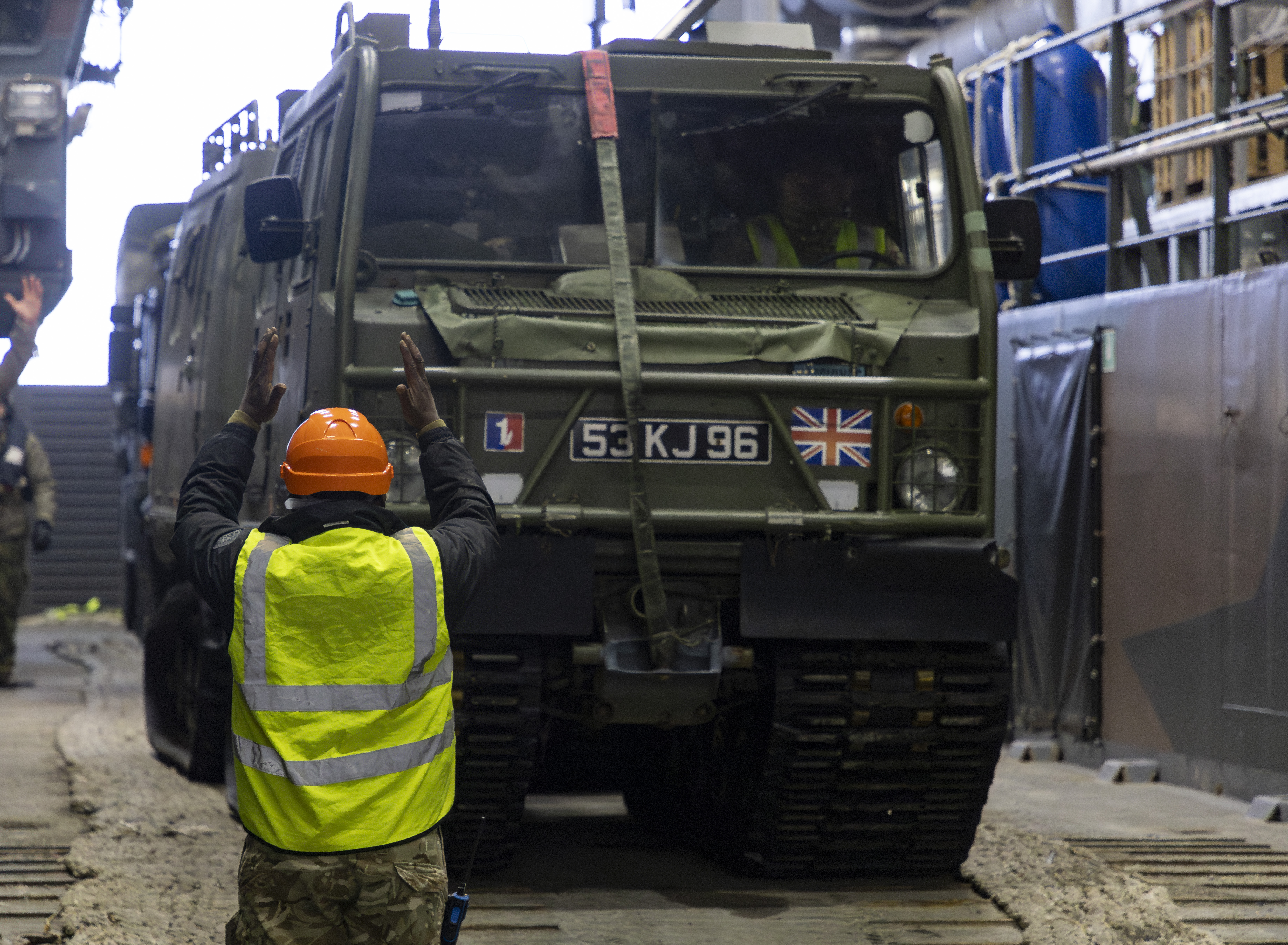
Operating from RFA Mounts Bay, U.K. personnel from the Commando Force load a Dutch landing craft with U.K. vehicles as part of training to confirm interoperability. Crown Copyright Cpl Katrina Knox

The drone aspect is also important, with the new LPDs being viewed as a way of accelerating industrial and military cooperation on autonomous and uncrewed technology.

While the kinds of drones that will go aboard the vessels have not been disclosed and are probably still a work in progress, it’s clear that the LPDs fit in with the United Kingdom’s vision for future warfare. The recently published Defense Investment Plan provides a budget of more than £5 billion ($6.6 billion) over four years just for drones and related capabilities, as you can read about here.

There is also further scope for cooperation here, with the U.K. government confirming that there are plans for future drone and uncrewed technology to be developed between the two nations.

The partnership also has significant implications for security in the North Atlantic and High North, regions that have become increasingly strategic as NATO bolsters its northern defenses in the face of increasing tensions with Russia.
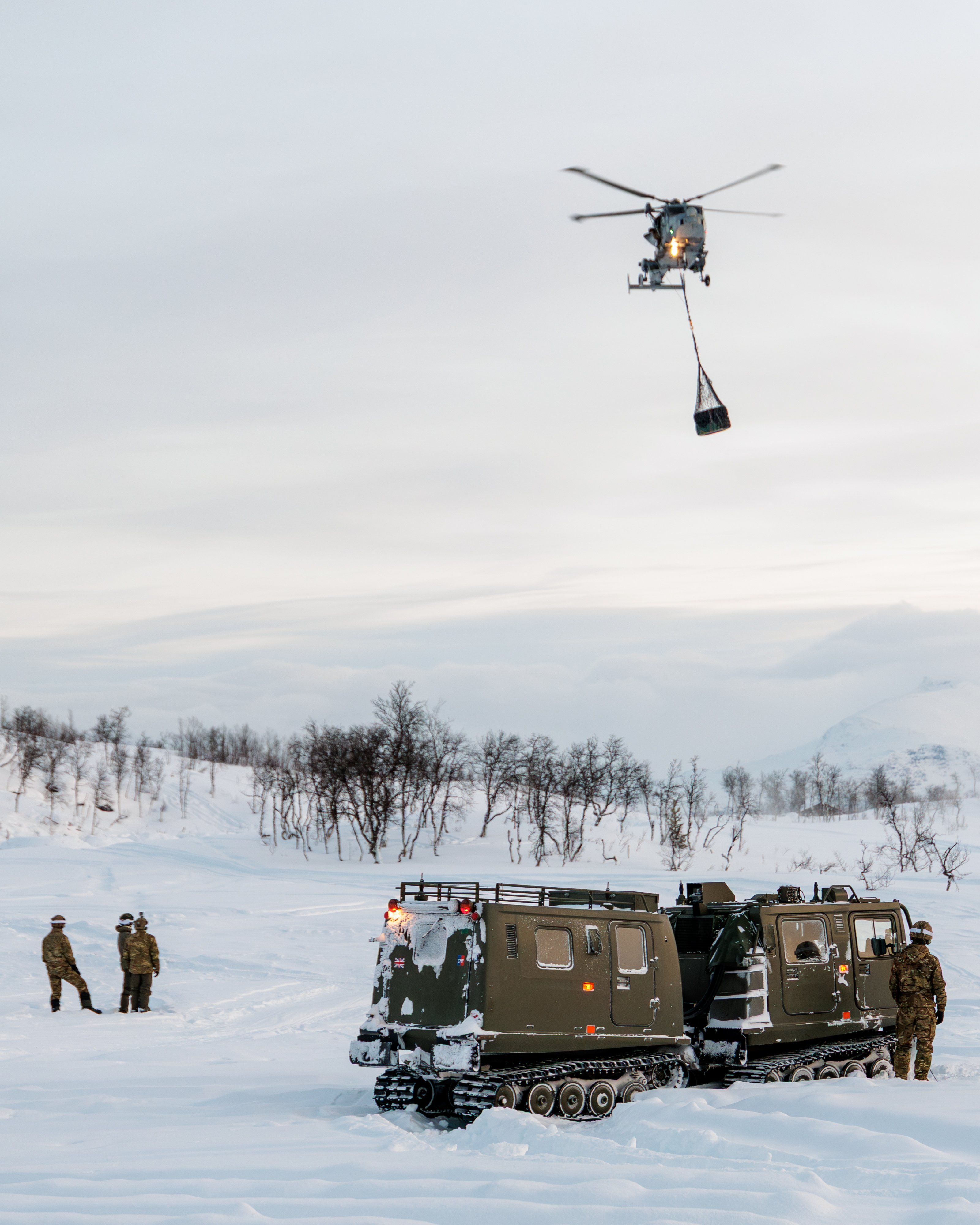
Wildcat helicopters from 847 Naval Air Squadron conduct load-lift training with the Mobile Air Operations Team (MAOT) and their Dutch equivalents while deployed to northern Norway, for an exercise in the Arctic Circle, Operation Clockwork. Crown Copyright POPhot Lee Blease

Alongside other NATO and JEF allies, the new LPDs will be expected to work together to protect critical undersea infrastructure and strengthen deterrence against emerging threats in these waters.

The new amphibious transport ships represent a major reset of Britain’s amphibious capability after years of uncertainty and force reductions. Operating alongside Dutch vessels, autonomous systems, and NATO partners, they are expected to become central elements of the Royal Navy’s future expeditionary and hybrid warfare model.

Contact the author: thomas@thewarzone.com

Thomas Newdick is a staff writer at TWZ, where he covers military aviation, defense technology, weapons systems, and international security. Based in Berlin, Germany, he reports on conflicts, military modernization efforts, and emerging aerospace technologies around the world, with a particular interest in airpower and its role in contemporary warfare. His reporting is informed by deep expertise in modern and historical airpower, particularly in Europe, with a focus on military aviation, air campaigns, and aerospace developments across the continent and beyond.


source

FlyMarshall Newsroom
  • Website

Related Posts

US Army tests autonomous mass minelaying

July 8, 2026

Poor B-52 Readiness Creating Testing Challenges For New AGM-181A Nuclear Cruise Missile

July 8, 2026

China shows snazzy clip of DF-17 missile on state TV in show of force

July 8, 2026

Where Are The Aircraft Carriers: July 7, 2026

July 8, 2026
Add A Comment
Leave A Reply Cancel Reply

Latest Posts

Air Canada Names SAS Chief Anko Van der Werff as New CEO 

July 8, 2026

Blue Origin, for the first time, is expected to raise private capital

July 8, 2026

Hubble Captures Star-Studded Cluster

July 8, 2026

UK And Dutch Partner On Next-Gen Amphibious Assault Ships

July 8, 2026

Subscribe to Updates

Please enable JavaScript in your browser to complete this form.
Loading
About Us

Welcome to FlyMarshall — where information meets altitude. We believe aviation isn’t just about aircraft and routes; it’s about stories in flight, innovations that propel us forward, and the people who make the skies safer, smarter, and more connected.


Useful Links
  • Business / Corporate Aviation
  • Cargo
  • Commercial Aviation
  • Defense News (Air)
  • Military / Defense Aviation
Quick Links
  • About Us
  • Contact Us
  • Disclaimer
  • Privacy Policy
  • Terms and Conditions

Subscribe to Updates

Please enable JavaScript in your browser to complete this form.
Loading
Copyright © 2026 Flymarshall.All Right Reserved
  • About Us
  • Contact Us
  • Disclaimer
  • Privacy Policy
  • Terms and Conditions

Type above and press Enter to search. Press Esc to cancel.

Go to mobile version