

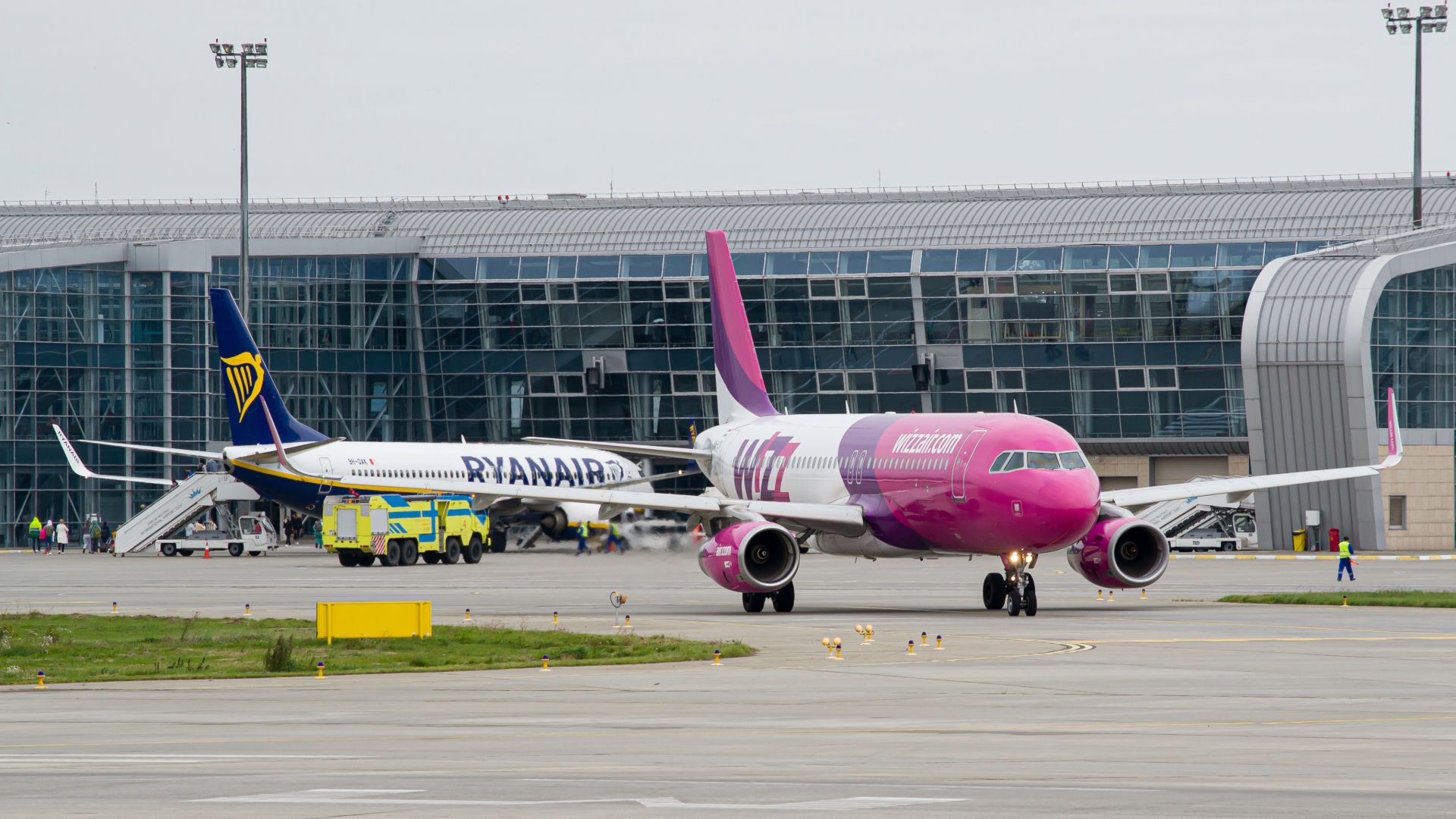
Two of the United Kingdom’s major low-cost carriers, Ryanair and Wizz Air, have separately warned about the rising costs facing the aviation sector following last year’s Budget announcement. As reported by Financial Times, both airlines have cautioned that further increases in taxes and airport charges could prompt them to scale back operations in the country, and shift aircraft to more cost-competitive markets.
Those closely following UK aviation will recall that during the Autumn Budget 2024, Chancellor Rachel Reeves announced a rise in flight taxes, including higher Air Passenger Duty (APD). From April 2026, passengers will pay around $2.63 (£2) more for the cheapest seats and up to 50% more to fly on private jets. The government defended the move as a necessary adjustment for inflation, but airlines and airports argue that the timing and scale of the increases could threaten the UK’s aviation growth and global competitiveness.
Ryanair And Wizz Air Warn Of Limited Growth Under Rising APD

Indeed, it’s clear why airlines are worried about rising APD; it is already among the highest in the world. The tax is paid by airlines and aircraft operators for every passenger departing from a UK or Isle of Man airport. The amount depends on the distance of the flight and the class of travel, with economy seats charged at a lower rate and higher fares applying to other cabins. APD was first introduced in 1994 to offset the environmental impact of flying, but it has since become a major cost factor.
Both Ryanair and Wizz Air have warned that these rising costs could hold back the industry’s recovery and limit growth in the UK. In fact, the Irish low-cost carrier was among the first to caution that higher air travel taxes would make the country a less competitive market for tourism and airline investment. Following the Budget in 2024, it warned that increased costs could lead to fewer flights, higher fares, and potential job losses, particularly affecting regional airports and domestic routes.
At the time, as reported by The Telegraph, Ryanair’s Chief Executive Michael O’Leary said, “If [the UK] raises APD again on domestic flights, then there will be a cut in capacity, no question. These routes are not particularly profitable; they barely break even.”
Similarly, Wizz Air’s Chief Operations Officer, Michael Delehant, recently told the Financial Times that the UK market could become “very growth stunted” and that the airline cannot simply absorb higher costs.
He pointed to Wizz’s recent withdrawal from Vienna (in which it relocated aircraft over the border in Slovakia’s Bratislava) as proof that airlines will move aircraft if costs become unsustainable. “When you’re at the price-sensitive part of the chain, you have to, and you can’t just accept [higher prices],” he told the outlet.
Higher Air Travel Taxes Could Push UK Routes To Other Markets

The first rise in APD took effect on April 1, 2025. Under the current structure, economy passengers on domestic and short-haul routes pay around $9.21 (£7) and $17 (£13) respectively, while long-haul travelers pay up to $126 (£94), depending on distance. For higher fare classes, the rates range from $18.42 (£14) on domestic routes to $295 (£224) on long-haul journeys, with the most expensive category, premium-class flights over 5,500 miles, costing around $885 (£673) per passenger.
The table embedded below shows how APD rates will increase again from April 1, 2026, as per the UK Government ADP Policy Paper:
|
Bands (distance in miles from London) |
Reduced Rate (lowest class of travel) |
Standard Rate* (other than the lowest class of travel) |
Higher Rate** |
|---|---|---|---|
|
Domestic Band |
$10.52 (£8) |
$21.05 (£16) |
$186.80 (£142) |
|
Band A (0 to 2,000 miles) |
$19.73 (£15) |
$42.10 (£32) |
$186.80 (£142) |
|
Band B (2,001 to 5,500 miles) |
$134.18 (£102) |
$320.98 (£244) |
$1443.10 (£1,097) |
|
Band C (over 5,500 miles) |
$139.44 (£106) |
$332.82 (£253) |
$1,500 (£1,141) |
*If any class of travel provides a seat pitch in excess of 40 inches (1.016 meters), the standard rate is the minimum rate that applies.
**The higher rate applies to flights aboard aircraft of 20 tonnes and above with fewer than 19 seats.
Additionally, there have been reports that the government could consider raising APD even further. Ryanair’s Wilson told the Financial Times that if Chancellor Reeves pushes rates higher, the airline would divert future aircraft orders to cheaper markets. It has already cut some services from Newquay, Cornwall, in favor of Sweden, where air passenger duty has been abolished. The carrier has around 300 aircraft on order and plans to deploy them based on the most profitable routes, meaning growth previously earmarked for the UK could move elsewhere if taxes continue to increase.
In fact, Ryanair’s recent schedule adjustments across Europe say everything. The airline has cut several routes in its 2025 winter schedule due to what it calls “excessive access costs.” In Germany, Ryanair has cut more than 800,000 seats and canceled 24 routes across nine airports, citing a 24% aviation tax rise. In addition, in France, it cut about 13% of its capacity for winter 2025/26, around 750,000 seats and 25 routes, following an increase in France’s TSBA air tax.
Rising Business Rates And Airport Fees Add To Airlines’ Cost Burden

Besides, on the airport side,  London Gatwick Airport recently warned that rising business rates could jeopardize upcoming investment decisions, including its expansion to build a second runway; it would make future development harder to justify. According to AirportsUK, each aircraft based in the country supports about 400 jobs and adds roughly $35 million (£27 million) to the economy each year, which shows how higher charges could have wider economic implications.
Wizz Air, which flies from both Gatwick and Luton and has 19 aircraft based in the UK, told the Financial Times that Gatwick’s prices are already “unsustainable.” Delehant said the airport is the most expensive in the airline’s network. “If the company is trying to offer its ultra-low fares, and already before you leave the gate, you’re paying €50, €60, it’s not sustainable,” he said. “People won’t buy it.” Indeed, this echoes the decisions of other carriers reacting to rising airport charges across Europe.
Ryanair, for instance, reduced capacity in Spain by two million seats this year and withdrew from Jerez and Valladolid, citing what it called excessive fees from airport operator Aena. Similarly, in Latvia, the airline is cutting its Riga capacity by 160,000 seats and dropping seven routes due to what it described as uncompetitive airport costs. In short, as rising taxes and access charges converge, both airlines and airports are warning that the UK’s aviation competitiveness could face further strain in the future.
source
