



More than 4,000 airports worldwide have regularly scheduled commercial flights, handling over nine billion global passengers in 2025. They range from the tiny Samui International Airport (USM), located on Thailand’s tropical island, to sprawling airport cities that spread for dozens of square miles.
According to the Airports Council International (ACI), the busiest airport in the world continues to be Hartsfield-Jackson Atlanta International Airport (ATL), which accommodated 106.3 million passengers in 2025. But when it comes to the largest airports in the world, Atlanta’s 7.3 square mile site doesn’t even make the top 10.
Let’s take a look at the largest airports in the world in terms of land mass as they stand in 2026.
10. Beijing Daxing International Airport (PKX)
18 square miles
| Opened | 2019 |
| Hubbed airlines | Air China, China Eastern, China Southern, Xiamen Air, Beijing Capital Airlines |
| Annual passenger traffic | 50 million (2025) |
| Runways | 4 |
| Terminals | 1 |
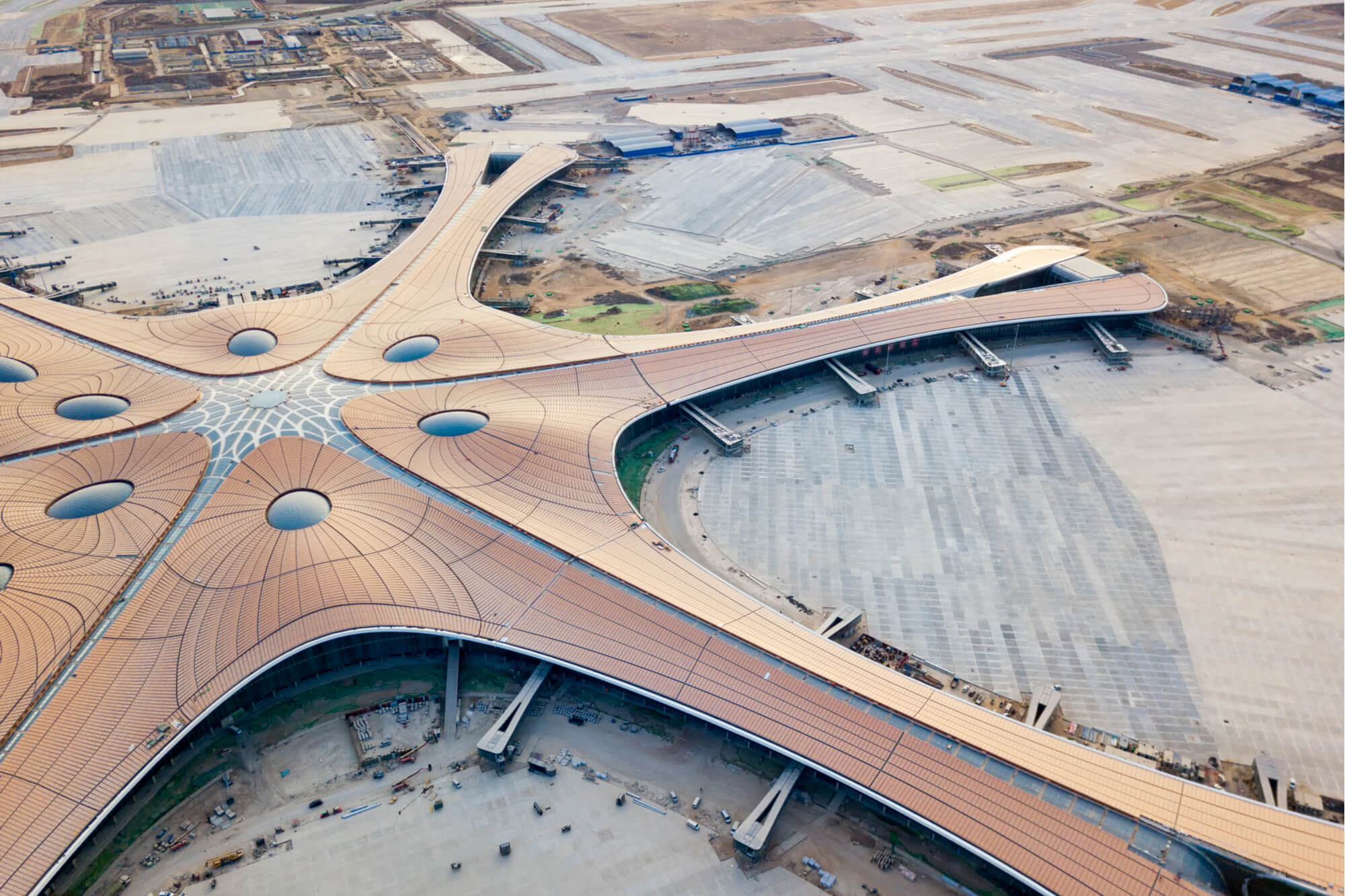
Opened in 2019, this is one of the youngest airports to enter our list of the world’s largest airports. Spanning 18 square miles, PKX is the largest airport in China, serving its capital, Beijing. It is home to China’s ‘Big Three’ airlines: Air China, China Eastern, and China Southern.
Designed by Zaha Hadid’s team, PKX is a colossal single-terminal construction, recognized as the largest single-structure airport terminal in the world. In 2025, Beijing Daxing International Airport hit a record 50.08 million passengers, its highest volume since opening. Approximately 70 airlines operate to and from Daxing Airport, serving nearly 180 destinations across 25 countries in Asia, Europe, and Africa.
Despite being China’s largest airport by size, it is still far less busy than the country’s busiest airport by passenger traffic, Shanghai Pudong (PVG). In 2025, Pudong handled a record 84.9 million passengers.
9. Orlando International Airport (MCO)
18.1 square miles
| Opened | 1961 |
| Hubbed airlines | Silver Airways |
| Annual passenger traffic | 57.6 million (2025) |
| Runways | 4 |
| Terminals | 3 |
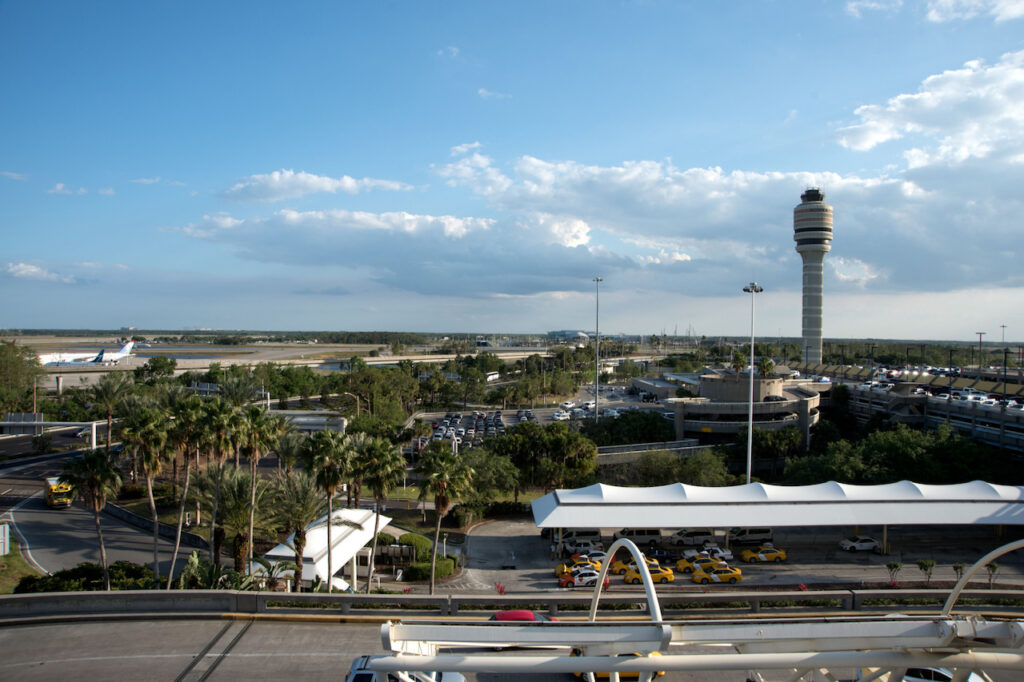
Opened in 1961, Orlando International Airport serves as a hub for Silver Airways and has a significant presence from several low-cost airlines, including Frontier, Breeze, Spirit and especially Southwest. With a landmass of 18.1 square miles, it’s the ninth biggest in the world.
The airport code MCO derives from the airport’s former name. McCoy Air Force Base was in operation here before closing in 1975. Today, it hosts more than 850 daily flights from 44 different airlines, helping more than 58 million passengers get on their way each year.
It has three terminals, A, B and C, but is working to add one more. Building work on Terminal D will commence when the annual passenger traffic rises to 70 million, and it should provide the airport with a final capacity to handle 100 million passengers each year.
8. Washington Dulles International Airport (IAD)
20.3 square miles
| Opened | 1962 |
| Hubbed airlines | United Airlines, Southern Airways Express |
| Annual passenger traffic | 29 million (2025) |
| Runways | 4 |
| Terminals | 1 + 2 concourses |
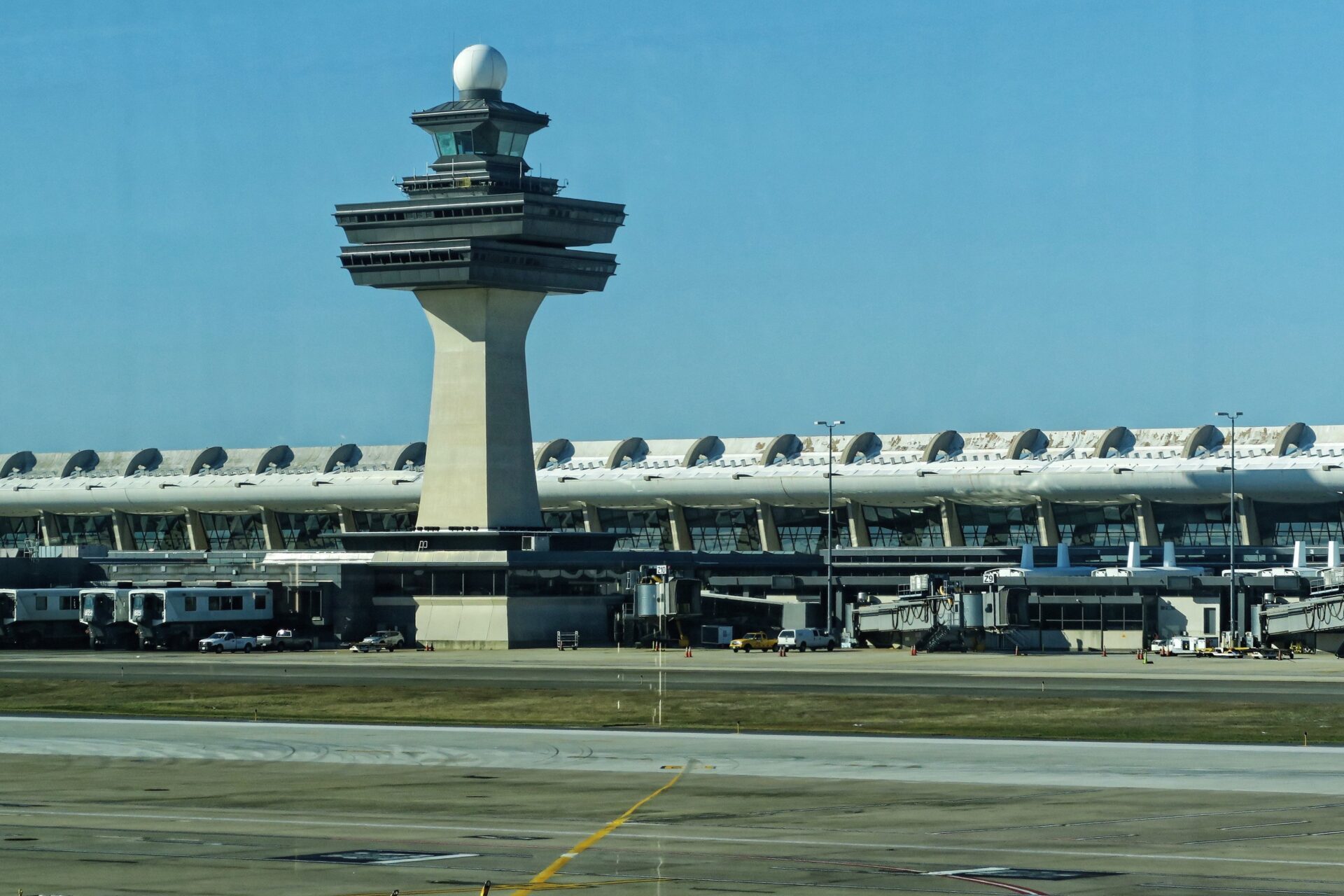
Washington Dulles International Airport, commonly referred to as Dulles International Airport, has been in operation since 1962. It is both the first and main hub for United Airlines and one of several hubs for Southern Airways Express. At approximately 20.3 square miles, it enters our list as the eighth largest airport in the world.
As of 2026, the airport has 46 airlines making over 340 flights to 164 destinations each day. United Airlines dominates, but low-cost airlines Allegiant and Breeze also have a prominent presence here.
The airport’s code is IAD, which doesn’t seem to fit with its name. The reason for this is that, when handwritten, its original code – DIA for Dulles International Airport – was often misread as DCA, the code for Washington National. To avoid confusion, the airport switched the letters around, and IAD now stands for International Airport Dulles.
Even that name has been up for debate, as Senator Bob Dole proposed changing it to Washington Eisenhower International in 1990, although the bill didn’t pass. More recently, Congress has made efforts to rename it Donald J. Trump International Airport, and the debate about whether it will change is ongoing.
7. Southwest Florida International Airport (RSW)
21 square miles
| Opened | 1983 |
| Hubbed airlines | Breeze Airways (base) |
| Annual passenger traffic | 11.1 million (2025) |
| Runways | 1 |
| Terminals | 1 + 3 concourses |
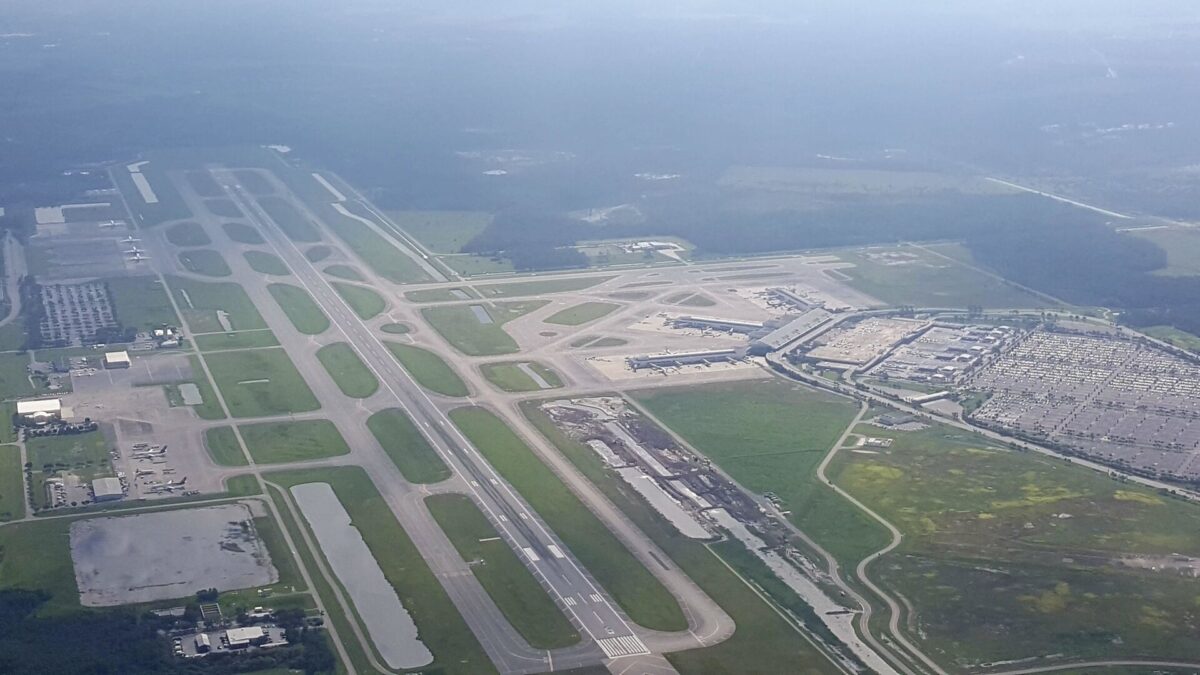
Southwest Florida Airport is located southeast of Fort Myers and serves as an important gateway to the southwest Florida region. Despite serving 58 million passengers a year, it has only one runway and is the second busiest single-runway airport in the US after San Diego (SAN).
Its huge 21 square mile site makes it the third largest airport in the States, and seventh largest in the world. Not all of the site is used for aviation, though. 6,000 acres have been conserved as swampland and set aside for environmental projects.
Work is ongoing to relocate the security checkpoints in a bid to ease wait times. By moving the checkpoints, the airport will be able to create more retail outlets and post-security space for passengers. Another concourse is also under construction, with works estimated to be completed in 2027.
6. Dallas/Fort Worth International Airport (DFW)
26.8 square miles
| Opened | 1973 |
| Hubbed airlines | American Airlines, Southern Airways Express |
| Annual passenger traffic | 85.6 million (2025) |
| Runways | 7 |
| Terminals | 5 |
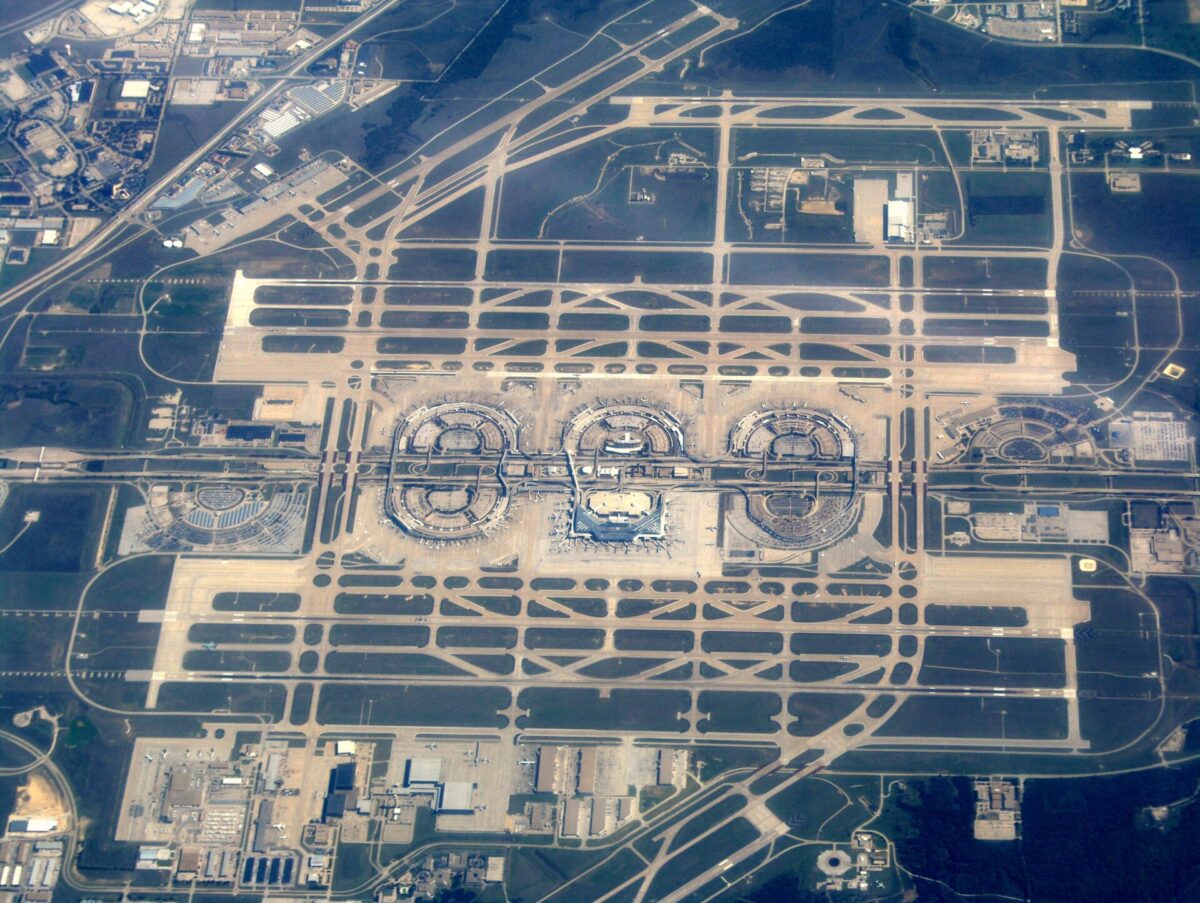
Since 1973, Dallas/Fort Worth International Airport, based in Texas, has played a pivotal role as a major aviation hub for various airlines, including American Airlines, Ameriflight, Southern Airways Express and UPS Airlines. Additionally, it is a base for Spirit Airlines and Frontier.
With a landmass of 26.8 square miles, Dallas is the second-largest airport in the US and the sixth largest in the world. According to ACI, DFW handled a total of 85.6 million passengers in 2025. With such passenger traffic, it remains one of the busiest airports for years, reflecting continued market strength.
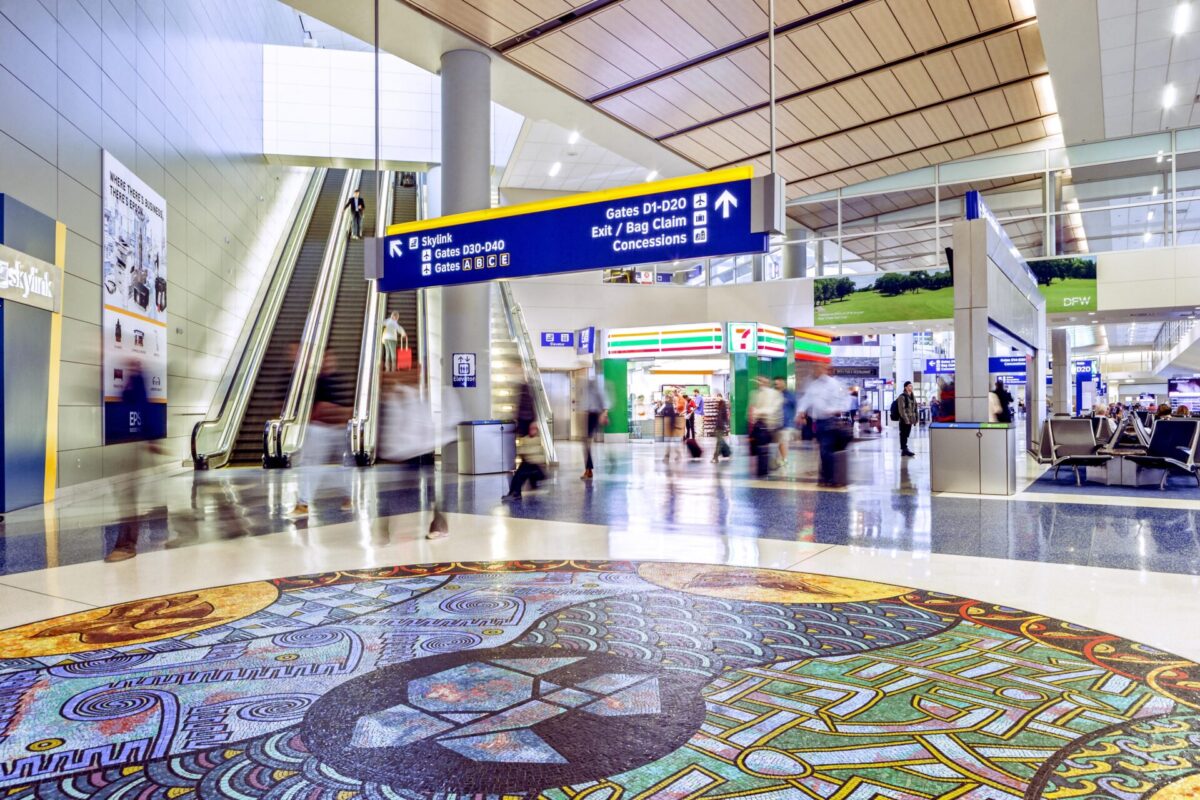
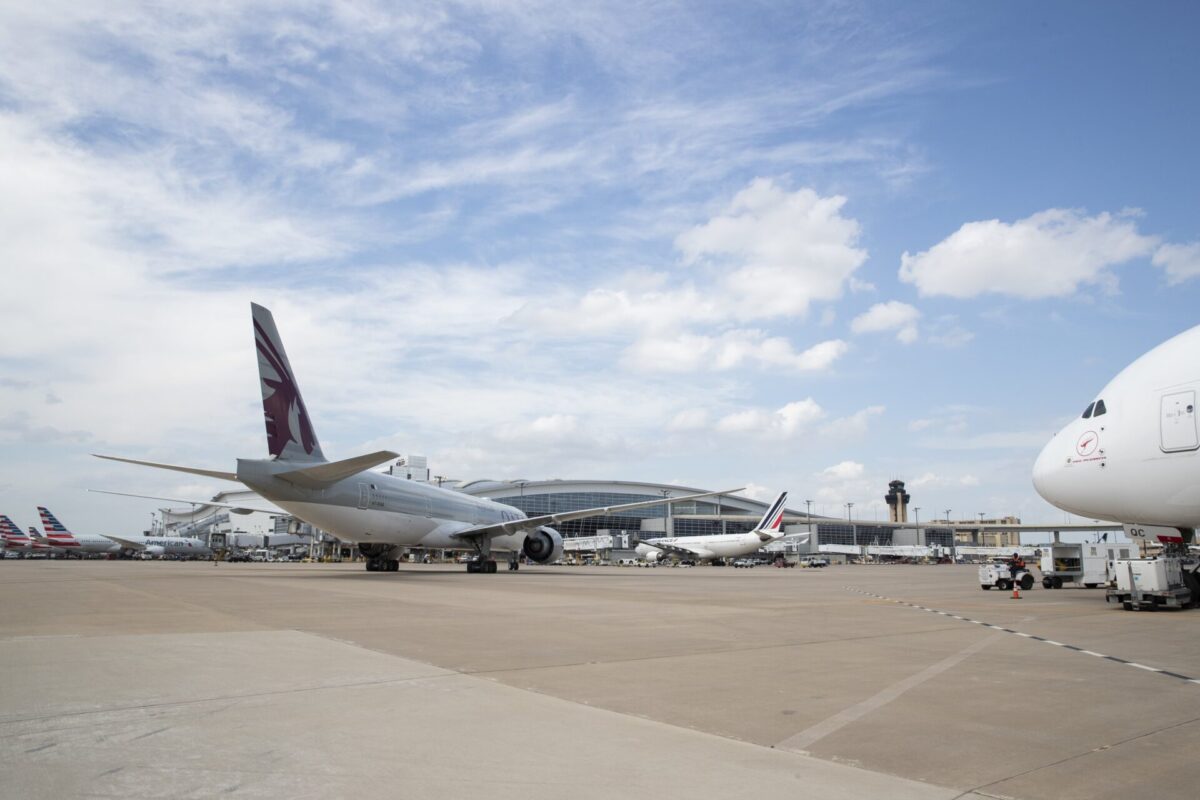
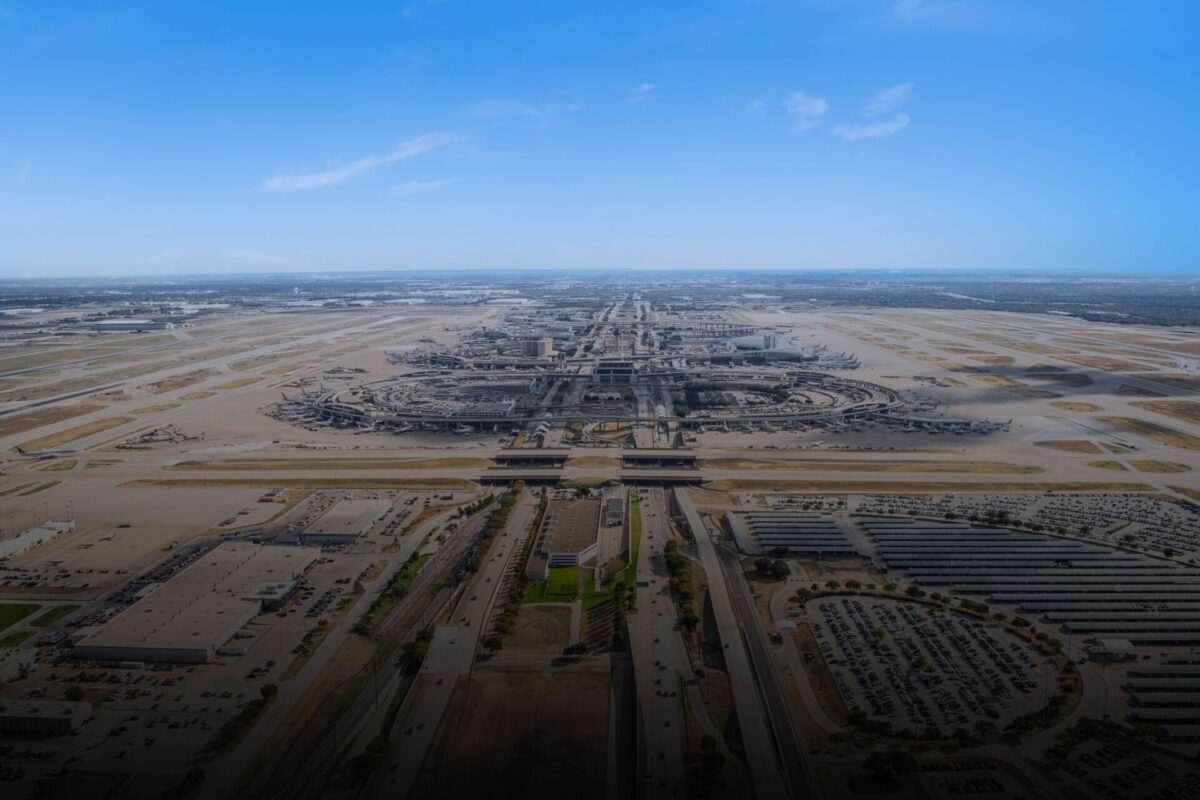
As well as being very big and very busy, Dallas/Fort-Worth has seven runways, just one less than the airport with the most – Chicago O’Hare, with eight. Like the other airports on this list, it is still expanding, with a long-discussed Terminal F on the cards as well as a $2.7 billion project to renovate Terminal C.
5. Istanbul Airport (IST)
29 square miles
| Opened | 2018 (full transfer from Atatürk in 2019) |
| Hubbed airlines | Turkish Airlines |
| Annual passenger traffic | 84.4 million (2025) |
| Runways | 5 |
| Terminals | 1 |
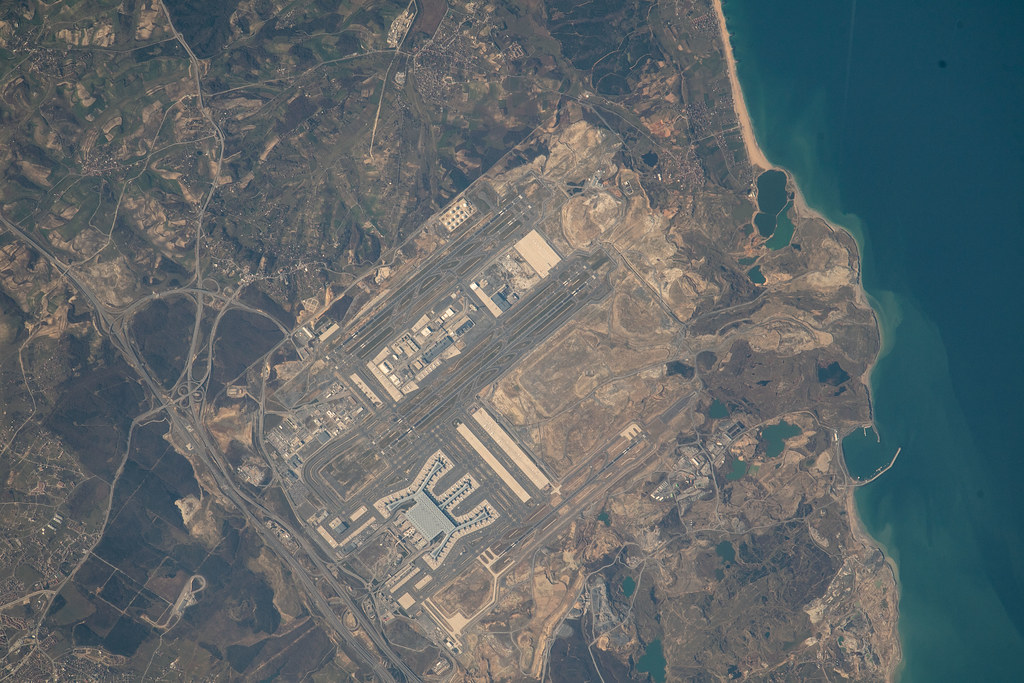
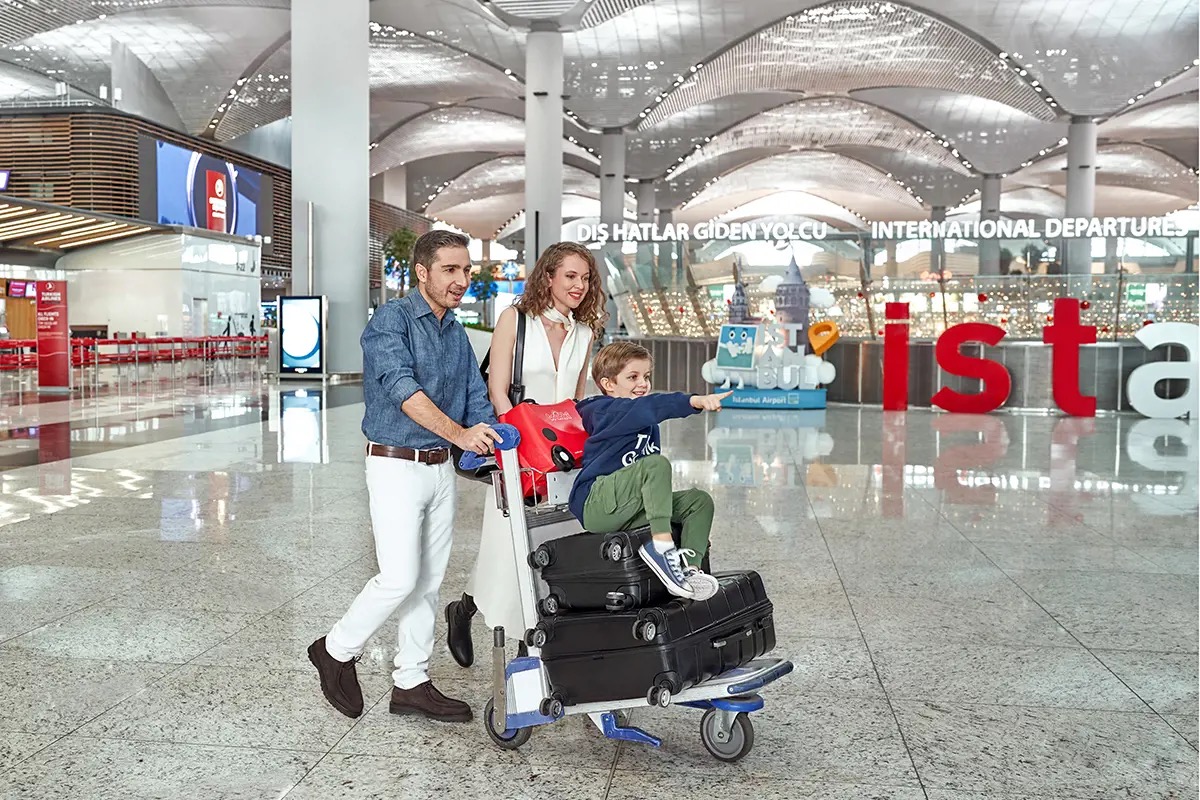
Since its opening in 2018, Istanbul Airport has become a major global hub for Turkish Airlines. The airport has one terminal, serving both domestic and international flights.
What sets Istanbul Airport apart is its impressive runway infrastructure, with five runways, some exceeding 13,000 feet in length. This capacity allows for efficient handling of a large number of flights. Also, the airport has three parallel runways operating at the same time, making IST the first and only airport in Europe to do so.
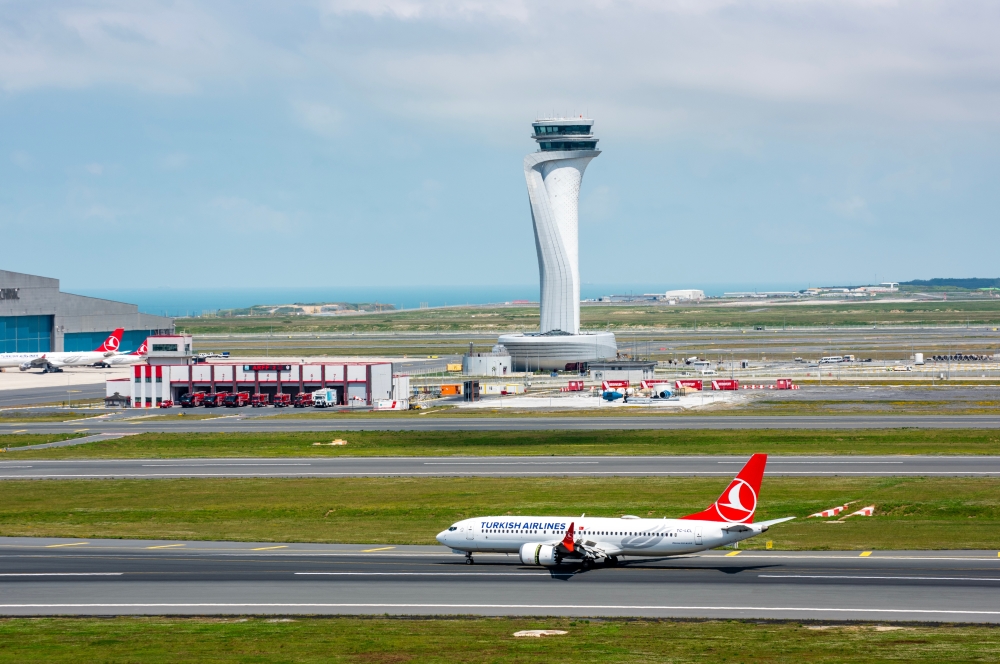
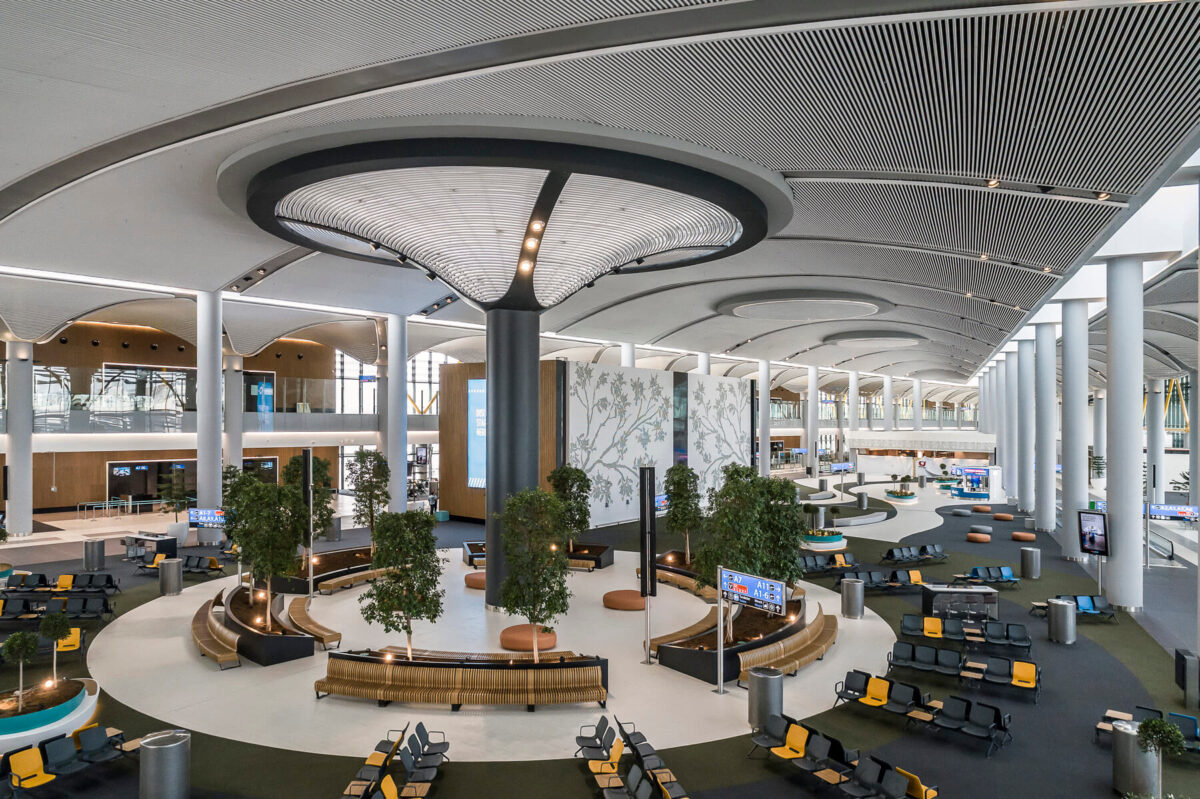
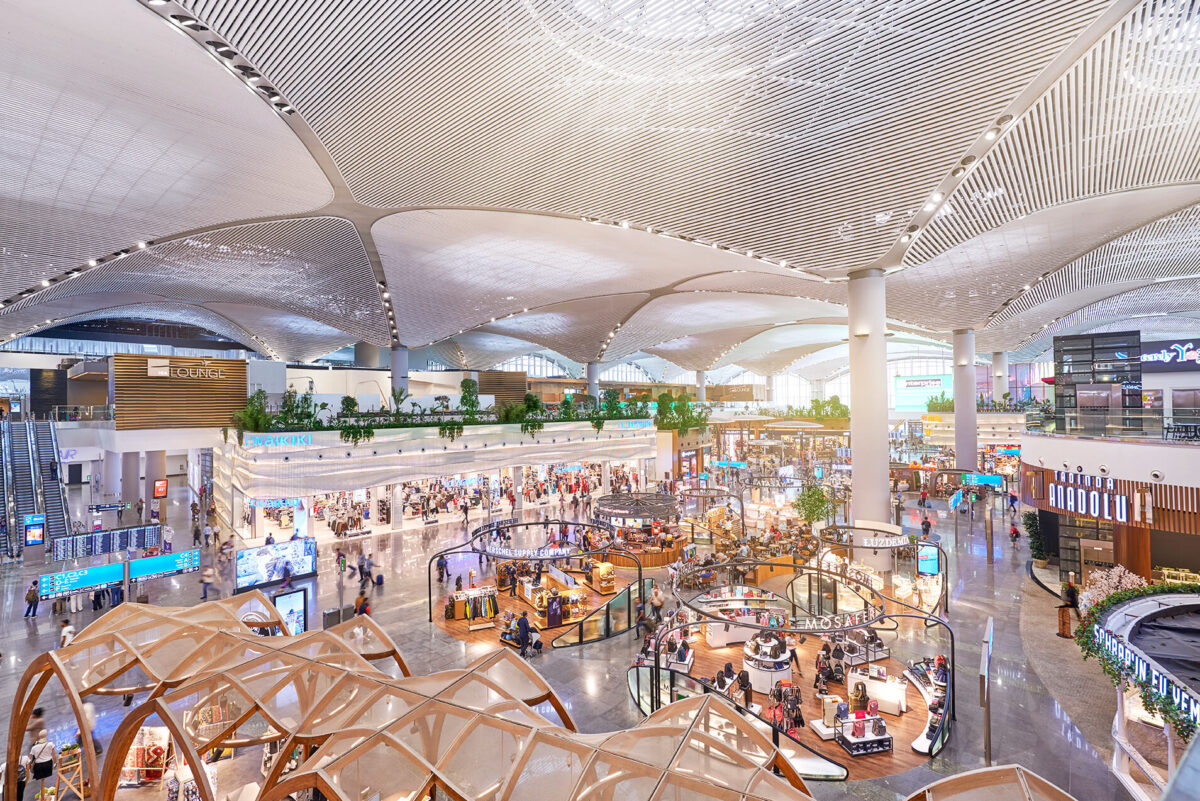
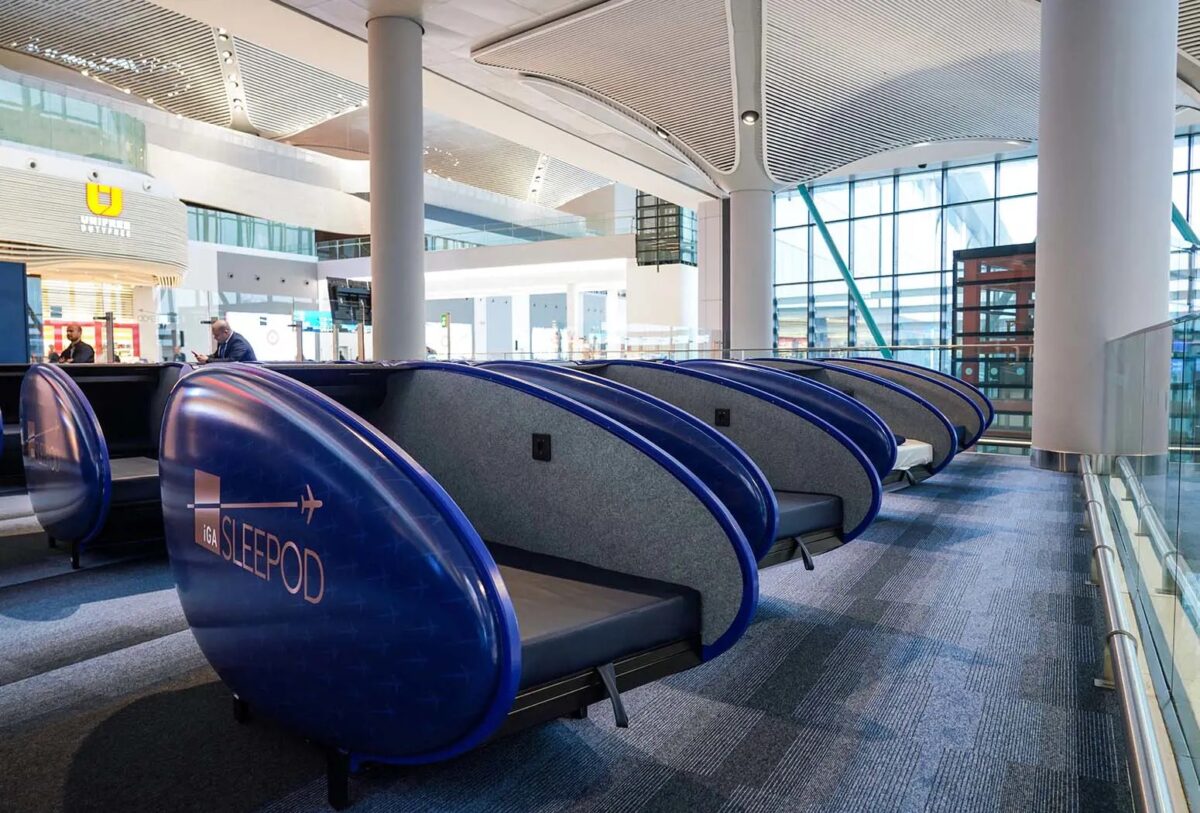
The new Istanbul airport stands as Turkey‘s largest infrastructure project, and it is still being built. It’s expected to be fully completed in 2027, at which point it will have more terminals, and the capacity to handle 200 million passengers a year, according to iGA.
4. Kuala Lumpur International Airport (KUL)
39 square miles
| Opened | 1998 |
| Hubbed airlines | Batik Air, Malaysia Airlines, Raya Airways |
| Annual passenger traffic | 63.3 million (2025) |
| Runways | 3 |
| Terminals | 2 |
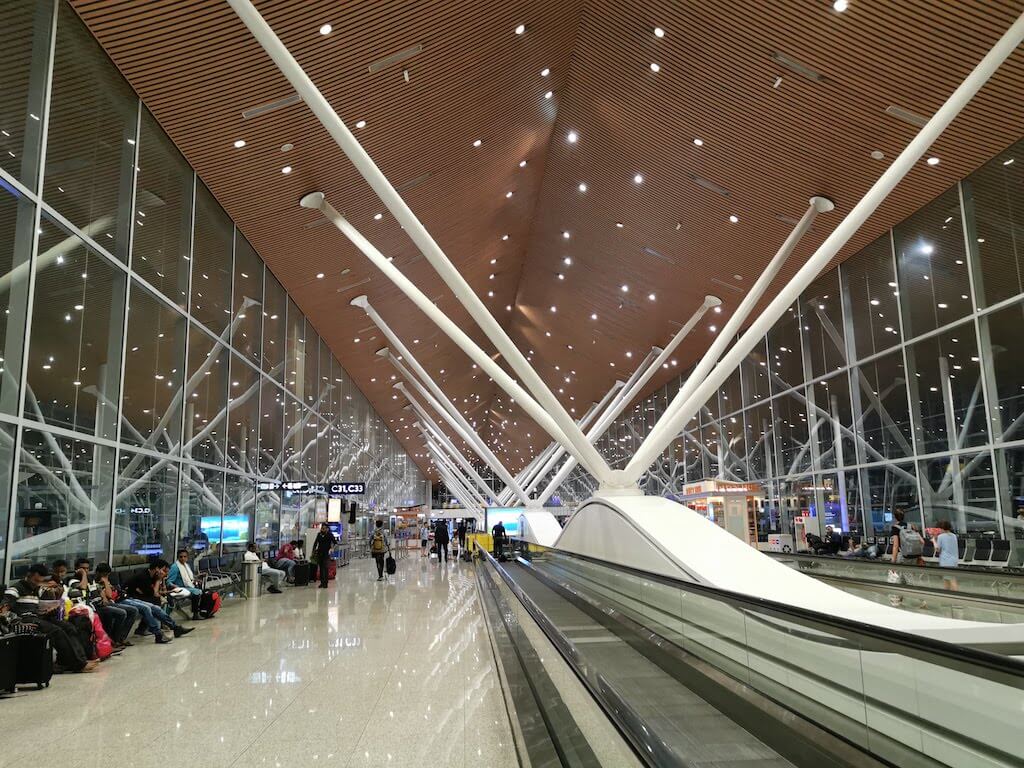
Located in Sepang, Selangor, Kuala Lumpur International Airport (KUL) is around 28 miles south of the city center and a hub for national flag carrier Malaysia Airlines. Also hubbed at the airport are Batik Air and Raya Airways, while AirAsia has the largest operating base here.
KUL was ranked the most connected airport in the Asia-Pacific in 2025, according to OAG. AirAsia’s presence at KUL was a dominant factor in the airport becoming the most connected, as it is also the largest low-cost carrier megahub in the world, with AirAsia accounting for 36% of flights from there.
Housed on 39 square miles of former agricultural land, the airport has plenty of opportunities for expansion. In the past, KLIA was separated into the main international terminal and KLIA2 for regional and domestic flights. However, in 2023, the airport rebranded the two facilities as simply Terminal 1 and Terminal 2. It has three parallel runways. At present, it can handle 70 million passengers a year, although it hasn’t reached that capacity yet.
3. Denver International Airport (DEN)
52.3 square miles
| Opened | 1995 |
| Hubbed airlines | Denver Air Connection, Southern Airways Express, United Airlines |
| Annual passenger traffic | 82.4 million (2025) |
| Runways | 6 |
| Terminals | 1 + 3 concourses |
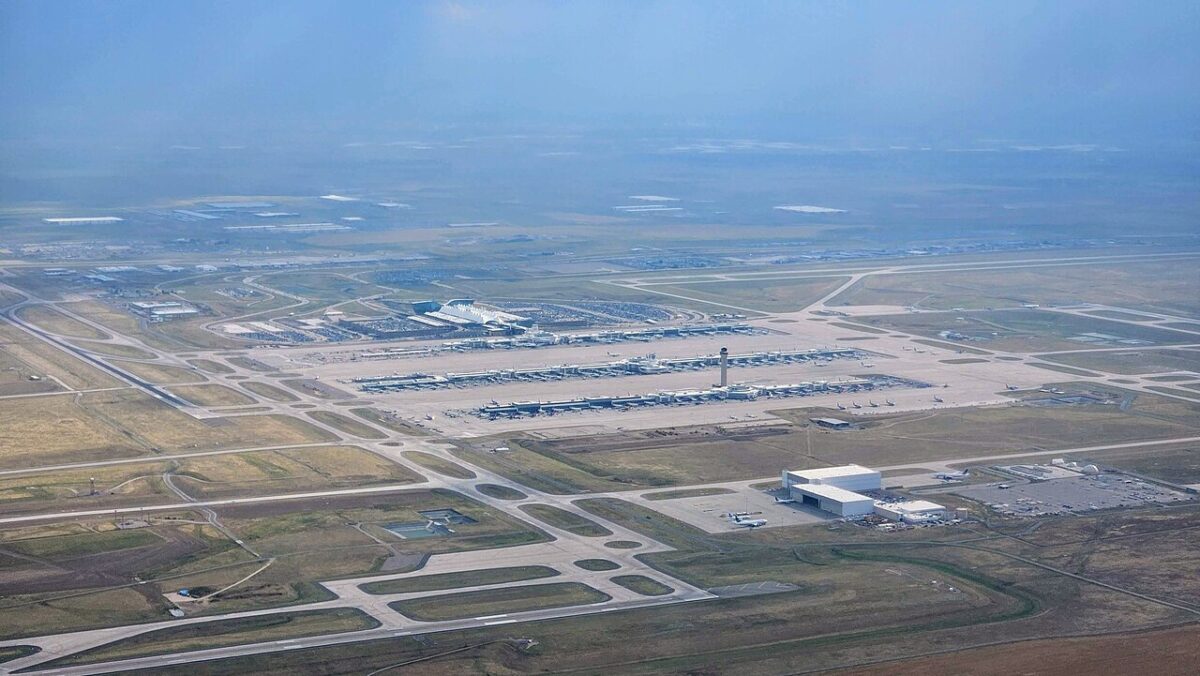
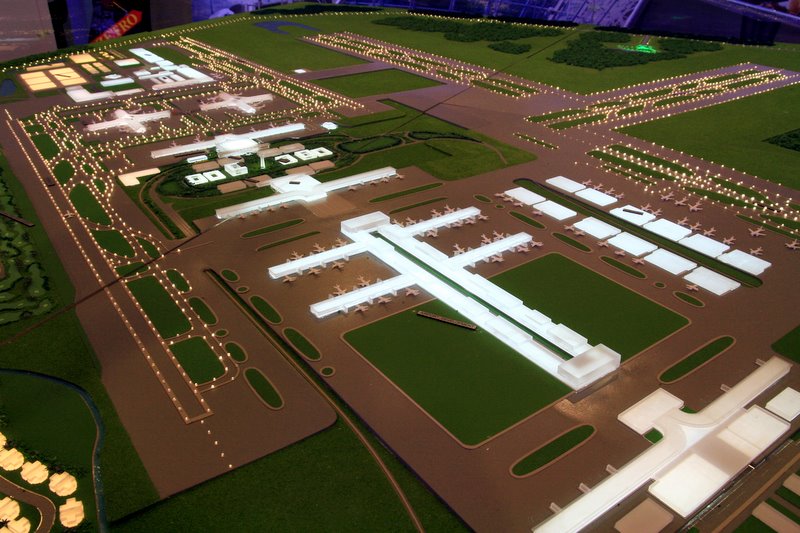
Denver International Airport is the US’s largest airport by size. At 53 square miles, it’s like a small airport city. Transporting over 82 million passengers a year, Denver is ranked by ACI as 10th busiest in the world and fourth busiest in the US, behind Chicago O’Hare, Dallas and Atlanta.
Notably, the airport boasts the longest public-use runway across North America and the seventh longest globally, stretching an impressive 16,000 feet. Serving as a hub for United Airlines, Southern Airways Express, and Denver Air Connection, it also operates as a base for Southwest Airlines and Frontier Airlines.
Denver Airport’s single terminal is connected to three primary midfield concourses—A, B and C. To accommodate its dynamic air traffic, the airport is equipped with a total of six runways.
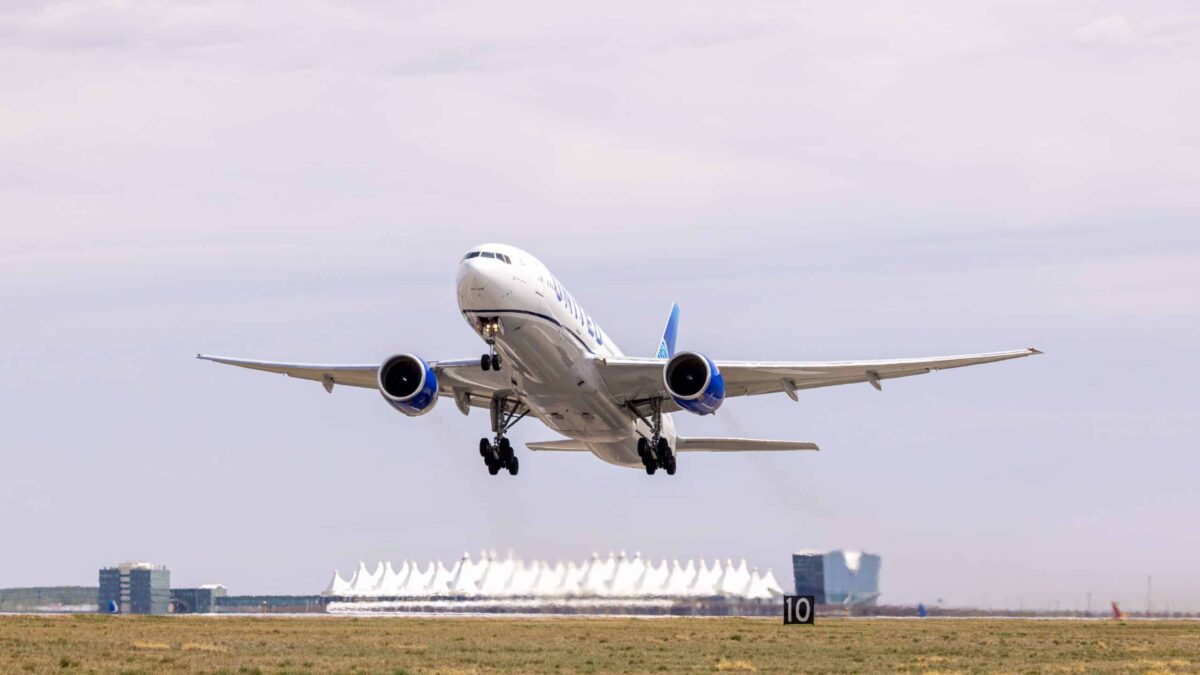
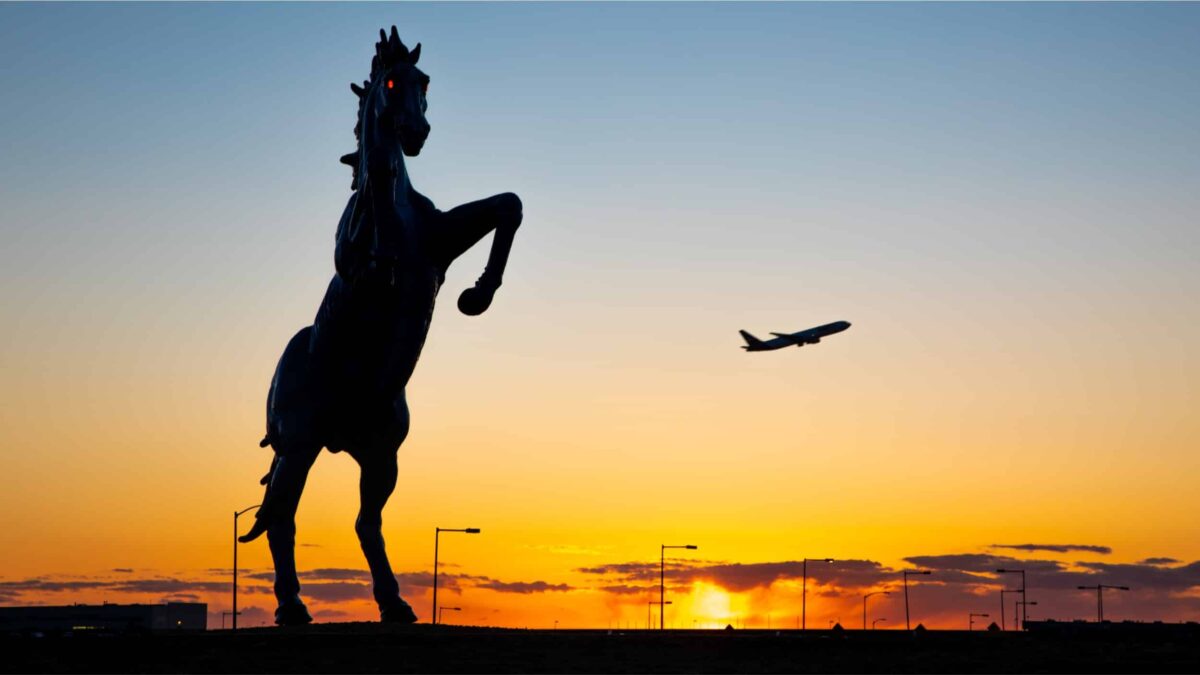
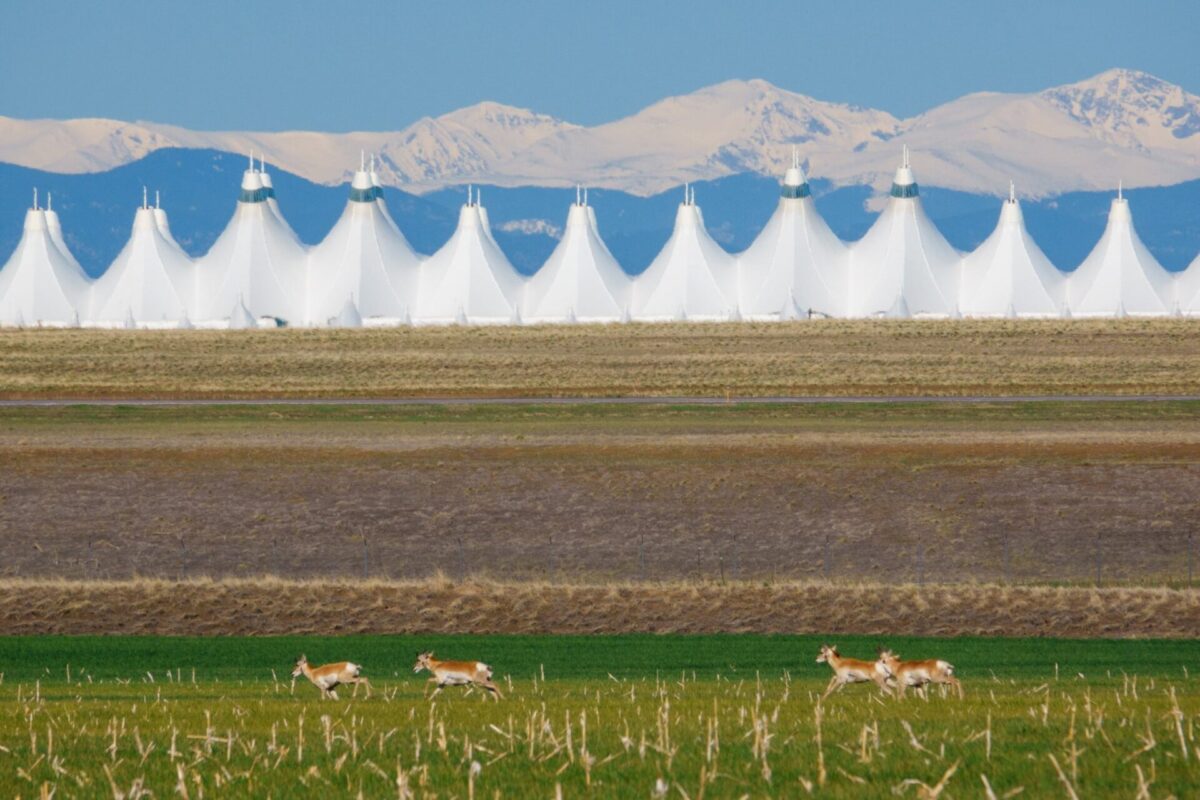
Enhancing its distinctiveness, Denver International Airport showcases a collection of iconic and unique artworks. Among these, one particularly noteworthy piece is the huge rearing blue horse with red eyes, affectionately known as ‘Bluecifer’. Meanwhile, the airport’s iconic Teflon-coated fiberglass roof pays homage to the Rocky Mountains.
2. King Khalid International Airport (RUH)
145 square miles
| Opened | 1983 |
| Hubbed airlines | Flynas, flyadeal, Saudia |
| Annual passenger traffic | 40.8 million (2025) |
| Runways | 2 |
| Terminals | 5 |
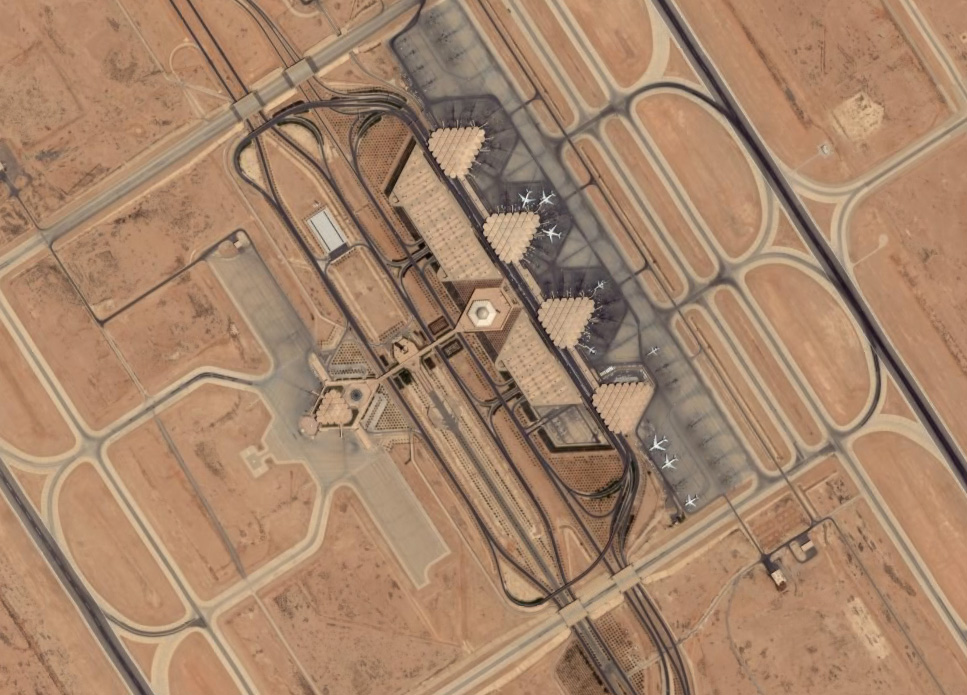
Three times the size of the next largest airport, King Khalid is the airport for Riyadh and was opened over 40 years ago, in 1983. It will be the home of the forthcoming airline Riyadh Air, and is also a hub for Saudia and local low-cost carriers Flynas and flyadeal.
The airport has five main passenger terminals as well as a general aviation terminal and one terminal regular visitors never get to see. The Royal Terminal is for heads of state and other high-ranking VIPs, featuring gardens, fountains and a 1,300-foot-long ceremonial hall connecting it to the mosque.
King Khalid Airport was honored in Cirium’s on-time performance report at the end of 2024. It won both the Large Airport and Global categories for exemplary on-time performance, achieving 86.65% on-time departures.
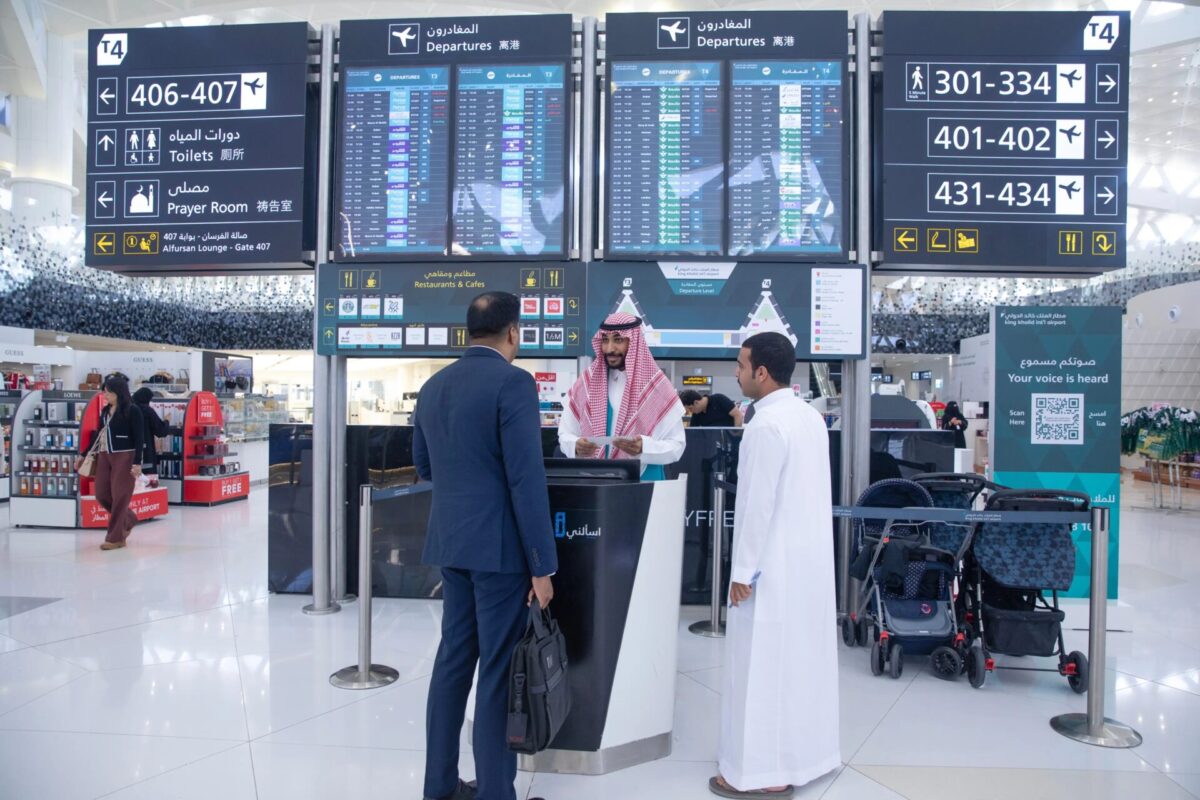
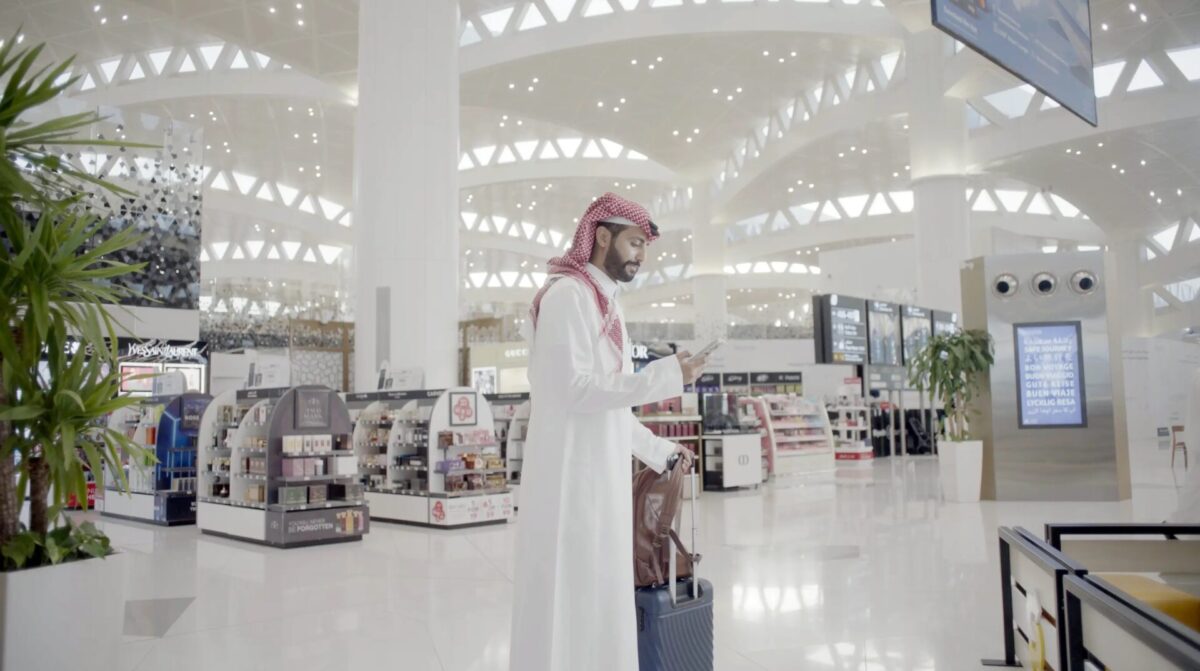
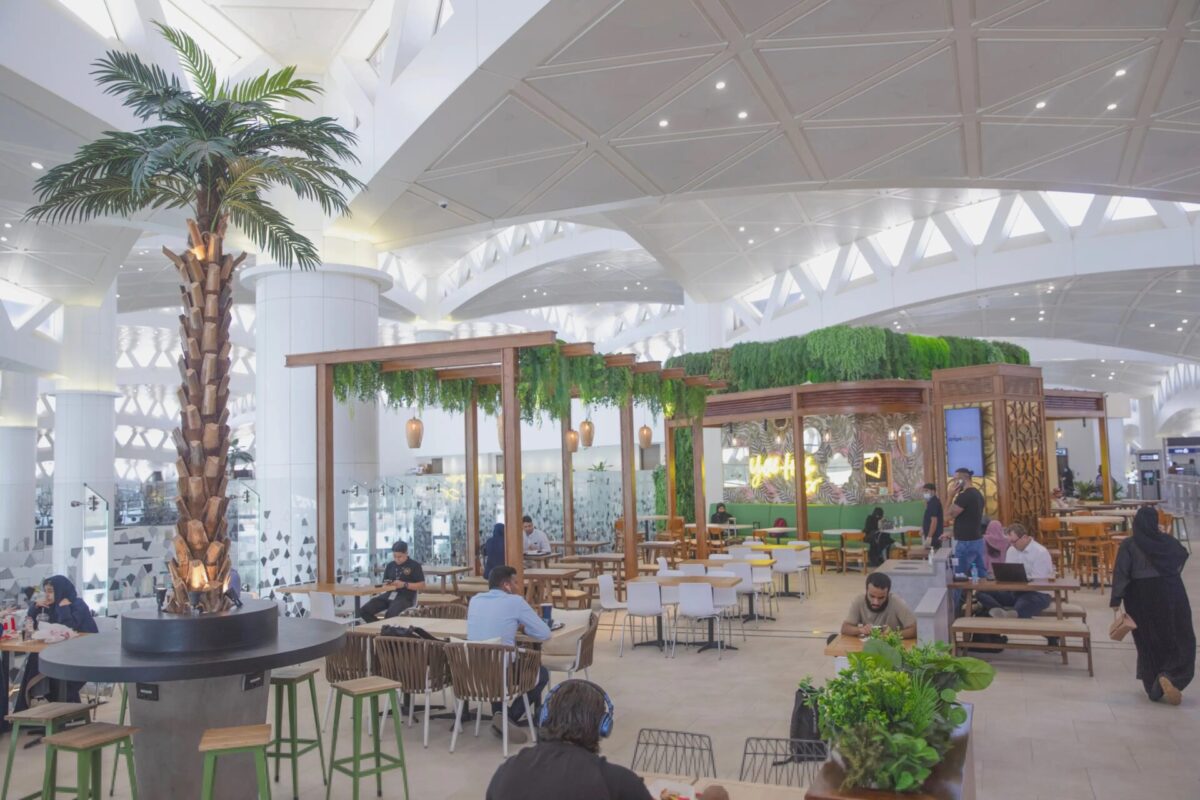
As part of Saudi’s Vision 2030 investments, the airport will be significantly expanded by 2030 to add four more runways and increase its passenger capacity to 120 million a year. When complete, the airport is due to be renamed King Salman International.
1. King Fahd International Airport (DMM)
300 square miles
| Opened | 1999 |
| Hubbed airlines | Flynas, flyadeal |
| Annual passenger traffic | 13.7 million (2025) |
| Runways | 2 |
| Terminals | 3 |
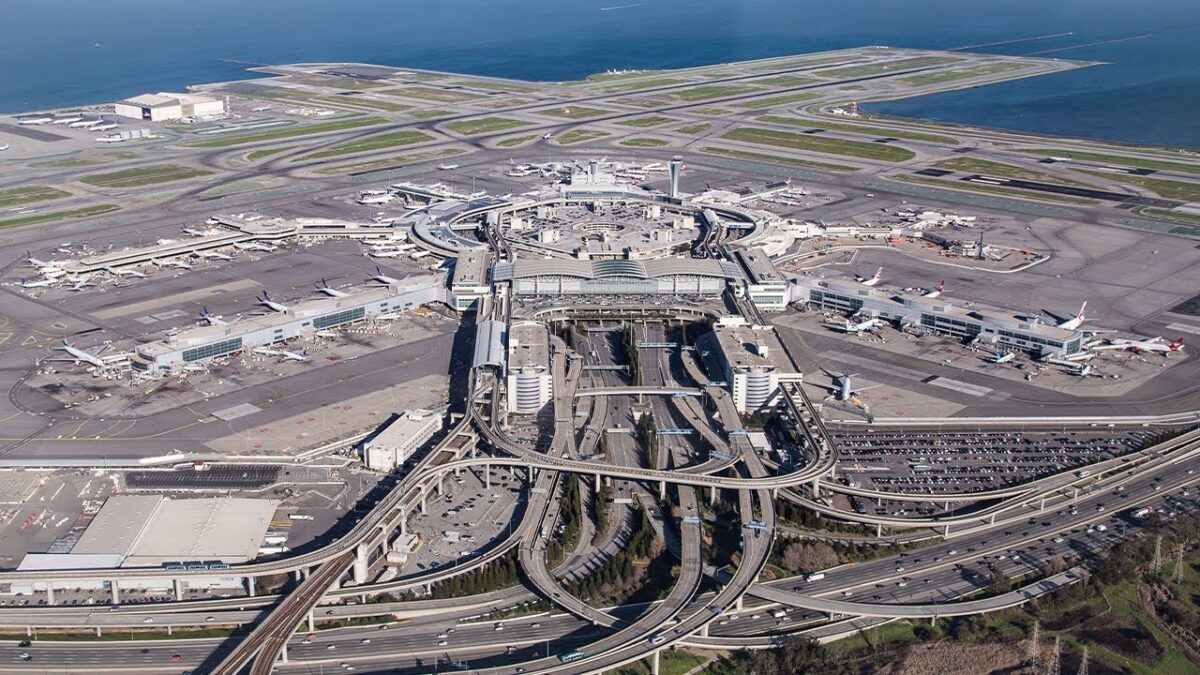
If you thought King Khalid was large, the site is dwarfed by the behemoth of an airport in Dammam, Saudi Arabia. Covering 300 square miles, King Fahd International Airport has been recognized by Guinness World Records as the largest airport in the world by size.
To put it in perspective, 300 square miles is about the same size as the entire country of Bahrain and a good 20 square miles larger than Singapore. However, only around 14 square miles of the site is being utilized for airport operations at present.
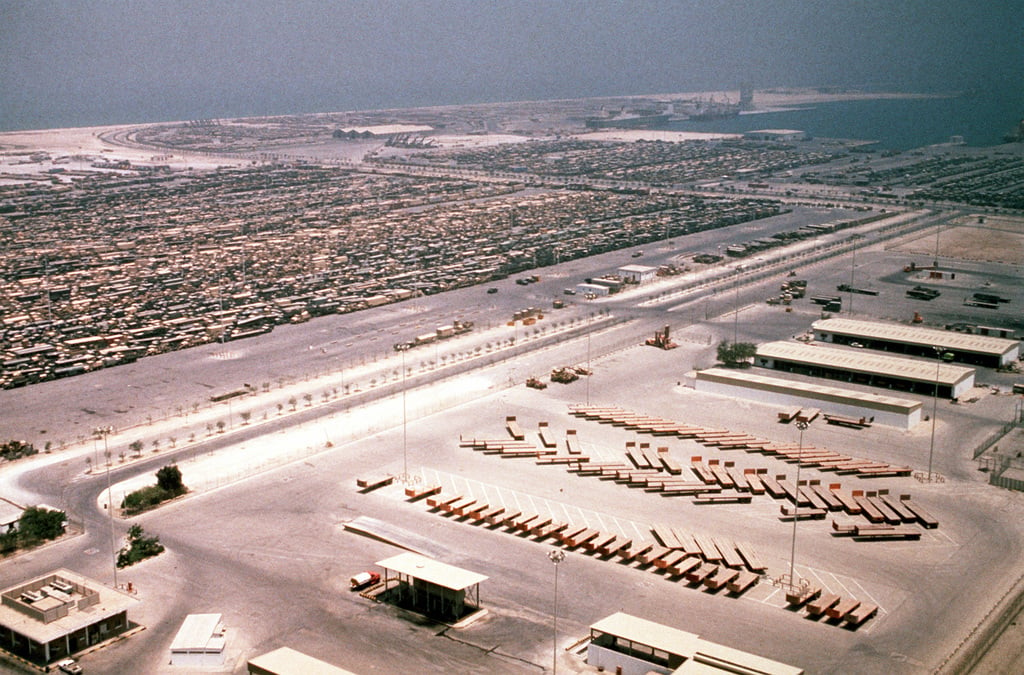
The terminal building spans six floors and takes up a total area of 3.5 million square feet. It was the first airport in Saudi Arabia to adopt duty free stores, and work is ongoing to expand the terminals even more, improving the passenger flow.
Over the past two decades, the growth at King Fahd Airport has been exponential. In 2001, it handled just 2.5 million passengers. By 2015, it had surged to more than nine million. In 2025, the airport accommodated a total of 13.7 million passengers.
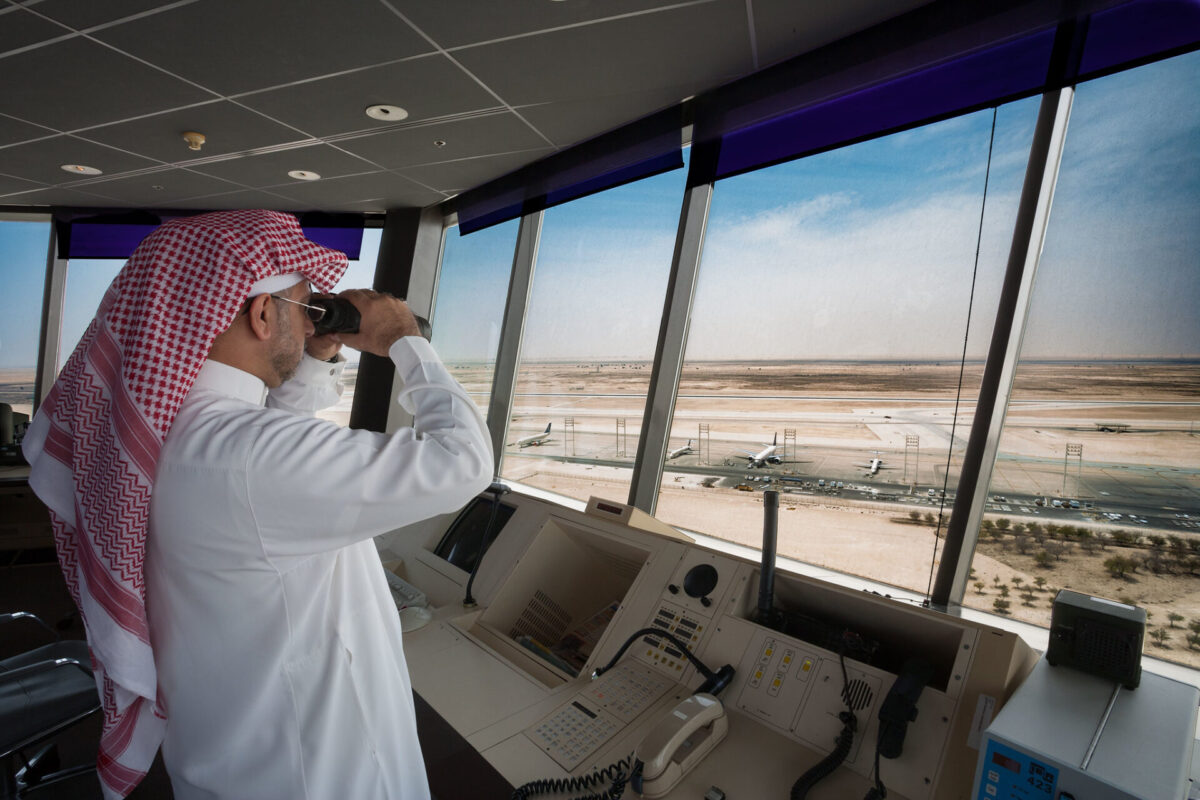
King Fahd Airport is the world’s largest airport by size at the time of writing, and thanks to the massive site it’s built on, is unlikely to be eclipsed by any other airport project. However, there is a giant of an airport being built just down the road, which won’t compete in size but will have the highest capacity of any airport in the world.
Located in Riyadh, King Salman International Airport will boast six parallel runways and is expected to handle 120 million passengers per year, making it the largest in the world in terms of passenger numbers. While the airport has not yet been given a designated IATA code, it is expected to open by 2030.
