

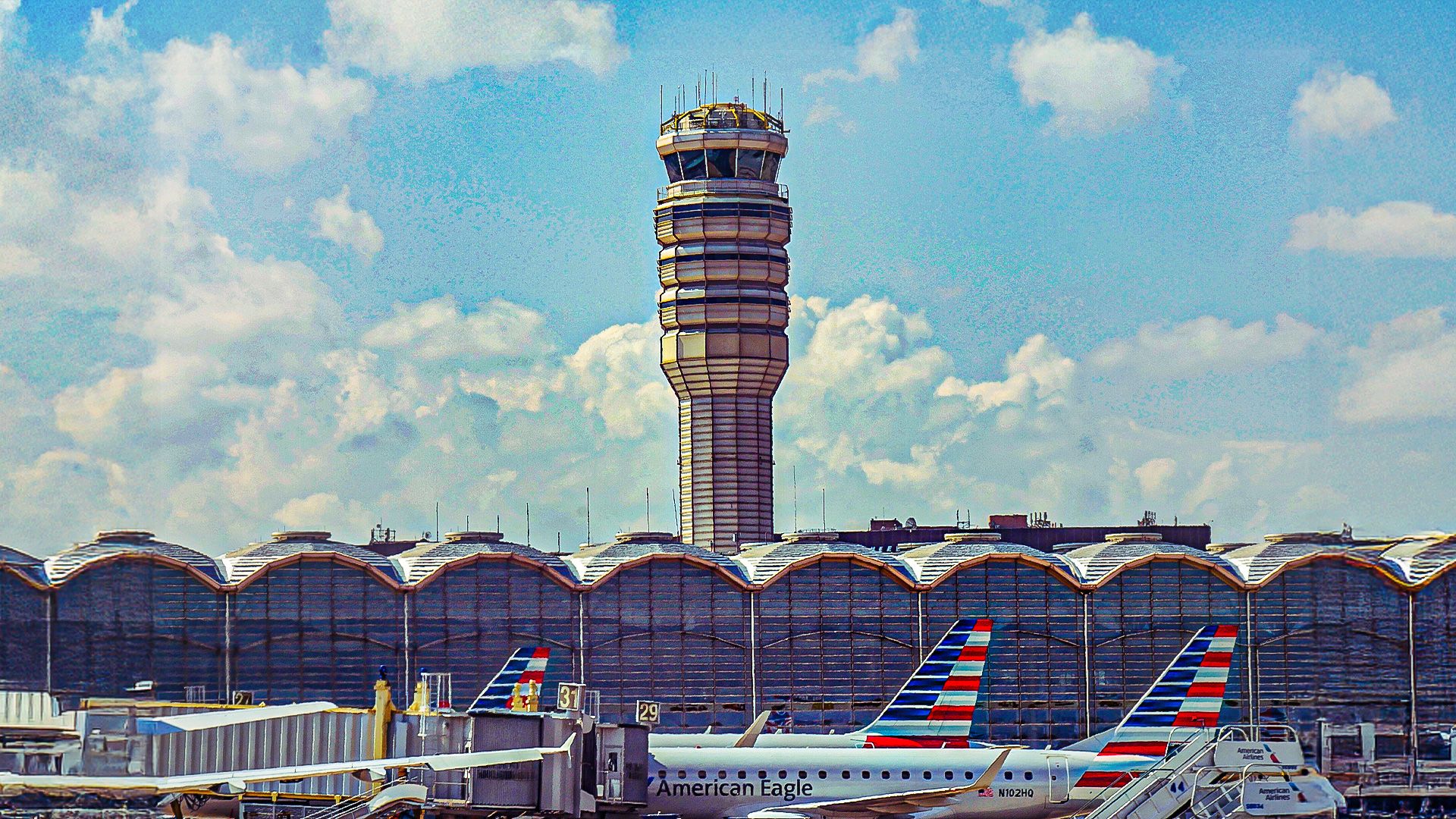
Air traffic controllers are the unseen guardians of the skies, ensuring that every aircraft moves safely and efficiently from take-off to landing. Whether guiding a single-engine Cessna or a fully loaded Airbus A380, air traffic controllers play a vital role in keeping air travel one of the safest modes of transportation in the world. Given the pressure involved, air traffic controllers can earn a very high salary.
In this article, we will take a look at the typical earning potential of an air traffic controller in the US, which is significantly higher than the national average. We will also consider the role of the air traffic controller in the context of the wider commercial aviation industry, and what it takes to become one.
What Is An Air Traffic Controller?

At its core, air traffic control (ATC) is about maintaining a safe separation between aircraft. Air traffic controllers use radar, radio communication, and digital flight-tracking systems to monitor the position, altitude, and speed of every aircraft within their allocated sector. They issue instructions to pilots, such as climb, descend, or turn, to avoid collisions and to keep the flow of air traffic running smoothly.
The job requires intense concentration, quick decision-making, and excellent communication skills, and air traffic controllers typically work in shifts around the clock, since air traffic never really stops in most parts of the world. Training is rigorous and can take several years, often involving simulation exercises and on-the-job experience under supervision. It is therefore no surprise that the profession is highly paid, with salaries significantly above the US national average.
Every airport requires some level of air traffic control, from international megahubs such as  John F. Kennedy International Airport (JFK) and
  Los Angeles International Airport (LAX) to smaller, regional airports such as Savannah/Hilton Head International Airport (SVA) in Georgia.
The Different Types Of Air Traffic Controllers

Several types of roles fall under the umbrella term of air traffic controller, each with a specific focus and set of responsibilities. Tower controllers work at airports, managing take-offs, landings, and movements on the runways and taxiways, while approach and departure controllers handle aircraft entering or leaving the airport’s airspace, ensuring smooth transitions between the airport and en-route phases of flight. En-route controllers, also known as center controllers, oversee aircraft flying at higher altitudes between cities or across countries.
In addition to these core positions, there are also clearance delivery controllers, who provide pilots with pre-flight instructions, routes, and altitude assignments before departure. Ground controllers coordinate aircraft and vehicle movement on taxiways and ramps, preventing conflicts during busy operations. Meanwhile, some controllers also specialize in oceanic control, managing aircraft flying long distances over regions without radar coverage, such as over the Atlantic or Pacific Oceans. Each role demands exceptional focus and teamwork, as controllers must coordinate closely to ensure a seamless, safe flow of air traffic throughout all phases of flight.
How To Become An Air Traffic Controller

There are several paths to becoming an air traffic controller, but all require dedication, precision, and a strong aptitude for problem-solving. Candidates typically need an associate’s or bachelor’s degree from an Air Traffic Collegiate Training Initiative (AT-CTI) program that has been approved by the US Federal Aviation Administration (FAA), several years of progressively responsible work experience, or a combination of both education and experience. Applicants must also be US citizens, pass rigorous medical and background checks, and demonstrate excellent English communication skills.
Once selected, trainees attend the FAA Academy in Oklahoma City, where they receive specialized classroom and simulator instruction in aviation weather, radar operation, aircraft separation, and emergency procedures. After successfully completing this training, new controllers begin on-the-job training at a control tower, approach control, or en-route center under the supervision of experienced mentors.
Becoming fully certified can take several years, as controllers must master real-world traffic scenarios, local procedures, and high-pressure decision-making. While the process is demanding, those who succeed earn a rewarding career that combines technical expertise with a deep sense of responsibility for the safety of the national airspace system. They can also be highly rewarded financially.

Data from the US Bureau of Labor Statistics suggests that the median salary for an air traffic controller in 2024 was $144,580 per year, equating to approximately $69 per hour. This is significantly higher than the median salary for all jobs across the US, which is currently around $46,300.
Pay for an air traffic controller can vary significantly, depending on experience and location, with so-called locality pay playing a significant role in the overall package, reflective of the varying cost of living across the country. According to Flying Magazine, an air traffic controller working in Albuquerque, New Mexico, receives a locality pay of around 18 percent, while an air traffic controller in New York receives approximately 38 percent of their base salary in locality pay.
The table below shows the typical median salaries of air traffic controllers across the US, according to data from the Bureau of Labor Statistics:
|
US State |
Median Salary |
|---|---|
|
New Hampshire |
$163,480 |
|
Virginia |
$162,620 |
|
Minnesota |
$156,070 |
|
Illinois |
$154,840 |
|
Colorado |
$152,580 |
|
California |
$150,060 |
|
Texas |
$146,620 |
|
New York |
$139,290 |
|
Hawaii |
$134,930 |
|
Florida |
$132,030 |
Entry-level salaries for air traffic controllers typically start at around $50,000 per year, but can climb to well over $250,000 annually for those in the most senior or high-complexity positions. Air traffic controllers who take on additional duties, such as mentoring new trainees, serving as supervisors, or working at busy international airports, can also expect to earn higher pay. Compensation may further increase through overtime, night shifts, and locality adjustments, reflecting both the demanding nature of the job and the critical role controllers play in maintaining the safety and efficiency of the national airspace system.
The US Government Shutdown & Its Impact On Air Traffic Controllers

Since the US Government shutdown began, many air traffic controllers working for the FAA have been required to work as essential staff, without pay. However, with their paychecks delayed, morale is suffering, and air traffic controllers are facing increased stress, fatigue, and financial strain.
In addition to financial difficulties, staffing shortages are also mounting. The FAA suggests that thousands of air traffic controllers are already working unpaid, and the shortage has reached a critical point, with absenteeism and fatigue becoming more common. Some facilities have even triggered formal warnings of understaffing. As a response, the FAA is beginning to limit operations – for example, it has announced plans to reduce air traffic by 10% at about 40 high-volume airports if the shutdown continues. The cuts are intended to manage safety margins in a system under strain.
The personal impact on air traffic controllers must not be underestimated, with many working long hours, six-day weeks, and some taking on second jobs or seeking loans to make ends meet. Meanwhile, training of new air traffic controllers and modernization efforts are delayed because of the funding lapse, which threatens longer-term staffing and system resilience.
Atlanta Is The Most Affected Airport

The US Government shutdown is having a wide-reaching impact, with airports across the entire country affected. Perhaps unsurprisingly, some of the most affected are the busiest airports in the US, such as  Hartsfield-Jackson Atlanta International Airport (ATL),
  Dallas/Fort Worth International Airport (DFW), and
  Denver International Airport (DEN), which are major hubs for Delta Air Lines, American Airlines, and United Airlines, respectively. Denver International Airport has even offered to pay air traffic controllers’ salaries in order to keep operations moving safely.
The list of the most affected airports, according to a report from mint, is outlined in the table below:
|
Ranking |
Airport |
|---|---|
|
1 |
Hartsfield-Jackson Atlanta International Airport (ATL) |
|
2 |
Dallas/Fort Worth International Airport (DFW) |
|
3 |
Denver International Airport (DEN) |
|
4 |
Chicago O’Hare International Airport (ORD) |
|
5 |
Los Angeles International Airport (LAX) |
|
6 |
LaGuardia Airport (LGA) |
|
7 |
John F. Kennedy International Airport (JFK) |
|
8 |
Miami International Airport (MIA) |
ATL is not just the world’s busiest airport, processing more than 108 million passengers in 2024, it is also home to one of the most demanding air traffic control operations anywhere. Every day, controllers at Atlanta’s towering air traffic control facility manage around 2,500 arrivals and departures, guiding everything from small regional aircraft to large widebody aircraft from all over the world with precision down to the second.
The control tower at Hartsfield-Jackson stands 398 feet tall, making it one of the tallest in North America. From this vantage point, controllers oversee five runways that operate almost continuously, and coordination is key – ground, tower, and approach controllers work in seamless rhythm to keep the air traffic flowing safely. In the radar rooms below, controllers handle aircraft within a 40-mile radius of the airport, sequencing them efficiently into and out of the busy Atlanta airspace.
Despite the pressure, teamwork and technology make the system remarkably smooth. Air traffic controllers rely on advanced radar displays, data links, and constant communication with pilots to keep operations running safely in all weather conditions. For passengers, it may just feel like another routine flight, but behind the scenes, air traffic controllers at Hartsfield-Jackson Atlanta International Airport are conducting one of aviation’s most impressive daily performances, ensuring the world’s busiest airport remains operational and safe.
source
