


What was once a two-site production program split between Everett, Washington, and North Charleston, South Carolina, became fully consolidated in 2021.  Boeing brought all 787 manufacturing to South Carolina as part of a broader effort to simplify the program’s footprint and reduce costs.
The move was primarily a cost-cutting decision. According to the Everett Herald, after the transition was completed, the 787’s production rate in South Carolina dropped from six aircraft per month to five. At the height of the program, when both Everett and North Charleston were building Dreamliners, Boeing reached a peak output of 14 aircraft per month.
Today, with customer demand strengthening, Boeing is under pressure to increase 787 production once again. Earlier this month, the company took its first visible step toward that goal by breaking ground on an expansion of the South Carolina facility.
Boeing’s History In South Carolina

Before selecting South Carolina as the site of its second 787 Dreamliner facility, Boeing evaluated multiple states, including California, Kansas, North Carolina, Texas, and Washington. By 2009, the company had narrowed its options to Washington, which housed the existing Everett 787 plant, and South Carolina. Labor tensions in Everett, including a 57-day machinists’ strike in 2008 that cost Boeing more than $1 billion, pushed the company to seriously consider alternative locations.
South Carolina offered several advantages. The Charleston region already hosted suppliers that produced parts for the 787 program, and the state’s largely nonunion workforce aligned with Boeing’s interest in greater labor stability. These factors made North Charleston an appealing candidate for long-term Dreamliner production.
In October 2009, South Carolina secured the project by offering Boeing an incentive package estimated between $800 million and $1 billion. The deal required Boeing to create 3,800 full-time jobs and invest at least $750 million in the state, supported by measures such as state funds, property tax breaks, worker-training programs, and corporate tax credits. Boeing South Carolina opened in July 2011 and, as of early 2022, employed more than 5,500 workers.
Production Set To Increase For The 787

Boeing is facing renewed pressure to lift 787 output as the program sits on a backlog of roughly 1,000 aircraft and new widebody demand continues to strengthen. Airlines are placing orders at a pace that requires Boeing to increase throughput. As a result, expanding the capability of the South Carolina facility has become a priority.
According to AIN, Boeing’s Charleston plant has a current maximum capacity of 10 aircraft per month, although the site is presently averaging about seven. Once the expansion work is completed, Boeing expects the facility could eventually double its output, giving the 787 program far more flexibility to ramp production.
The most recent phase of Boeing’s growth plan broke ground this month. The company is investing more than $1 billion and plans to create more than 1,000 new jobs over the next five years, with work that includes a new 1.2 million square foot final assembly building, a parts preparation area, a vertical fin paint facility, Flight Line stalls and other support structures. The project also expands the Interiors Responsibility Center, and the construction effort is expected to employ more than 2,500 workers across more than 6.2 million labor hours.

Air France’s Most Frequent Routes With The Boeing 787 In 2025
The aircraft is a long-haul workhorse for the carrier.
Impact On South Carolina

Boeing’s presence in South Carolina has become one of the most significant economic drivers in the Charleston region, and the company’s latest expansion has reinforced that role. State and federal leaders praised the decision to scale up 787 production capacity, framing it as a sign of long-term confidence in the local workforce. Senator Lindsey Graham called the move “the ultimate vote of confidence,” noting that Boeing employees in the state have proven they are worth continued investment.
The economic ripple effects of Boeing’s operations extend well beyond the walls of the plant. According to research from the Federal Reserve Bank of Richmond, each job promised by Boeing generated an additional 2.6 jobs in the Charleston metropolitan area. This multiplier effect has helped strengthen the region’s broader labor market and deepen the economic influence of the aerospace sector.
Boeing has also played a major role in reshaping wages and industry growth across South Carolina. The same Richmond Fed analysis found that the company’s arrival increased wages in the state’s aerospace industry by an average of 10 percent, with the strongest gains occurring in the most recent years of the study period. The number of aerospace establishments in South Carolina grew by 44 percent, reflecting Boeing’s long-term commitment in creating a durable, expanding aerospace ecosystem.
South Carolina Governor Henry McMaster commented on Boeing’s presence in the state.
“Boeing’s continued investment in South Carolina is a tremendous vote of confidence in our state’s people and business climate. This $1 billion expansion and the creation of 1,000 new jobs will strengthen our position as a global leader in aerospace and advanced manufacturing. We are grateful for Boeing’s partnership and commitment to the Lowcountry, which will bring new opportunities and economic prosperity across our state.”
Outstanding Orders

The 787 Dreamliner program continues to be one of the most successful widebody families in commercial aviation. Since its introduction, the aircraft has become a core part of long-haul fleets around the world, valued for its fuel efficiency, range, and passenger comfort. Ninety customers have placed more than 2,250 orders, making it the best-selling widebody passenger aircraft of all time.
After more than 1,200 deliveries, Boeing still holds a backlog of nearly 1,000 aircraft, including more than 300 orders placed this year. Boeing expects demand for more than 7,800 new widebody aircraft over the next two decades, underscoring the importance of sustaining high 787 production levels.
Among individual airlines,  United Airlines has emerged as one of the largest and most influential 787 customers. The carrier already operates about 80 Dreamliners across its fleet and has roughly 150 additional aircraft on order as part of its long-term widebody renewal strategy. These aircraft play a central role in United’s international growth plans, supporting new routes and additional frequencies across its global network. United’s continued investment in the 787 highlights how important the type has become to the airline’s future.
 Qatar Airways is another major customer shaping the future of the 787 program. The airline currently operates 53 Dreamliners and has committed to 130 more, with options that could add an additional 50 aircraft. This sizeable order reflects Qatar’s strategy of modernizing its long-haul fleet while expanding capacity across key global markets.

United Airlines Cuts Next Summer’s European Flights
It has removed one route and reduced flights on five others, but five links will begin.
737 Production

Boeing’s 737 MAX production takes place at its Renton, Washington, facility, which has produced 737-family aircraft for many years and remains the primary center for the MAX program. The only exception will be the 737 MAX 10, which is planned to be built exclusively in Everett. Renton’s established production flow enables the site to maintain steady, consistent manufacturing output.
Renton is capable of producing significantly more aircraft per month than the 787 line in South Carolina. At higher production tempos, the facility can reach rates of up to 42 aircraft per month. This is a level Boeing has targeted in the past and is again working toward now that regulators have cleared the company to increase output.
The cap that previously limited 737 MAX production to 38 aircraft per month was recently lifted following the investigation into the Alaska Airlines incident. With that restriction removed, Boeing is now permitted to return to production levels closer to 42 aircraft per month. The company will continue to coordinate with regulators as production gradually increases.
What about the 777X? Boeing’s plans for the 777X program include a long-term production goal of about four aircraft per month. To date, the company has already manufactured 22 customer-version 777X jets, all of which are parked and awaiting delivery while the program continues through certification. These aircraft represent the first wave of what Boeing expects to be a major part of its future widebody lineup once the model enters service.
How Does Airbus Compare?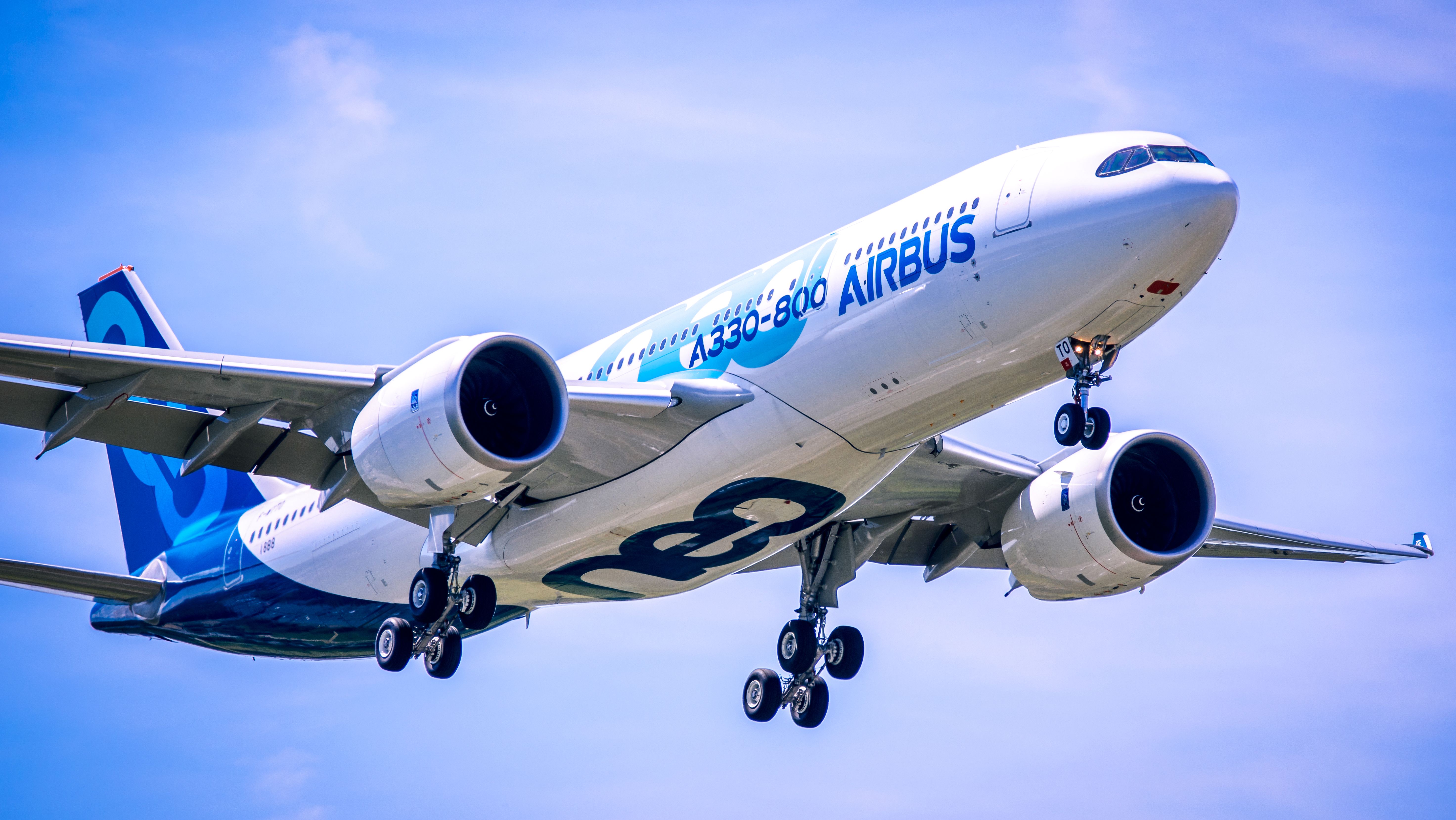
Airbus’s widebody production rates are not particularly high at the moment. The company aims to produce about four A330neos per month and around six A350s per month, which keeps both programs stable but far from their potential upper limits.
In the coming years, Airbus plans to gradually increase these widebody rates as demand strengthens. The A350 program is expected to climb to about ten aircraft per month in 2026 and reach twelve per month by 2028. The A330neo line is set to rise from four to five aircraft per month in 2029, indicating slow but steady growth.
On the narrowbody side, Airbus continues to operate at much higher volumes. The A320neo family is targeting production of 50 aircraft per month, driven by sustained global demand. The A220 program is expected to produce between six and eight aircraft per month, supporting airlines that rely on the type for regional and medium-haul flying.
source
