

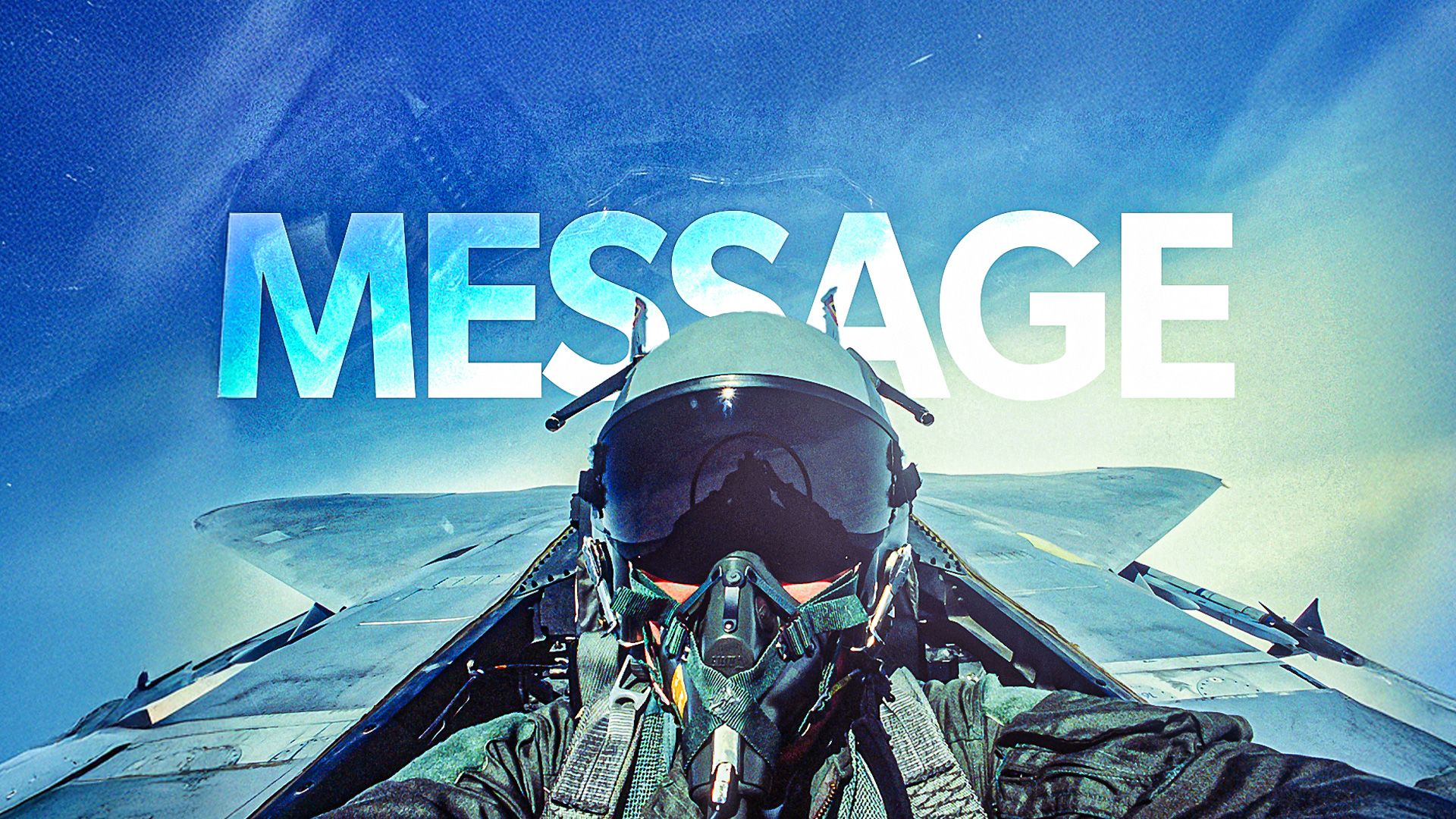
The principal question posed by many critics of the F-15EX Eagle II program to the United States Air Force is relatively straightforward. They argue that the aircraft is a step back in terms of stealth, and that the aircraft should be deprioritized over some more advanced systems, specifically stealth-capable fighter aircraft like the F-35 Lightning II and the F-22 Raptor. However, we see the F-15EX Eagle II today as a capable aircraft that solves urgent and practical gaps in the Air Force’s inventory while next-generation programs continue to mature. The jet itself offers incredible capabilities, many of which will make a clean case for valuing the aircraft even more than some stealth-capable alternatives. The jet’s long-reach payload arsenal, including outsized hypersonic weapons which are still in development, makes it a critical element of any on-station battlefield package.
We argue that the F-15EX Eagle II’s impressive speed, advanced sensors, and ability to transition quickly into different roles help the air force buy time and optionality during difficult battlefield environments. The aircraft can escort tankers, bolster homeland defense capabilities, and multiply the effectiveness of fifth-generation fighter jets by spotting and passing targets, all while shooting down enemy aircraft from a safe distance. The F-15EX Eagle II’s impressive munitions capabilities, survivability, and performance help make the case that the aircraft should be used extensively and that it may just have a critical role for decades to come.
A Look At The History Of The F-15 Eagle

Before we dive into the role that the  Boeing F-15EX Eagle II plays in the United States Air Force, we need to begin by analyzing the program’s history. The aircraft was originally developed as the McDonnell Douglas F-15 Eagle, a twin-engine, all-weather air-superiority fighter that was conceived in the late 1960s to restore US aerial dominance. The jet was first flown in 1972 and eventually entered service in 1976, and it was rebuilt around energy-maneuverability principles. The aircraft offered high thrust and provided a generous wing area, lowering drag in order to win both the vertical and horizontal fight. Two Pratt & Whitney F100 turbofans gave the Eagle a thrust-to-weight ratio exceeding one, delivering rapid acceleration, spectacular climb rates, and sustained turns at combat weight. A robust structure with large twin tails and a wide-track landing gear, the aircraft was agile yet stable.
The aircraft’s primary gun was an internal 20 mm M61A1 Vulcan cannon, which gave the aircraft close-in combat abilities. Beyond visual range, the aircraft’s early variants used AIM-7 Sparrow and later AIM-120 AMRAAM missiles, which offered within-visual-range combat capabilities. Later variants used AIM-9 Sidewinders, with all munitions carefully managed by an advanced electronic warfare suite that gave pilots superior situational awareness in cluttered airspace. Optional conformal fuel tanks extended range without sacrificing pylons.
The F-15 Eagle’s combat record cemented its legend. US, Israeli, and Saudi pilots amassed more than a hundred air-to-air victories with no confirmed combat losses in aerial engagements. Early F-15 models dominated when it came to air superiority and homeland defense alert missions, while later F-15E Strike Eagles adapted the airframe for deep strikes with a two-crew cockpit. Continuous upgrades, including modern mission computers, new radars, and datalinks, have all helped keep legacy Eagles credible against contemporary threats.
What Purpose Was The F-15 Eagle Designed To Serve?

The F-15 Eagle’s combat purpose was to secure and maintain overall air superiority so that friendly forces could operate in an undisturbed manner. This allowed the F-15 to deter or destroy enemy aircraft that were attempting to contest airspace. Designed around energy and maneuverability, the F-15 executed offensive counter-air sweeps, combat air patrols, and quick-reaction intercepts. The aircraft also serves as an effective fighter escort. The aircraft’s powerful radar, long-range missiles, and thrust-to-weight advantage let Eagle pilots detect, engage, and disengage entirely on their own terms.
In service with the Israeli Air Force during the late 1970s and 1980s, the F-15 Eagle achieved dozens of kills and demonstrated the value of preemptive air dominance. During Operation Desert Storm, US F-15C aircraft decimated Iraqi fighters across the board, enabling coalition strike packages to penetrate heavily defended airspace with minimal losses. Thereafter, the Eagles enforced no-fly zones over Iraq and deterred challenges in the Balkans and the Gulf.
Saudi F-15 Eagles conducted homeland defense and combat interceptions. While the dedicated strike role belonged to the twin-seat F-15E Strike Eagle, the broader Eagle family’s combat purpose expanded into dynamic targeting under the same umbrella of overall air control. Across theaters, the psychological effect mattered too. Adversaries often avoided takeoffs when Eagles were orbiting nearby. In short, the aircraft quickly became a symbol of air dominance and a shield for allied aerial warfare campaigns. The aircraft boasts an impressive combat record with 104 confirmed victories, while no F-15s were lost in air-to-air combat.
What Is The F-15EX Eagle II?

The F-15EX Eagle II is the United States Air Force’s newest variant of the classic F-15 Eagle, an aircraft that was re-engineered as a fast, long-range, high-capacity aircraft that complements stealth fighters while not replacing them. Ultimately built by Boeing to take over from aging F-15s, the aircraft keeps the Eagle’s Mach-2 performance and payload heft while adding a modern digital backbone and fly-by-wire controls. The aircraft also operates large heads-up cockpit displays and a capable electronic warfare suite.
The result is ultimately a jet-powered aircraft that can be fielded quickly by existing F-15 squadrons, operated from current infrastructure, all while integrating next-generation sensors and weapons into its software. The aircraft’s signature advantage is its magazine depth, or the ability to carry a large number of air-to-air missiles or air-to-surface weapons, potentially including outsized or hypersonic-class munitions. Here are some additional specifications for the aircraft, according to Air and Space Forces Magazine:
|
Category: |
Specification: |
|---|---|
|
Length: |
63 ft 9.6 in (19.446 m) |
|
Height: |
18 ft 6 in (13.045 m) |
|
Maximum takeoff weight (MTOW): |
81,000 lb (35,741 kg) |
The jet can also work alongside next-generation fighters like the F-35 Lightning II, the F-22 Raptor, and other kinds of advanced platforms. That makes it ideal for homeland defense, offensive counter-air tactics, and the escort of high-value assets. Even a 20,000-hour airframe delivered lower life-cycle costs and higher overall availability. In short, the F-15EX Eagle II is a modernized, highly connected payload trick that buys capacity and options for the Air Force as it allows other next-generation programs to mature.
What Is The F-15EX Eagle II’s Strategic Purpose?

The F-15EX Eagle II’s strategic purpose is to add affordable, rapidly fieldable capacity to the United States Air Force as the service waits for next-generation programs to continue scaling. The aircraft complements stealth aircraft, and it is not designed to replace them. F-35s and F-22s push forward to find and fix major targets, and the EX, with its long-range and high dash speed, acts as a connected weapons delivery platform that can carry large amounts of powerful munitions. These combinations underwrite deterrence and day-to-night dominance when sheer missile count, persistence, and sortie generation matter.
From an operational perspective, the aircraft is designed to secure homeland and in-theater defense, while escorting aerial tankers and high-value assets. The aircraft performs counter-air sweeps from established bases, leveraging open-architecture avionics. The aircraft is also equipped with an AESA radar and multiple kinds of survivability systems. The aircraft’s structural life and sustainment commonality with legacy F-15 jets make it incredibly dynamic and a strong schedule risk hedge for all kinds of operators.
These are all reasons why the dynamic fighter jet offers exceptional capabilities. For these reasons, the Air Force has continued to double down on its commitment to the type. Across the board, the aircraft adds mass, reach, and resilience to the Air Force’s deterrence-oriented mission squadrons.
How Much Do F-15EX Eagle II Aircraft Cost?

The F-15EX program is structured around a 10-year contract that allows the Air Force to place multi-lot orders while continuing to control unit prices through small “block” purchases. Early procurement for the type set the baseline, with the first eight jets being awarded around $1.2 billion, including support and non-recurring engineering expenses.
Early F-15EX Eagle II lots were priced to deliver a flyaway cost of around $90-$97 million per jet. Current planning envisions a fleet of around 104 aircraft, with the proposal including upgraded figures from 2023, all while 2025 documents fund the procurement of 15 additional jets and continued development. Independent cost assessments have estimated that operating costs are around $29,000 per hour, leveraging existing infrastructure to limit conversion, training, and other expenses.
Looking ahead, Congress’s 2026 draft adds three more aircraft, which would make the aircraft one of the Department of Defense’s largest investments in history. The aircraft is currently manufactured by Boeing, a recipient of many contracts.
What Are Our Principal Takeaways From This Information?

Critics will say that the F-15EX is a retreat from stealth and that the aircraft is a retreat from the Lockheed Martin F-35 Lightning and the F-22 Raptor. This breakdown makes a strong case otherwise. We highlight the F-15EX’s immediate capacity and overall optionality, paired with Mach-2 speed and advanced sensors.
The original F-15 Eagle, which was flown from 1972 and entered operational service in 1976, was built on increased maneuverability and amassed more than 100 air-to-air kills. The F-15EX modernizes this formula through open-architecture avionics and the introduction of fly-by-wire controls.
The F-15EX Eagle II comes along with a 10-year contract that enables multi-lot purchases. This program is a hefty investment, and one that program critics have been quick to aim at. Nonetheless, whether critics agree or disagree, the aircraft is continuing to become a critical element of any modern air force.
source
