


We get a first-hand account from the third pilot onboard the EP-3 and his experiences while being held by the Chinese, as well as being released and coming home.
On April 1, 2001, a United States Navy EP-3E signals intelligence (SIGINT) aircraft collided with a Chinese interceptor over the South China Sea, causing the EP-3 to make an unauthorized emergency landing on Hainan Island and sparking an international incident between the United States and the People’s Republic of China. The American crew would be held for 11 days by the Chinese.
The Collision and Aftermath
Two Chinese Navy J-8 II aircraft intercepted the EP-3 while conducting a signals intelligence mission involving overflights of the South China Sea. Aggressive passes were made at the American aircraft by the Chinese pilots, resulting in a collision that would seriously damage the EP-3, destroy the Chinese aircraft and cause the loss of the pilot. The EP-3 would have to land on the Chinese Island of Hainan at the Lingshui airfield.
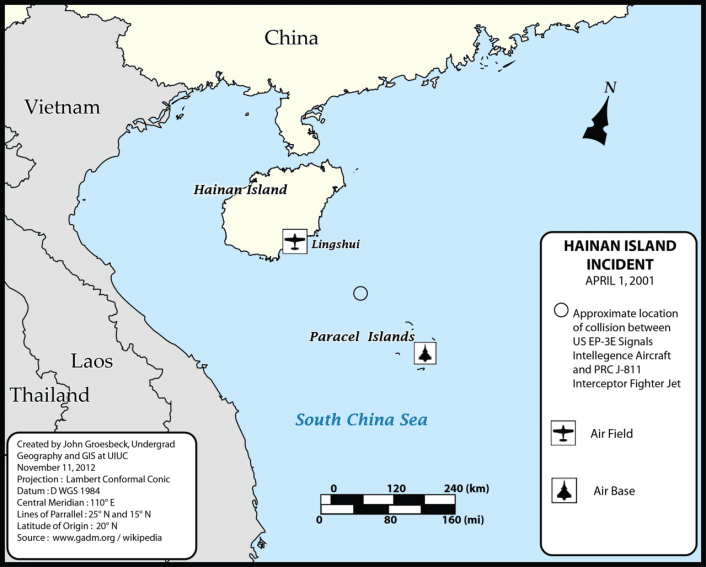
After landing, the crew of the American aircraft was detained by the Chinese government, and the Chinese took possession of the EP-3. Classified information had been destroyed by the crew prior to landing; however the Chinese still attempted and succeeded in gathering information and materials from the aircraft.
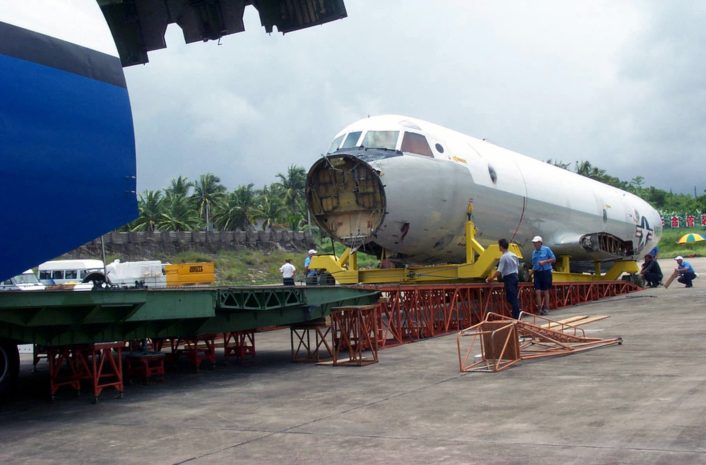
Diplomatic efforts achieved the release of the crew after 11 days, while the aircraft was not released back to the United States until it was disassembled. Technicians from Lockheed Martin dismantled the aircraft and it was returned on an AN-124 transport aircraft in July 2001. The aircraft was reassembled in Georgia, repaired and placed back in service.
The EP-3
Built by Lockheed, the EP-3 was an electronic signals reconnaissance version of the P-3 Orion anti-submarine aircraft. Introduced in the 1960s and based on the L-188 Electra airliner, the P-3 received many modifications during its service life.
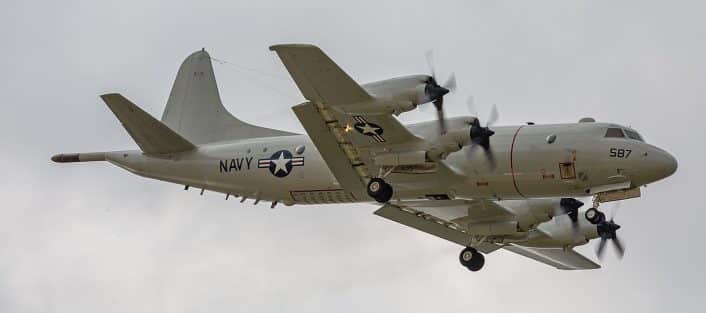
The EP-3 variant was known by the acronym ARIES (Airborne Reconnaissance Integrated Electronic System) and was capable of intercepting signals such as communications or more specifically electronic signals not directly used in communications. A total of 12 P-3Cs were converted to the EP-3E ARIES II ELINT (Electronics Intelligence) variant, the last one delivered in 1997. The last EP-3E was retired in 2025.
The aircraft received power from four Allison turboprops engines and had a length of over 116 ft and wingspan of 99 ft 8 in. It usually carried a crew of 24, which included linguists, cryptographers, and technicians.
The J-8 II Interceptor
The Shenyang J-8 II (Finback-B) is a development of the earlier J-8 (Finback) interceptor. Development began in the early 1980s and it entered service in 1988. The primary users include the People’s Liberation Army Air Force and the People’s Liberation Army Naval Air Force of the People’s Republic of China.
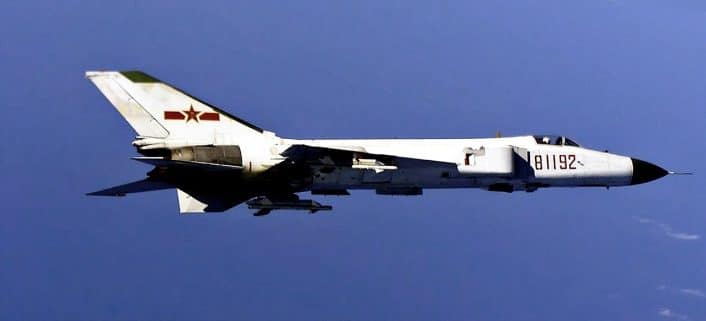
The J-8 II’s power is derived from two WP-13A-II turbojets capable of pushing the 70 ft 10 in long jet to 1,452 mph. Armament includes a single twin-barrel Type 23-III 23 mm cannon and seven external hard points able to carry a variety of weaponry and drop tanks.
The J-8 II also was radically redesigned with the Type 208 pulse-Doppler radar installed. Over 70 percent of the original J-8’s airframe structure and systems were reworked, including the nose air intakes and the shock cone being replaced with a radome and lateral air intakes.
The Interview with Jeff Vignery, 3rd Pilot
The Aviationist: Can you please provide us some background information such as where you grew up, where you attended school, and your path to the U.S. Navy?
I was born in San Diego California at Balboa Naval Hospital and then we moved to Goodland, Kansas, once my Dad finished his time in the Navy as a JAG officer. I grew up in Goodland and graduated from Goodland High School, and then attended and graduated from the University of Kansas. I was in the Naval ROTC program while at KU.
What unit or units were you a part of during your Navy career and what duties did you perform?
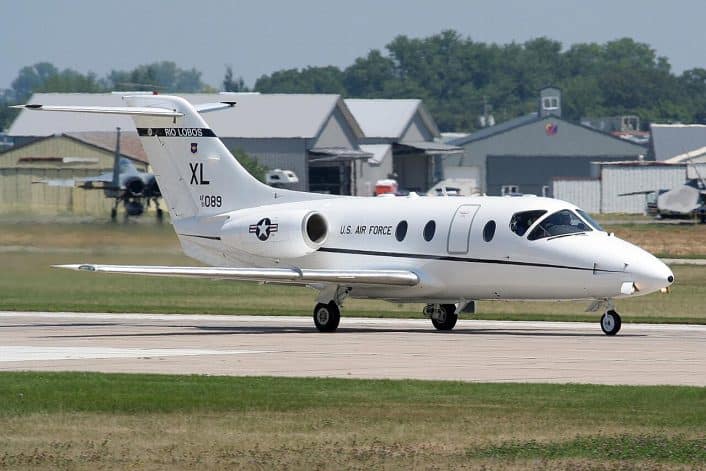
I was part of VQ-1 in Whidbey Island where I flew the EP-3. While stationed there, my ground jobs were Public Affairs Officer and Aviation Safety Officer. After leaving Whidbey I took joint flight instructor orders with the Air Force’s 32nd Flight Training Squadron in Enid, Oklahoma. I instructed Air Force and Navy students in the T-1A Jayhawk.
At the time of the Hainan Island Incident, what position and rank did you hold?
I was the 3rd pilot on the crew and a Lieutenant Junior Grade. Below is a breakdown of the crew positions.
- 1P / PPC (Patrol Plane Commander): The most senior pilot, responsible for the safe operation of the aircraft and mission accomplishment.
- 2P (Second Pilot / Co-Pilot): A qualified pilot who is experienced but not yet fully qualified to be a PPC.
- 3P (Third Pilot): The most junior pilot who is in training and acting as a safety observer and/or copiloting while gaining experience.
What type of aircraft is the EP-3 and what types of missions did it fly?
The EP-3 is a signal intelligence aircraft built by Lockheed. We flew reconnaissance missions all over the world.
What duties did you perform on the EP-3 on that particular mission on April 1, 2001, and where did the mission take place?
I was the 3rd pilot on the aircraft and we were flying off the coast of China.
How many crew members were onboard the EP-3 for this particular mission?
We had 24 crew members on board the EP-3.
Can you briefly describe what occurred during the time leading up to the collision with the Chinese J-8II interceptor? Can you describe the collision? What did you witness?
At the time of the incident I was sitting in the left seat of the cockpit. I was observing the Chinese fighter approach our aircraft on an approximate 45 degree bearing line. He would get close to our aircraft and then break away. On his 3rd attempt of doing this, it is my assumption that he was trying to “thump” (a tactical, often aggressive maneuver where a fighter jet zooms directly in front of a slower, intercepted aircraft (like a spy plane or bomber), causing the target to fly through the fighter’s wake turbulence) our aircraft. I believe he miscalculated and wasn’t in front of us enough when he pulled up on his aircraft.
This resulted in our #1 engine propeller cutting his aircraft in half just in front of his vertical stabilizer. I immediately looked at the aircraft commander in the right seat (Shane Osborn) in disbelief at what had just happened. Shortly after that the aircraft bumped up and then went into a slow roll to almost inverted as we tried to get the aircraft under control.
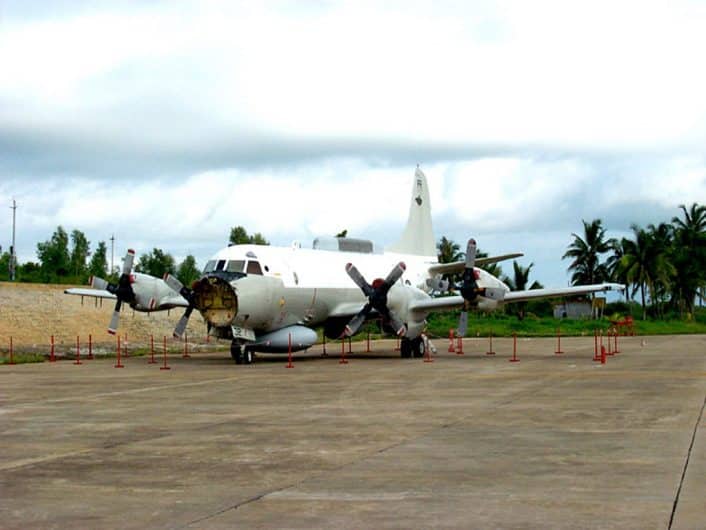
What kind of damage was done to the EP-3 and how did it affect flight performance?
The nose cone was torn off, the #1 and #3 engines had to be shut down and the propellers failed to feather, HF antenna wrapped around the elevator which led to some elevator issues, and no airspeed indicator. I tell people the aircraft was shaking like a single wet towel in a washing machine on spin cycle that is stuck on one side. Shane Osborn performed a two-engine, no flap landing using the GPS to interpolate airspeed..
What became of the Chinese aircraft and pilot?
It is my understanding that both were lost at sea.
What occurred on board the EP-3 after the collision?
After the collision we were all happy to be alive. We spent time determining our next steps as the plane was surrounded by armed personnel and they were yelling for us to come off of it.
At what point was the decision made to land the EP-3 on Hainan Island?
Once the aircraft was somewhat under control we performed a seat swap and requested the Navigator (Regina Kaufman) provide the closest airfield. However, when I left the flight station I was going to my ditching station (where I would sit for ditching the aircraft in the ocean). So my assumption was we were going to ditch the aircraft in the ocean.
What were your thoughts after the collision after realizing the damage done to the EP-3?
Well, I don’t think there is a way to realize the full extent of the damage until after you exit the aircraft. Honestly, I was thanking God for providing a miracle.
What was the emergency landing like and the reception?
I think any landing after something like that is the best. The plane was immediately surrounded by armed Chinese military personnel.
Can you describe what happened after the crew exited the aircraft?
We were ushered onto a bus where we waited for hours. It is my assumption that they didn’t know what to do with us and were waiting for direction from higher authority.
How did the Chinese troops and personnel treat the crew of the EP-3?
No physical harm was done to anyone on the crew. They mostly left us alone until you were taken for interrogation. Sometimes during interrogation there were threats but they were never executed.
When did you realize they were not sending you home right away and were you able to communicate with loved ones back home and if so how often and by what means?
I think we all realized it after a couple of days when we were requesting to speak to the Red Cross and/or a U.S. military representative and nothing was happening. We weren’t able to communicate at all with loved ones back home that I remember.
Did the Chinese interrogate the crew? If so can you describe how that was done?
The pilots were interrogated individually twice a day at random times. Sometimes we were interrogated in the middle of the night, early in the morning, or afternoon.
Did you witness anything the Chinese did with the EP-3 while they had control of it?
No, we were kept in barracks away from the airfield and told to keep the blinds closed on our windows.
How was the crew’s morale during the time they were detained? How did you deal with the unknowns of what was going to happen next?
I think morale was as best it could be in that type of situation. We encouraged prayer and prayed before meals when we were all together. The 2P (Pat Honeck) and myself would come up with short skits to perform when we were all lining up for meals to try and keep the crew smiling or laughing if we could.
When and how did you find out you were finally being released?
If I remember correctly, the Defense Attache Brigadier General Neal Sealock came and let all of us know that we would be going home the next day. We were all allowed one phone call to a loved one to let them know we would be coming home the next day.
When you were released, how was the crew transported and to where? What did your journey home look like?
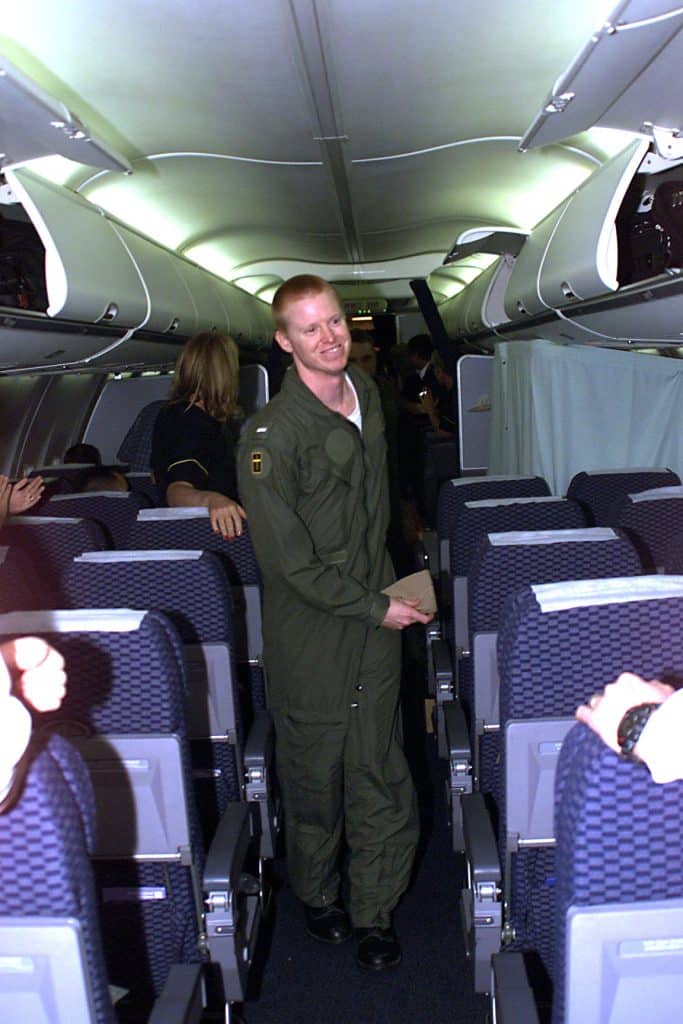
We were transported by Continental Airlines. First time, I ever had my own row of seats on a plane and served a meal on actual plate ware instead of paper. We stayed one night in Guam then headed to Hawaii. Spent a couple days in Hawaii for debriefing and President Bush made sure we made it home in time to spend Easter with our families.
Can you describe the reception you received when you returned home?
Incredible reception both at Whidbey Island and my personal one in Goodland, Kansas. Definitely unexpected in both cases. I think the entire crew felt like we were doing what we were trained to do. Unfortunately another aircraft ran into us and, in my opinion, God ensured that aircraft remained airworthy enough for us to get everyone to safety.
I understand the crew was invited to the White House by President George W. Bush. Can you describe that experience?
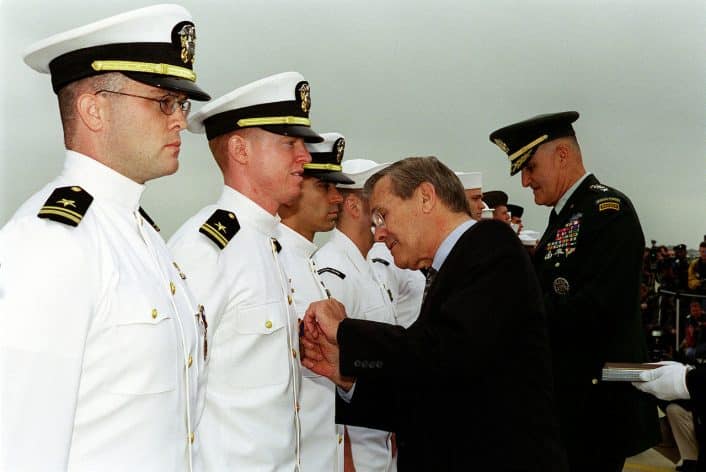
Meeting the President of the United States was amazing. He showed us around the oval office and explained the various artwork in the space. One of our crew actually asked if they could sit in his chair behind the desk. Of course the secret service was shaking their head no but President Bush replied “absolutely”. Which was great because we all took a turn sitting in that chair.
Do you remain in contact with any of your former crew members from this incident?
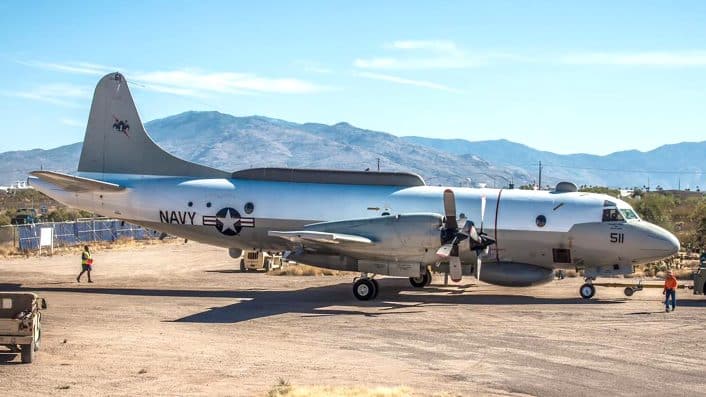
We do remain in contact the best we can when life doesn’t get in the way. An email does get sent every April 1st and crew members respond with an update on where they are and what they are doing. Those that were able did get together this year on April 1st to see the plane in a boneyard in Arizona. Unfortunately, a lot of us were unable to make it.
Do you know what became of the specific EP-3 from this incident?
The specific EP-3E is now on display at the Pima Air & Space Museum in Tucson, AZ.
Is there anything else you’d like to let our readers know about this event and your experience?
When I look back at this event and the near misses throughout. I truly believe God was watching over us and kept the plane airborne until we were safely on the ground. The experience increased my faith in God and continues to be my reminder that he is always with us.
The Aviationist would like to send out a huge thank you to Jeff Vignery for agreeing to answer our questions and share his experiences. In addition, very special thanks to Rachel Berkheiser and J. Ronald Vignery for working behind the scenes and connecting us with Jeff.
source
