
Close Menu
FlyMarshallFlyMarshall
  • Aviation
    • AeroTime
    • Airways Magazine
    • Simple Flying
  • Corporate
    • AINonline
    • Corporate Jet Investor
  • Cargo
    • Air Cargo News
    • Cargo Facts
  • Military
    • The Aviationist
  • Defense
  • OEMs
    • Airbus RSS Directory
  • Regulators
    • EASA
    • USAF RSS Directory
What's Hot

US Navy destroyer intercepts Iranian-flagged vessel trying to skirt blockade

April 15, 2026

JetBlue Founder Predicts Bankruptcy For Struggling Airline In Leaked Recording

April 15, 2026

U.S. Army Officially Names MV-75 as Cheyenne II

April 15, 2026
Facebook X (Twitter) Instagram
Demo
  • Aviation
    • AeroTime
    • Airways Magazine
    • Simple Flying
  • Corporate
    • AINonline
    • Corporate Jet Investor
  • Cargo
    • Air Cargo News
    • Cargo Facts
  • Military
    • The Aviationist
  • Defense
  • OEMs
    • Airbus RSS Directory
  • Regulators
    • EASA
    • USAF RSS Directory
Facebook X (Twitter) Instagram
Demo
Home » The Beginner’s Guide to Keyed Washers
Airbus RSS Directory

The Beginner’s Guide to Keyed Washers

FlyMarshall NewsroomBy FlyMarshall NewsroomApril 15, 2026No Comments3 Mins Read
Share
Facebook Twitter LinkedIn Pinterest Email

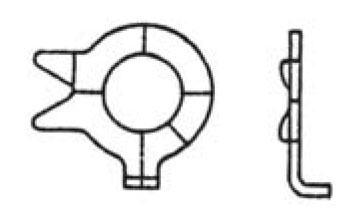
keyed washer by Monroe

Washers are commonly used with bolts and nuts. Without them, the head of a bolt may dig into the surface of the fastened object, crushing and damaging the object. Washers prevent this from happening by distributing the bolt’s load across a larger area. While most washers feature a uniform ring shape, however, keyed washers feature a unique asymmetrical design that sets them apart.

What Are Keyed Washers?

Keyed washers are mechanical fasteners that are designed to resist loosening. They are characterized by the presence of a tab-like extension. Known as a “key,” this extension locks the washer into place so that the fastener assembly doesn’t loosen over time.

How Keyed Washers Work

How does a keyed washer work exactly? Most washers have a single main purpose: to distribute the load of a bolt across a larger area. Keyed washers go one step further by protecting the fastener assembly from loosening.

Keyed washers leverage mechanical interference to protect against loosening. They don’t rely on pressure alone. Instead, keyed washers have a mechanism — the key — to block rotation.

The key fits into a groove or slot. Once seated, keyed washers can’t spin. Many keyed washers also have teeth that are bent upward or downward to further resist loosening. Regardless, all keyed washers have a tab or “key” that prevents the washer from spinning.

The Installation Process

Installing a keyed washer is a straightforward process. The first step is to align the washer’s key with the groove or slot. The key must be fully seated. Otherwise, the washer may spin.

A bolt is then placed through the center of the keyed washer — just like with a traditional nut and bolt assembly. If the keyed washer has teeth, the teeth should be bent for additional protection against loosening. The final step is to twist a nut onto the back end of the bolt using proper torque to achieve a tight and secure joint.

The Importance of Keyed Washers

Mechanical fasteners are designed to hold parts together. When they become loose, their clamping force can drop by as much as 80%. The end result is loose, weak joints that leave the fastened parts susceptible to premature wear and tear, misalignment and even failure.

Keyed washers offer a solution. They protect against loosening by aligning with a groove or slot. You’ll often find them in machinery and other high-vibration environments. When exposed to vibrations, traditional fasteners will typically loosen. Keyed washers, on the other hand, won’t loosen because the key physically blocks rotation.

In Conclusion

Washers come in a variety of styles, one of which is keyed. Keyed washers feature a key that sits into a groove or slot. By physically blocking rotation — as opposed to relying on friction — they give fastener assemblies a level of stability that standard washers cannot match.

source

FlyMarshall Newsroom
  • Website

Related Posts

Inspection Ports: Streamlining Aircraft Inspections

April 13, 2026

What Is a One-Pole Toggle Switch?

April 10, 2026

What Factors Affect Takeoff Distance?

April 8, 2026

Why Do Some Airframe Bolts Have a Hole in the Shank?

April 6, 2026
Add A Comment
Leave A Reply Cancel Reply

Latest Posts

US Navy destroyer intercepts Iranian-flagged vessel trying to skirt blockade

April 15, 2026

JetBlue Founder Predicts Bankruptcy For Struggling Airline In Leaked Recording

April 15, 2026

U.S. Army Officially Names MV-75 as Cheyenne II

April 15, 2026

ANN’s Daily Aero-Term (04.12.26): Request Full Route Clearance

April 15, 2026

Subscribe to Updates

Please enable JavaScript in your browser to complete this form.
Loading
About Us

Welcome to FlyMarshall — where information meets altitude. We believe aviation isn’t just about aircraft and routes; it’s about stories in flight, innovations that propel us forward, and the people who make the skies safer, smarter, and more connected.


Useful Links
  • Business / Corporate Aviation
  • Cargo
  • Commercial Aviation
  • Defense News (Air)
  • Military / Defense Aviation
Quick Links
  • About Us
  • Contact Us
  • Disclaimer
  • Privacy Policy
  • Terms and Conditions

Subscribe to Updates

Please enable JavaScript in your browser to complete this form.
Loading
Copyright © 2026 Flymarshall.All Right Reserved
  • About Us
  • Contact Us
  • Disclaimer
  • Privacy Policy
  • Terms and Conditions

Type above and press Enter to search. Press Esc to cancel.

Go to mobile version