

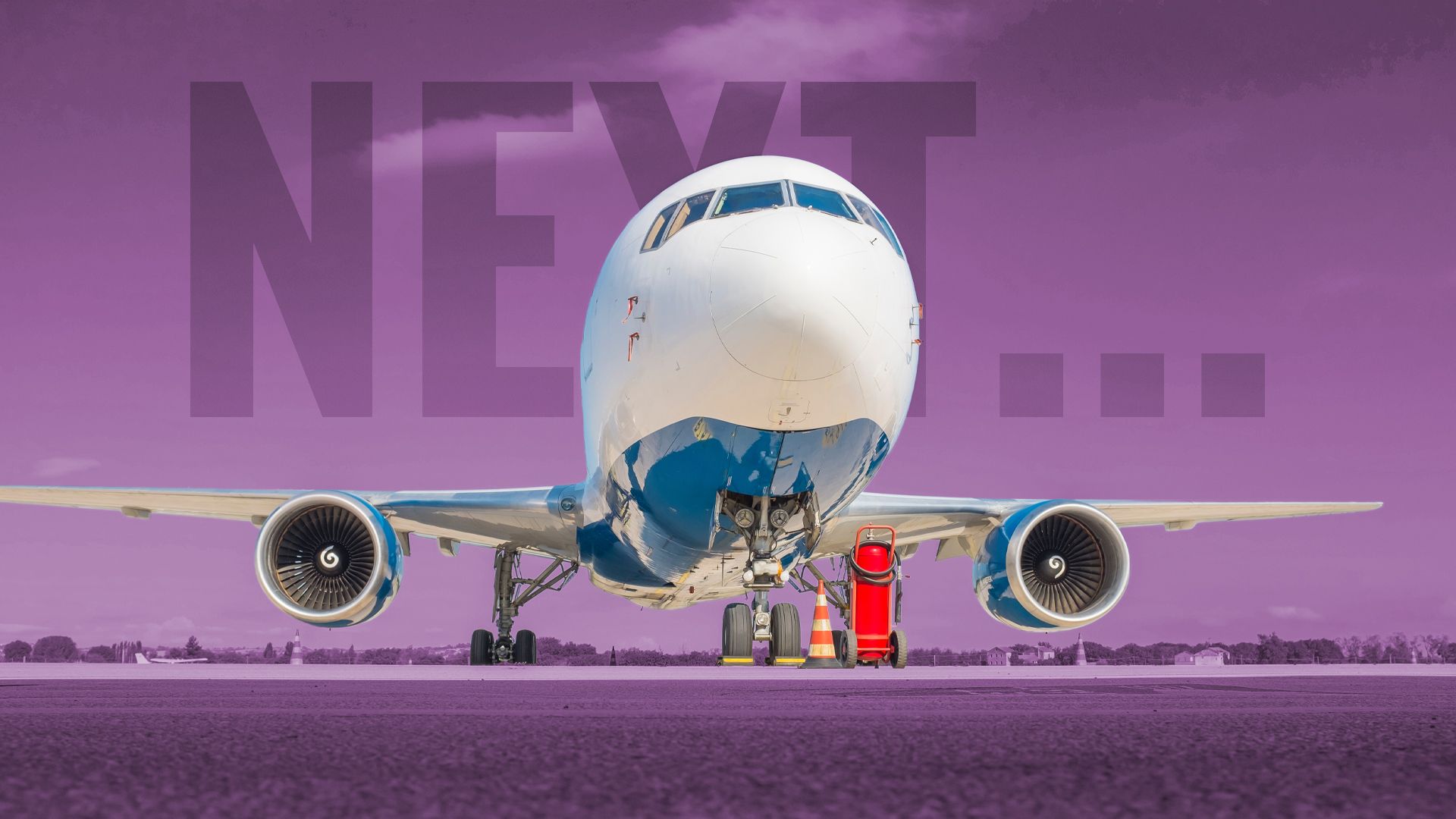
The Boeing 767 first flew in September 1982, being introduced with United Airlines as the launch customer. With 43 years of flying under its belt, the time is soon coming when the 767 will no longer be worth the maintenance costs. As of September this year, 1,341 767s have been delivered, with modern 767 variants still being produced today, such as the 767-200ER. This variant seats 181 people over a 6,590 nautical mile range, making it competitive on transcontinental passenger routes.
However, big changes are coming to the passenger aviation industry thanks to new emissions guidelines coming into effect, and many aircraft will no longer be purchasable new on the market. Competing aircraft variants in the Airbus A330 and Boeing 787 Dreamliner aircraft families are waiting in the wings, but which is most likely to replace the 767 as a medium to long-haul workhorse?
The A330neo Is Certified Future-proof

The question of emissions can be a contentious one, particularly as climate change has been something of a gravy train, spawning numerous initiatives and projects around the world, becoming very lucrative for green product manufacturers. Nevertheless, in the field of commercial passenger aviation, emissions mean fuel consumption, and every mile of travel has a cost to the airlines that own and operate passenger aircraft.
A recent and very significant development is the new standards from the International Civil Aviation Organization (ICAO), which will apply from 2028 onwards, requiring all certified aircraft to produce a low level of CO2 emissions. Almost all aircraft currently available on the market fall short of these standards, although it has been known for some time that the Airbus A350 and its as yet unreleased long-haul widebody competitor, the Boeing 777X, will likely fall within acceptable levels.
The European Union Aviation Safety Agency (EASA), the body responsible for ensuring civil aviation safety in the skies across Europe, has recently certified the Airbus A330neo as the first aircraft ever to officially qualify for the post-2028 environmental regulations. As long as airlines are willing to disregard any brand loyalty to Boeing, being viable in a post-2028 passenger aviation environment makes the A330neo a suitable immediate successor to the Boeing 767.
The 2-Liter Aircraft

The A330-900, the first A330neo variant, was first delivered to TAP Air Portugal in November 2018. This was followed by the A330-800, which was first delivered to Kuwait Airways in October 2020. Being a contemporary widebody aircraft, the A330neo benefits from many efficiency-boosting features, resulting in a 14% better fuel economy per seat than the original A330ceo (current engine option) according to Airbus.
Condor, a German airline that offers scheduled and charter flights, calls the A330neo ‘the 2-liter aircraft’, according to Auto Evolution. This is because it only burns 2.1 liters of fuel per 100 kilometers per passenger, which is much lower than the industry average. One of the secrets to the A330neo’s efficiency is the Rolls-Royce Trent 7000 high-bypass turbofan engines it comes equipped with, which boast twice the bypass ratio of the previous Trent 700 model.
|
A330-941 Specifications |
|
|
Range |
7,200 nautical miles |
|
Cruise Speed |
Mach 0.86 |
|
Seats |
440 |
|
Freight Capacity |
33 LD3s or 9 pallets and 5 LD3s |
|
Length |
208 feet 10 inches |
|
Wingspan |
210 feet 0 inches |
|
Max takeoff weight |
553,400 pounds |
|
Fuel Capacity |
36,750 US gallons |
|
Powerplant |
2x Rolls-Royce Trent 7000-72 turbofan engines 289.16 kN (65,005 lbf) thrust each |
The A330neo also benefits from aerodynamic improvements, with longer, improved wings and ‘sharklet’ winglets, boosting fuel efficiency by a further 4%. Regarding the Neo’s recent EASA certification, Simone Rauer, Airbus’ Head of Aviation Environmental Roadmap said the following:
“Airbus is proud to be the first commercial aircraft manufacturer to receive EASA certification for ICAO’s new CO2 emissions requirement. ICAO standards are important elements of the global ICAO action plan to regulate emissions from aircraft and engines and to help ensure a level playing-field in the industry. For the A330neo in particular this award demonstrates that this aircraft meets ICAO’s environmental regulations beyond 2028.”
The Boeing 787-9 Might Be Another Contender

The A330neo is based on the 30-year-old design of the A330, and its incremental improvements have given it great fuel-efficiency. However, while the Boeing 787 dreamliner is a slightly older aircraft, being introduced in October 2011 with All Nippon Airways, the 787 has the benefit of having a more modern model base, having been a clean-sheet design at the time.
According to the i6 Group, the 787 may actually have both the A330neo and the A350-900 beaten in terms of fuel-efficiency per seat, as shown in a comparison below:
|
Category |
Airbus A330-900neo |
Airbus A350-900 |
Boeing B787-9 |
|
Liters of fuel per 100 kilometers per PAX |
2.48 |
2.39 |
2.31 |
|
Seating Capacity (typical multi-class layout) |
300 |
315 |
290 |
|
Range (kilometers |
13,334 |
15,327 |
14,140 |
|
Fuel capacity (liters) |
139,090 |
166,488 |
126,372 |
The 787-9 currently competes closely with the A350-900, and thanks to being slightly lighter, it comes in slightly ahead in terms of fuel economy per seat. The A350-900 does have the edge in some areas, with a greater range, capacity and maximum take-off weight. One way that being a newer clean-sheet design benefits the 787, is that its wings and fuselage are primarily made of composites, where those of the A330neo A330-900 are made primarily of aluminum, giving the Boeing great efficiency during cruise.
One Plane For Medium-Haul, Another For Long

Regarding the Boeing 767, it is also no slouch in terms of fuel efficiency per seat, being comparable with the A330neo. According to Aviation Stack Exchange, the 767-400ER variant burns 2.43 liters of fuel per 100 kilometers per PAX, slightly less than the 2.48 liters cited by the i6 Group. The A330neo does beat the shortest 767-300ER variant, however, which burns 2.56 liters.
The question of lightness also comes up in community discussion on which is more efficient between the A330neo and 787-9, with posters on Reddit presenting that the lightness of the A330neo makes it more efficient on medium-haul flights. The question of gross weight comes into play here, particularly when that weight is made up by jet fuel for long routes:
“The A330neo is a much lighter aircraft than the 787; it has a much lower maximum takeoff weight (MTOW). Planes that have an increased gross weight are usually better at flying long distances, because they can carry more fuel and more passengers at the same time. […] This is why you’ll typically see A330s and 767s flying much shorter routes than 787s or A350s, despite being a roughly similar size.”
Even if lighter planes with smaller fuel capacities are more efficient for medium-haul routes, making them particularly useful for island-hopping Asian or European flights, sometimes the fuel-burn reductions are hard to resist. However, for airlines already using Boeing aircraft, a major reason that they may not consider an A330neo, or even an A350, is that there is the added expense of retraining air and ground crews to accommodate an Airbus aircraft.
“Boeing widebody operators jumped at the chance for a new plane when the 787 launched near a decade ago. With such huge fuel burn reductions, they couldn’t ignore it. But they’re unlikely to retrain their entire maintenance and flight crew contingents to swap over to Airbus, so the most likely candidates for A339 sales are the existing Airbus widebody operators.”
Condor Has Chosen The A330neo

It is worth noting that the 2.1 Liters per 100 kilometers per PAX fuel efficiency cited by Condor for the A330neo may be due to the fittings used onboard. According to a Condor flyer on the A330neo, the aircraft carries 315 passengers, with the cabin arranged in 216 Economy, 64 Premium Economy and 26 Business classes, with the addition of four Prime seats. However, the A330 uses the Airbus Airspace-branded cabin, which reduces weight through simple design.
The German airline also added an upgraded air system to supply the people onboard with fresh, clean air. Along with increased privacy measures in all classes, Condor has promised that the A330neo will offer the world’s quietest cabin for an airliner of comparable size:
“Our new aircraft not only operates economically and efficiently, but is also quiet: noise pollution at airports is reduced by up to 60 percent. Flying is therefore only half as loud as before.”
Condor has recently ordered 16 A330neos with the above specifications, aiming to use the aircraft to replace its current fleet of 767s, the airline opting to bite the bullet and make the switch from Boeing to Airbus. Notably, according to the flyer, these aircraft will be utilized on long-haul routes. With the push towards minimizing environmental impact, Condor highlights the A330neo’s recent EASA certification and also markets it to passengers as being one of the most eco-friendly flying options out there:
“By cutting CO2 emissions by 20 percent on the same routes, customers reduce their environmental footprint. In fact, the Airbus A330neo is the first aircraft in the world already certified to meet the 2028 CO2 emission reduction targets.”
source
