

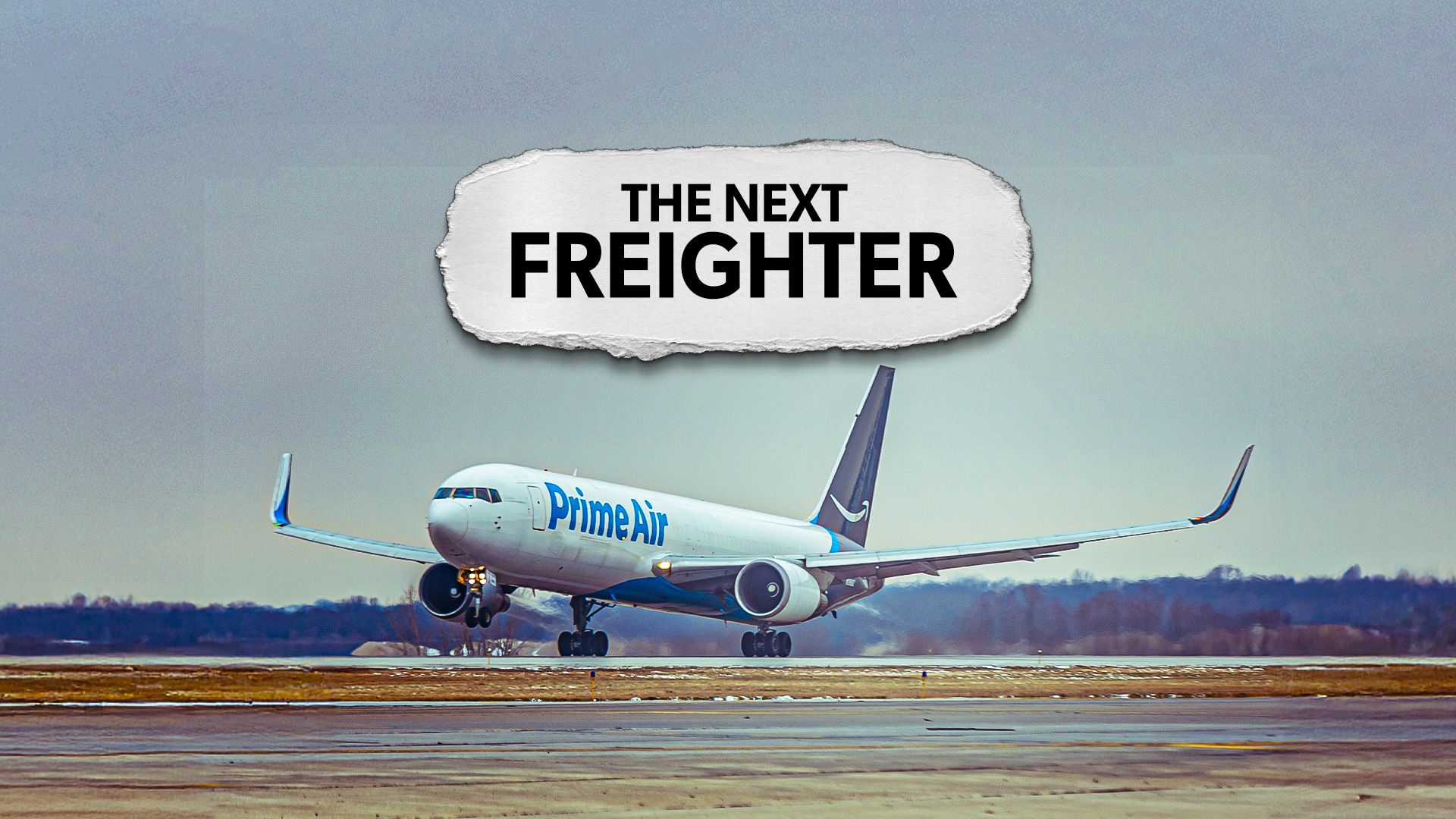
For many of its operators, the Boeing 767 freighter is reaching the end of its life. The 767-300F entered into service with UPS Airlines in 1995 and the first 767-300 Converted Freighter arrived at All Nippon Airways in June 2008. It is time for these airlines to start considering replacements.
The most likely candidate is the 777-8F, the freighter variant of the upcoming and long-delayed 777X. This jet aims to bring the incredible power and efficiency of the 777X to the cargo market. However, it will have to achieve dominance over its old adversary. The upcoming Airbus A350F has currently secured 65 orders, which is approximately 10% of the total outstanding orders for the A350 family.
The 777-8F Is Set To Replace The 767 Cargo Variants

The aircraft most likely to replace cargo 767s is the Boeing 777-8F, the upcoming freighter variant for the 777X. The aircraft has come to pass because Qatar Airways heavily lobbied Boeing for it to build the jet in 2019 and offered to be its launch customer. Boeing confirmed that it would construct the 777X freighter soon after, and that it would be based on the 777-8, the less popular of the two 777X variants.
The guiding philosophy for this aircraft is that it will allow Boeing to market a freighter compliant with increasingly strict emissions restrictions that the 767 freighters were not compatible with. FlightGlobal has reported Boeing CEO David Calhoun’s beliefs on what the 777-8F can achieve. Calhoun said:
“We need to develop a new ICAO-compliant freighter. I circle the 777X as the logical place for that, and the smart place to do that.”
The 777-8F was then officially launched in January 2022, alongside an announcement that Qatar Airways had ordered 34 of the aircraft with options for 16 more. The manufacturer initially suggested that deliveries would start in 2027, but delays have occurred in line with delays for the entire 777X program. However, things are moving along now, with the first parts in production as of July 2025. Boeing now believes that its first deliveries will begin in 2028.
Despite the need for the 777-8F for regulatory reasons, Boeing has said it will continue producing the older 777F. Calhoun explained how this will be done,
“There are exemptions that exist within the ICAO language that have to be accommodated by the US government” which could form a “transition strategy to that new kind of opportunity.”
What Freighters Does Boeing Currently Market?

Boeing currently markets four models of freighters. This includes two variants in the 767 family, the 767-300 Freighter and the 767-300 Converted Freighter. The difference is that the 767-300 Freighter rolled off the production line as a cargo aircraft. Meanwhile, the 767-300 Converted Freighter was converted to a cargo aircraft after ending its service as a passenger airliner.
Boeing calls the 767-300F the “most versatile freighter for the medium widebody freighter market.” Meanwhile, the Converted Freighter is marketed as the “market-preferred converted freighter for the general and express cargo markets.” The table below contains essential specifications for the Boeing 767-300F according to Air Charter:
|
Payload |
119,049 lbs (54,000 kg) |
|---|---|
|
Hold size |
1531 inches x 177 inches x 98 inches (3890 cm x 450 cm x 250 cm) |
|
Door size |
133 inches x 102 inches (340 cm x 260 cm) |
|
Total load volume |
15,467 cubic inches (438 cubic meters) |
|
Maximum range |
3,763 miles (6,056 km) |
|
Cruising speed |
529 mph (850 km/h) |
Another model of freighter currently sold by Boeing is the 777 freighter, which it claims is the longest-range twin-engine freighter in existence. This jet can fly a revenue payload of 102 tonnes almost 5,000 nautical miles. At the very age of its range, a 777 freighter taking off from Dubai can reach Dakar or Perth. That is further than the 747-400F, 747-200F and MD-11 Freighter.
The other cargo aircraft currently sold by Boeing is the Boeing 737-800 Converted Freighter, which Boeing calls the “world’s most efficient and most reliable standard-body freighter.” This jet also has some impressive accolades. It has a range of 2,025 nautical miles and can carry a net revenue payload of 21.5 tonnes. Furthermore, as a member of the 737 Next Generation family, it has decent efficiency and fairly low operating costs.
The Start Of 777-8F Production

This July, AIN Online reported on the commencement of Boeing 777-8F production. The event was marked with a gathering of 100 Boeing employees inside the 777X Composite Spar Shop on July 21 to watch Boeing’s robots drilling the first holes in a 777-8F wing spar. Each such wing spar will require 938 holes to be drilled, each by the Spar Assembly Robotic Cell (SPAC) robot over the course of five eight-hour shifts.
At 108 feet long, each wing has two spars, one in the front and one in the back, that are essential for maintaining the wing’s structural integrity. The table below includes critical specifications for the 777-8F according to Boeing’s 777-8F Airport Compatibility Brochure and commercial freighters web page:
|
Wingspan |
Folded: 212 ft 9 inches (64.9 m) Unfolded: 235 ft 5 inches (71.8 m) |
|
Maximum takeoff weight |
805,000 lbs (365,000 kg) |
|
Length |
232 ft 6 inches (70.9 m) |
|
Height |
64 ft 1 inch (19.5 m) |
|
Range |
4,410 nautical miles (8,200 km) |
|
Net revenue payload |
112.3 tonnes |
Jason Clark, 777/777X vice president and general manager, explained why the event was so momentous for the entire Boeing 777Xprogram:
“It may seem small, [but] it’s that one hole…that gets everything started. All the work that goes into starting a program, the years of development, the years of engineering, the years of supply chain, procurement, and contracting, and all the other pieces—the blood, sweat, and tears—all that innovation comes together and is represented in the first in that first hole.”
The State Of Boeing’s Order Sheet

Beginning production of the 777-8F and other 777X aircraft is not the only manufacturing pressure that Boeing is under. This July, Boeing had 93 freighters currently in production (excluding 777-8F) in its backlog and delivered 27 cargo aircraft in June, according to The Stat Trade Times. This included 13 777s, eight for FedEx Express and five split between two unidentified customers.
The 27 deliveries completed through June were 20 777 Freighters and seven 767-300Fs. In June alone, Boeing managed four 777F deliveries to Air China Cargo, Atlas Air Worldwide, DHL Aviation Americas, and CFS Leasing Corporation and two 767-300Fs to UPS and FedEx. Up to 2025, Boeing has delivered 297 777Fs.
The backlog of 93 Freighters included 65 777Fs and 28 767-300Fs. The latter included 14 for UPS, six for FedEx Express, and eight for an unidentified customer. Meanwhile, the unfilled Boeing 777Forders included 11 for Emirates SkyCargo, eight for FedEx Express, six for Volga-Dnepr, four each for National Airlines, Silk Way West Airlines, and Turkish Cargo, two for DHL Aviation Americas, one for CMA CGM, and 25 for unidentified customers.
Boeing also has attracted strong orders for the 777-8F totaling 59. That accounts for a little over 10% of the total 777 orders. Interestingly, there are more orders than the manufacturer has for the passenger 777-8 (43). These orders are distributed across seven airlines: Qatar Airways (34), Cargolux (10), Korean Air (8), Lufthansa (7), China Airlines (4), All Nippon Airlines (2), and Silk Way West Airlines (2).
Four of these airlines have signed contracts that give them the option to purchase additional 777-8Fs: Qatar Airways (16), Cargolux (6), China Airlines (4), and Silk Way West Airlines (2). As the 777-8F takes to the skies over the next few years, it will be fascinating to see how many of these options for additional aircraft are taken.
What Will The 777-8F Compete With?

The most obvious competition for the 777-8F as the 767 freighter begins to be phased out is the Airbus A350F. Airbus’ new freighter’s strengths are different from the impressive payload, commonality with 777s, and powerful GE9X engine offered by the 777-8F. The A350F has a lower structural weight, advanced composite fuselage and wings, and an efficient Rolls-Royce Trent XWB engine.
The A350F was first proposed in 2007 to offer a similar capacity to the McDonnell Douglas MD-11F with a better range (5,000 nautical miles or 9,250 km) and more efficient operations. The Airbus board approved the launch of the $2-3 billion program in 2021, basing the aircraft on the A350-1000 and planning for a 2025 entry into service. The designed aircraft would have a payload of 90 tonnes. Currently, Airbus expects to deliver the first of its A350Fs in the second half of 2027.
It is clear that Airbus aims to offer lower emissions and costs per ton of cargo transported. As such, we are likely to see the 777-8F operating at the busiest airports, where it will help companies with limited slots transport as many goods as possible. The A350F offers something more flexible. With the 777-8F set to join the market very soon, it will be fascinating to see how it squares up against the A350F in real-world operations.
source
