

The Airbus A380 is one of the most iconic aircraft ever built. With four engines and a full-length second deck, it is the largest commercial airliner in the world. 11 airlines currently operate the A380, primarily on high-volume, core long-haul routes. None of these operators are US airlines, but the A380 is no stranger to American airports, with Los Angeles International Airport (LAX) having the most daily flights.
The A380 was revolutionary when it first hit the market in terms of how much cabin space it offered. Airlines had free rein to design layouts that optimized revenue and delivered world-class premium experiences fitting for an aircraft of such grandeur. The A380’s unique cabin design allows airlines to offer configurations with more premium seats, which are key drivers of airline revenue.
The Airline Business Model

The business of airlines is not as straightforward as it may seem. The modern-day airline has many sources of revenue, ranging from cargo to credit cards. In fact, ticket sales fall second to the revenue generated by loyalty programs in most cases. Nevertheless, executives of the world’s leading airlines are tasked with finding ways to optimize revenue streams in an ever-changing consumer landscape.
Now halfway through November, the year is nearing its close, and airlines are prepping for some of the busiest travel days of the year. In a recent earnings report,  United Airlines announced it is expecting its highest ever quarterly revenue in the final fiscal quarter of 2025. This number is primarily driven by increased demand for premium travel, a trend seen across many airlines. At a similar time,
  Delta Air Lines reported its premium revenue grew 9% in the September quarter compared to 2024.
Catering to premium ticket fares represents a core strategy adopted by many airlines in the recent post-COVID years. In fact, it has been the premium offerings that have shown promising margin growth for many airlines in an industry known for razor-thin margins. This has created competition at the top end of the airline experience, with major airlines across the world putting efforts towards improving their premium offerings. In particular, operators of the Airbus A380 have demonstrated these efforts thanks to the aircraft’s spacious cabin design.
Emirates A380: An Aviation Icon

Perhaps no airline-aircraft combination is more iconic than the  Emirates A380. With a total of 116 in its fleet, they are the largest operator of the “King of the Skies” by a wide margin. The Emirates A380 route network reaches nearly every corner of the globe as well, with the most popular route being between the airline’s home base at
  Dubai International Airport (DXB) and London Heathrow (LHR), currently operating six daily flights.
One area where Emirates separates itself from other A380 operators is in its approach to cabin layout. Across the fleet, there are eight different cabin configurations, ranging from two- to four-class layouts (see table below). Granted, this is thanks in part to its large A380 fleet, but Emirates is purposeful in its strategy. The 615-seat two-class configuration flies on mid-range flights to Europe and Asia from DXB, with destinations such as Prague only receiving aircraft of this layout. This configuration has the highest seat count of the eight and trades lower revenue per seat for much higher seat volume. Decisions like this are made based on the types of passengers on certain routes and their reasons for travel.
Conversely, the A380’s large cabin also enables a four-class layout that includes more premier offerings on ultra-long-range flights. In particular, private first class suites, onboard showers, and a bar where first and business class passengers can enjoy a cocktail at cruising altitude all help elevate the travel experience. However, these amenities come at a much higher price, which not only helps generate more revenue for the airline but also helps to diversify the A380 revenue streams and use cases. This flexibility in seat layout is a crucial asset for Emirates, which has the ability to respond to and capitalize on fluctuating consumer trends with ease.
|
Configuration Type |
Number of Aircraft |
First Class Seats |
Business Class Seats |
Premium Economy Seats |
Economy Seats |
|---|---|---|---|---|---|
|
Four-class (388Y) |
31 |
14 |
76 |
56 |
338 |
|
Four-class (388V) |
5 |
14 |
76 |
56 |
322 |
|
Four-class (388M) |
7 |
14 |
76 |
56 |
341 |
|
Three-class (388U) |
16 |
14 |
76 |
399 |
|
|
Three-class (388R) |
4 |
14 |
76 |
429 |
|
|
Three-class (388P) |
23 |
14 |
76 |
401 |
|
|
Three-class (388L) |
15 |
14 |
76 |
427 |
|
|
Two-class (388J) |
15 |
58 |
557 |
Source: AeroLOPA

How Emirates Turned The Airbus A380 Into A Luxury Icon The World Can’t Forget
Emirates has been able to associate the A380 Superjumbo with its own brand and used innovations like the in-flight bar and shower to shape its image.
Luxury Sells

Most aviation-minded travelers have seen the outrageously opulent offerings some airlines are including on their A380s. Most notably, The Residence, offered by  Etihad Airways, consists of a private living room, bathroom, and bedroom. This ticket is the epitome of luxury and is only offered to select first class customers. It is not uncommon to see one-way fares in the range of $25,000, which, of course, contributes a considerable amount to the flight’s revenue. Not to mention the nine first class and 70 business class seats also present on an Etihad A380.
This trend towards luxury on the A380 is not limited to a few operators. Rather, the major airlines that operate the A380 take advantage of the wide airframe, which is the widest among any airliner, by incorporating ultra-premium seating zones. In many cases, the entire second deck is reserved for premium seating only. The  Singapore Airlines A380 is regarded as having one of the best first class seats on any airline, thanks to its vast private suites with full-size beds. This reflects another core strategy of A380 operators: selling an experience. For instance, lounges on an A380 are an element of luxury no other aircraft on the market can offer, thanks to its vast cabin footprint. This, in part, justifies the exceptionally high ticket prices at the top end on the A380, which make it such a lucrative asset to airlines.
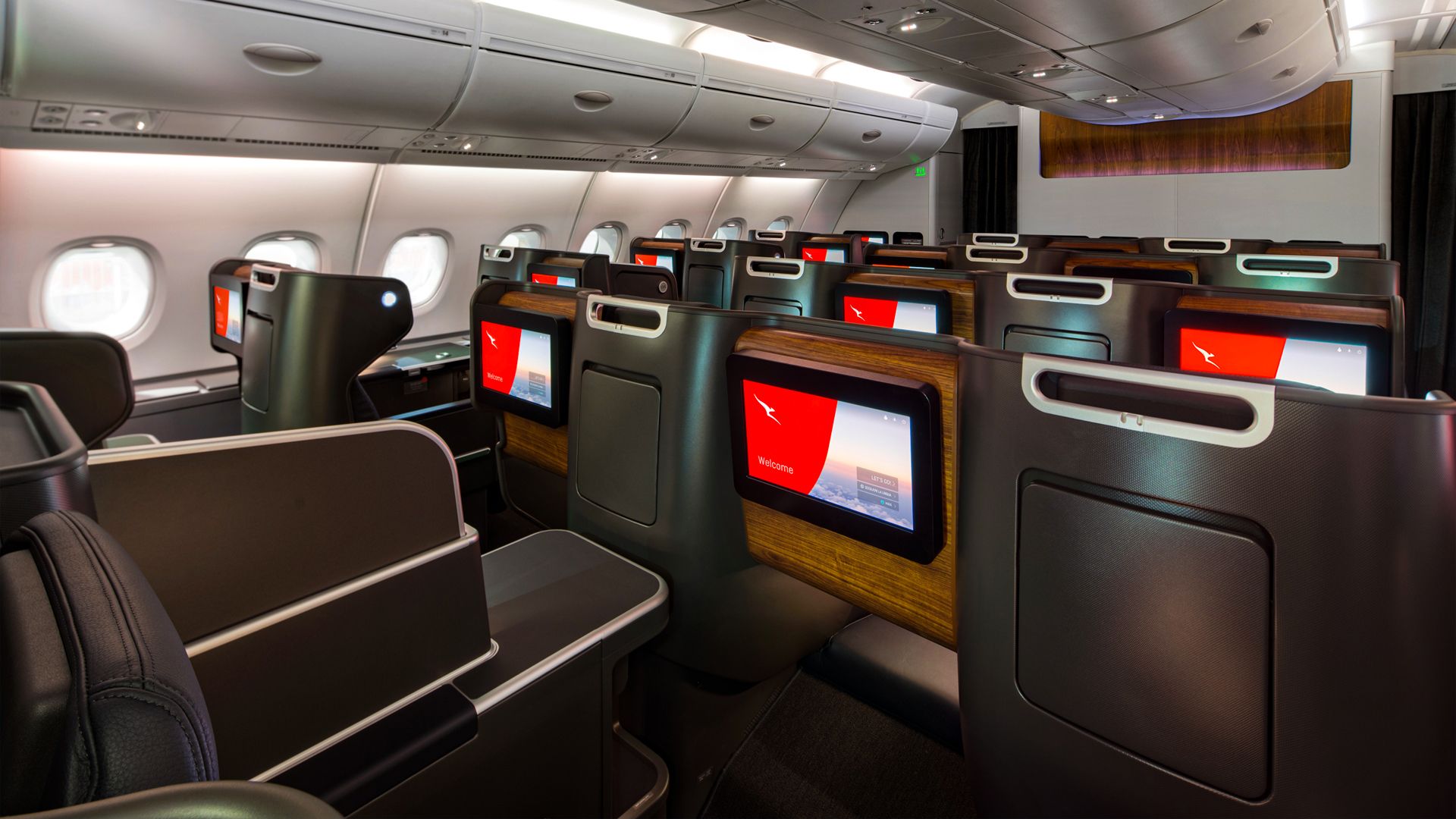
Many airlines, such as Qantas, have actually reduced the number of economy seats to incorporate more premium seats and lounges on its A380s. The clubhouse atmosphere onboard an A380 differentiates it from any other aircraft. It was a pioneer in suite-style seats, and that is still a point of competition for its leading operators today. The A380 has established itself as the gold standard in luxury commercial air travel, positioning it perfectly to bring in revenue from top spenders.
Out With The Old, In With The New

The A380 entered service in 2007 with Singapore Airlines as its launch customer. Many of the airframes in use today are nearing 20 years old, and will most likely not be in service for very much longer. In fact, COVID accelerated that process with airlines such as Air France and Thai Airways retiring their entire A380 fleets as a result. With no new quad-engine aircraft in production, this sparks the question of what will replace the A380 and whether it can generate as much revenue. For Airbus, the answer is clear: the Airbus A350.
The A350 family of aircraft has been slowly preparing to replace the A380 in the next ten to 15 years. In fact, Emirates is planning to order at least 30 A350-1000s, with the order set to be finalized at the  Dubai Airshow 2025 in a few days, adding to their young fleet of A350-900s. However, the airline is not saying goodbye to its beloved A380 fleet just yet (in fact, it is making continuous efforts to keep its cabins updated). Rather, it is preparing for the future. The problem airlines will face is that the A380 is simply irreplaceable. No aircraft can offer the same combination of passenger capacity and range. Sacrifices in the number of premium seat offerings will have to be made in exchange for the longer range, newer, yet smaller, aircraft. A380 operators will have to find opportunities to thin routes or solve lower capacity with higher route volume.
 Lufthansa is an A380 operator that also flies three different configurations of the A350-900. When looking at the percentage of premium seats on each configuration, it is clear that the A350-900 is configured for a lower premium seat percentage than the A380. While it may not seem like a considerable difference, the premium tickets are usually two- to three-times more expensive than economy, if not more. This can represent a significant reduction in revenue.
|
Aircraft |
First Class Seats |
Business Class Seats |
Premium Economy Seats |
Economy Seats |
Percentage Premium Seats |
|
A350-900 (35P) |
4 |
38 |
24 |
201 |
24.7% |
|
A350-900 (35S) |
30 |
26 |
262 |
17.6% |
|
|
A350-900 (359) |
48 |
21 |
224 |
23.5% |
|
|
A380-800 (388) |
8 |
78 |
52 |
371 |
27.1% |
Source: AeroLOPA
While revenue may decrease on certain routes, operating costs of new aircraft will be lowered due to improved fuel efficiency. This is a key driver in the push towards ultra-long-range aircraft like the A350-1000ULR, which some airlines are looking at as a replacement for their A380 fleet.

Spotted: Qantas’ 1st Airbus A350-1000ULR Takes Shape On Toulouse Assembly Line
An exciting milestone as the world’s first Airbus A350-1000ULR finally takes shape.
The A380 Today

At the time of writing, there were 92 A380s currently in flight across the world, over nearly every continent. While only a handful of airlines operate the A380, they will still be around for the near future, as airlines have invested significant time in perfecting the onboard experience. Today it is still possible to find new operators of the A380 as well.
Global Airlines made news earlier this year when it operated its sole A380 for the first time with passengers, making it only the second airline to try and fly a second-hand A380. However, after just a few Atlantic crossings in May, and only 62 hours of total flight time, Global decided to put its aircraft into parking in France for maintenance.
The fact that new players like Global Airlines are attempting to make an old A380 work for them is a testament to the aircraft. Its massive cabin lends well to generating a lot of revenue in a short timeframe. In addition, its size also opens the door for creative use of the interior space.
Overall, the A380 is one of the most iconic aircraft ever built. It has become synonymous with luxury thanks to its unique ability to offer more premium seating and generate strong revenue streams for its airlines. In a time of increased growth in premium spending, the A380 will continue to hold its throne as the “King of the Skies.”
source
