

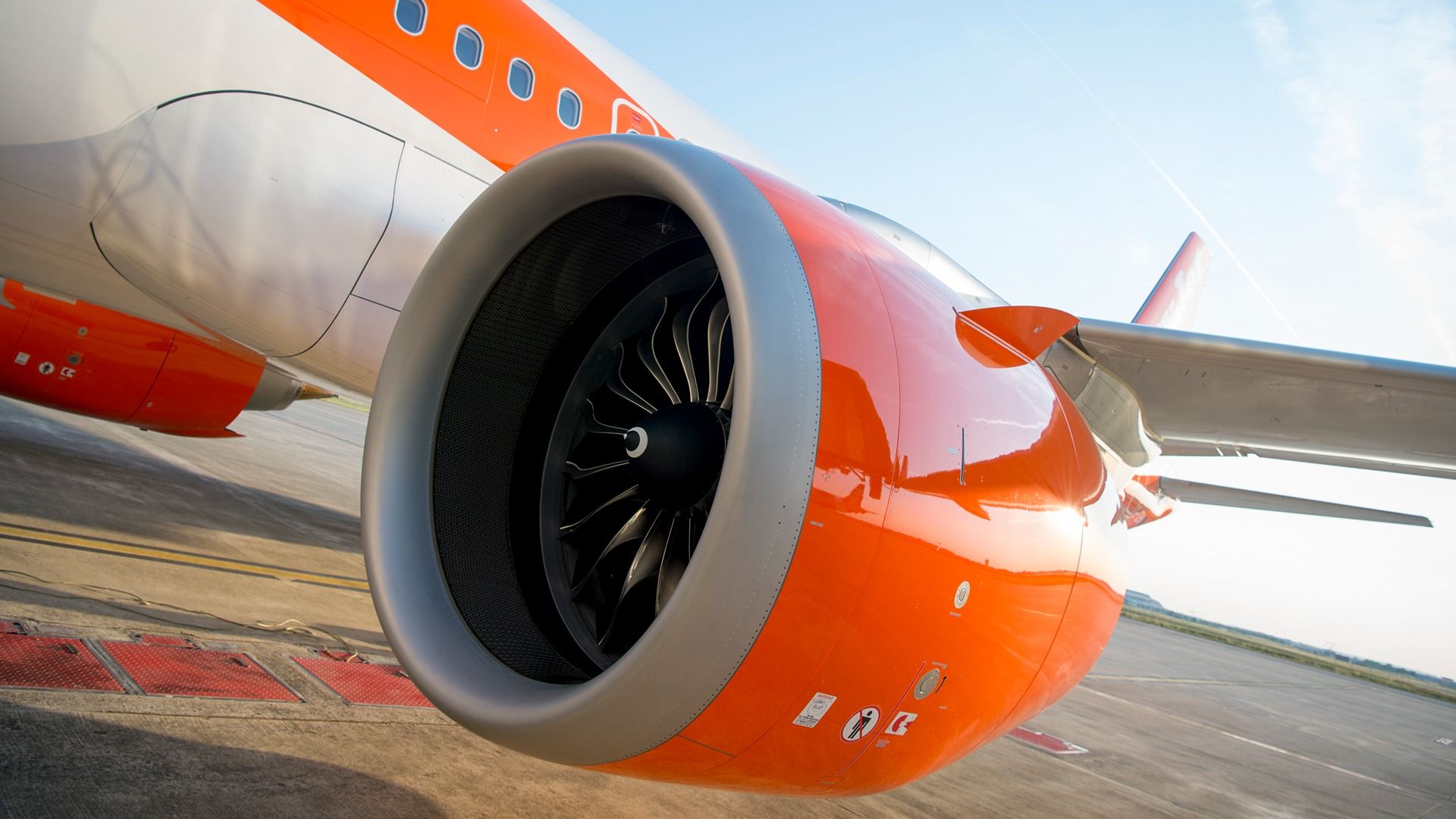
As the final months of 2025 march on, Pratt & Whitney announced that it has delivered enough engines for Airbus to reach its goal of 820 deliveries by the end of the year. Airbus had delivered 585 planes at the end of October, leaving an ambitious 235 to go.
It has often been cited that one of the primary bottlenecks to Airbus deliveries was engine supply from both P&W and CFM International this year. The news that P&W fulfilled its 2025 backlog is a crucial supply chain victory that gives the green light for Airbus to push ahead.
P&W Picking Up Pace

Pratt’ has made more than 85,000 engines for over 17,000 customers since it was established 100 years ago, in 1925. P&W’s current commercial lineup is led by the Geared Turbofan (GTF) family, which has been adopted by almost every commercial planemaker in the world, from Boeing and Airbus to Embraer and Irkut.
The most popular engines on Airbus aircraft are specifically the PW1100G-JM variant for the A320neo family and the PW1500G for the A220 family. The company is currently the exclusive supplier of power plants for the A220, and roughly half of all A320neo orders include P&W engines.
There have been some issues recently that compounded the slow post-COVID supply chain recovery, which is still not back up to its pre-Coronavirus Pandemic capacity. A320 aircraft were grounded for retrofit after material defects were discovered in some engines. A number of A220s around the world are also still grounded due to corrosion effects from production issues.
Despite the setbacks, P&W has not only caught up with its order backlog, but the company is now in development of a next-generation narrowbody powerplant in collaboration with Airbus, Boeing, and Embraer. Bloomberg quoted Rick Deurloo, Pratt & Whitney’s president of commercial engines, when he told reporters in Dubai ahead of this year’s air show:
“We are aligned with the deliveries with them for the balance of this year… anything we’re delivering now is for next year.”
Airbus’ Steady Climb

Airbus has its work cut out for it. The delivery numbers for November have not yet been reported, as the month is only reaching the halfway point, but the planemaker remains steadfast in its goal. The European aerospace giant will need to produce a stunning 117 planes per month to meet its quota for the year. Airbus continues to reaffirm that it is not lowering its target for the year, and looking ahead to 2026, the company is aiming higher still.
At present, P&W has the capacity to support a rate of 63 A320neo deliveries per month, but Airbus wants to bring that figure up to 75 a month. The Air Current reported that P&W, an RTX company, is in talks with Airbus to industrialize to the new, higher level by 2027.
On the eve of the Dubai Airshow, Deurloo told Reuters that his company is “talking to Airbus on a daily basis” as the two manufacturing titans plan to expand A320neo production as well as support the aircraft in service to reduce maintenance downtime. P&W has not gone into detail publicly, but did state that the company has invested significantly in new production equipment for the cutting-edge next-gen engine it is developing.
A Historic Year

The results of the September production numbers from Boeing and Airbus revealed that the Airbus A320 series had surpassed the reigning champion of jetliners, the 737, for most aircraft delivered in the history of commercial aviation. Thanks to the proven track record and sustained quality assurance by Airbus, the A320 crossed the 12,250 total delivery mark.
Aside from the World War II-era Douglas DC-3 Skytrain, the 737 has been the best-selling airliner since it debuted in the late 1960s. That legacy of over six decades was shattered by the low output of 737 MAX jets and the A320neo’s meteoric success since it debuted in 2016. On top of taking the crown for highest-selling airliner in history, Airbus has a massive backlog of 7,262 orders..
source
