
Close Menu
  • AVIATION
    • US Airlines
    • Airports & Hubs
    • eVTOL & Urban Air
  • MILITARY
    • Air Force
    • Defense News
  • SPACE
    • SpaceX & Rockets
    • NASA
    • Commercial Space
  • CARGO
  • CORPORATE
  • TECH & OEMS
  • REGULATORS
    • FAA
    • NTSB
    • TSA
What's Hot

Navan Says Rivals’ Mergers Are Sending It More Clients

June 12, 2026

The fastest humans in the galaxy just got a spiffy patch to prove it

June 12, 2026

World Cup Fever in Guadalajara

June 12, 2026
Facebook X (Twitter) Instagram
Demo
  • AVIATION
    • US Airlines
    • Airports & Hubs
    • eVTOL & Urban Air
  • MILITARY
    • Air Force
    • Defense News
  • SPACE
    • SpaceX & Rockets
    • NASA
    • Commercial Space
  • CARGO
  • CORPORATE
  • TECH & OEMS
  • REGULATORS
    • FAA
    • NTSB
    • TSA
Facebook X (Twitter) Instagram
Demo
Home » Mystery GPS jammer in Iran becomes test for NASA satellites’ capabilities
Space Tech

Mystery GPS jammer in Iran becomes test for NASA satellites’ capabilities

FlyMarshall NewsroomBy FlyMarshall NewsroomJune 11, 2026No Comments2 Mins Read
Share
Facebook Twitter LinkedIn Pinterest Email

NASA satellites designed to observe cyclone wind speeds and collapsing ice sheets have also proven capable of identifying the approximate locations of GPS jammers. That could help monitor high-risk areas for aircraft and ships navigating the growing prevalence of GPS interference worldwide.

Two different NASA satellite systems showed how they could locate a known but mysterious GPS jammer within several kilometers of its position in Iran, according to an experiment by Sean Gorman, CEO and cofounder of the location-based technology company Zephr.xyz that was detailed in the magazine GPS World. Such jammers use strong signals to overpower the weaker radio signals coming from US-operated GPS satellites and other global navigation satellite systems.

Such NASA satellites cannot perform “near-real time monitoring” or pinpoint the exact location of GPS jammers, said Clara Chew, principal scientist and lead of the GNSS systems and data team at the California-based satellite manufacturer Muon Space, who was not involved in the study. But Chew told Ars that identifying the approximate locations of GPS jammers “could potentially be helpful for flight planning” or for “indicating high risk areas for maritime shipping.”

One of the NASA satellite systems, the Cyclone Global Navigation Satellite System (CYGNSS), has eight microsatellites that detect GPS signals reflected from ocean surfaces to measure wind speeds within the eyewalls of hurricanes, tropical cyclones, and typhoons. When an Earth-based jammer turns on, the effect creates a huge footprint in the reflected GPS signals that can show up hundreds of kilometers from the jammer’s location.

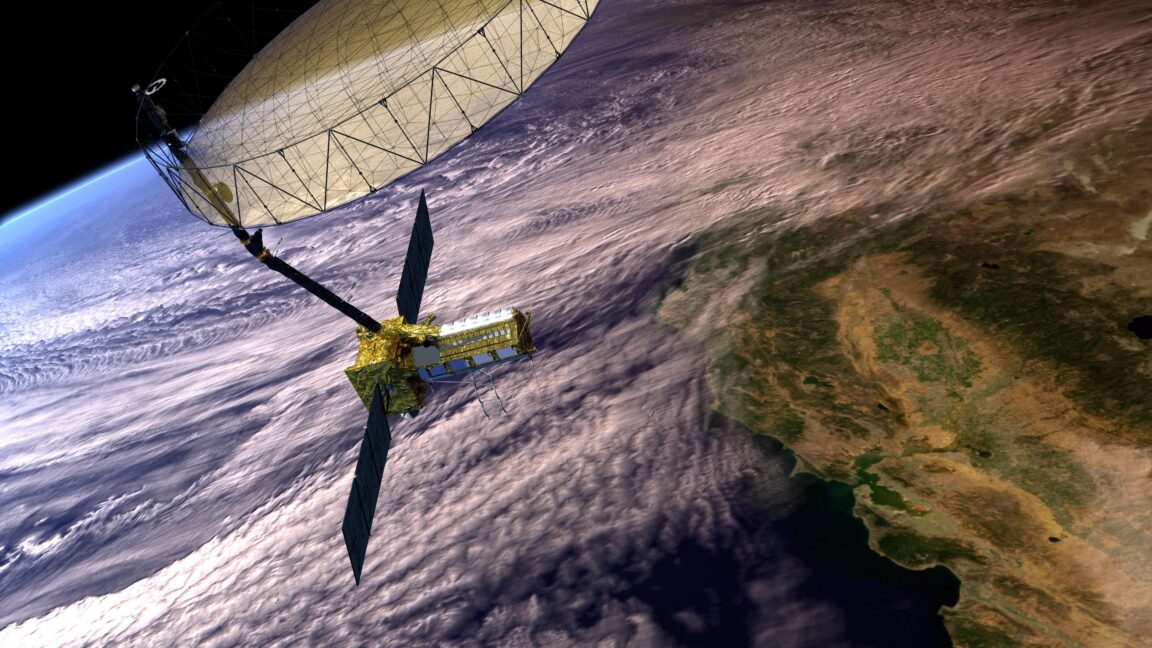
The other satellite system, NASA-ISRO Synthetic Aperture Radar (NISAR), typically uses radar imaging to continually map and track changes across the Earth’s surface, including earthquakes, tsunamis, volcanoes, and ice sheet collapses. GPS jammer emissions create streaks in the NISAR radar imagery that run perpendicular to flight direction—meaning that “each streak encodes the jammer’s direction relative to the satellite’s ground track,” Gorman wrote in his GPS World article.

“CYGNSS sees the jammer’s effect on reflected GPS signals, offering an indirect measurement spread across hundreds of specular reflection points,” Gorman wrote. “NISAR sees the jammer’s emissions directly in its own receiver, which is a more precise measurement, but only along the satellite’s narrow ground track.”

source

FlyMarshall Newsroom
  • Website

Related Posts

The fastest humans in the galaxy just got a spiffy patch to prove it

June 12, 2026

World Cup Fever in Guadalajara

June 12, 2026

A Falcon 9 booster turns 5 years old—and just set a remarkable reuse record

June 12, 2026

NASA Award Boosts Space Technology Research Capabilities

June 12, 2026
Add A Comment
Leave A Reply Cancel Reply

Latest Posts

Navan Says Rivals’ Mergers Are Sending It More Clients

June 12, 2026

The fastest humans in the galaxy just got a spiffy patch to prove it

June 12, 2026

World Cup Fever in Guadalajara

June 12, 2026

Legislators Demand Navy Prove Trump Class Battleships Won’t Sink U.S. Nuclear Shipbuilding

June 12, 2026

Subscribe to Updates

Please enable JavaScript in your browser to complete this form.
Loading
About Us

Welcome to FlyMarshall — where information meets altitude. We believe aviation isn’t just about aircraft and routes; it’s about stories in flight, innovations that propel us forward, and the people who make the skies safer, smarter, and more connected.


Useful Links
  • Business / Corporate Aviation
  • Cargo
  • Commercial Aviation
  • Defense News (Air)
  • Military / Defense Aviation
Quick Links
  • About Us
  • Contact Us
  • Disclaimer
  • Privacy Policy
  • Terms and Conditions

Subscribe to Updates

Please enable JavaScript in your browser to complete this form.
Loading
Copyright © 2026 Flymarshall.All Right Reserved
  • About Us
  • Contact Us
  • Disclaimer
  • Privacy Policy
  • Terms and Conditions

Type above and press Enter to search. Press Esc to cancel.

Go to mobile version