

No more relying on the U.S. Army to protect the Air Force’s air bases — it’s time for the Air Force to take responsibility to defend its own airfields, argues an Air Force officer.
“The Air Force is doctrinally responsible for its own force protection,” wrote Lt. Col. Phil Ferris, an airpower strategist on the Air Staff, in a recent essay for the Mitchell Institute for Aerospace Studies. Currently, “the Air Force’s only current active defense option” comes from its own fighter aircraft.
But that’s not feasible in many cases, Ferris argues.
“Many air bases do not have fighters on station, including many overseas and expeditionary environments,” Ferris told Defense News. The Air Force’s Security Forces “employ non-kinetic C-UAS [counter-unmanned aerial system] options and some small arms, but many units lack assigned medium and heavy machine guns needed to provide meaningful protection.”
Instead, Air Force bases should handle their own defense against small drones and low-flying cruise missiles, while the Army focuses on fast, high-altitude threats such as ballistic missiles, Ferris said.
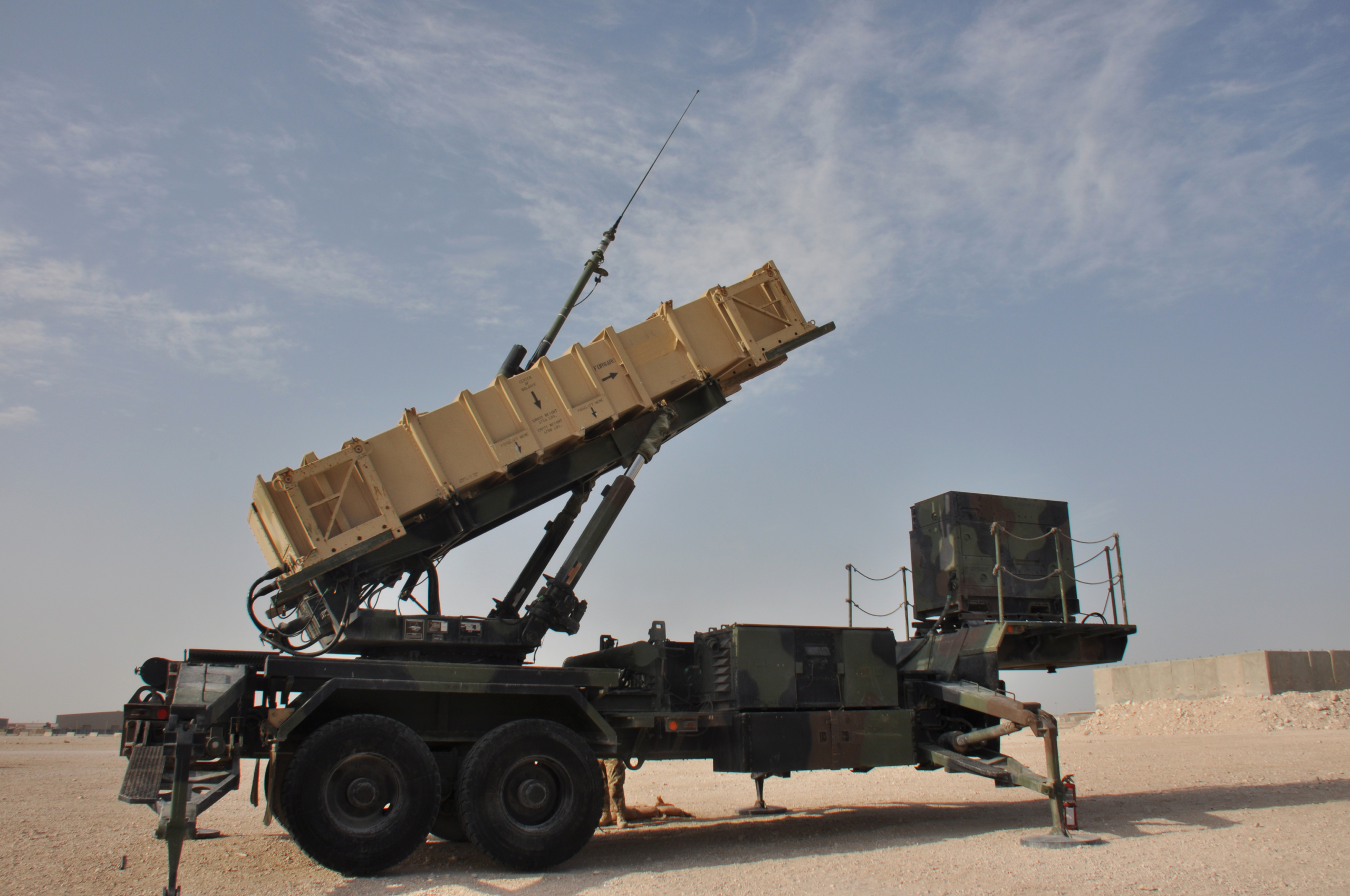
“The Air Force should cover C-sUAS [counter-small unmanned aerial system] in Groups 1 to 3 [drones weighing less than 1,320 pounds] and address the low and slow cruise missile mission gap,” said Ferris, an airpower strategist on the Air Staff and a veteran Security Forces officer. “The Army can continue to provide Patriot and THAAD [Terminal High Altitude Area Defense] units, and can augment C-sUAS and cruise missile defense when able, but the Air Force must retain the means to protect itself just as the other services do.”
The stakes could not be higher. Should the U.S. go to war with China, for example, it is a near-certainty that American air bases on Guam and elsewhere would be hit with missiles, bombers and commando raids. And as demonstrated by Ukraine’s recent drone strikes on air bases deep inside Russia, even small nations or terrorists can destroy billion-dollar bombers with thousand-dollar drones.
The problem is that the air defense of Air Force bases is complex. In many nations, air defense is assigned to the air force. But for the U.S., the common perception is that under the 1948 Key West Agreement, which defined the roles of the various military services, ground-based air defense is the responsibility of the Army. The fact that Army air defense batteries are often colocated with Air Force bases in the Middle East and elsewhere only reinforces that belief.
However, “that is only partly true,” according to the Mitchell Institute essay. The Key West Agreement “never explicitly gave that mission to the Army,” Ferris wrote.
“The closest delineator of responsibility for air defense of air bases in writing was a memorandum of understanding signed by the Army and the Air Force in 1984 stating that the Army would be primarily responsible for air defense of air bases,” the essay explained. Except there is an important caveat: “If inadequate funding was applied to the mission, the Air Force could conduct its own point defense.”
Either way, Ferris argues that the Air Force can no longer rely on the Army for base protection. The Army is already strained with existing responsibilities for air and missile defense around the world. Meanwhile, the Air Force’s Agile Combat Employment doctrine calls for dispersing airpower among many small and temporary installations. While this avoids creating concentrated targets for enemy missiles, it also means having to transport, maintain and supply cumbersome air defense systems to remote outposts. The result is that “such bases cannot support the fielding and maintenance of large pieces of equipment like Patriot, THAAD, or even the relatively smaller indirect fire protection capability (IFPC) batteries,” wrote Ferris.
Ferris calls for the Air Force to adopt a comprehensive air and missile defense plan for its air bases, including both active and passive defenses. He points to several air defense systems that the Air Force could utilize, including the Army’s Multi-Domain Artillery Cannon project and the Marine Corps Medium-Range Intercept Capability and Marine Air-Defense Integrated System.
These could be supplemented by machine guns and shoulder-fired missiles, which have proven useful for downing drones in the Ukraine war. In addition, air bases need to employ passive measures, such as camouflage, jamming enemy sensors, decoy targets and hardening air bases.
“The key is not which unit operates the systems, but that they fall under the Security Forces Defense Force Commander,” said Ferris. “The DFC has base defense integration responsibilities and must be the final decision authority for defensive responses, since attacks will likely be multipronged.”
Ferris emphasizes the importance of emissions control, or EMCON. Experience in Ukraine has shown that transmitting radio, radar or cell phone signals is an invitation for a missile or drone strike.
“Currently, the Air Force invests very little in this arena, and individual airmen receive limited training in reducing signatures to lower a base’s targeting priority,” Ferris said.
The Air Force should also strengthen air base defenses against ground attack by special forces, guerrillas or terrorists. This means leveraging “technology to make up for the lack of manpower and fixed locations,” the essay suggests. This includes cameras and other sensors, drones and remote vision devices to allow crews to see outside their ground vehicles.
“Whatever the Air Force employs, it must have the capability to be rapidly deployable (using as few C-130s as possible) and affordable from a cost-imposition perspective,” Ferris wrote.
Ferris raises an unpalatable prospect: Some locations simply cannot be defended.
“Many areas may be ultimately indefensible in the Indo-Pacific theater, and it may be better to focus on allied and partner capabilities and some long-range fires outside of the second island chain,” he wrote. “The threats close in may simply be too dense.”
source
