

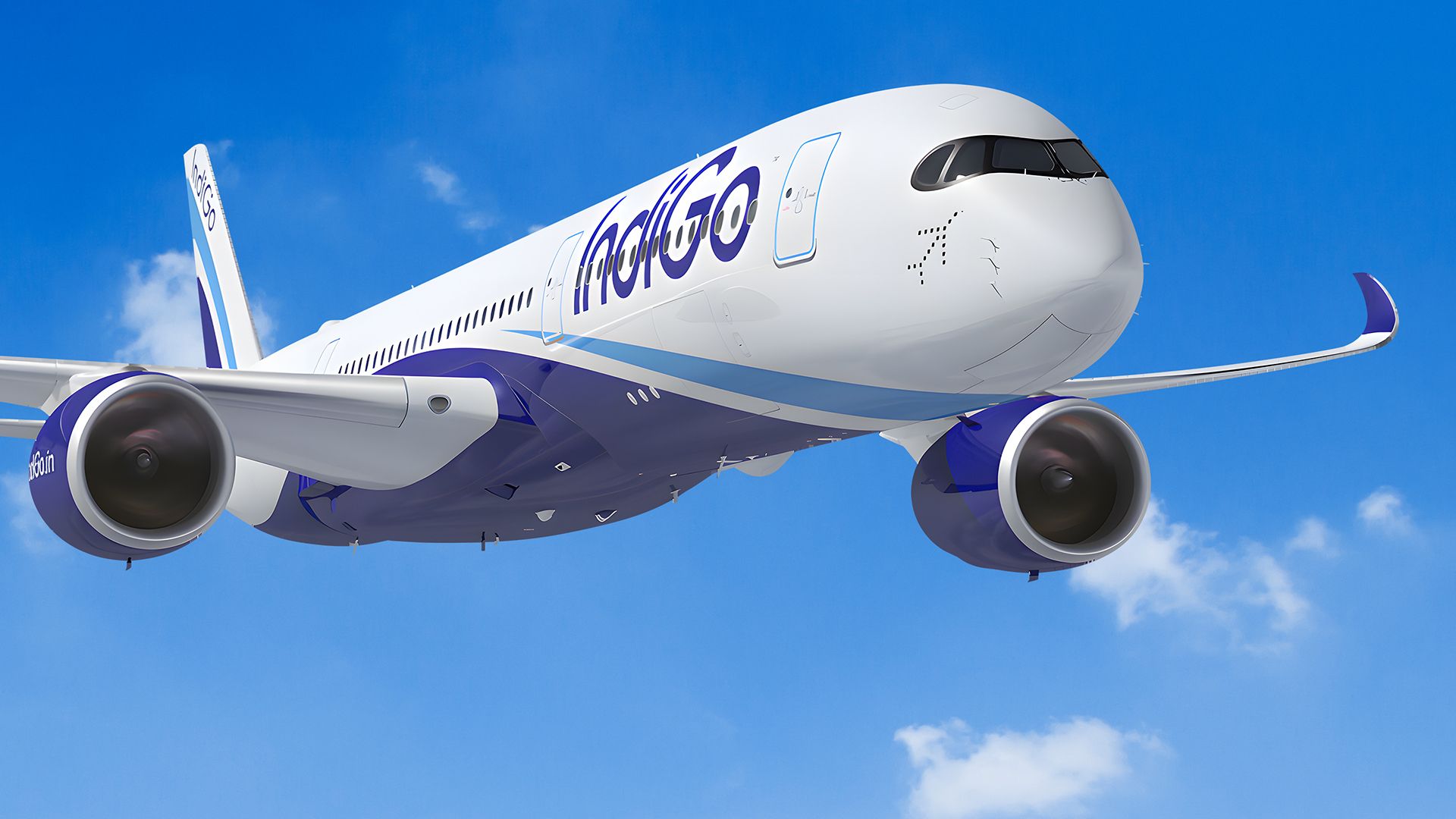
As of Friday, October 17, IndiGo has finalized a firm order for 30 additional Airbus A350-900 models, ultimately converting a June Memorandum of Understanding and lifting its Airbus A350 backlog up to 60 jets. This ultimately signaled a decisive move into the world of long-haul flying. The airline’s CEO, Pieter Elbers, ultimately said that the deal supports IndiGo’s goal of becoming a global player by 2030 and aligning with India’s aviation hub ambitions.
The aircraft type promises a roughly 25% lower fuel burn, operating cost, and Carbon Dioxide output than previous-generation rival jet models. The plane can also operate with up to 50% Sustainable Aviation Fuel, with a target of 100% currently in the works for 2030. Airbus noted impressive market growth in India, with Airbus A350 orders totaling more than 1,400 from 63 customers by September 2025.
A Deeper Look At The Specifics Of This Deal

IndiGo’s firm order for a set of 30 Airbus A350-900s is set to lift its A350 backlog to 60 aircraft, and it is notable on several fronts. This order very quickly converts a Memorandum of Understanding from June, and it signals a strong conviction in the airline’s decision to make a pivot into the long-haul market. IndiGo has historically been a very successful low-cost regional carrier, but this shift highlights the airline’s strong interest in making an entry into the long-haul market, according to the latest reports from manufacturer Airbus.
The Airbus A350’s long-range capabilities, cabin comfort, and roughly 25% advantage in terms of fuel burn make it a good choice for an airline looking to cater to a new kind of long-haul travelers. The jet’s exceptional route economics and ability to operate with nearly 50% Sustainable Aviation Fuel make it exceptionally capable in relation to earlier-generation competitors. The carrier will now begin the challenging part of planning which long-haul destinations it is looking to fly to.
What Is IndiGo’s Plan For Entering The Long-Haul Market?

IndiGo is pursuing a sequenced and risk-managed pivot into long-haul travel. This is relatively unique for an airline that operates on a low-cost model, given the typical higher expenses associated with long-haul intercontinental flights. The airline is starting by layering partnerships across its network to offer diverse one-stop access to destinations across Europe. The airline is then looking to wet-lease Boeing 777-300ER models to build up experience operating services between Delhi, Mumbai, and Istanbul.
Next, IndiGo added a small “Stretch” premium cabin on Airbus A321neos to test paid upsell potential and condition customers for two-class services. The airline’s fleet architecture is based on a true long-haul model with some future Airbus A321XLR jets that will enable flights on long and thin routes. This will soon be followed by Airbus A350-900s starting in 2027, with this new order bringing the total number of airframes to 60.
The airline’s network strategy will leverage Delhi and Mumbai as super-feed hubs, opening up European services first before broader Asia-Pacific and North America moves. Codeshares also fill gaps until the Airbus A350 arrives to provide scale and long-range capabilities. There are some risks associated with the execution of this long-haul fleet strategy. This includes improved slot access at primary gateways, and potential delivery delays could also slow down the airline’s planned timeline.
What Does All Of This Mean For Passengers?

Passengers will now have access to more nonstop flights from India to Europe. Later expansion plans call for the airline to add flights to Asia-Pacific destinations and to North America, which will further expand the carrier’s long-haul reach. Passengers traveling with IndiGo on long-haul services can anticipate competitive base fares, but an unbundled model that will require them to pay for pretty much everything extra.
In the near term, one-stop connectivity will continue to improve via the airline’s partners. Medium-haul routes will use the Airbus A321XLR that features “Stretch” seats offering extra comfort. The Airbus A350 does offer top-of-the-line cabin comfort, so its introduction to service will mark an improvement over the 777-300ERs, which it will initially use.
The airline will operate two principal hubs using this aircraft. The airline will center its long-haul service network out of Indira Gandhi International Airport (DEL) in Delhi and Chhatrapati Shivaji Maharaj International Airport (BOM) in Mumbai.
source
