

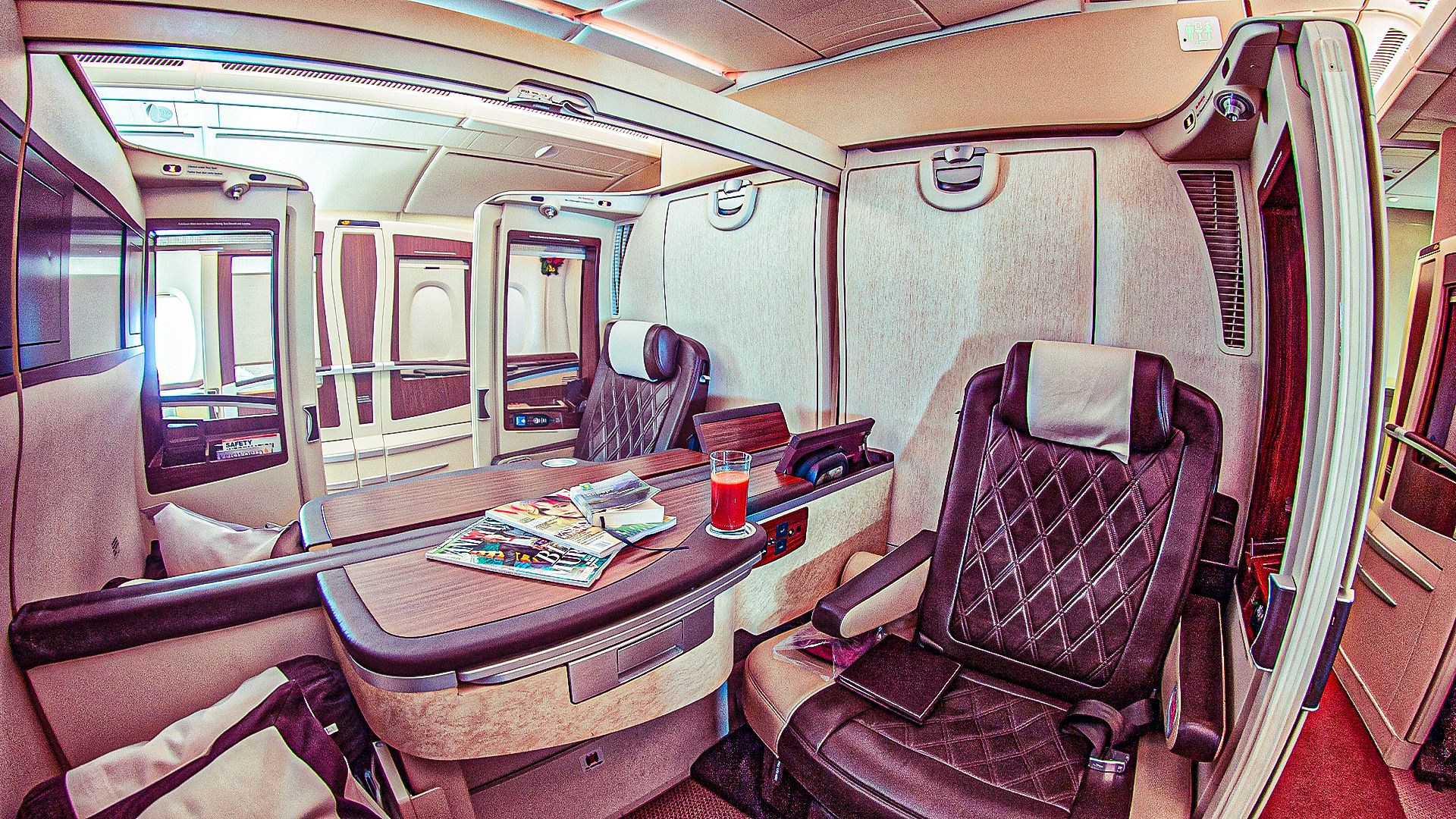
The commercial aviation industry has changed drastically over the past several decades. The airline industry began as a means of transportation for only the ultra-wealthy. However, over the years, the industry has evolved into a segmented marketplace, which allows global carriers to compete not only on routes and fares but also on comfort, exclusivity, and the overall experience for passengers. As global travel demand increased, airlines began to rethink their cabins and introduce new seating classes.
During this transformation, the gap between the standard economy class and the heavily upgraded business class has widened considerably. Economy classes, which were once relatively spacious, have shifted to tighter seats and reduced inflight amenities. However, the business has moved in the opposite direction, becoming a flagship product for many global carriers. Business class seats may now include full suites, lie-flat beds, and even exclusive lounge access. Because of this, upgrading from a standard economy seat to a business class seat has become a prominent topic. Let’s take a closer look at the many factors that influence the cost of this significant upgrade, as well as some of the actual prices that customers may see when attempting to secure these upgrades.
What Determines The Price Of A Business Class Upgrade?

The overall cost to upgrade to a business class seat varies depending on a mix of factors. The main factor in determining the cost is how full the flight is. When the demand for a premium seating option is high, which is common on long-haul or business-heavy routes, airlines will charge significantly more for this upgrade. On the other hand, if a flight is empty and most of the business class seats are empty, carriers may offer deep discounts to customers trying to upgrade.
Another major factor in the price to upgrade to business class is the fare class and ticket flexibility of the initial purchase. For example, many airlines offer multiple types of economy class ticket fares. Passengers who book higher-priced or more flexible economy fares often receive lower upgrade costs or have better eligibility to receive discounts on the upgrade. The passenger’s loyalty status with the airline is another factor, as frequent flyers typically gain access to reduced upgrade fees, complimentary upgrade options, or priority on waitlists.
Additionally, the timing of the upgrade can also dramatically affect the upgrade cost to business class. Upgrades purchased by passengers at the initial time of booking or during the online check-in process tend to be cheaper than those that request the upgrade when they are already at the airport. Most airlines utilize dynamic pricing, which means that upgrade costs can change rapidly based on current demand, season, and revenue projections.
What Are Timing Strategies That Affect Upgrade Costs?

Timing is one of the most critical factors in determining how much a passenger will pay for a business class upgrade. One of the most effective ways to secure a business class ticket upgrade is to check upgrade options early and often. Interestingly enough, ticket upgrades tend to be much cheaper at the time of booking or shortly afterward. Many airlines will offer discounted upgrade rates at the time of the initial purchase, as they typically want to lock in the revenue early.
However, this is not always the case. As the date of the flight gets closer, airlines may realize that the business class seats on that particular flight are undersold. To help fill these seats and secure additional revenue on the flight, many airlines may offer last-minute upgrade deals during the online check-in process or even at the gate. Airlines would much rather have their premium seats filled, and a discounted rate helps to achieve this.
This trade-off is often unpredictable. However, passengers can help predict this by checking the upgrade options often. Flying during off-peak periods, such as slower travel periods or during the week, can offer better upgrade opportunities because the demand for premium seats is much lower. However, upgrades tend to be chosen quickly during peak travel periods, such as during the summer, holidays, or during major business conferences.

How To Get A Free Upgrade To First Class On US Airlines
Airlines are becoming notoriously frugal about free upgrades nowadays, but it’s still possible.
Using Miles And Points: Is It Cheaper Than Paying Cash?

For many travelers, using miles or points for a flight may be one of the most cost-effective ways to upgrade to business class. The upgrade option to business class with points or miles is often much cheaper than paying cash outright. Many airlines offer mileage upgrades at a fixed redemption rate, which means that the number of miles needed does not always rise with the same demand as cash upgrades.
However, the value of miles or points required to upgrade to business class once again depends heavily on the fare class of the original ticket. Some airlines may restrict upgrades using miles for standard economy fares, or the price may be much higher for the same upgrade compared to a more expensive economy ticket. It is always important to check the upgrade rules before booking a ticket, as booking a cheaper economy ticket does not always result in a cheaper upgrade.
The passenger’s loyalty status also plays a significant role in the cost of the upgrade, in terms of points or miles. Travelers who are flying with an elite status often enjoy reduced mileage costs, better upgrade eligibility, or even priority on upgrade waitlists. This heavily increases the likelihood of securing an upgrade, even when flying on a particular popular service. Even so, upgrading a ticket via miles or points is not always the best choice. Oftentimes, cash upgrades will be reduced closer to departure, so it may be smarter to save points for higher-value redemptions.
What Are Some Of The Best Business Class Seats In The US?

Each year, Skytrax releases its World Airline Awards, which highlight the best airlines in terms of multiple factors, including the best business class seating options. This year,  Delta Air Lines won the award for the Best Business Class in North America. The airline was the third airline in the world to introduce privacy doors in its business class, which are named “DeltaOne Suites”. These seats use the Thompson Vantage XL+ staggered seat and can be found on the airline’s fleet of Airbus A350-900. This seating option also comes with an 18-inch touchscreen display, charging ports, and lie-flat seats. Delta also offers DeltaOne seats, which do not include the full suite. According to AeroLOPA, the following aircraft have DeltaOne Suites or DeltaOne seating options onboard:
|
Aircraft Type |
Total DeltaOne Seats |
|---|---|
|
Airbus A330-200 |
34 |
|
Airbus A330-900neo |
29 |
|
Airbus A350-900 |
30, 32, 40 |
|
Boeing 767-300ER |
26, 34, 36 |
|
Airbus A220 series |
12 |
|
Airbus A319 |
12 |
|
Airbus A320 |
16 |
|
Airbus A321 series |
16 or 20 |
|
Boeing 717 |
12 |
|
Boeing 737 series |
12, 16, 20 |
|
Boeing 757 |
16, 20, 24 |
 American Airlines also offers a prominent suite option. Newer Boeing 787 aircraft in the airline’s fleet feature 51 Flagship suites, compared to older variants that only had 30 Flagship suites. These Flagship suites feature privacy doors and have seats that are 21 inches wide. The suite also features a 17-inch 4K touchscreen display, four charging options, and Bluetooth connectivity.
Hawaiian Airlines, which was recently converted to the  Alaska Airlines operator code, utilizes a unique business class seating option. The airline’s Boeing 787-9s feature unique suites, typically seating 34 passengers per plane depending on the configuration. Hawaiian Airlines uses the Adient Ascent package for its business class suites, which are configured in a herringbone configuration.

5 Superior Premium Economy Seats You Can Book Today
Premium economy offers elevated amenities without the business-class price tag.
What Are Some Of The Best Business Class Seats In The World?

According to the Skytrax World Airline Awards, the best business class seating option in the world is  Qatar Airways. This airline offers its passengers a unique business class option called the Qatar Airways Qsuite. These seats are positioned in a 1-2-1 configuration, which features a fully lie-flat bed. The seat itself is a private suite with a sliding door and considerably more room than other suite offerings. According to ch-aviation, the Qsuite option can be found on the following aircraft:
|
Aircraft Type |
Total Qsuite Seats |
|---|---|
|
Airbus A350-100 |
46 |
|
Airbus A350-900 |
36 |
|
Boeing 777-200LR |
42 |
|
Boeing 777-300ER |
24 |
 Singapore Airlines offers another popular business class option. The airline offers business class on almost all of its aircraft, except for its Boeing 737-800 narrowbody aircraft. On the airline’s long-haul aircraft, Singapore Airlines offers fully flat beds and greater sleeping comfort, which includes linen, a duvet, and multiple pillows.
Skytrax awarded the third-best business class seating option to All Nippon Airways (ANA). The long-haul business class option offered by ANA is nicknamed “The Room”. This debuted in 2019 on updated Boeing 777-300ERs and will be on Boeing 777-9 Dreamliners. This seating option features private walls, a flat bed, and a 24-inch 4K display.
What Are The Expected Costs To Upgrade To Business Class?

The cost to upgrade to business class can vary dramatically depending on the airline, route, and when you request the upgrade, but there are some typical ranges travelers can expect. For short-haul or domestic flights, the cost to upgrade to business class is usually the cheapest. This upgrade option can range from a relatively small surcharge to mid-tier add-ons. This is because the cost of the onboard experience for airlines on short haul flights is less expensive. Customers may be able to secure upgrades for under a few hundred dollars.
However, on long-haul or international flights, the price difference becomes much more significant. The difference between economy class and business class represents a major shift, as business class may now include lie-flat seats, enhanced dining, and premium amenities. As a result, upgrades can cost between several hundred dollars to well over a thousand dollars, depending on the airline. Flights to major business hubs or popular leisure destinations often command the highest premiums because airlines know these seats will sell.
Overall, the price of upgrading to business class from economy class can be a significant cost. However, these upgrades allow for an enhanced passenger experience, including better seats, more entertainment options, and even better dining options or customer service. Because of this, depending on the airline and flight, the upgrade to business class can range from under a hundred dollars to well over a thousand dollars.
source
