

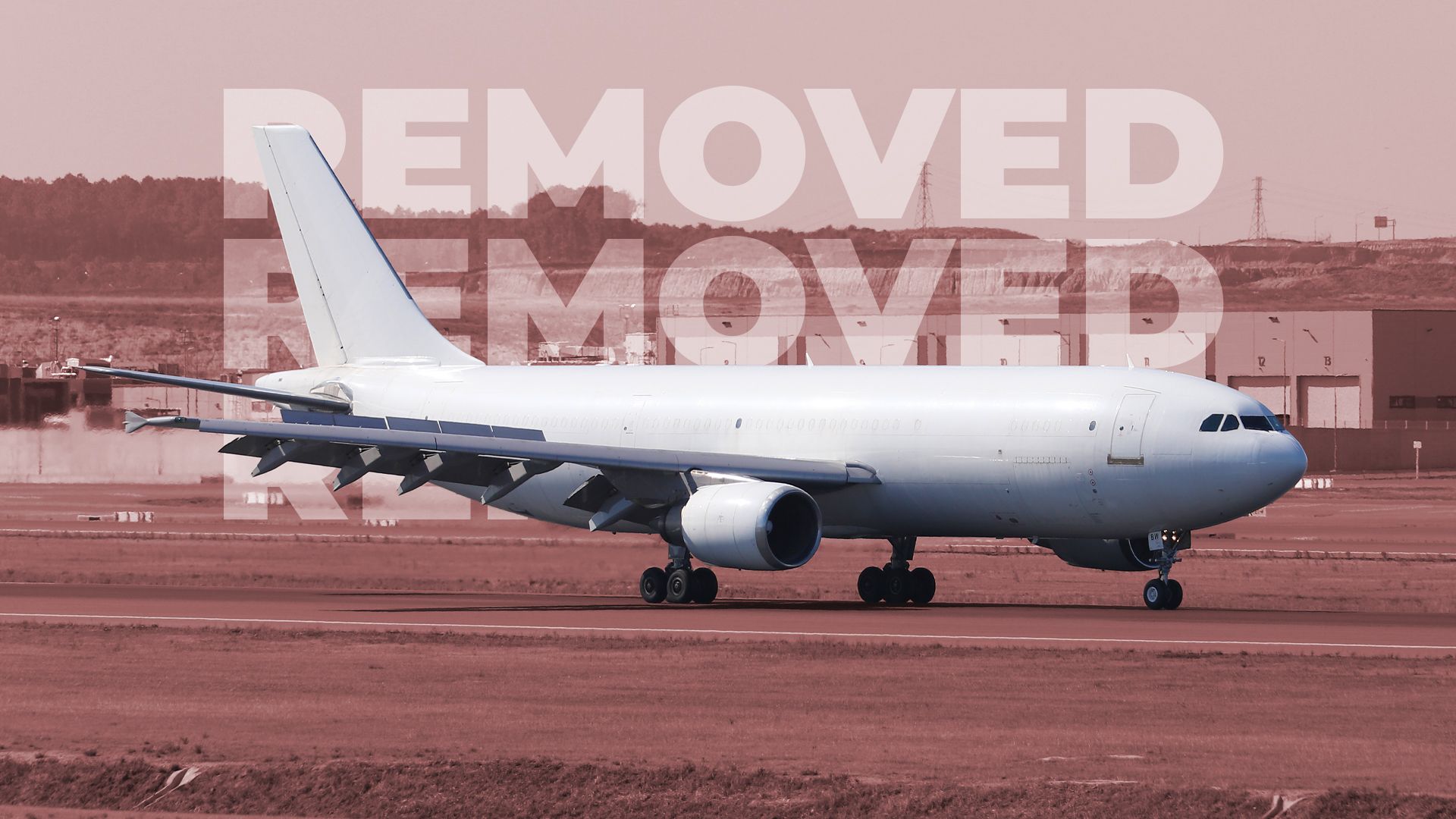
The Airbus A300 holds a significant place in aviation history as the world’s first twin-engine widebody airliner. The A300 also marked the beginning of Airbus’ challenge to the dominance of US manufacturers such as Boeing and McDonnell Douglas in the commercial aircraft industry.
- First Delivery
-
May 23, 1974
- Last Delivery
-
July 12, 2007
- Number Delivered
-
561
In this article, we will take a closer look at the Airbus A300 and discover how many have already been scrapped. We will also consider the aircraft’s role and legacy in the wider aviation industry.
A Brief History Of The Airbus A300

The Airbus A300 was launched in 1972 and entered commercial service in 1974 with Air France on a flight from Paris Orly Airport (ORY) to  London Heathrow Airport (LHR). The aircraft was designed to meet the growing demands of short- to medium-haul routes with high passenger volumes. Its most distinctive feature was its twin-engine, widebody configuration, which was revolutionary at the time.
Most widebody jets before it, such as the Boeing 747 or the McDonnell Douglas DC-10, had three or four engines. By contrast, the A300’s design significantly reduced fuel consumption, maintenance costs, and noise levels, making it more economical to operate and more attractive to airlines. Its widebody cabin also offered a superior level of comfort and space to passengers once onboard.
Four primary passenger variants of the Airbus A300 were developed – the A300-B1, A300-B2, A300-B4, and A300-600. With a typical cabin configuration of between 250 and 300 passengers, each A300 is able to fly up to 3,100 miles. Technologically, the A300 was also ahead of its time, bringing with it several innovations like composite materials to reduce weight and advanced autopilot systems.
A total of 571 Airbus A300s were built and delivered to airlines across the world before production ended in 2007. The aircraft proved particularly popular with carriers across Europe and Asia, but the introduction of the Boeing 767-300ER in 1988, which had a similar passenger capacity but a longer range, marked the beginning of the end for the game-changing aircraft.
How Many Airbus A300s Have Been Scrapped?

The latest data from Planespotters shows that, of the 571 Airbus A300s that were produced and delivered by Airbus, a total of 256 have been scrapped as of September 2025. The Airbus A300 has been retired and scrapped by many carriers due to a combination of aging technologies, rising operational costs, and changing industry demands. As the first twin-engine widebody jet, the A300 was revolutionary in the 1970s, but by the late 1990s and early 2000s, it could no longer keep pace with modern aircraft in terms of efficiency and performance.
One of the primary reasons for the Airbus A300 being retired from commercial aircraft fleets and scrapped was its age. Aircraft have a limited operational lifespan, typically around 25 to 30 years, and as the A300 aged, it required more frequent and costly maintenance. Structural fatigue, corrosion, and the wear and tear of decades of service made it increasingly expensive to keep the aircraft airworthy, and airlines found that the cost of overhauling older A300s often exceeded the benefits of keeping them in service.
Stricter noise regulations also contributed to the Airbus A300’s fall from grace. Many early variants of the aircraft did not comply with modern international standards, particularly in Europe and North America, which led to restrictions or bans at major airports and created operational challenges for airlines. That said, there are still a number of Airbus A300s in active service around the world today, the majority of which operate for cargo airlines such as FedEx Express and UPS Airlines.
The Airbus A300s Still In Commercial Service

The latest data from ch-aviation shows that there are five airlines still operating commercial flights with the Airbus A300. Curiously, all of these carriers are based in Iran, and are outlined in the table below:
|
Ranking |
Airline |
Airbus A300 |
|---|---|---|
|
1 |
Iran Air |
5 |
|
2 |
Iran Airtour |
4 |
|
3 |
Qeshm Air |
2 |
|
4 |
Mahan Air |
2 |
|
5 |
Meraj Airlines |
2 |
As the table above shows, Iran Air is currently the world’s largest commercial operator of the Airbus A300, deploying the aircraft on a variety of domestic and regional routes. Each of the carrier’s A300s is equipped to carry up to a maximum of 261 passengers in a two-class configuration – 22 in business class and 239 in economy class.
Iran Air’s A300s have an average age of over 32 years old, making them among the world’s oldest commercial aircraft still flying today. Data from Flightradar24 shows that over the past seven days, Iran Air’s Airbus A300s have operated routes that include the following:
|
Departure Airport |
Arrival Airport |
|---|---|
|
Tehran Imam Khomeini International Airport (IKA) |
Medina Prince Mohammad Bin Abdulaziz Airport (MED) |
|
Medina Prince Mohammad Bin Abdulaziz Airport (MED) |
Isfahan Shahid Beheshti International Airport (IFN) |
|
Isfahan Shahid Beheshti International Airport (IFN) |
Jeddah King Abdulaziz International Airport (JED) |
|
Jeddah King Abdulaziz International Airport (JED) |
Tehran Imam Khomeini International Airport (IKA) |
|
Medina Prince Mohammad Bin Abdulaziz Airport (MED) |
Ahvaz Qasem Soleimani International Airport (AWZ) |
|
Tehran Imam Khomeini International Airport (IKA) |
Najaf International Airport NJF) |
|
Medina Prince Mohammad Bin Abdulaziz Airport (MED) |
Kerman Ayatollah Hashemi Rafsanjani Airport (KER) |
|
Shiraz Shahid Dastgheib International Airport (SYZ) |
Jeddah King Abdulaziz International Airport (JED) |
The Aircraft Is Still Popular With Cargo Operators

Although there are few remaining commercial operators of the Airbus A300, the aircraft is still popular among cargo airlines, particularly in the US. The A300’s large cargo capacity has helped to drive this popularity, and the largest cargo operators of the aircraft today are outlined in the table below:
|
Ranking |
Airline |
Airbus A300 |
|---|---|---|
|
1 |
FedEx Express |
65 |
|
2 |
UPS Airlines |
52 |
|
3 |
European Air Transport Leipzig |
24 |
|
4 |
ASL Airlines Ireland |
6 |
|
5 |
MNG Airlines |
5 |
Typical routes flown by FedEx Express with its Airbus A300s include Memphis International Airport (MEM) to Madison Dan County Regional Airport (MSN),  Houston George Bush Intercontinental Airport (IAH) to Laredo International Airport (LRD), Denver International Airport (DEN) to Indianapolis International Airport (IND), and Baltimore/Washington International Airport (BWI) to Nashville International Airport (BNA).
The World’s Largest Operators Of The Airbus A300

The Airbus A300 proved popular with a variety of commercial operators around the world, particularly those in Europe and Asia. Overall, the largest operator of the passenger A300 was Korean Air, which flew a total of 40 A300s, followed by Japan Airlines (39) and Saudia (37).
The world’s largest historical operators of the Airbus A300 are shown in the table below:
|
Ranking |
Airline |
Country |
Airbus A300-B1 |
Airbus A300-B2 |
Airbus A300-B4 |
Airbus A300-600 |
Total |
|---|---|---|---|---|---|---|---|
|
1 |
Korean Air |
South Korea |
– |
– |
10 |
30 |
40 |
|
2 |
Japan Airlines |
Japan |
– |
9 |
8 |
22 |
39 |
|
3 |
Saudia |
Saudi Arabia |
– |
2 |
13 |
22 |
37 |
|
4 |
American Airlines |
US |
– |
– |
– |
35 |
35 |
|
5 |
Thai Airways |
Thailand |
– |
– |
14 |
21 |
35 |
|
6 |
Eastern Air Lines |
US |
– |
2 |
32 |
– |
34 |
|
7 |
Lufthansa |
Germany |
– |
6 |
5 |
15 |
26 |
|
8 |
Air France |
France |
– |
11 |
14 |
– |
25 |
|
9 |
Continental Airlines |
US |
– |
– |
23 |
– |
23 |
|
10 |
Mahan Air |
Iran |
– |
3 |
5 |
15 |
23 |
The Airbus A300, like all commercial aircraft with decades of service, has experienced a number of accidents and incidents over its operational life. While the aircraft itself is generally regarded as safe and reliable, several high-profile events involving the A300 have occurred, some due to mechanical issues, others due to human error, external threats, or environmental factors.
The Airbus A300’s Operational Record & Legacy

One of the most significant accidents involving the A300 was  American Airlines Flight 587, which crashed on November 12th, 2001, shortly after takeoff from New York John F. Kennedy International Airport (JFK). The aircraft came down over Queens as it flew through wake turbulence, with the vertical stabilizer separating from the fuselage. The crash resulted in the deaths of all 260 people on board and five people on the ground, and led to revised training procedures for rudder control and a better understanding of structural limits during flight.
Another significant incident was Iran Air Flight 655, which was shot down by the USS Vincennes on July 3rd, 1988. The aircraft was mistakenly identified as a hostile aircraft during a tense situation in the Persian Gulf, and all 290 passengers and crew were killed. In 1992, Pakistan International Airlines Flight 268 crashed into a hillside near Kathmandu Tribhuvan International Airport (KTM) in Nepal, while on approach in cloudy conditions. All 167 passengers and crew members onboard were killed.
Despite several high-profile incidents, the Airbus A300 will go down in history as one of the aircraft that helped to shape the modern aviation industry. The aircraft’s innovative widebody, twin-engined design contributed to its commercial success, and also propelled Airbus onto the world stage as a credible aircraft manufacturer. The A300 paved the way for later, more modern aircraft, such as the A310, A330, and most recently, the A350.
source
