

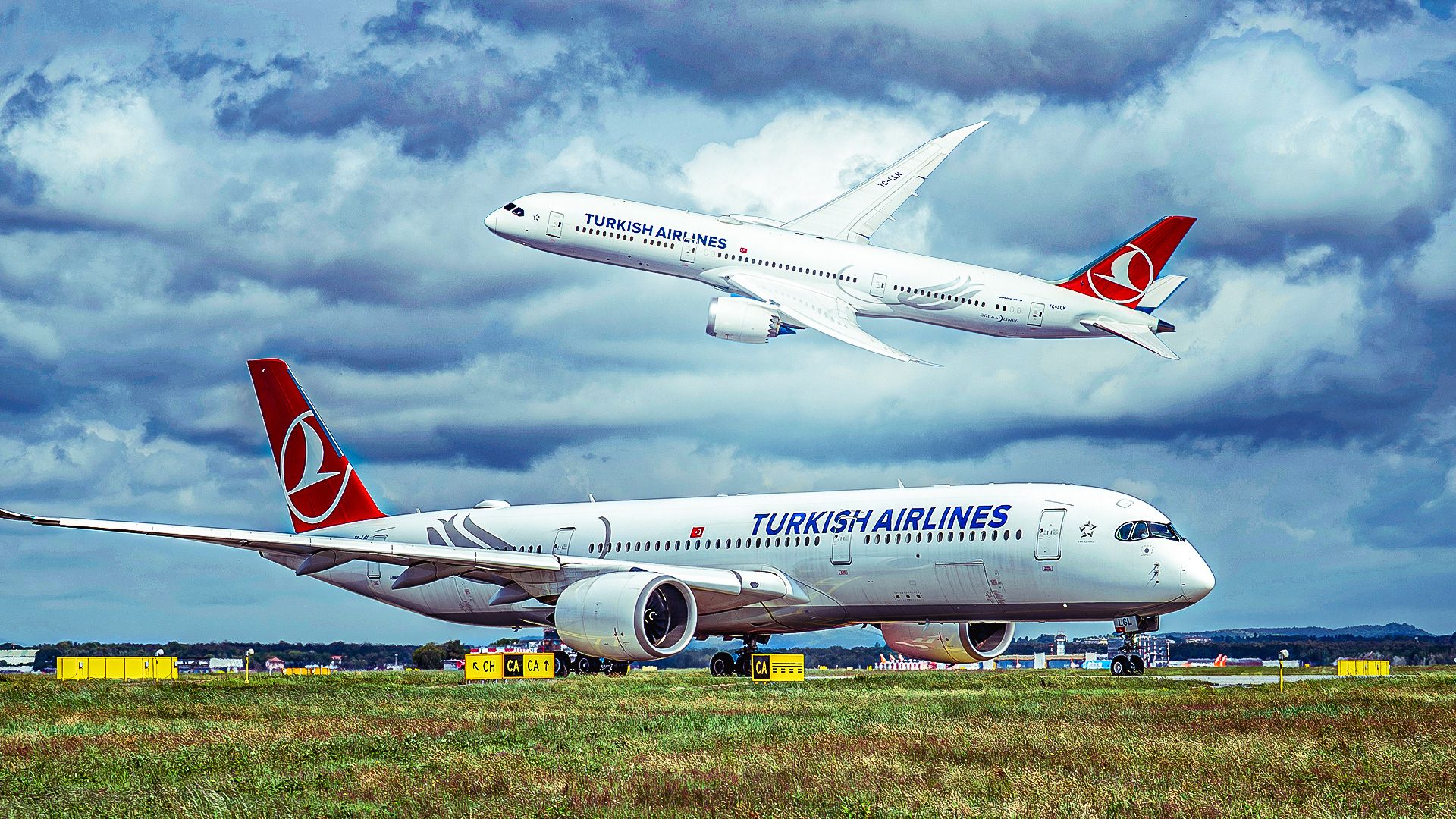
The Airbus A350-1000 is the bigger, longer-range rival to the largest Boeing Dreamliner, the 787-10. While both are modern, fuel-efficient widebody aircraft with advanced composite airframes, the A350-1000 is a larger machine designed for high-demand, ultra-long-haul routes. When it comes to widebody jets, size matters, and the European airliner has the American plane beaten across the board on this front.
They compete in the same long-haul market segment, but the A350-1000 is the more capable and physically larger aircraft, as it is built to fly on the world’s longest and most demanding routes. Let’s examine each in a head-to-head comparison of the raw size and capacity of two of the newest generation widebodies from the two largest aircraft manufacturers worldwide.
Crunching The Numbers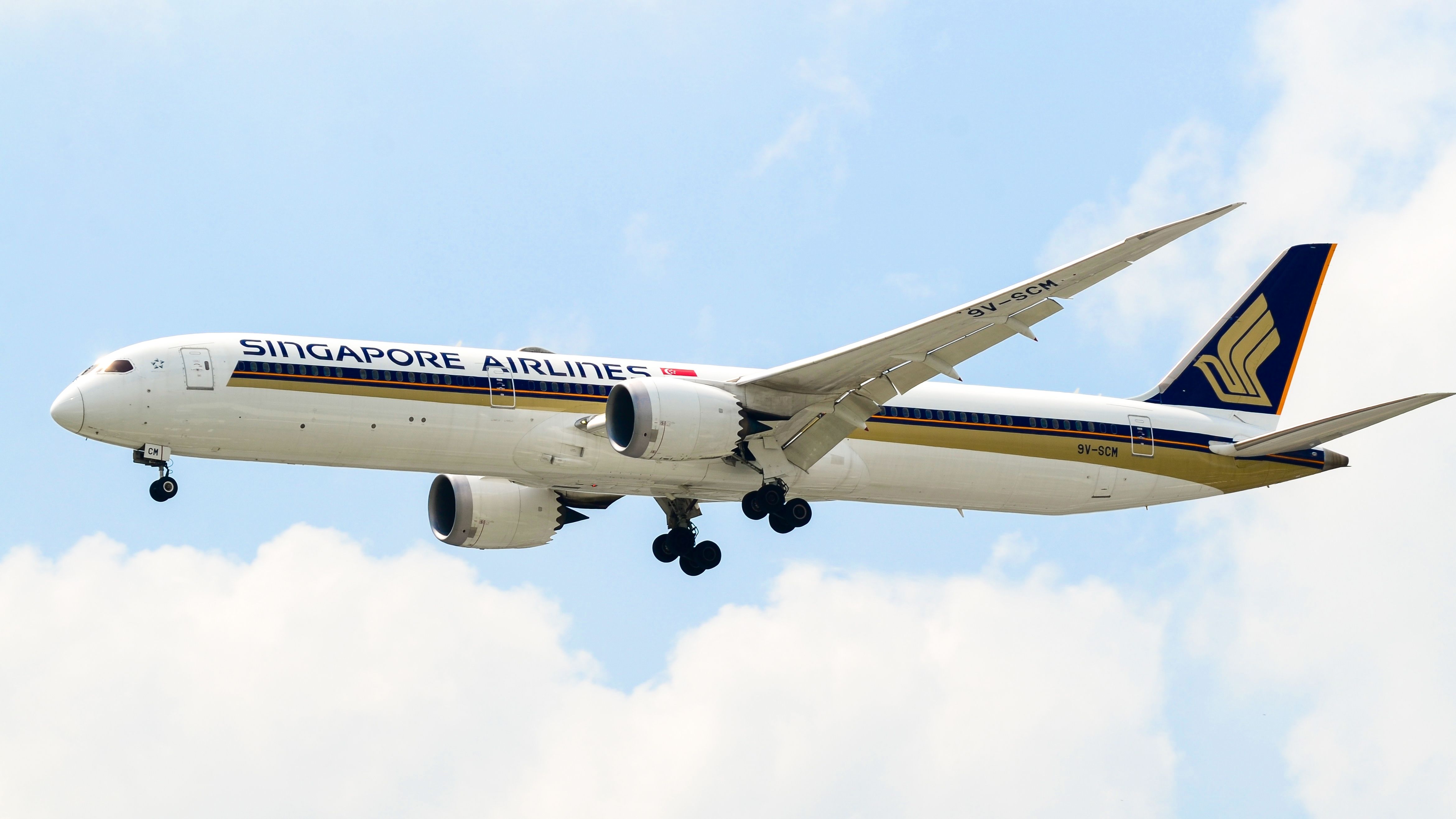
In most metrics, like length, wingspan, maximum takeoff weight, and average passenger capacity, the Airbus A350-1000 is substantially larger than the Boeing 787-10. However, the fuselage of the 787-10 is only marginally narrower than that of the A350-1000. While the 787-10 usually holds about 330 passengers in a two-class configuration, the Airbus typically has 350-410 seats in three-class layouts. In addition to being heavier and more heavy-duty than the 787-10, the A350 can carry more fuel and cargo over longer distances.
The A350-1000 lives up to its ‘XWB’ (eXtra Wide Body) moniker with a slightly wider cabin cross-section than the 787-10’s cabin. This small but meaningful difference allows airlines more flexibility in configuration as well as more passenger comfort. The latter is directly influenced by the A350’s wider fuselage, as A350 seats are usually 18 inches wide in standard nine-abreast economy configurations, while 787 seats are often narrower, at 17 inches. This difference is particularly noticeable on lengthy flights.
|
Metric |
Key Differences |
|---|---|
|
Length |
The A350-1000 is about 5.5 meters (18 feet) longer than the 787-10. |
|
Wingspan |
The A350-1000 has a wingspan that is 4.7 meters (15 feet) wider. |
|
Capacity |
The A350-1000 can carry significantly more passengers, especially in high-density layouts (480 vs 440 maximum seats). |
|
Weight |
The A350-1000 has a much higher maximum takeoff weight, reflecting its larger overall size and greater capabilities. |
|
Cabin Width |
The A350 cabin is slightly wider, by about 12 cm (5 inches), which can translate to slightly wider seats for passengers, although actual seat width depends on airline configuration. |
The 787 family’s models, and particularly the smaller 787-8 and -9 models, are better for long-distance routes with low passenger demand (also known as ‘long and thin’ corridors) that might not be able to accommodate an A350’s larger capacity. As such, thanks to this flexibility, airlines are able to use it on previously unprofitable point-to-point routes, which might not necessarily always be the case with the A350.
The Biggest Airbus Jet In Production

The A350-1000 has an imposing presence with its length of 73.79 meters (242 feet). The A350’s exceptional aerodynamic efficiency and extended range are a result of its incredibly wide and flexible wing design. Compared to the 787-10, the A350 can more efficiently service more dense ultra-long-haul routes, which offers airlines clear benefits in passenger comfort, capacity, and operational capabilities.
The A350 is a top contender for long-haul missions for which it was specially designed because of its size and efficiency, which provide a small cost per seat-mile advantage over the 787-10. Its larger size and higher maximum takeoff weight allow the A350 to carry more fuel and cargo over longer distances. This makes it the preferred aircraft for niche, ultra-long-haul flights like Qantas’ ‘Project Sunrise’ routes, such as London to Sydney nonstop.
Long flights feel less cramped thanks to the A350’s overall wider and taller cabin. The A350 is renowned for having one of the quietest cabins in the sky, which makes traveling more comfortable for every cabin class and the folks on the ground
Boeing’s Clean Sheet Widebody

The Boeing 787 continues to be a highly competitive aircraft thanks to its operational flexibility that accommodates many routes. It also benefited from an earlier introduction into service, and has a cheaper retail price alongside high passenger comfort characteristics. The 787-10 is the ideal size for medium-to-long-haul, high-capacity flights that might not need the A350-1000’s exceptionally long-haul capabilities.
It is a flexible workhorse for numerous airline networks due to its effectiveness on a wide range of ‘standard’ long-haul routes. The 787-10’s list price is typically less than that of the A350-1000, which is an important consideration for airlines when handling upfront capital costs, even if they rarely pay the full price.
The 787 introduced a number of popular cabin innovations that passengers appreciate, including the largest windows of any commercial airliner, with electronic dimming, enhancing the passenger experience. The composite fuselage design allows for a higher cabin humidity level and lower cabin altitude pressure, which helps reduce the effects of jet lag and enhances overall passenger comfort.
Serrated edges on the engine nacelles help reduce noise levels both outside and inside the cabin. The 787-10 provides a compelling blend of proven reliability, cost-effectiveness on popular routes, and desirable passenger features, ensuring its strong competitive position in the modern wide-body market.
Big Wings By The Numbers

These two enormous widebodies have instantly noticeable differences in wing design that are grounded in distinct aerodynamic theories. To maximize efficiency, the A350-1000 has a larger wingspan of 64.8 meters (212 feet) with big, swooping winglets at the tip. The 787 wings’ highly raked wingtip design, which lacks a distinct winglet, allows them to flex dramatically upward during flight. Although carbon fiber reinforced plastic (CFRP) is used extensively in both aircraft, the manufacturing process is different.
Boeing uses large, single-piece barrel sections that are joined together to manufacture the fuselage. As a result, there are fewer joints and fasteners. Airbus uses several CFRP panels to build its fuselage, which are then put together into sections. This method is thought to be more adaptable and simpler to fix. The engine nacelles (housings) on the GEnx and Trent 1000 engines feature a distinctive sawtooth pattern called chevrons on the trailing edge to reduce noise.
|
Specifications |
Airbus A350-1000 |
Boeing 787-10 |
|---|---|---|
|
Length |
73.79 m (242 ft) |
68.28 m (224 ft) |
|
Wingspan |
64.8 m (212 ft) |
60.1 m (197 ft) |
|
Fuselage Width |
5.96 m (19 ft 7 in) |
5.75 m (18 ft 11 in) |
|
Typical Passenger Capacity |
350-410 (3-class configuration) |
330 (2-class configuration) |
|
Maximum Passenger Capacity |
Up to 480 seats in high-density |
Up to 440 seats in high-density |
|
Maximum Takeoff Weight |
319 tonnes (703,200 lbs) |
254 tonnes (560,000 lbs) |
The Rolls-Royce Trent XWB engines have a smooth, traditional nacelle design as Airbus achieves low noise levels through different engineering solutions. On the 787, Boeing substituted electric power systems for heavy pneumatic and hydraulic ones, most notably the bleedless air system. This removes the requirement to extract hot, compressed air from the engines for air conditioning, cabin pressurization, and de-icing.
Electric compressors are instead powered by generators mounted on engines. This design reduces weight and makes maintenance simpler. Many airlines have already made significant investments in 787 infrastructure, pilot training, and spare parts networks as members of the prosperous 787 family, which went into service four years before the A350. This current commonality is leveraged by adding more 787-10s, which grants significant cost savings.
Taking Over From The Old Guard

Due to improved fuel economy and operational flexibility via cutting-edge engine technology that meets changing airline tactics, the Airbus A350 and Boeing 787 are surpassing the older A380 and 747. Modern twin-engine aircraft like the A350 and 787 represent substantial gains in operational costs on maintenance as well with half as many engines. The use of lightweight composite materials in their construction reduces aircraft weight and can lower fuel consumption by 25-40% compared to traditional aluminum quadjets.
The practical benefits of the A350 and 787 are highlighted by the change from a ‘hub-and-spoke’ to a ‘point-to-point’ routing approach. By supporting direct flights to many destinations, these contemporary aircraft let airlines modify their capacity in response to passenger demand, eliminating the inefficiencies that come with flying big, usually empty planes. Once a domain reserved for quadjets due to safety concerns, twinjets can now operate safely over long transoceanic distances thanks to ETOPS advancements.
Larger aircraft like the A380 and 747 necessitate expensive infrastructure modifications, but the A350 and 787’s smaller footprint makes it easier for them to integrate with existing airport facilities. The A350 and 787 are prime examples of affordability, adaptability, and efficiency, as they are in line with the airline industry’s current priorities. As such, they have contributed to the downfall of the larger four-engine aircraft.
The World’s Biggest Twinjet Is Yet To Come

The Boeing 777X is poised to become the largest and most efficient commercial twin-engine jet, surpassing the A350 and 787 in passenger capacity to seat 426 passengers in a two-class configuration. The largest commercial aircraft engines on the market, the GE9X engines, are also expected to be roughly 10% more fuel-efficient than their predecessors.
The aircraft’s folding wingtips, which allow it to fit into current airport gates and make it suitable for airports with limited slots, are one example of how technological advancements improve performance and efficiency. In comparison to the A350 and 787, the composite wing construction will dramatically enhance aerodynamic efficiency.
It will have the biggest windows, 16% larger than the current models with electronic dimming, and a cabin altitude of 6,000 feet to lessen the effects of jet lag, more humidity, and insulation that reduces noise to make flying quieter. We will have to see how the long-awaited colossal twinjet changes the market when it finally debuts.
source
