


Germany has announced the acquisition of eight MQ-9B SeaGuardians through the NATO Support and Procurement Agency, with deliveries to start in 2028.
The German government has announced that it will acquire eight MQ-9B SeaGuardian Remotely Piloted Aircraft (RPA), together with four Certifiable Ground Control Stations. The procurement will be made by the Federal Office of Bundeswehr Equipment, Information Technology and In-Service Support through the NATO Support and Procurement Agency (NSPA).
The delivery of the first MQ-9B to Germany is planned for 2028. The country now joins a growing list of NATO Allies that selected the type, including the United Kingdom, Belgium, Poland and Denmark, with the first two already flying the RPA.
“We’re thrilled that Germany has joined the list of NATO countries that have selected MQ-9B SeaGuardian,” said GA-ASI CEO Linden Blue. “The proliferation of MQ-9B in Europe delivers commonality between NATO countries and for Germany, it will provide opportunities for interoperability with their fleet of P-8As.”
The interoperability with the P-8 Poseidon is an aspect which was also mentioned by the German armed forces in their announcement. “To protect sea lanes and critical infrastructure, the Navy needs to know what is happening at sea,” said the statement. “For this purpose, the German naval forces use aircraft such as the P-8A maritime patrol aircraft and soon the MQ-9B drones. This allows them to cover the largest possible sea areas, for example in the North Atlantic or the Baltic Sea.”
NSPA Negotiation
The press release by General Atomics Aeronautical Systems, Inc. (GA-ASI) mentioned that the acquisition was negotiated on behalf of Germany by the NSPA. This is not the first time, as the agency similarly negotiated the acquisition of the MQ-9Bs for Denmark.
In fact, the NSPA has developed a contractual framework through the MQ-9 Support Partnership (MIC SP) for supporting cooperation amongst its member nations and enabling the procurement of MQ-9B for NATO Allies and Partners. Towards this goal, the NSPA has added MQ-9B to its portfolio of defense systems to contract on behalf of NATO nations, with the goal of enhancing interoperability for joint training and operations.
“This Support Partnership demonstrates how NSPA enables efficient, effective and responsive multinational acquisitions for advanced, interoperable capabilities. We are proud to support Germany in this strategic investment for maritime surveillance and security,” said Ms. Stacy A. Cummings, NSPA General Manager.
The MQ-9B in Germany
The statement from the Bundeswehr mentioned that the eight MQ-9B drones and their associated ground control stations will be operated by Naval Air Wing 3 “Graf Zeppelin” in Nordholz. Notably, this is the same location where the German P-8 fleet has been assigned.
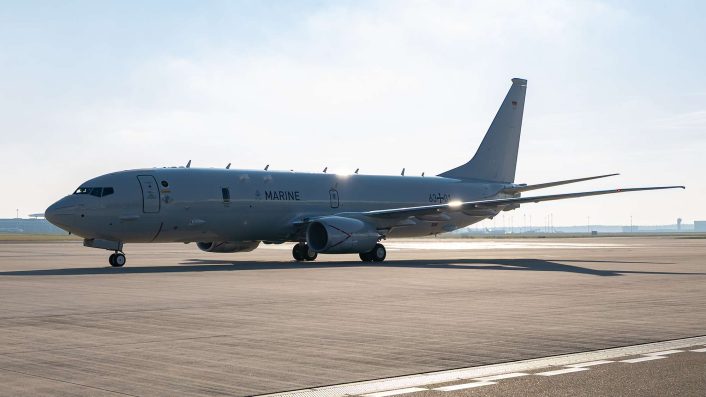
The Bundeswehr highlighted that preparations will be required, with training and infrastructural work underway. However, Germany won’t be alone in this, as the statement also mentions that its armed forces will draw upon the experience of the UK and Belgium to better prepare for 2028.
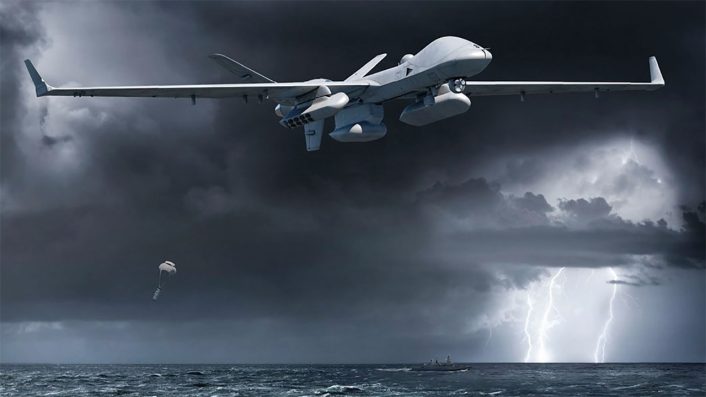
The statement also noted how the MQ-9B can complement the P-8, with the former bringing its long endurance of up to 30 hours and the latter bringing its speed and payload capacity. The RPA will have a payload too, even if smaller, which will include both sensors and the dispensers for sonobuoys.
The data collected by the sensors will be relayed to the ground control stations and will be shared not only with other German naval aircraft and ships, but also with Allies. This echoes a similar intention already disclosed for the P-8, as Germany already showed willingness to jointly operate its Poseidons with other European operators.
A similar concept of operations was also mentioned by Canada following its announced acquisition of both the P-8 and MQ-9B. Canada has large maritime areas to survey, and the two aircraft types will complement each other to optimize their use.
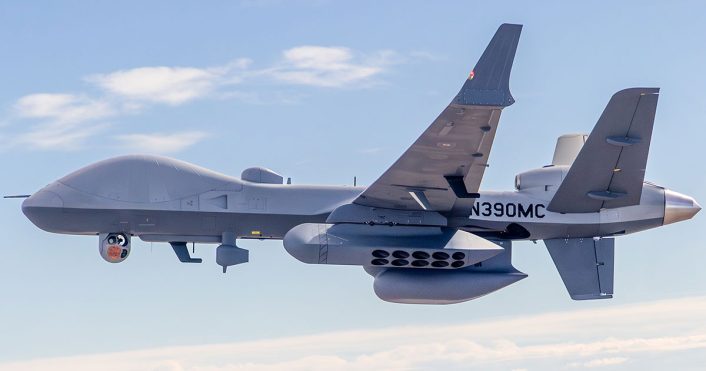
In fact, Canada intends to exploit the long endurance of the SeaGuardian for the surveillance of the coastline and the open waters around the country. The Poseidon would then be sent in to investigate threats identified by the MQ-9B.
MQ-9B SeaGuardian
The MQ-9B SeaGuardian and its sibling MQ-9B SkyGuardian are part of the next generation of remotely piloted aircraft systems (RPAS) developed by General Atomics Aeronautical Systems (GA-ASI). These are based on the lessons learned from 8 million flight hours of the GA-ASI family of RPAs, including the MQ-1 variants and the MQ-9A.
Building on this experience, the MQ-9Bs are designed to deliver persistent intelligence, surveillance, and reconnaissance (ISR) around the globe with an endurance of 30 to 40 hours. Notably, the MQ-9B integrates enhanced payload capacity, including nine hardpoints with a max 4,750 lb (2,155 kg) external payload capacity, and an open architecture system, as well as the Lynx Radar and an advanced electro-optical/infrared (EO/IR) sensor.
Since the beginning, the aircraft has been designed to be able to safely integrate into civil airspace, without requiring segregated airspace. The MQ-9B is controlled via satellite and features automatic takeoff and landing, aided by collision avoidance technology.
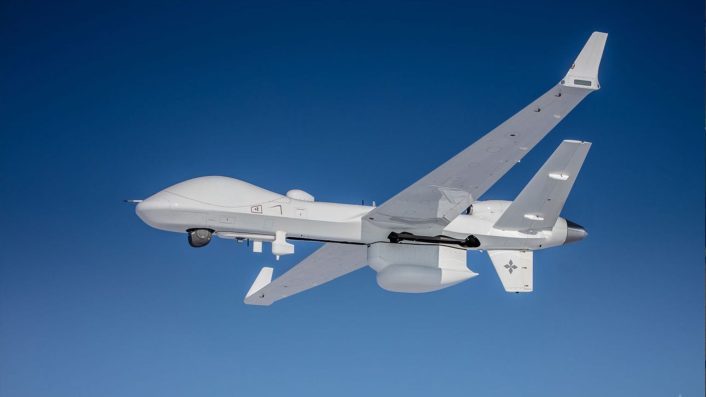
Among the distinguishing features of the SeaGuardian are the Sonobuoy Dispensing System (SDS) pods. These pods are used to deploy sonobuoys to conduct onboard thermal-depth and acoustic data processing.
Among the available payloads for the pods are Directional Frequency Analysis and Recording (DIFAR), Directional Command Activated Sonobuoy System (DICASS), and Bathythermograph sonobuoys. These allow to detect, track, and analyze underwater targets.
Another prominent feature of the RPA is the distinctive Raytheon SeaVue XMC radar pod installed under the fuselage. This joins the GA-ASI Lynx Synthetic Aperture Radar mentioned earlier, installed internally, as well as a Raytheon Intelligence & Space Multi-Spectral Targeting System, a Leonardo Electronic Support Measure (ESM)/Electronic Intelligence (ELINT) SAGE 750, a Shine Micro Automatic Identification System (AIS), an Ultra sonobuoy receiver and a General Dynamics Mission Systems-Canada sonobuoy processor.
source
