



Germany is expected to announce the end of the FCAS/SCAF program at the Berlin Air Show, after an agreement with France was not reached regarding the industrial side.
France and Germany are about to announce the end of the Future Combat Air System/Système de Combat Aérien du Futur (FCAS/SCAF) program during the upcoming ILA Berlin 2026, according to French and German media. The program was first announced as a joint French and German project at ILA Berlin 2018, with Spain officially joining in 2020.
According to La Tribune, German Chancellor Friedrich Merz is expected to announce the end of the program at the opening of the Berlin Air Show, acknowledging profound disagreements over the program’s governance between Airbus and Dassault Aviation. The Frankfurter Allgemeine Zeitung says this was a shared conclusion by both Merz and French President Emmanuel Macron after the companies involved were unable to find common ground.
Both leaders attempted to save the program, considered the most important European defense cooperation project. However, the mediation efforts failed as Dassault was reportedly looking at a greater workshare while Airbus wanted an equal share.
This disagreement led the program to be stuck at the Phase 1B Technological Development, which was supposed to lead to Phase 2 involved the development and production of a demonstrator aircraft. The initial goal was to begin flight testing of the demonstrator in 2026 and field the Next Generation Fighter aircraft in 2040, a timeline that already slipped to at least 2045.
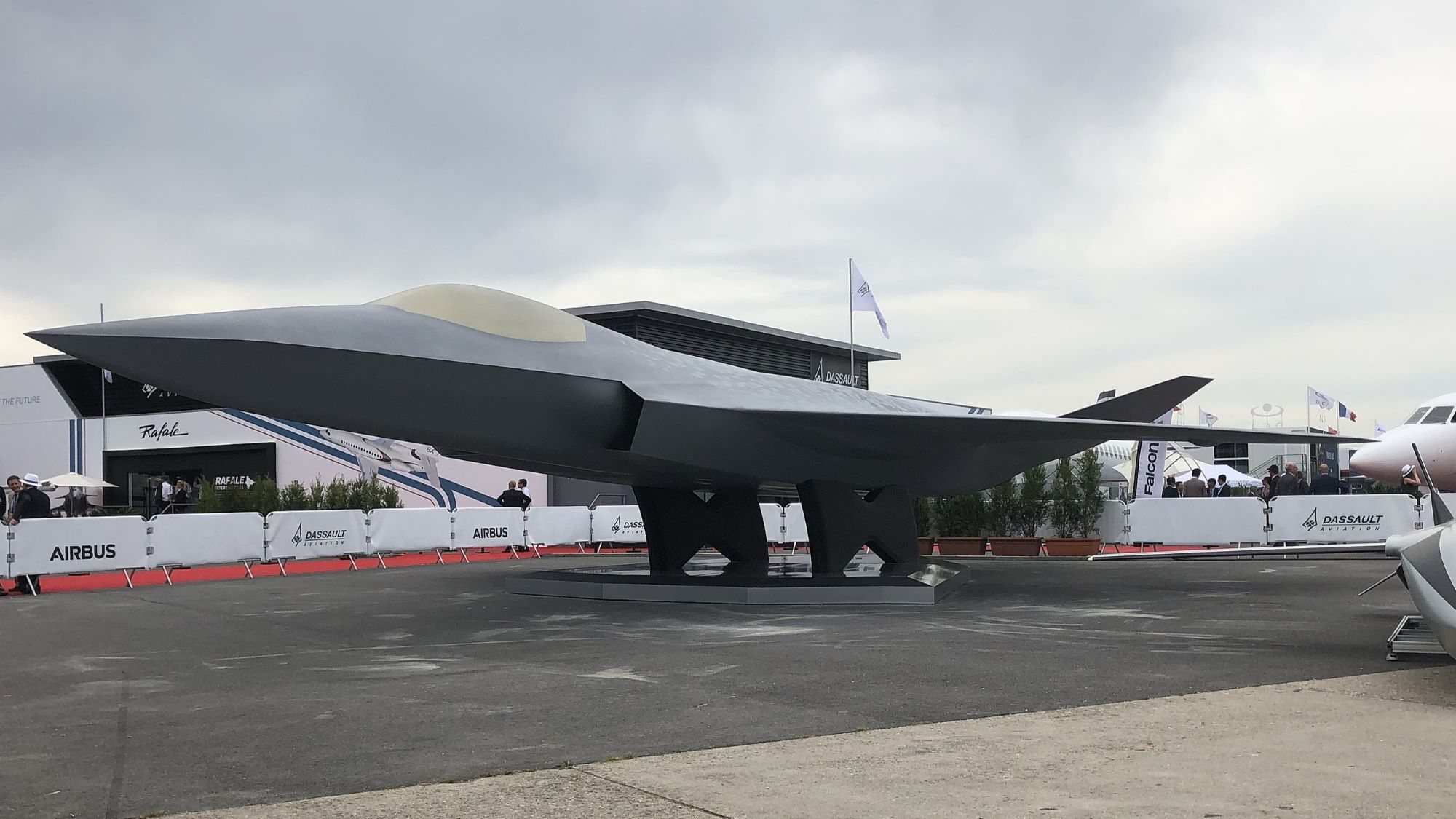
The decision to end the program was reportedly taken during the EU-Balkan summit in Montenegro last week, where Merz and Macron met and discussed on the sidelines of the event. The two leaders however decided they will continue to develop a drone system and a related data network.
FCAS/SCAF
The Future Combat Air System (FCAS)/ Système de Combat Aérien Futur (SCAF) is the 6th generation stealth fighter aircraft designed to replace the Dassault Rafale and the Eurofighter Typhoon. The program was first announced in 2018, with a mockup unveiled during the Paris Air Show 2019.
Airbus described it as a network-enabled system of systems that integrates a new generation fighter aircraft, unmanned MALE drones (medium-altitude, long endurance), the current aircraft fleet, cruise missiles and drone swarms. The Next Generation Weapon System (NGWS) was planned to be the core of FCAS, comprising the NGF, the remote carriers and the Air Combat Cloud.
The timeline foresaw the initial demonstrator phase to begin in 2020, with the demonstrator development starting in 2021 and leading to flight tests in the 2026-2027 timeframe. Initial production was scheduled for 2035, with an introduction into service of the aircraft in 2040, five years later than the other European 6th generation aircraft being developed as part of the Global Combat Air Programme (GCAP).
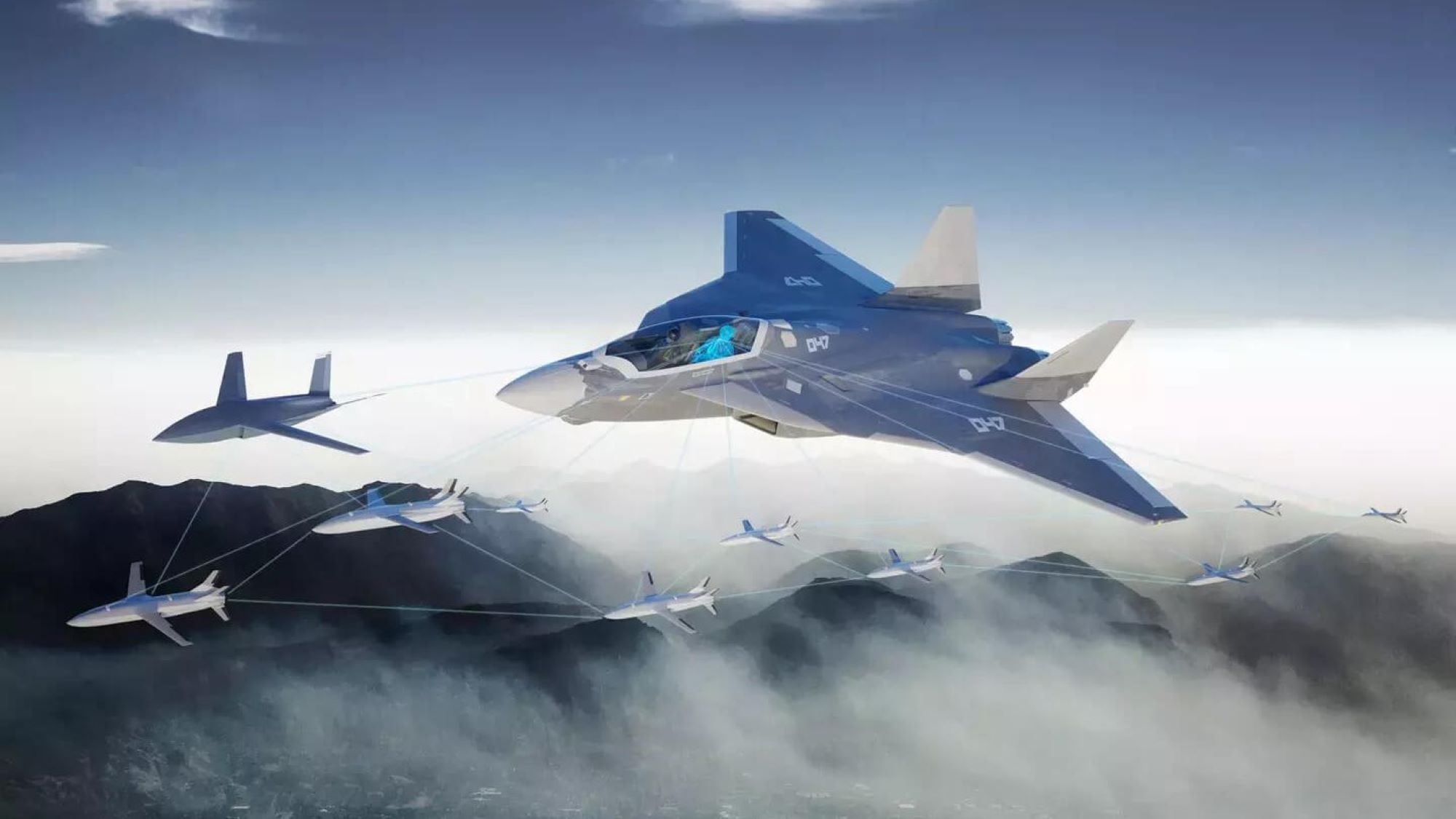
The Rafale and the Typhoon would have also benefited from the FCAS development, receiving the new technologies to be fully integrated and interoperable with the FCAS’ Air Combat Cloud and Artificial Intelligence. Additionally, they would be able to operate with the remote carriers, the armed and surveillance drones controlled by the sixth-generation aircraft.
In 2020, the Spanish industry has signed the initial framework contract for FCAS. Airbus would have the lead in the Spanish industrial effort for the New Generation Fighter (NGF) demonstrator and will also be the prime contractor for the Low Observability development.
At the time, it was said the companies working on the FCAS demonstrators are:
- In the Next Generation Fighter Demonstrator, led by Dassault Aviation, Airbus D&S SAU is the Main Partner alongside Airbus D&S GmbH;
- In the Engine Demonstrator, Safran Aircraft Engines is the Main Contractor, with ITP Aero and MTU Aero Engines as the Main Partners;
- In the Remote Carriers Demonstrator, led by Airbus D&S GmbH, SATNUS (a consortium comprising GMV, SENER Aeroespacial and TECNOBIT) is the Main Partner alongside MBDA;
- In the System of Systems/Combat Cloud Demonstrator, led by Airbus D&S GmbH, Indra is the Main Partner alongside Thales;
- In the JIPC/SIMLAB (Joint Inter-demonstrator Consistency/Simulation Laboratory) Demonstrator, Indra is a Co-Contractor alongside Dassault and Airbus D&S GmbH;
- In the Sensors Demonstrator, Indra is the Main Contractor, with Thales and the German FCMS as the Main Partners;
- In the ELOT (Low Observable Technologies) Demonstrator, Airbus D&S SAU is the Main Contractor, with Dassault and Airbus D&S GmbH as the Main Partners.

Disagreements
Soon, disagreements between Dassault and Airbus emerged, especially regarding the leadership of the program. These led to a delay in the fielding date, which was now expected for 2045.
In 2025, German media reported that Dassault called for taking 80% of the workshare because it believed to have the technical expertise and capability to design the NGF. This emerged following a feasibility report with which the companies were expected to give recommendations on various aspects of the program.
On the other hand, Airbus demanded respect for the initial agreements of the program, which called for an equal division of the workshare between the companies involved. As previously mentioned, Airbus represented both the German and the Spanish industries.
