

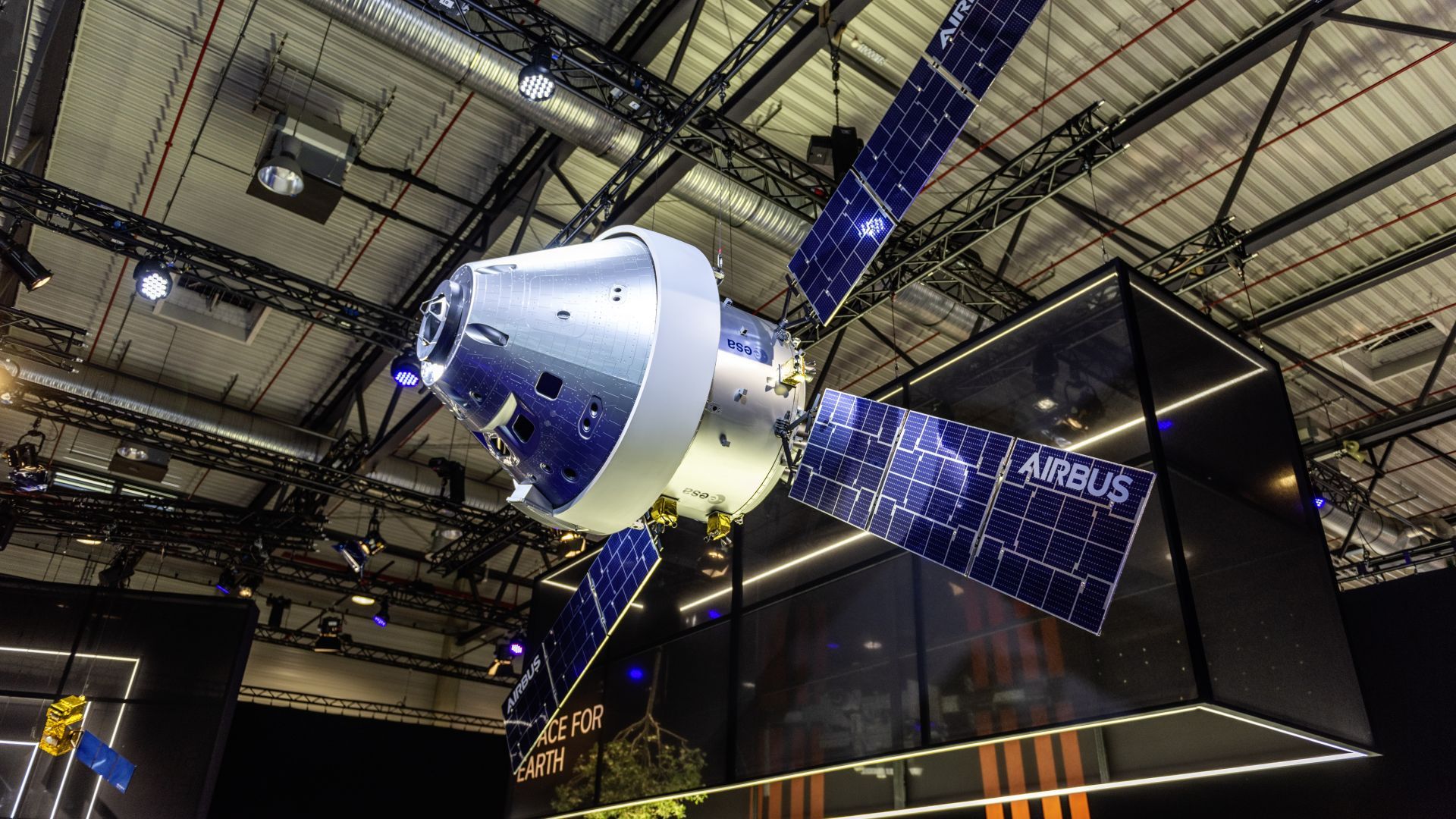
Three major European aerospace and defense firms, Airbus, Thales, and Leonardo, have signed a memorandum of understanding (MOU) to merge their space units into a single entity. The agreement, announced on October 23, 2025, signals a strategic pivot for European players seeking to scale up quickly in the global space and satellite connectivity market and positions the new entity as a competitor to Elon Musk’s Starlink.
The merged entity would pool satellite manufacturing, launch capabilities, ground infrastructure, and service provision under one roof. The intention is to create a vertically integrated challenger capable of delivering high-throughput broadband, IoT connectivity, and secure government communications at scale. With Starlink already operating thousands of satellites, the new alliance hopes to leverage Europe’s industrial base, regulatory environment, and institutional demand to carve out market share.
The Details Of The New Merger

The three firms will combine their respective space businesses, Airbus’s space division, Leonardo’s Defense and Space division, and Thales Alenia Space operations, under the code name “Project Bromo“. Discussions initially began in 2024, with an MOU formally announced on October 23. The MOU sets out governance, ownership stakes, and pathways toward consolidation over the next 12-18 months.
Thales already has a joint venture with Leonardo named Thales Alenia Space, providing space-based systems and satellites. The joint venture is the second-largest industrial partner on the International Space Station and has multiple partnerships with other companies. The two joining forces with Airbus will create a single, unified entity that can more effectively compete against established players like SpaceX and Starlink.
One major goal is to deliver high-capacity broadband to remote regions, maritime zones, and governmental customers, areas where Starlink and other LEO constellations are already active. The merged firm would aim to compete not just on satellite hardware, but on service pricing, regulatory alignment, and customer trust tied to sovereign supply chains.
The Motivation Behind This Tie-Up

Starlink, a subsidiary of Elon Musk’s SpaceX, has disrupted traditional satellite operators by deploying large low-Earth-orbit (LEO) constellations, offering global internet service, rapid scalability, and strong brand presence. The European merger is a direct response, indicating concern among legacy players about being squeezed out or relegated to niche roles. Europe’s industrial players are leveraging existing strength in aerospace, manufacturing, defense, and regulation.
Airbus CEO Guillaume Faury had previously commented in September on why his company specifically is pursuing this tie-up. For one, the pace of change in the space and satellite sector is rapidly accelerating. Faury states that combining capabilities isn’t just about avoiding losses, but also about leveraging combined resources to adapt further to future markets with modularity, faster production, and more agile responses.
Additionally, Europe as a whole is pushing for more independence in space missions. Currently, European and other nations around the world are heavily dependent on SpaceX due to the company’s comparatively low operating costs. A single, large European entity would be able to offer competitive costs due to its scale and would reduce European dependence on the United States.
The Challenges Ahead For The Three Partners

With the MOU now formally signed, the next step will be to gain regulatory approval. Past consolidation attempts in aerospace and defense have often been slow or blocked due to concerns over market dominance, procurement fairness, and national strategic interests. One of Faury’s points when previously speaking on the manner is that it will be a delicate matter to convince regulators that these three giants joining hands is necessary to remain competitive.
Another hurdle for the three firms is that all three have national obligations and different product lines. As such, the three will need to plan which segments to merge and how to integrate them, while balancing R&D priorities, government programs, and workplace structures. Additionally, all three companies have different corporate cultures, which will need to be harmonized.
|
Company |
Headquarters |
|---|---|
|
Airbus |
Blagnac, France |
|
Leonardo |
Rome, Italy |
|
Thales |
Paris, France |
There’s also the financial impact. Airbus, for instance, has incurred significant charges in its space division already. Programs like “OneSat” (a reprogrammable GEO satellite effort) have faced sizeable cost overruns, and they continue to struggle against American competition. The hope for all three is that scale can make such programs more cost-effective.
source
