


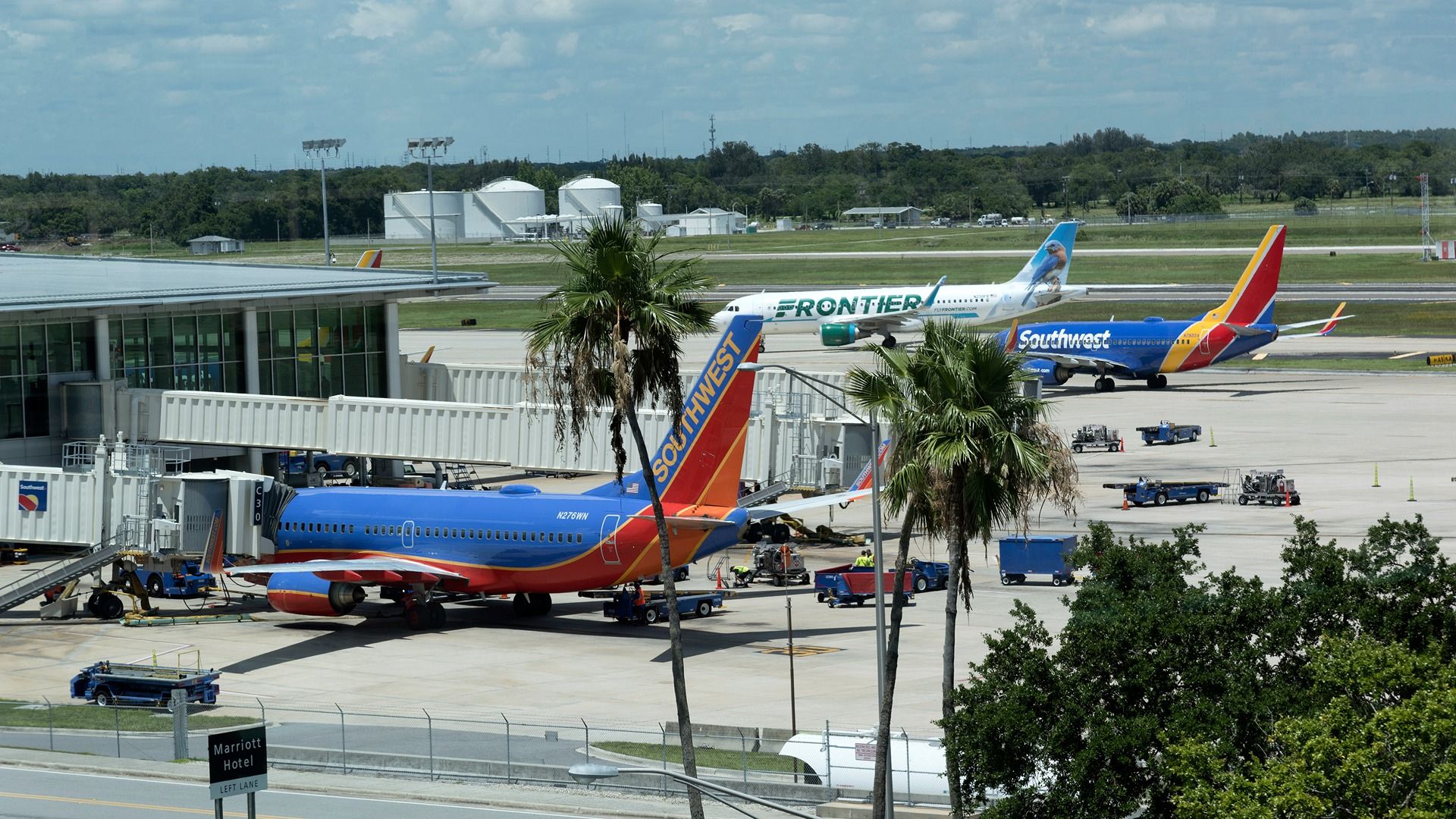
Scanning airport luggage would seem to the outside world to be somewhat of a monotonous, albeit critical, occupation. However, every now and then something unusual pops up on the security screens at airports. United States Customs and Border Protection (CBP) officers discovered what appeared as human bones in a traveler’s luggage at Tampa International Airport (TPA).
According to a report by NBC News, the passenger said that the human remains, including a part of the skull wrapped in foil, were intended for rituals. Director of Field Operations at CBP, Carlos C. Martel, wrote on X that the passenger initially declared only ten cigars, but agents later discovered prohibited plants and, eventually, what appeared to be human remains.
Officials Seized And Destroyed Remains

After the remains were found in the traveler’s luggage at Tampa International Airport, customs officials moved quickly to assess the potential risk. Martel said the items resembling human remains were seized and destroyed because they posed “serious” health risks.
Photos he shared online showed what appeared to be a skull and several small bones wrapped in aluminum foil. Officers also discovered prohibited plants in the passenger’s duffel bag, though the post did not specify what kind. In a social media update, Martel added
“At @CBP, we never know what baggage may hold, but smugglers should know we’ll always have a bone to pick.”
Rules On Carrying Human Remains By Air

Rules apply when transporting human remains by air. According to the Customs website, travelers carrying remains for burial or cremation must provide a death certificate and comply with Centers for Disease Control and Prevention (CDC) requirements. If the certificate is issued in a language other than English, it must be accompanied by an English translation.
Also, if a death certificate cannot be obtained in time to transport remains, the United States embassy or consulate may issue a consular mortuary certificate indicating whether the individual died from a “quarantinable communicable disease.” Also, if a passenger is flying within the US, including connecting flights, cremated remains must be in a temporary container that can go through Transportation Security Administration (TSA) X-ray machines. The container can be made of wood, plastic, cardboard, or any non-lead ceramic, according to the website.
Additionally, human remains, along with coffins and accompanying flowers, are exempt from duty and do not require formal entry. However, flowers may be subject to inspection by the Animal and Plant Health Inspection Service (APHIS). Typically, a CBP officer will decide on the spot whether the accompanying flowers are allowed.
How Often Do Such Incidents Occur?

Every now and then, something unusual is bound to pop up on the monitors. Such as the shape of a phalange, a femur, or perhaps even a human skull. Nevertheless, cases of passengers traveling with undocumented human remains in their luggage are not frequent.
In a notable incident, Mexican authorities discovered four human skulls in a package at Querétaro Intercontinental Airport (QRO) in 2023. The National Guard of Mexico was conducting an operation at Querétaro Intercontinental Airport to identify potential narcotics or firearm shipments from the airport using X-Ray scanners. However, the X-ray scans also revealed the disturbing package.
The four skulls were wrapped in transparent plastic wrap and aluminum foil and placed in a parcel. Initial details revealed the freight was bound from Apatzingán in the Michoacán state to Manning, South Carolina, and was being carried by a parcel firm located at Querétaro Intercontinental Airport. The lack of paperwork meant that it was unclear why the skulls were being shipped, and especially in this haphazard manner.
