


The Chinese national, currently studying for an aeronautical engineering degree in Scotland, was arrested by the FBI at JFK airport before his return flight to Europe.
Tianrui Liang, aged 21, visited Offutt Air Force Base, Nebraska, in an attempt to spot and photograph U.S. Air Force aircraft like the E-4B Nightwatch and all RC-135 variants. He had previously visited Ellsworth AFB, South Dakota, with the aim of spotting B-1B Lancer bombers.
The Scotsman reports that Liang used information gathered from planespotting websites to learn where to position himself to get the best views and photographic opportunities at the bases. These websites are also commonly used by enthusiasts to understand where you are allowed to spot without getting into trouble either with authorities or private landowners, though it is not clear exactly where Liang chose to spot from.
Chinese student at Scots univerisity charged with photographing US military aircraft https://t.co/LkRlPO8RH8
— The Scotsman (@TheScotsman) April 19, 2026
Liang initially flew to Vancouver, Canada, where he met with a friend who studies at a university in New York. The two began a road trip into the United States, via Seattle, to Montana. The friend then reportedly board a flight home to New York, while Liang continued his trip solo.
When Liang made it to New York’s John F. Kennedy Airport, and prepared to head home to Glasgow, via Frankfurt, he was arrested by the Federal Bureau of Investigation (FBI) under Title 18 U.S. Code Section 795. The code, which is similar to seldomly enforced laws also on the statute books of various nations including the UK, states “it shall be unlawful to make any photograph, sketch, picture, drawing, map, or graphical representation of such vital military and naval installations or equipment without first obtaining permission of the commanding officer”.
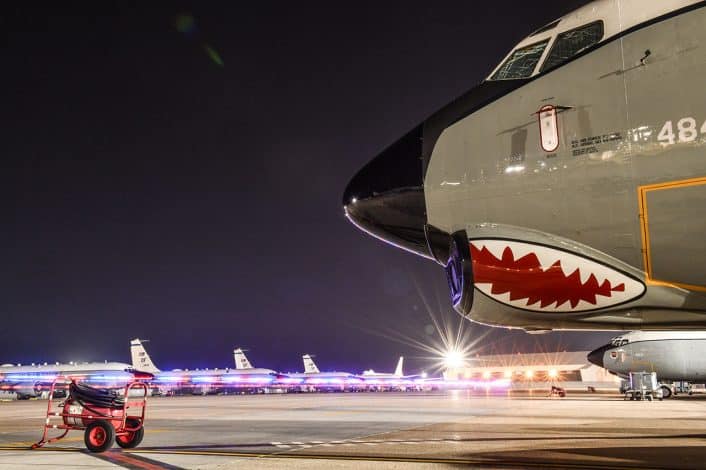
These types of laws are not uncommon worldwide, and aviation enthusiasts are usually not hindered by them. In fact, many security agencies have long viewed aviation enthusiasts as a useful additional layer of security protection as they are able to forward information of suspicious activity to the appropriate authorities. Some airfields even maintain a membership scheme for regular planespotters which allows members a more formal, direct line to the base for reporting these occurrences.
Clearly, based on the available spotters’ guides as well as a plethora of photographs from the base, many enthusiasts have been able to partake in their hobby at Offutt without issue.
In this instance, the combination of Liang being a Chinese national – though, from our cursory research, there is significant evidence that supports him being a genuine planespotter – as well as heightened sensitivities during the Iran conflict and a reportedly more hostile environment for foreign enthusiasts under the Trump administration – appears to have caused this individual to fall foul of the law. Offutt AFB is, as well as being home to various sought-after aircraft types for enthusiasts, the headquarters of the U.S. Strategic Command (STRATCOM), which may add an additional element to security concerns.
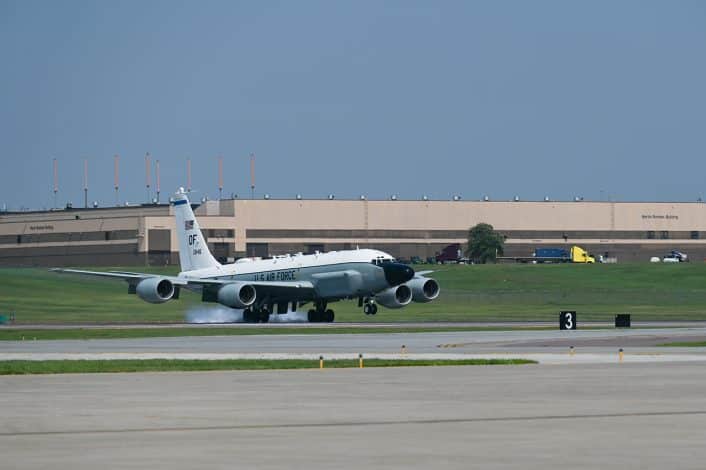
Liang, who would be most familiar with the more permissive environment in the UK, may also have chosen to spot from a location that local enthusiasts do not commonly use, and therefore would have drawn more attention. A witness is said to have reported Liang photographing aircraft ‘on the runway’, which would not align with the location recommendations from Spotterguide.net.
The student was released on bail after appearing in court on Apr. 8, after surrendering his passport, as the judge overseeing the case overruled the U.S. Government’s request for detention until trial. However, a new court order on Apr. 9 saw Liang, considered a ‘flight risk’, taken back into custody where he presumably remains.
Problems for Planespotters
While little has apparently changed for U.S. citizens, there have been many reports from overseas aviation enthusiasts who have visited the U.S. since the current administration took office suggesting that authorities were taking a far more sensitive position on planespotting at U.S. military installations.
Even spotters from allied countries, such as the UK and the Netherlands, travelling on Electronic System for Travel Authorization (ESTA) Visa-waiver programs, have spoken online and in person about having had their details noted by security forces while at regular spotting locations, or being questioned when departing the U.S. for home.
Not the first time this has happened. It happened in turkey a few years ago as well. Photography near or of military installations comes with risk.
— Scott Bateman MBE (@scottiebateman) April 20, 2026
In some cases, spotters have said that after arriving back to their country they were informed that their ESTAs have been revoked. This would prohibit further travel to the U.S. and usually would mean any further travel would be subject to a full Visa application.
While heightened security sensitivities in the current environment are understandable, it is unfortunate that the security benefits of maintaining a good relationship with aviation enthusiasts are seemingly not more widely understood and accepted.
source
