

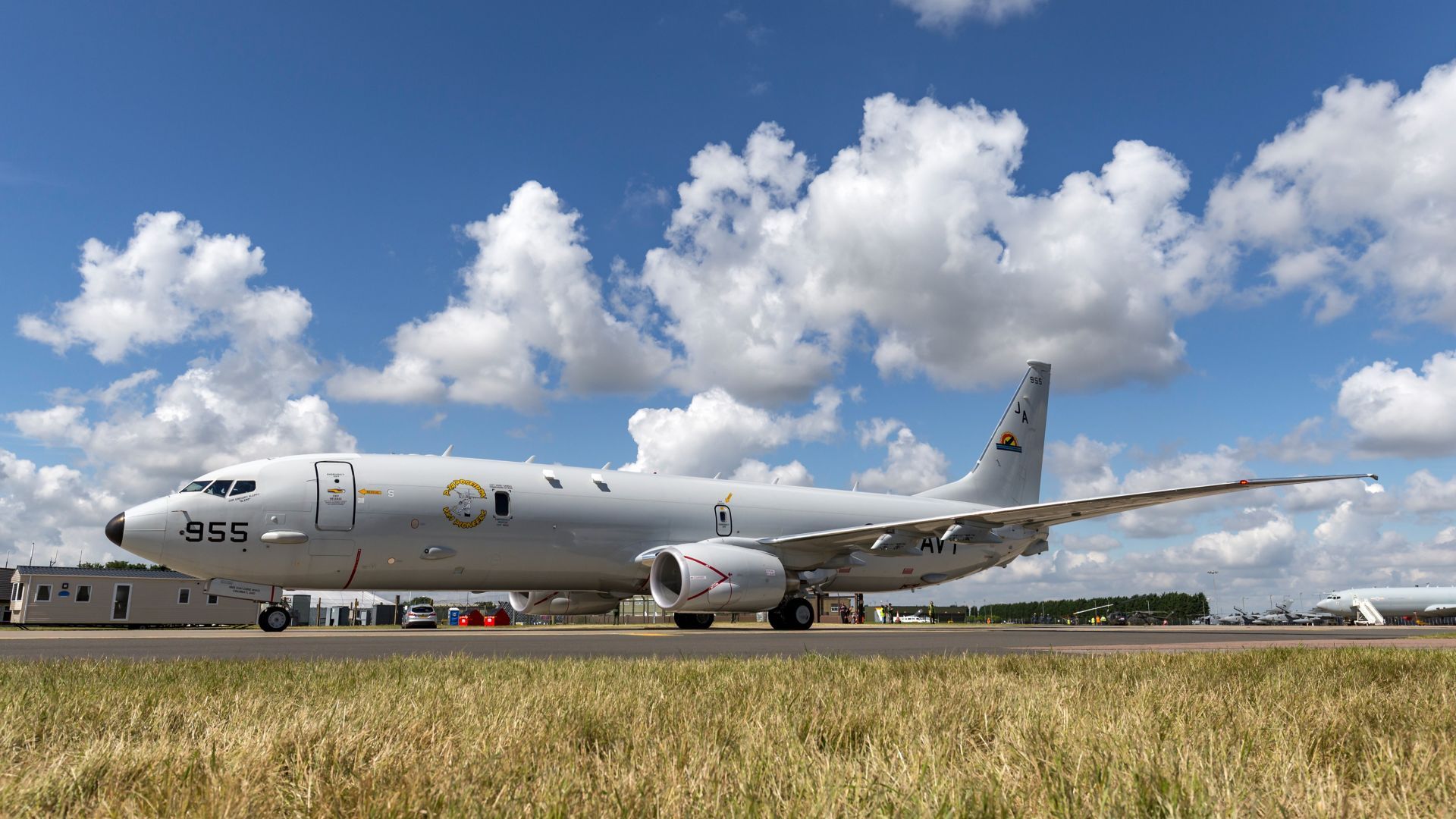
Germany has taken delivery of its first Boeing P-8A Poseidon maritime patrol aircraft, signaling a further bolstering of its naval surveillance and anti-submarine warfare capabilities amid rising tension in the Baltic Sea region. As per Defense News, there are eight on order in total, and the P-8A is expected to replace Germany’s aging fleet of Lockheed P-3 Orions, enhancing Germany’s ability to monitor undersea threats and contribute to NATO’s collective maritime defense objectives.
The acquisition underscores how Germany is expanding its maritime reach. The German Navy will now operate a state-of-the-art platform that combines surveillance, anti-submarine warfare, and networked mission systems. With this first aircraft delivered, Germany joins a small group of NATO nations flying the P-8A, aligning itself more closely with U.S. and allied maritime patrol standards and advancing the nation’s maritime capabilities.
What Will The P-8A Poseidon Do For Germany

The P-8A Poseidon is a modified version of the Boeing 737-800, fitted with advanced sensors, acoustic systems, and weapons capability. Its core roles include anti-submarine warfare (ASW), anti-surface warfare (ASuW), intelligence, surveillance, and reconnaissance (ISR), and maritime domain awareness. Germany’s version is expected to integrate with national and NATO maritime and naval assets to enhance coordinated operations.
The Baltic Sea, characterized by shallow waters and complex geography, demands a high degree of ASW capability to detect and track submarine activity. Germany’s naval strategy and responsibilities are heavily tied to the Baltic Sea, where tensions are currently escalating. As such, this aircraft fills a critical capability gap, especially considering the age of the P-3 Orions that the German Navy currently operates.
Germany’s procurement also strengthens NATO interoperability. Operating the same platform as allies like the US, UK, Norway, and others enables shared tactics, data exchange, logistics, and international training. That alignment is especially valuable in joint exercises or coalition maritime surveillance missions. This allows for far more streamlined operations, making missions more efficient and improving cost-effectiveness.
The Capabilities Of The P-8A

The P-8A is the standard variant of the Boeing P-8 Poseidon. These aircraft are designed for anti-submarine warfare, meant to assist warships by tracking and localizing submarines before coordinating with other naval forces. The plane can also carry torpedoes, anti-ship missiles, and depth charges, making it a potent multi-role asset.
The aircraft also integrates maritime radar, electro-optical/infrared (EO/IR) sensors, communication suites, and data links like Link 16, enabling real-time data sharing with naval fleets, ground stations, and allied platforms. In effect, it is a node in the broader maritime domain awareness network. For Germany, this means sharing situational awareness across the Baltic and North Seas with NATO task groups.
|
Specification |
Boeing P-8A Poseidon |
Lockheed P-3 Orion |
|---|---|---|
|
Base Aircraft |
Boeing 737-800 |
Clean-sheet design |
|
Entry-Into-Service |
2013 |
1962 |
|
Engines |
2x CFM56-7B turbofans |
4x Allison T56 turboprops |
Operationally, the P-8A’s combat range of over 1,200 NM (2,225 KM) allows for prolonged patrols along key maritime chokepoints and shipping lanes. German crews will likely base operations in coastal locations to maximize coverage. The aircraft also supports search-and-rescue, environmental surveillance, and peacetime patrol roles, making it a flexible asset even outside wartime scenarios.
The Impact Of This New Commitment
The delivery of Germany’s first of eight P-8As comes amid growing Baltic Sea tensions. Russia has increased submarine and naval activity in the region, significantly raising concerns among NATO states as Russia’s invasion of Ukraine continues. Germany’s new capability can help close detection gaps and act as a stronger deterrent against covert undersea incursions from a nation that is becoming more and more militarily aggressive.
The aircraft deepens Germany’s strategic weight in Northern European security. While Germany already fields modern naval vessels and units, adding an advanced maritime patrol aircraft enhances its ability to project intelligence dominance over regional seas. This may influence maritime posture, alliance planning, and threat calculus.
For other European nations, Germany’s move could accelerate demand for P-8A or equivalent maritime patrol solutions. Poland, the Baltic states, and other NATO members may press for similar platforms or shared patrol programs to strengthen regional coverage. The German P-8A is likely to become a vital in NATO’s Baltic maritime deterrence structure.
source
