

When you think of Emirates, the Airbus A380 may be the first thing that comes to mind. And when you think of the Airbus A380, Emirates might be the first thing that comes to mind. Emirates helped turn Dubai into the global transit hub that it is today, and the A380 is the plane that really enabled Emirates to do that. For the Dubai-based carrier, the A380 is more than just another aircraft.
With that in mind, I want to take a look at Emirates’ current retirement plans for the whale jet. Up until now, Emirates’ plan was to retire the aircraft by 2040, though the plane has seemingly just gained some extra years of life…
Emirates plans to fly Airbus A380 into the 2040s
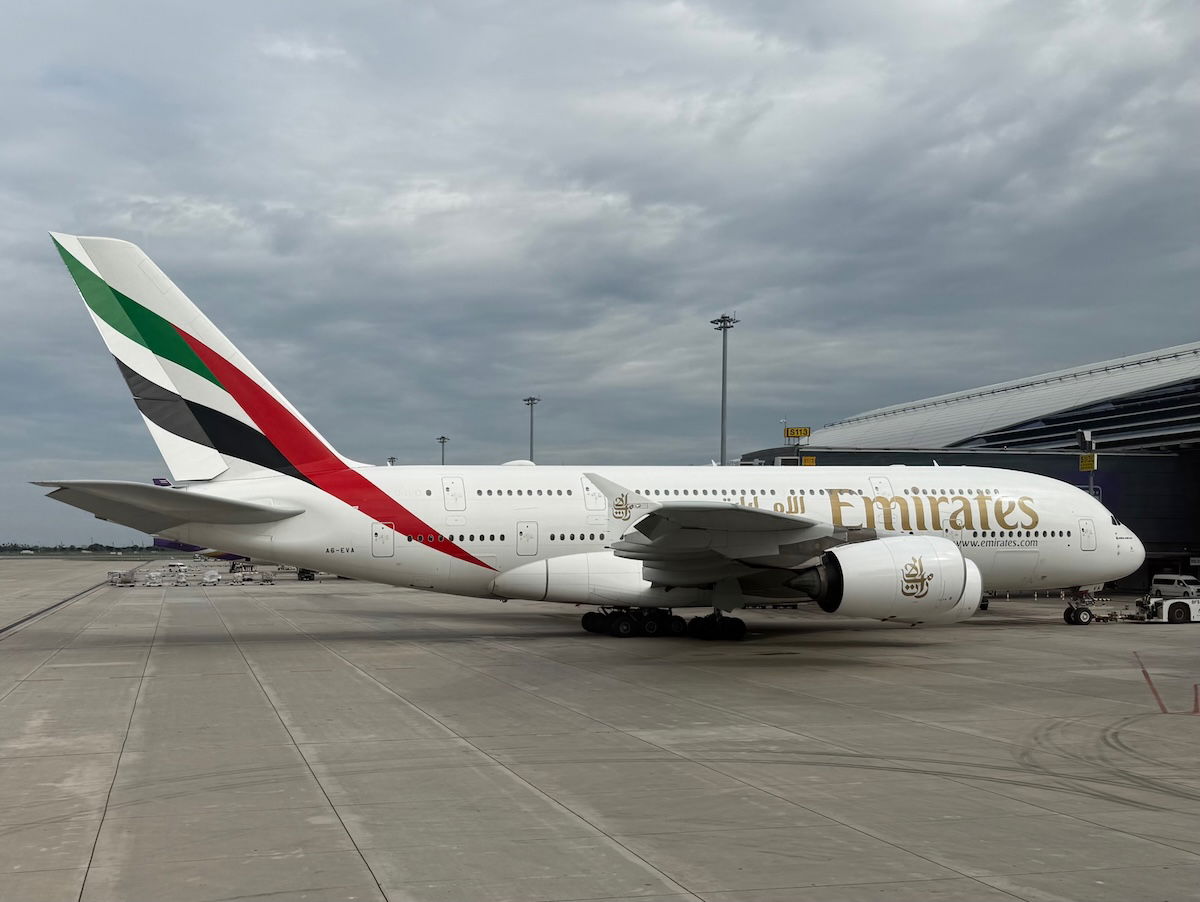
Emirates is the only airline in the world that has managed to make the Airbus A380 a huge success, as the airline was able to scale its A380 operations in a way that no other airline did. Emirates has 116 A380s in its fleet, representing roughly half of the world’s total A380 deliveries. For some airlines, the A380 offered too much capacity, while for Emirates, the airline can’t get enough of the plane.
Unfortunately for Emirates (and us passengers), the days of the Airbus A380 are numbered. Airbus stopped A380 production in 2021, as there weren’t sufficient orders to keep production going (Emirates’ leaders believe that other airlines intentionally sabotaged the plane).
As much as Emirates could have almost kept the A380 program alive, the airline also realized it didn’t make sense to keep investing in an aircraft that would eventually become obsolete, as aircraft manufacturers invest in other aircraft technology instead.
So, what’s the latest on the retirement of the Airbus A380? A Memorandum of Understanding (MoU) has just been signed for Rolls-Royce to perform Maintenance, Repair and Overhaul (MRO), on Emirates’ A380 Trent 900 engines.
With this announcement, Emirates has revealed that it plans to continue operating the A380 fleet “into the 2040s,” which suggests that the planes are getting a little more life than initially planned.
With the last A380 having being delivered in 2021, that means the youngest A380 will be in its 20s when it’s retired, give or take. Of course “2040s” gives the airline quite a bit of flexibility, and the timeline could change. Are we talking 2041 or 2049?
At one point, Emirates’ plan was to retire these planes in the mid-2030s, so the longer timeline is something that many travelers will appreciate. To be clear, that doesn’t mean some A380s won’t be retired before then. Quite to the contrary, the plan is for many A380s to start to be retired around the early to mid 2030s, and then they’ll be used for parts, to allow the remaining A380 fleet to keep flying.
Emirates is still very much investing in its Airbus A380s, as these planes are being overhauled with refreshed cabins, including a new premium economy product, and even updated business class seats. Emirates President Tim Clark has even hinted at a refreshed first class cabin on these jets.
I think it’s also worth mentioning that this timeline is very much subject to change. Just as coronavirus changed the airline industry in many ways, any major event that impacts global demand could cause Emirates to move forward A380 retirements. So while the 2040s is the goal as of now, if there’s a major economic downturn in the years prior to that, you can bet that those planes will be retired early.
How Emirates will replace its Airbus A380 fleet
The Airbus A380 is by far the largest passenger aircraft in the world, so it goes without saying that it’ll take a lot of frames to replace Emirates’ fleet of A380s. Emirates has roughly 250 aircraft at the moment, split almost evenly between Airbus A380s and Boeing 777s, in addition to a limited number of Airbus A350s, which the airline started taking delivery of earlier this year.
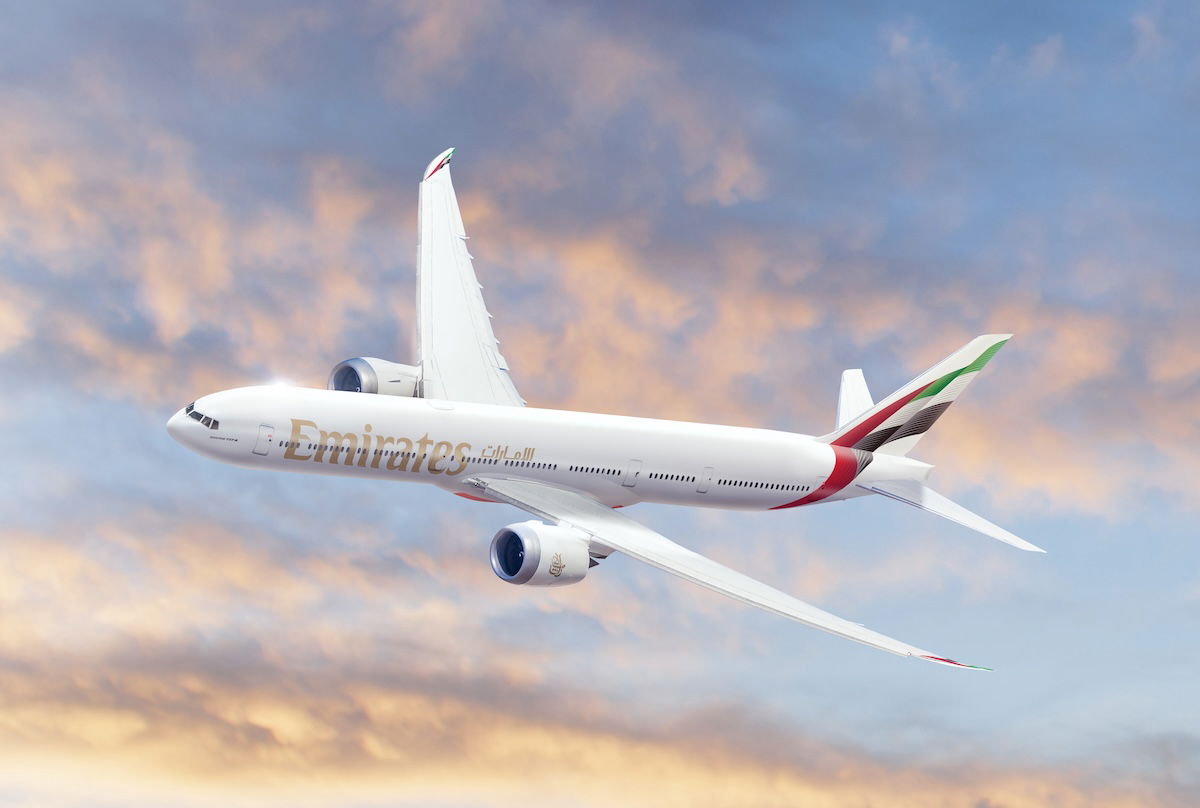
Eventually A380s and existing 777s will be retired, and that’s why Emirates has over 350 jets on order:
We know that Emirates is also pushing for a stretched version of the 777X (informally referred to as the 777-10), but it remains to be seen if that becomes a reality. Given how long aircraft certification takes nowadays, who knows when such a plane could even realistically enter service
Some may wonder why the Airbus A350-1000 isn’t in Emirates’ fleet plans, given that it’s Airbus’ largest aircraft that’s currently in production. It’s because Clark has been critical of the durability of the plane’s Rolls-Royce engines, so he doesn’t see it as a great fit. While there had been rumors that Emirates would order the plane, that didn’t come to frutiion.
Will Emirates be the same without the Airbus A380?
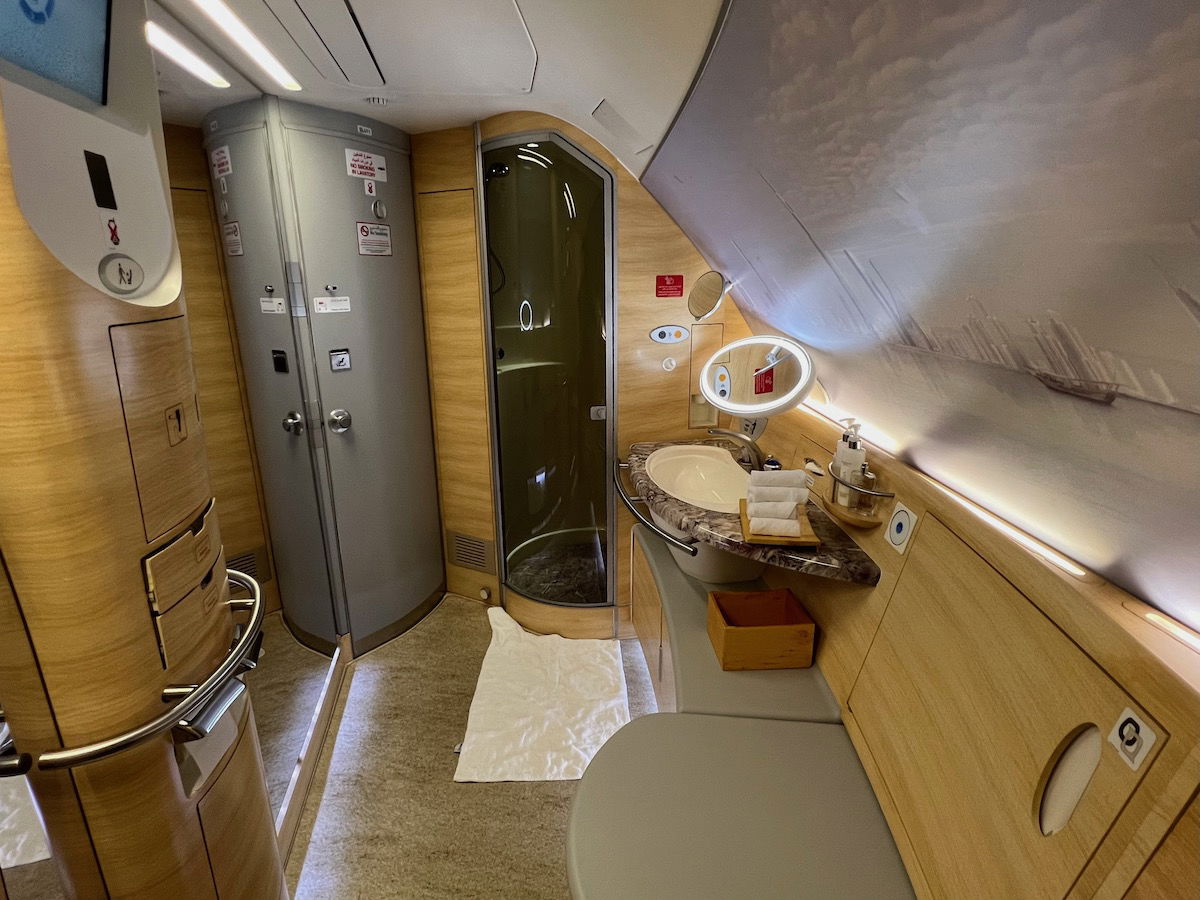
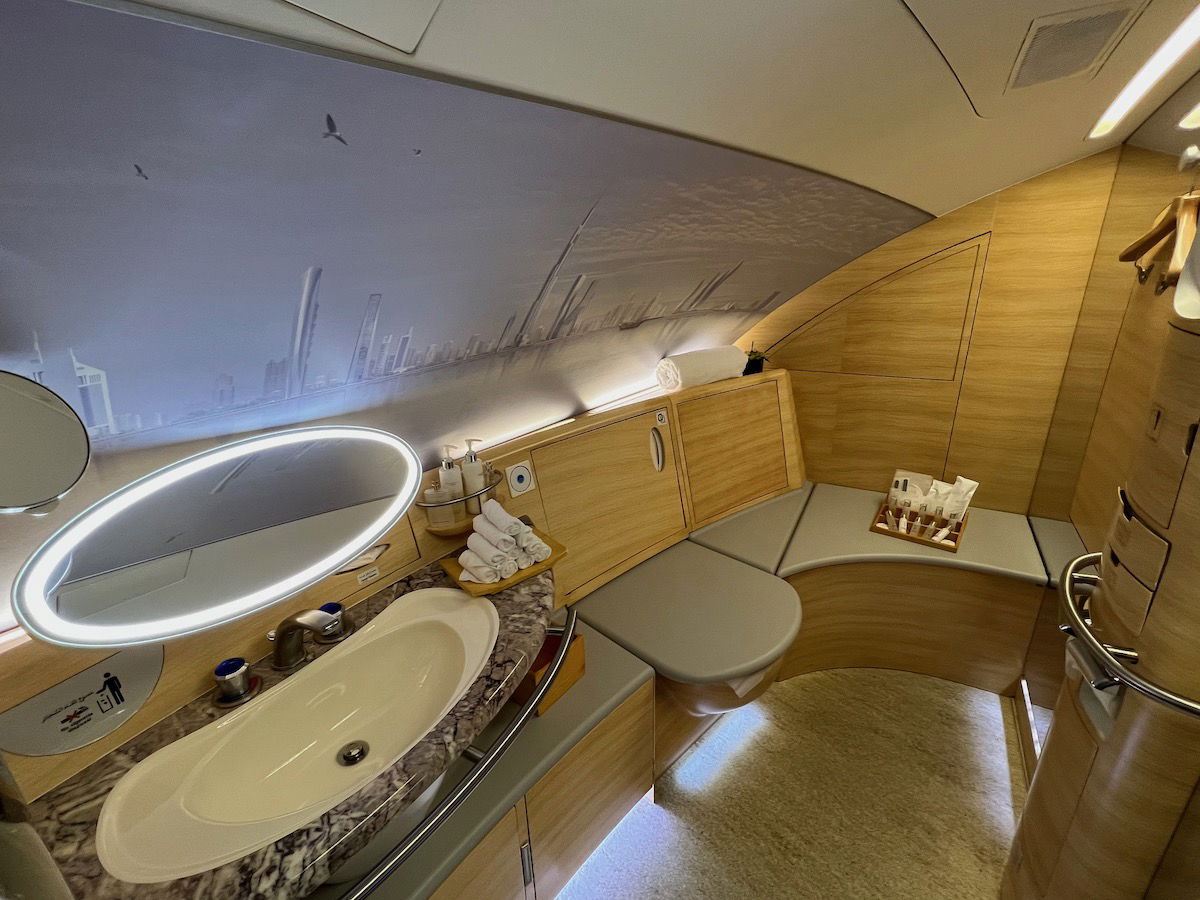
There’s no denying that Emirates has a huge halo effect from the Airbus A380. When people think of Emirates, they almost always think of the A380, and in particular the business class bar and first class shower. Even if someone never travels in a premium cabin, these are two instantly recognizable signature amenities of Emirates.
Arguably the A380’s reputation has allowed Emirates to underinvest in other premium products. For example, Emirates’ Boeing 777 business class has historically been downright subpar, with seven angled seats per row (though a new product is finally being rolled out). While the A380’s amenities might be style over substance, I truly do believe that they give people the impression that Emirates is world class across the board, and causes people to overlook other shortcomings.
Without the Airbus A380, will Emirates maintain the same reputation? The A380 just has some extra real estate for airlines to play with, which you won’t find on other aircraft. Could we still see Emirates introduce an onboard bar on Boeing 777Xs, even if it comes with a bigger opportunity cost?
Honestly, it’s just kind of hard to imagine Emirates without the A380, because it’s such a core part of the brand’s experience. But I do think a lot about Emirates will change. Keep in mind that the airline will move to Dubai World Central (DWC) in the 2030s, which is expected to be the world’s biggest airport, once fully operational.
Also, FlyDubai is massively expanding its fleet, and is expected to eventually fly hundreds of planes. I continue to think that an eventual merger between the two airlines is inevitable, which would make Emirates’ network much more comprehensive (due to the destination limitations of only flying wide body aircraft).
Bottom line
Emirates seems to be planning on keeping the Airbus A380 in its fleet longer, and the plane is now expected to fly into the 2040s, though we don’t know anything beyond that. Previously, Emirates planned to retire the A380 by 2030, so it sure seems like the plane is getting a bit more life.
This obviously remains subject to change, as a shift in global demand could cause Emirates to change that timeline. Emirates has lots of other aircraft on order to eventually replace the A380. Still, one has to wonder what Emirates will be like without the A380.
What’s your take on Emirates eventually retiring the A380? Can you imagine the airline without the A380?
source
