


A new Australian defence strategy will see AU$5 billion redirected from current programs towards new capabilities, with the headline cut being the early withdrawal of the RAAF’s ten C-27J Spartan airlifters.
News of the cut came with the release of Australia’s 2026 National Defence Strategy, which states the Italian-built transport aircraft will be replaced “with a commercial aircraft fleet to support personnel and logistics transport across the Pacific”.
The first of the Royal Australian Air Force’s C-27J Spartans arrived in 2015, with the final aircraft in the order of ten airframes arriving in 2018. Although built by Alenia in Italy, the aircraft were ordered through a U.S. Foreign Military Sales (FMS) deal that was spun out from the U.S. Air Force’s own messy procurement of the Spartan. The C-27J faced competition from the Airbus C-295, though this option was ruled out after falling short of a number of capability requirements set by the RAAF.
Now, only eleven years after initial deliveries, the aircraft is due to be retired from Australian service. A firm retirement date has not yet been announced. The young airframes are almost certain to draw significant interest on the second hand market from other armed forces in the region and further afield, though, as Scramble notes, any such sale – involving the transfer of restricted technologies – would require a sign off from the U.S. and from the manufacturer.
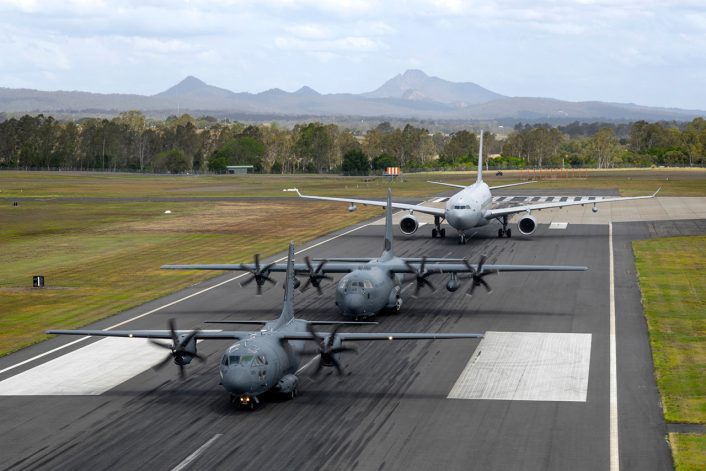
The C-27J Spartan is the smallest of the RAAF’s three airlifters, flying alongside the Lockheed Martin C-130J Hercules and the Boeing C-17A Globemaster III. In 2021, the Australian Defence Force (ADF) announced that the Spartan would be refocused towards the humanitarian and disaster relief (HADR) role, rather than supporting overseas combat deployments and operations like its larger counterparts, and as was intended when procured.
&
SOF Photo of the Week
U.S. and Australian Special Operations Forces (SOF) conduct a high-altitude low-opening (HALO) parachute jump from a Royal Australian Air Force (RAAF) C-27J Spartan of the 35 Squadron during Talisman Sabre in Queensland, Australia, July 17, 2019. Talisman… pic.twitter.com/enrjy1Y0UW
— SOAA – Special Operations Association of America (@SOAAorg) March 19, 2025
#AusAirForce deployed a C-27J Spartan to the Defence Pacific Air Program in 🇵🇬 to provide airlift support to the PNG government. #YourADF had the opportunity to train and fly into remote highland airfields, transport #PNGDF personnel and supplies, and support HADR operations.🇦🇺✈️ pic.twitter.com/qfL2u7JF2P
— Defence Australia (@DefenceAust) April 30, 2024
A year earlier, a Government report quietly noted issues with the sustainment of the C-27 fleet. Australian Defence Magazine later reported that the Spartan “has also reportedly suffered from poor availability rates since introduction, largely due to sustainment and supply chain issues”.
Sustainment issues forcing the early retirement of an aircraft type is familiar ground for Australia, the country having already ditched its force of NH90 battlefield helicopters in favor of new UH-60 Black Hawks. Meanwhile, for similar reasons, the Tiger attack helicopter is due to be withdrawn from Australian service in 2028.
Although the National Defence Strategy document notes that commercial aircraft will be sought to replace the C-27J, it should also be noted that the RAAF currently has twenty C-130J Hercules airlifters on order from Lockheed Martin – with first deliveries due in 2028.
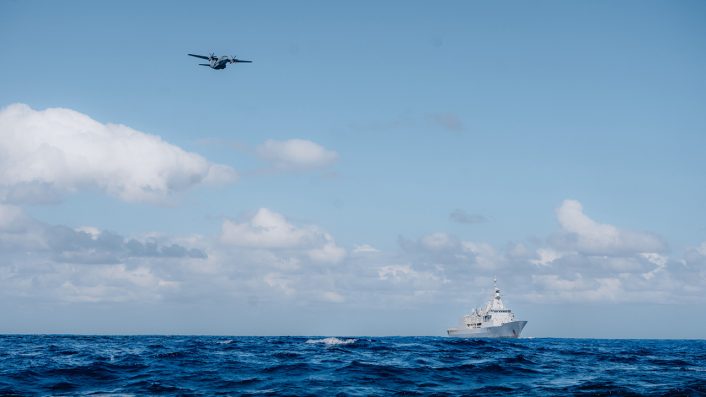
The new C-130Js are intended to replace Australia’s current fleet of the same aircraft, though does include a significant uplift of eight airframes. Commercial aircraft may be sought to take over some of the Spartan’s less demanding tasks, transporting personnel and palletised freight, while the extra C-130Js could offset the loss of a cargo-dedicated airlifter for certain mission sets where the larger hold and rear ramp are required.
E-7 Wedgetail Replacement and More Under Consideration
Alongside the announcement regarding the C-27J Spartan, the new National Defence Strategy also brings with it some other interesting notes.
The RAAF force of E-7A Wedgetail airborne early warning (AEW) aircraft were the first in the world to enter service, and now Australia is the first nation planning for its withdrawal – even before major customers like the Royal Air Force and U.S. Air Force introduce them to service. It should be stressed that this is likely related to long term planning, and should not be taken as an indication that the RAAF is seeking to offload its Wedgetails ahead of schedule.
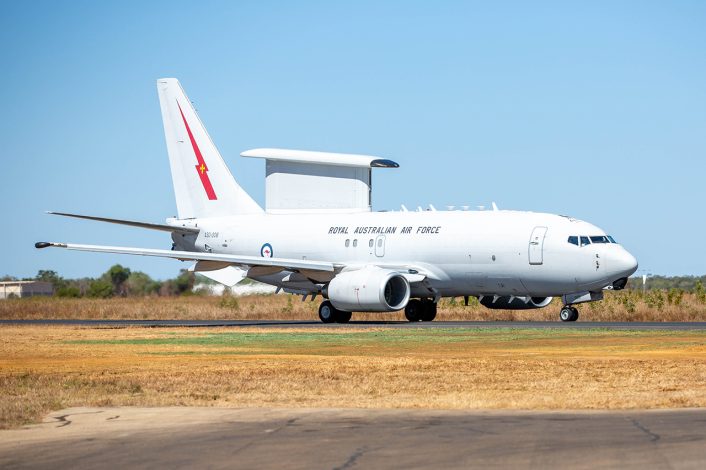
Given the relative youth of the Wedgetail program and its ongoing development for new customers, there is no immediately obvious choice for where this next generation AEW capability would come from. It is known that the U.S. Department of Defense seeks, in the long term, to move AEW over to space-based capabilities, but as Australia’s lack of a sovereign orbital launch capability means such a proposal for the ADF would have major hurdles to clear from the start.
We also have further mention of the RAAF’s intention to integrate hypersonic weapons onto its F/A-18F Super Hornets. This will likely come from the joint Australia-U.S. Hypersonic Attack Cruise Missile (HACM) project, which has faced delays but may be ready for initial testing next year.
The US Air Force plans to begin flight testing of the #Scramjet powered Hypersonic Attack Cruise Missile #HACM this year for a rapid fielding in the second half of next year. Building on the highly successful Hypersonic Air-breathing Weapon Concept (HAWC) program that… pic.twitter.com/hzNlRuSZPL
— Air-Power | MIL-STD (@AirPowerNEW1) February 1, 2026
As has been confirmed before, the document also notes Australia’s procurement of the AGM-88G Advanced Anti-Radiation Guided Missile-Extended Range (AARGM-ER) suppression of enemy air defences (SEAD) weapon, as well as the fielding of the AGM-158B The AGM-158B JASSM-ER (Joint Air-to-Surface Standoff Missile-Extended Range), AGM-158C LRASM (Long Range Anti-Ship Missile), and the Kongsberg Joint Strike Missile on existing platforms.
source
