

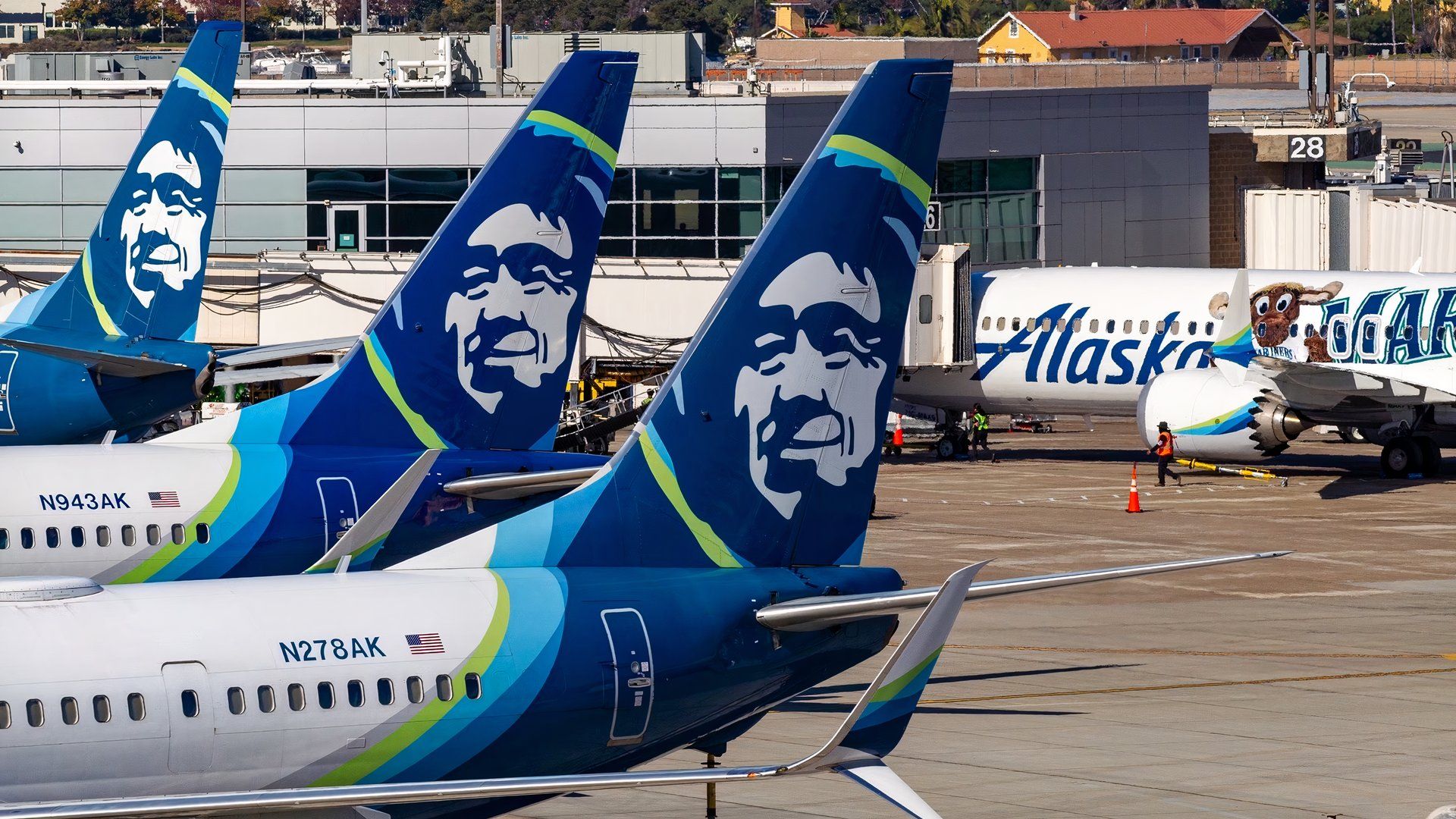
The latest schedule update shows that  Alaska Airlines has axed 16 routes. In the past few days, an article suggested 12 were removed, but additional markets have since been found. The eliminations include San Francisco to Boston, which is Alaska’s third-longest mainland US route.
More than two-thirds of the 16 airport pairs are currently operating from  Los Angeles and
  San Francisco. Some were inherited from Virgin America. As Alaska is increasingly moving away from those cities, where it finds it harder to compete, it is focusing instead on San Diego and Portland as key growth markets. Like all businesses, airlines must concentrate on where they have a better shot at winning.
Alaska Has Axed These 16 Routes

The end date specified in the table relates to the specific direction and regular, normal operations. Some links have one or two flights at odd times thereafter. For example, Alaska’s double daily service from San Francisco to Austin ends on January 6, but there’s a one-off flight on February 11. Other instances exist.
Six of the 16 cuts involve routes either inherited from Virgin America or at least previously operated by it. For example, the US Department of Transportation shows that Alaska has served Los Angeles-Cancun since 2001. Virgin coexisted with it between 2011 and 2017. It therefore wasn’t inherited from the other carrier.
|
Month Ending |
Route(s) |
|---|---|
|
January 2026 |
Los Angeles-Las Vegas (ends January 11; inherited from Virgin), Los Angeles-Reno (ends January 6), Los Angeles-San José (CA; ends January 6), San Francisco-Austin (ends January 6; from Virgin), San Francisco-Boston (ends January 6; from Virgin) |
|
March 2026 |
San Diego-Atlanta (ends March 17), San Francisco-Burbank (ends March 17), San Francisco-Phoenix (ends March 17), San Francisco-Salt Lake City (ends March 17) |
|
May 2026 |
Los Angeles-Cancun (ends May 12; Virgin also operated), San José-Guadalajara (ends May 9), San José-Los Cabos (ends May 12), San José-Puerto Vallarta (ends May 9), San Francisco-Orlando (ends May 12; from Virgin) |
|
June 2026 |
San Francisco-Newark (ends June 9; from Virgin) |
|
Not resuming |
Anchorage-Detroit (last served in September 2025; more on this below) |
Anchorage-Detroit Only Lasted For A Season

Alaska only began this route, which covers 2,595 nautical miles (4,806 km) each way, on June 14, 2025. Served weekly, the last flight took place on September 6, which is when it was due to end for the year. Cirium shows that the Boeing 737 MAX 9 was primarily used, although the 737-900ER and MAX 8 appeared too. The route will not return next year.
While not particularly risky—it only operated 13 round-trip services—it decided it wasn’t worth it. The return of  Delta to this city pair in 2024 did not help. The SkyTeam carrier can carry passengers across the eastern portion of the US and beyond via its Michigan hub, where it has 74% of the flights.
The latest DOT data extends to July. In June/July, Alaska’s seat load factor was 79%, which says relatively little in itself. Some 88% of seats were filled in July. Evidently, it was insufficiently pleased with the performance relative to what else it could do with the aircraft. Moreover, it already carries the second-highest number of passengers between Detroit and Anchorage. It had 30% of the market in the 12 months to July 2025, with virtually everyone connecting in Seattle. They’ll continue to do so.
Alaska’s San Diego Seats Are Up By 44% Year-Over-Year

All of the above changes, and much more besides, contribute to a changing landscape. In the first six months of 2026, Cirium shows that Alaska plans 44% more seats for sale from San Diego than in the same period in 2025. It has added 1.2 million additional round-trip seats in a year. This is partly because its routes have risen from 41 to 50. Alaska’s expansion means its share of San Diego’s seats has risen from 18% to 24% in a year.
Elsewhere, its capacity has risen by 22% at Portland and 5% at Seattle. In contrast, it has slashed seats by 5% at Los Angeles and San Francisco, and by 6% at San José. San Diego has leapfrogged Los Angeles and San Francisco to become Alaska’s third most-served airport.
source
