

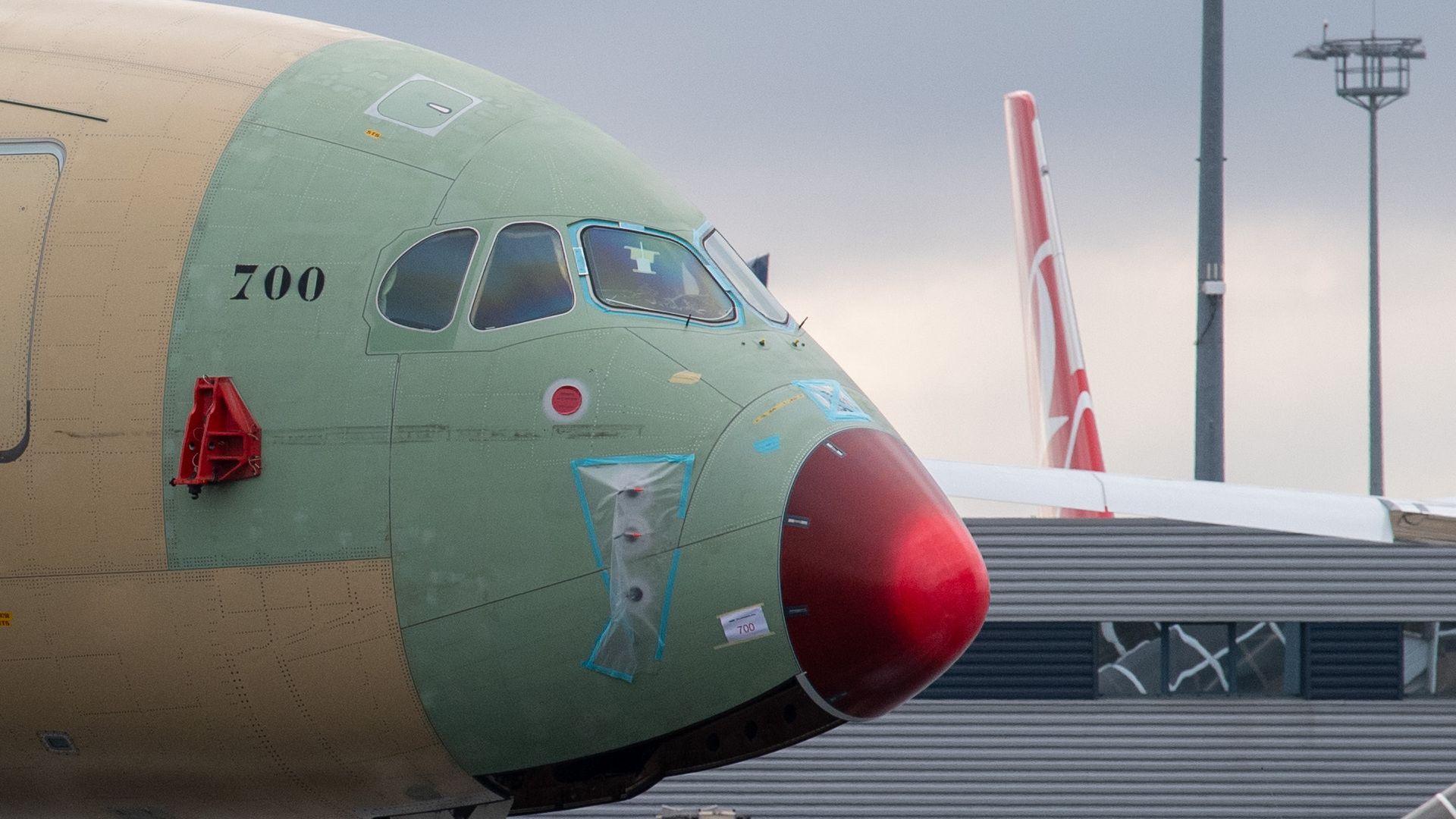
Airbus has recently secured a landmark order from Air China Cargo for six Airbus A350F freighters, converting a previously signaled commitment into an order for firm metal. The deal makes Air China Cargo the official launch customer for the aircraft variant in mainland China, and it anchors the Airbus A350F’s presence in one of the world’s most important air freight markets, one that only continues to grow.
These new widebodies will progressively replace increasingly outdated Boeing 747-400F and Airbus A330 freighters in the airline’s fleet, boosting overall payload efficiency and cutting fuel burn alongside emissions. For Airbus, the contract adds further momentum to a program that had more than 70 orders on the books before the latest deal was announced with China.
What Are The Key Developments In This Story?

A deal that was signed on November 14, 2025, the purchase agreement gives  Air China Cargo six new Airbus A350F aircraft, with first deliveries expected late this decade. The order itself follows an earlier disclosure that the carrier intended to take up to ten Airbus A350F platforms, including six firm orders and four options, which were valued at around $4.6 billion at list prices. Each jet can carry up to roughly 111 tons of payload and is derived from the larger Airbus A350-1000 platform, with a reinforced floor and large main-deck cargo door, according to documents published by the manufacturer.
Airbus claims around 40% lower fuel burn and Carbon Dioxide emissions over older Boeing 747-400 freighters, a key selling point as China tightens its environmental rules. The aircraft is set to join a mixed fleet that includes Boeing 777F, Boeing 747-400F, and Airbus A330-200F models, which ultimately expands long-haul capacity and helps simplify future fleet renewal processes.
What Does All Of This Mean For Airbus?

For Airbus, landing Air China Cargo is a strategic win that goes beyond the simple purchase of six airframes. It plans the Airbus A350F firmly inside China’s flagship all-cargo operator, and it opens the door for follow-on orders while signaling to other Chinese carriers and lessors that the program has regulatory and political tailwinds behind it.
The deal itself is also set to enlarge a young order book. By October 2025, Airbus had logged roughly 74 Airbus A350F commitments from about a dozen customers, ultimately adding the Air China Cargo contract and tightening the race with Boeing’s 777-8F as fleets slowly began to transition away from aging Boeing 747s and MD-11s.
Securing a high-profile Asian customer directly supports Airbus’ narrative that the Airbus A350F is a game-changer in the world of freight operations, as it combines lower trip costs, higher payloads, and full main-deck container compatibility. Lastly, the order underpins the broader Airbus A350 family’s production skyline, helping smooth widebody output and spread development and industrial costs over more units.
What Does All Of This Mean For Air China Cargo?

For Air China Cargo, the Airbus A350F order marks the start of a structural fleet upgrade. The airline’s current long-haul freighter line-up, which includes the Boeing 777F, the  Boeing 747-400F, and the Airbus A330-200F, includes aircraft with average ages approaching two decades in some sub-fleets, with maintenance costs only continuing to rise and fuel efficiency only continuing to weaken.
The introduction of the Airbus A350F into service will give the airline access to a platform with lower fuel burn, higher payload-to-weight efficiency, and improved airport noise and emissions performance, ultimately supporting compliance with tightening International Civil Aviation Organization (ICAO) guidelines. These new freighters will fundamentally strengthen Air China Cargo’s competitiveness on core trunk lanes to Europe and North America, high-yield sectors for industries like e-commerce and pharmaceuticals.
The option framework around the original up-to-10-aircraft plan also gives management some flexibility. Additional Airbus A350Fs can be exercised as market demand and slot availability evolve, allowing for a measured, stepwise retirement of older widebodies without sacrificing capacity. All of this is set to allow Air China Cargo to remain the leading operator in the Chinese air cargo market for decades to come.
source
