

The aviation industry stands at a critical juncture, facing immense pressure to decarbonize by 2050. While Sustainable Aviation Fuel (SAF) offers an immediate “drop-in” solution, its long-term scalability and total emissions reduction potential remain subjects of debate.
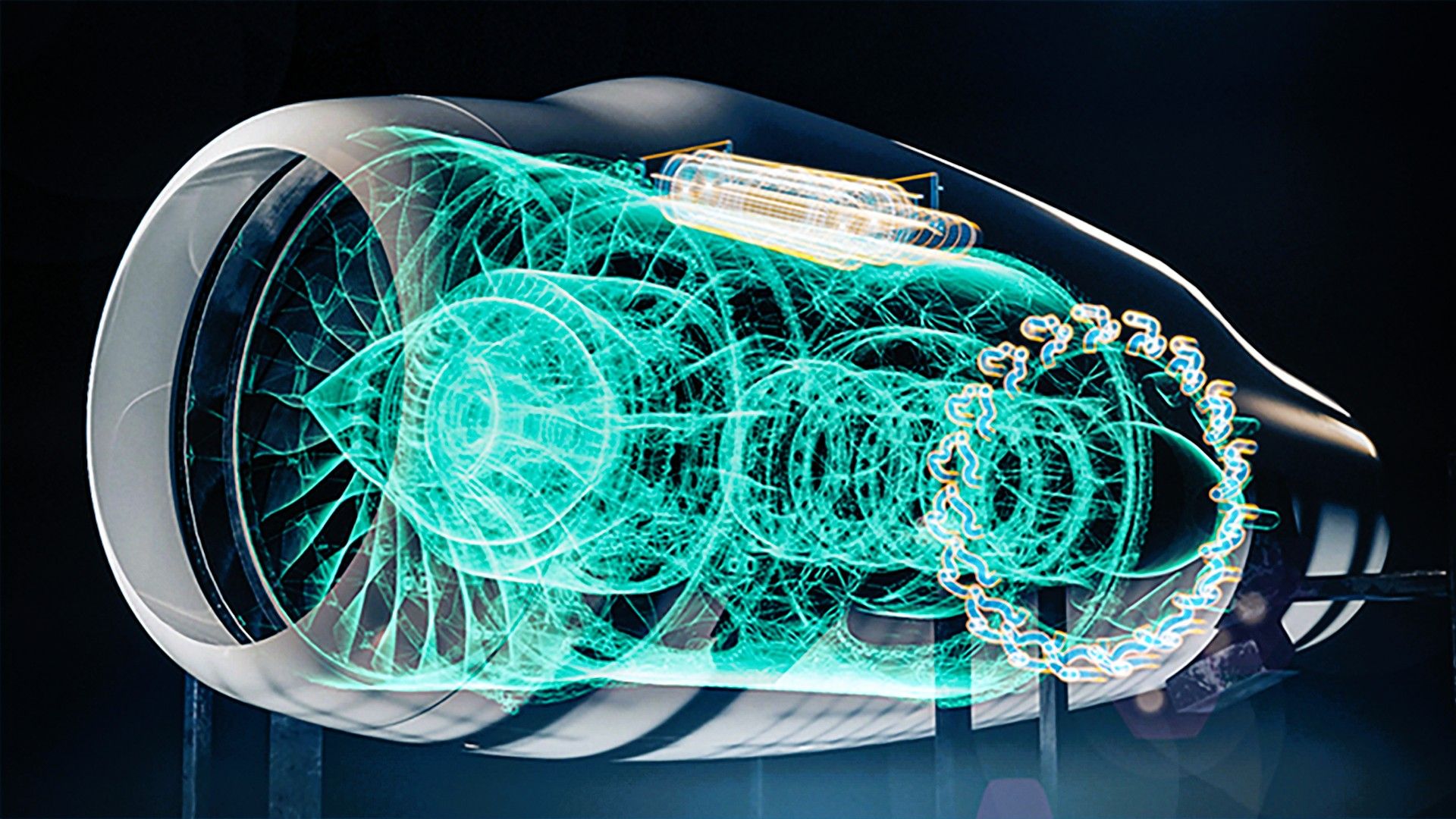
Enter hydrogen, a fuel source with the potential for true zero-carbon emissions at the point of use. British engine maker Rolls-Royce, in partnership with airline easyJet and various research institutions, has embarked on a pioneering journey to develop and test hydrogen-powered gas turbine engines. But could today’s hydrogen engine concept tests truly redefine the future of jet power?
The Rationale Behind Hydrogen Power

Testing of hydrogen for jet engines began as early as the mid-1950s by the US National Advisory Committee for Aeronautics (NACA), a precursor to NASA. Ground tests of a liquid hydrogen fuel system with a modified J65 engine were conducted at NACA’s Lewis Field laboratories in 1955. This led to the world’s first experimental flights of a hydrogen-powered aircraft, a modified Martin B-57 Canberra bomber, in early 1957.
Back then, interest in hydrogen-powered flight was primarily focused on performance. But hydrogen’s appeal today lies in its clean-burning properties, producing only water vapor as a byproduct. Specifically, the environmental advantages of hydrogen as a jet fuel are:
- Zero CO₂ Emissions: When hydrogen is burned in a jet engine, the only direct byproduct is water vapor. This eliminates carbon dioxide (CO₂) emissions, a major contributor to global warming, making it an attractive solution for decarbonizing the aviation industry, especially if the hydrogen is produced using renewable energy (“green hydrogen”).
- Reduced Other Pollutants: Hydrogen combustion produces up to 90% less nitrogen oxides than conventional jet fuel and eliminates the formation of particulate matter, improving local air quality around airports.
- Potential to Reduce Climate Impact: While water vapor creates contrails, studies suggest that hydrogen combustion could lead to a 30–50% reduction in overall climate impact compared to kerosene aircraft, a figure that could reach 75–90% with fuel cell technology.
Hydrogen also has significant operational advantages. It possesses nearly three times the energy per kilogram as kerosene, so less fuel by weight is needed to achieve the same amount of energy. Theoretically, it can be generated anywhere there is water and electricity, reducing the reliance on complex oil extraction and refinement supply chains and potentially allowing airports to produce their own fuel. Thinking even more broadly, using liquid hydrogen’s cryogenic properties as a heat sink could also open up new design possibilities for improved engine and system performance.
A Landmark Ground Test

All that theory started being put into practice on November 28, 2022. At an outdoor test facility at Boscombe Down in the UK, engineers from Rolls-Royce and easyJet gathered to run a converted Rolls-Royce AE 2100-A test engine on 100% green hydrogen. Years of research and development had led to that day, and the hydrogen produced using renewable wind and tidal power by the European Marine Energy Center (EMEC) in the Orkney Islands, was ready. When the day was out, the partners had set a new aviation milestone with the world’s first run of a modern aero engine on hydrogen.
This initial test was more of a proof of concept than a test of the actual power of the engine. It demonstrated that a modern turboprop engine could combust hydrogen without immediately encountering show-stopping issues. The engine technology itself remained largely the same, a crucial point for future certification and integration, but the fuel system was radically altered to handle the unique properties of hydrogen. The success of this ground test injected a new wave of optimism into the sector, showing that the zero-carbon potential of hydrogen was an achievable goal, not just a theoretical aspiration.
Overcoming The Thermal Challenge

Following the initial low-power test, the engineers moved to tackle a more significant hurdle: achieving maximum takeoff thrust. This is where hydrogen’s properties pose their greatest challenge. Hydrogen burns far hotter and more rapidly than traditional kerosene, making flame control a significant engineering feat.
The team, collaborating with the German aerospace research agency DLR and Loughborough University, focused their efforts on redesigning the fuel spray nozzles within the combustor of a Rolls-Royce Pearl 700 engine, the exclusive engine for the Gulfstream G700 and G800. The result was a novel system that progressively mixes air with the hydrogen to manage its high reactivity and control the flame position. The tests, conducted at DLR’s facilities in Cologne, proved that hydrogen could indeed be combusted at conditions representing maximum takeoff thrust.
The results were precisely in line with expectations, confirming the viability of Rolls-Royce’s advanced fuel system design. Grazia Vittadini, former Chief Technology Officer (CTO) at Airbus and now the CTO at Rolls-Royce, had the following to say:
“This is an incredible achievement in a short space of time. Controlling the combustion process is one of the key technology challenges the industry faces in making hydrogen a real aviation fuel of the future. We have achieved that, and it makes us eager to keep moving forward.”
This milestone was crucial because it went beyond the initial proof of concept. Via intermediate and full pressure testing, it addressed a major technical unknown in hydrogen combustion, proving that it could be used in real-world conditions. In doing so, it moved the conversation from “if” hydrogen could power an engine to “how” it could be safely and efficiently integrated into existing engine architectures.
Major Infrastructure Hurdles Remain

The engineering breakthroughs in the lab were significant, but the path to commercial aviation involves more than just engine technology. A massive obstacle looms large: the lack of infrastructure. For hydrogen to be a viable aviation fuel, a global ecosystem for its production, storage, and distribution at airports needs to be built from scratch.
The current production of “green” hydrogen—created using renewable energy sources like wind and tidal power—is minimal and expensive. Most hydrogen produced today relies on fossil fuels, which negates the carbon-neutral benefit. Rolls-Royce is actively advocating for government support and cross-industry collaboration to scale up production and drive down costs, but the investment required is substantial, representing many billions of dollars.
|
The Major Infrastructure Challenges With Hydrogen |
|
|
Lack of Infrastructure |
A global supply chain and refueling infrastructure for liquid hydrogen do not currently exist. Airports worldwide would require a massive and expensive reinvention of their logistical systems, including new on-site production or large, specialized storage tanks and refueling mechanisms. |
|
High Cost |
The production, transport, and storage of green (renewably produced) hydrogen is currently much more expensive than conventional jet fuel or gray hydrogen (produced from natural gas). |
|
Energy Intensity |
The current processes for liquefying hydrogen consume a significant amount of energy (nearly a quarter of its own energy content), which reduces the overall efficiency of the hydrogen-based system. |
|
Safety Standards |
New regulations and certification processes for hydrogen-centric ground operations must be developed and approved by authorities like EASA and the FAA, a process that could take a decade or more. |
Airports and energy companies are hesitant to invest such sums without guaranteed demand, creating a classic “chicken and egg” scenario. As a result, Rolls-Royce and partners like easyJet are working with airports, such as AGS Airports (Aberdeen, Glasgow, Southampton), to plan for on-site hydrogen generation and storage, a crucial step in preparing for zero-emission flights. The success of this concept is intrinsically linked to overcoming this monumental infrastructure hurdle.
A Redesigned Future For Aircraft

The challenges aren’t limited to the ground or the engine itself. Aircraft running on liquid hydrogen will require fundamental design changes. Hydrogen, even in liquid form, has a much lower energy density by volume than kerosene. This means operators would have to sacrifice either passenger capacity or range to accommodate the bulky, insulated cryogenic fuel tanks needed to store hydrogen at -253°C.
|
The Major Aircraft Design Challenges With Hydrogen |
|
|
Low Volumetric Energy Density |
Hydrogen has a high energy-to-mass ratio but a very low energy-to-volume ratio compared to conventional jet fuel. An aircraft would need fuel tanks approximately four times larger by volume to achieve the same range as a kerosene-powered jet. |
|
Complex Storage |
To be stored on an aircraft, hydrogen must be in liquid form, requiring cryogenic tanks that maintain temperatures below -253°C (-423°F). These are bulky, require specialized, heavy insulation, and take up significant space, reducing passenger or cargo capacity. |
|
Embrittlement and Leakage |
Hydrogen’s small molecules can permeate and weaken metals (embrittlement) over time, and the gas is prone to leakage from tiny cracks, requiring the use of specialized, hydrogen-resistant materials and robust seal designs. |
|
NOx Emissions and Contrails |
While hydrogen combustion produces no CO₂, it does produce nitrogen oxides (NOx), especially at high combustion temperatures, and significantly more water vapor. The climate impact of the increased water vapor contrails at high altitudes is still being studied and is a key concern. |
The consensus in the industry is that hydrogen will likely be limited to smaller, shorter-haul segments initially. Rolls-Royce is targeting small to mid-sized aircraft (30–40 seats) from the mid-2030s. This focus on regional aviation makes sense, as shorter flights require less fuel, making the volume/weight trade-off more manageable. While radical aircraft redesigns are necessary, the path is clearer for smaller platforms, allowing the technology to mature before potentially scaling up.
The Long-Term Vision For Hydrogen

So, could Rolls-Royce’s hydrogen engine concept redefine jet power? The answer is nuanced. The current consensus within Rolls-Royce and the broader industry is that while hydrogen has immense potential, especially for zero-emission flight at the point of use, it will likely start as a complement to other solutions like SAFs, rather than an immediate replacement for all aviation.
SAFs remain the only viable option for decarbonizing existing long-haul fleets in the near to medium term. Hydrogen’s role is expected to blossom first in the regional and short-haul sectors. The technology needs years of rigorous development and certification, with commercial availability likely only by the mid-2030s for smaller planes.
However, the groundbreaking tests have fundamentally altered the landscape, proving the viability of hydrogen combustion in a modern engine. By pushing the boundaries of engineering and design, Rolls-Royce has demonstrated that a future of zero-carbon aviation is possible, even if it requires a radical rethink of aircraft design and global infrastructure. As such, the redefinition of jet power will be a phased evolution, led by the pioneering work of companies willing to take a leap into the cryogenic future of flight.
source
