



By Bjorn Fehrm
May 8, 2026, ©. Leeham News: We have made a series of articles on the Blended Wing Body (BWB) as a potentially more efficient design for passenger-carrying airliners than the classical Tube-And-Wing (TAW) configuration.
In last week’s article, we looked at the passenger experience on the JetZero Z4 and how the emergency escape facilities would be organized. There have been a lot of discussions on how a passenger will feel flying in a main cabin with only wide screens simulating side windows, with natural light coming through skylights in the roof. It’s difficult to say what the feeling will be. In a widebody aircraft, we sit at ease, far from the outside windows.
The emergency exit concept is straightforward, except for water landings, where buoyancy may be insufficient to keep the water line below the emergency exit doors. In that case, there have to be roof exits where the skyports are, made into emergency exits, along with some means to reach them.
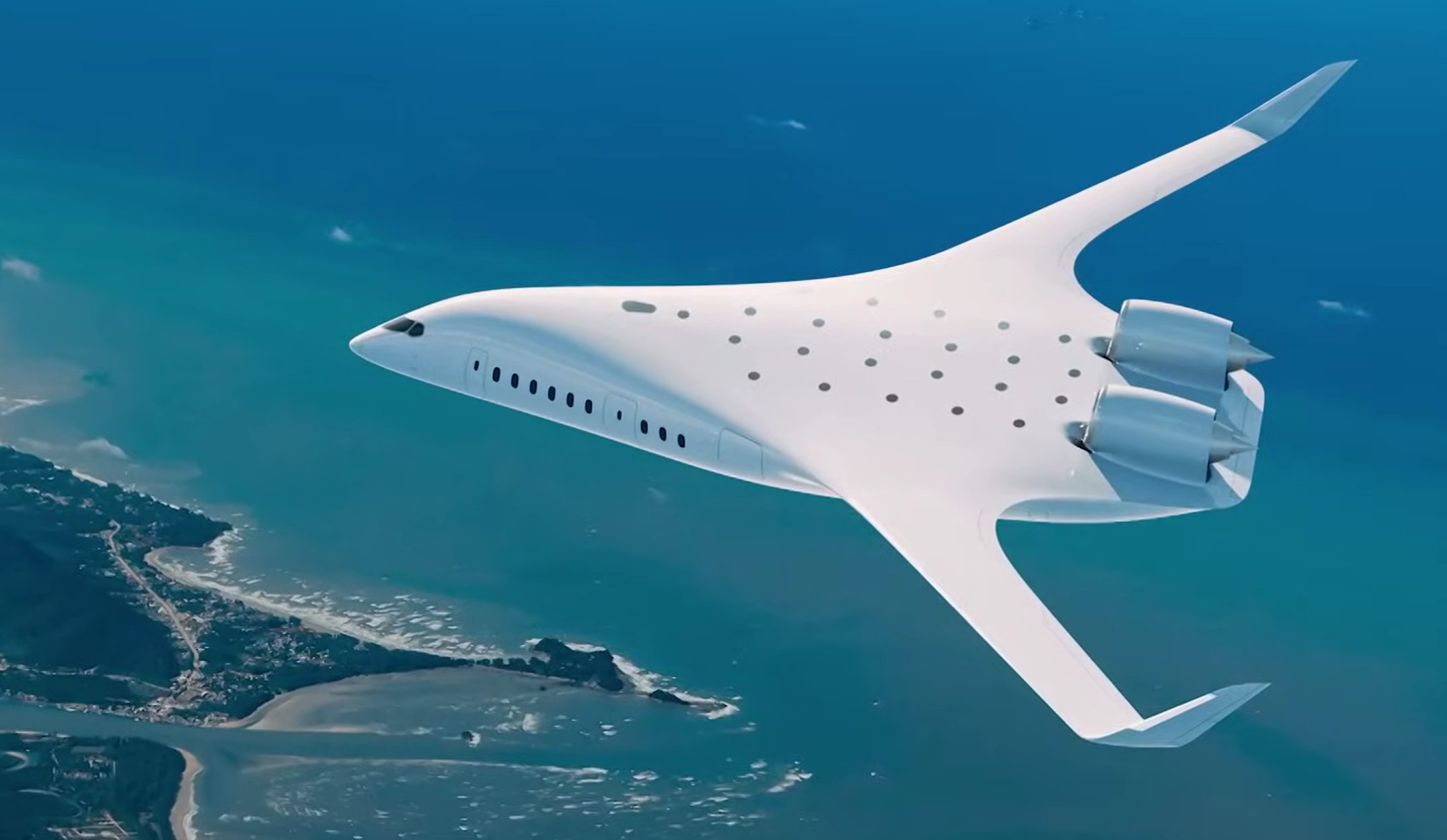
Figure 1. The JetZero Z4 BWB. Source: JetZero.
Now it’s time to summarize what else we learned in the series.
It’s about the drag, not increased lift
BWB proponents say the BWB is more efficient than a Tube-And-Swing (TAW) because it has no fuselage or tail, with the entire passenger compartment functioning as a centerpiece of the wing.
We learned that it’s not about getting more lift; the classical aircraft has a wing too large for the cruise condition, and the BWB an even larger one. It’s about lowering the drag for the mission, especially for the cruise part where most of the fuel is burned.
The dominant air friction drag is decided by the external wetted area of the aircraft. JetZero compares the Z4 to the 767 and there the -200. It has a smaller passenger capacity than the Z4 (225 versus 250 seats using the same comfort standard), but the 767-200 can take 22 LD2 containers whereas the Z4 takes none, just passenger bags and parcel cargo. The Z4 has 16% less wetted area than the -200 and 24% less than the -300, which has 265 seats and takes 30 LD2.
The other important drag is drag due to weight, which is decided by the total wingspan, including any wingtip devices. The wide central part of a BWB puts the wings far apart, and the 55m effective wingspan of the Z4 is 9% wider than the 767’s 50m.
The effect is that the Z4 has a drag advantage, especially if it can fly higher than the 767 to make efficient use of its wider span. But the comparison with the 767 is comparing future aircraft to 45-year-old ones.
We used our Aircraft Performance and Cost Model (APCM) to compare the Z4 to the Boeing NMA in a 250-seat version. Then the Z4 has no drag advantage. The NMA had a cargo bay that only accepted the smaller LD3-45 container, which puts its wetted area 10% below the Z4. This compensated for the NMA-250’s nine-meter lower wingspan at 46m, using two 5m folding wingtips to fit in the 36m single-aisle gates (the Z4 needs widebody gates).
BWB engines are different
The wider wingspan of a BWB enables the aircraft to fly at a higher cruise altitude to minimize drag. This requires engines that have power left at these higher altitudes, which changes the design point from a higher bypass engine to a lower bypass to increase the specific thrust (the exit air overspeed) to keep more thrust at higher altitudes.
This is against the trend in airliner engine development, in which specific thrust has been reduced in each generation since the 1950s to improve propulsive efficiency. We have seen a recent trend from BPR 5 in the 1990s to 10 in 2010, and now projected at 15 for the 2030s.
A BWB engine shall have a BPR below 10 to achieve the specific thrust required for to keep the altitude thrust lapse rate at the level where a BWB can climb to initial cruise at 40,000ft or more, and then continue a step cruise up to close to 50,000ft. The Z4 starts with the 40-year-old PW2040 at BPR 5.5; the progression to a lower-fuel-burn modern engine is not clear.
The BWB poses new structural challenges
In the classical Tube-And-Wing airliner, the two different structural load cases, cabin pressurization to keep a maximum of 8,000ft cabin altitude, and the aerodynamic forces from gusts and abnormal flight cases are handled by optimized structures. The dangerous cycling of cabin pressure during every flight is handled by a pressure cylinder, which puts the stresses in the direction of the material (hoop stresses). The bending forces on the wing are handled by a tip-to-tip wingbox with the highest possible build height and thick skins, spars, and ribs.
The BWB poses a challenging structural design where cabin pressure from a box-like cabin area must be handled without causing detrimental bending loads on the cabin walls, at the same time as these cabin walls shall be part of a central wingbox. How JetZero handles this challenge will be interesting to watch.
Passenger experience and safety
Much has been written about the passenger experience in the boxlike, wide, and flat cabin of a BWB. The premium section, Figure 2, will have a wide and spacious area with outside views through larger windows.
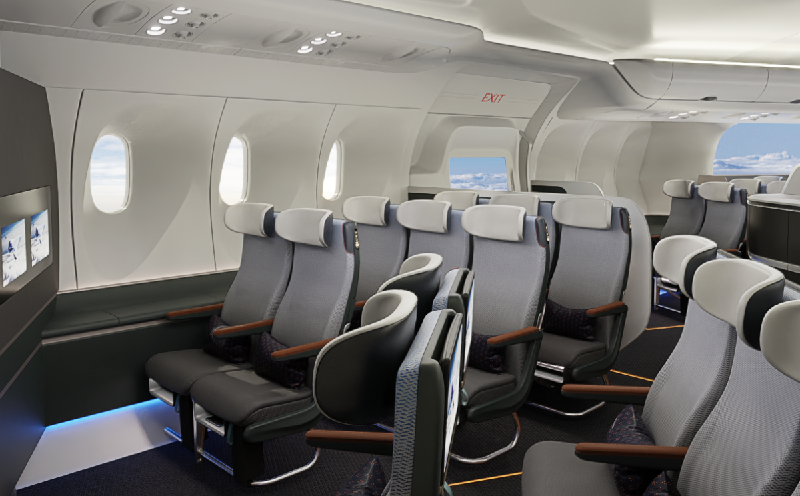
Figure 2. The premium, forward section of a Z4 cabin. Source: JetZero.
The main cabin has to do with large screens showing the outside view, while sky ports provide the outside light. It’s hard to say what passengers in the main cabin will think, but with a nice interior design and smart screen images, it wouldn’t surprise me if it were all a non-issue. Passengers have minimum outside view in the center parts of our widebodies.
The concept around emergency exits might pose more challenges, but it seems solvable.
Conclusion
The BWB realizes the dream that the most efficient way of flying must be the way nature implemented it in birds: a blended wing-body with integrated tail and no separate empennage.
But birds did not transport passengers in cabins that require pressures 8-10 PSI higher than the surrounding air. The Tube-And-Wing aircraft has the tube for this purpose. As a benefit, it enables the placement of pitch control surfaces on a long moment arm, enabling main wing flaps, to keep the main wing size close to what’s needed for cruise.
The BWB suffers from the lack of flaps, which forces a too-large wing that can only be made efficient by flying in very thin air, where the drag due to size (air-friction drag) diminishes, and the large wingspan keeps the drag due to weight (induced drag) in check. The ensuing high cruise altitudes complicate the engine design for a BWB.
Related
source
