

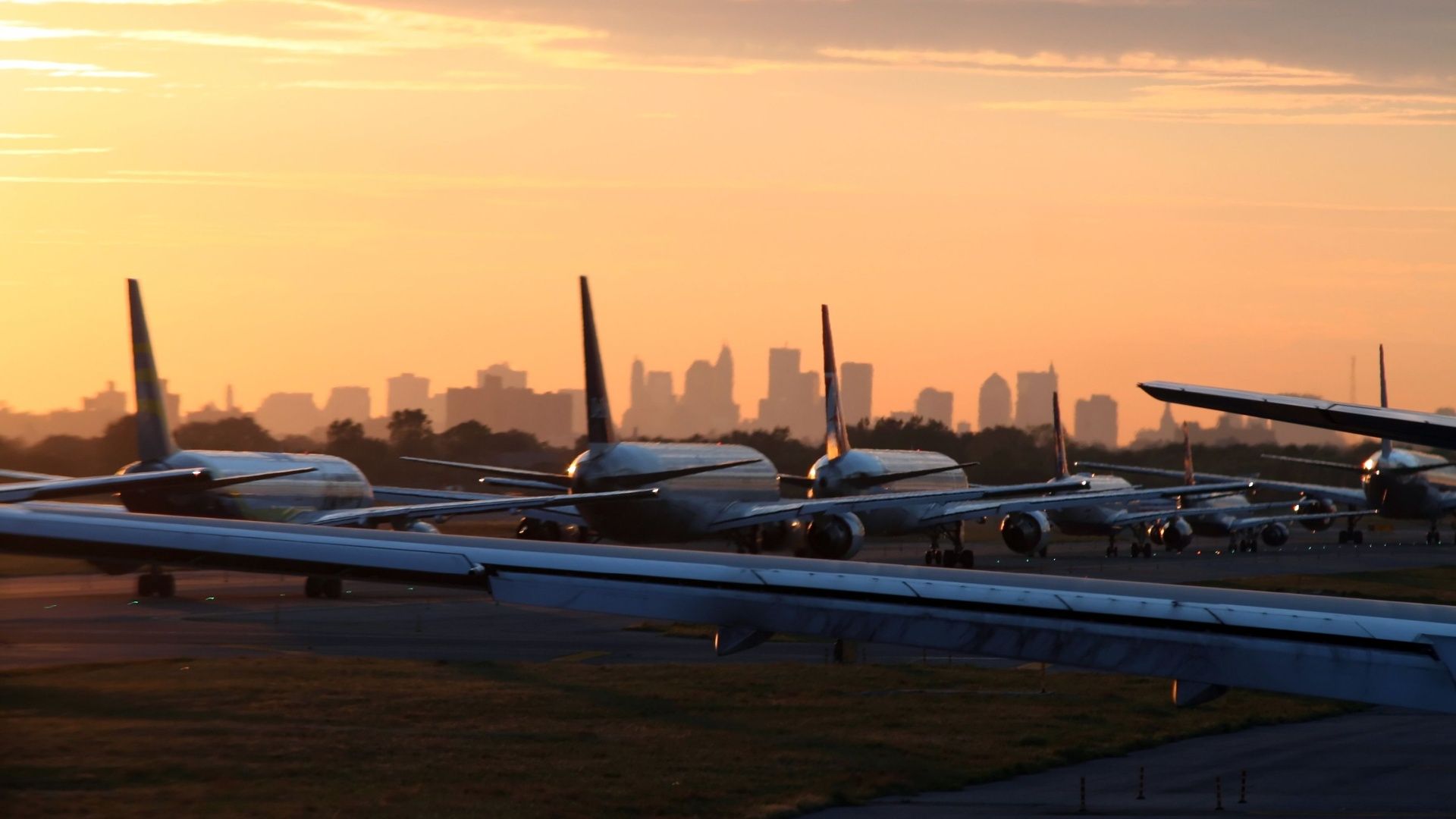
The Federal Aviation Administration (FAA) is going to be threatening hefty civil penalties on a handful of airlines, after multiple carriers notably fell short of the government-mandated schedule cuts that were put in place during the US government shutdown earlier this fall. An emergency order required carriers to trim flight operations at around 40 major airports all across the country in order to ease pressure on short-staffed air traffic control facilities.
A later audit of flight schedules and timing data revealed that many airlines continued to fly something close to their normal schedules. The FAA will now be seeking fines of up to $75,000 per non-compliant flight, with investigative letters set to go out to carriers that exceeded their caps. This standoff highlights how shutdown-driven safety orders have exposed airlines to highly politicized financial risk, and airlines themselves are now also facing scrutiny.
The FAA Is Accusing Airlines Of Violating Its Orders

At the height of the government shutdown, the FAA issued Emergency Order 11-6-25, which was directed at airlines operating flights out of 40 high-impact airports to cut daytime domestic flights, initially by around 4%, although this figure would later be expanded to around 10%. The principal factor driving the FAA to order these capacity limitations was the lack of available air traffic controllers. As staffing levels at control towers continued to improve and a deal to reopen the government neared, regulators froze cuts at just 6%, before eventually easing to around 3%, all before these restrictions were lifted entirely in mid-November.
Nonetheless, flight tracking data did indicate that on the final full day under the order, airlines canceled only around 0.25% of flights at these facilities, far below the 3% requirement that regulators had attempted to put in place, according to reports from Reuters. FAA Administrator Bryan Bedford has indicated that he will now be investigating letters and potential enforcement cases against airlines that failed to meet the mandate. The principal reason for these cuts was the mitigation of safety risks amid widespread controller absences and overtime payments.
These Fines Could Bite Into Airline Financials

The headline of this story might seem rather surprising to begin with, considering that it is somewhat unexpected that these airlines did not obey the FAA’s order. Under the emergency order, large carriers that operated above their daily caps can be fined up to $75,000 for each excess flight, while smaller operators face penalties of around $16,000 per violation.
On a hub-to-hub route where a carrier may have scheduled dozens of departures each day, even modest over-scheduling quickly becomes expensive for an operator. If an airline exceeded its limit by just 20 flights a day, this could create one day pre-negotiation exposures of around $1.5 million.
If you multiply this figure across several operational days, multiple constrained airports, and several major legacy carriers, the theoretical liability that airlines are facing could be massive. Any eventual penalties will likely be negotiated, with the FAA weighing safety impact and cooperation. By setting such a high ceiling, however, regulators will have stronger leverage to push carriers to comply with orders in the future.

FAA Caps Flight Reductions At 6% As ATC Staffing Levels Improve
The shutdown is over, but it’s not business as usual just yet.
What Does All Of This Mean For Passengers?

For travelers, these looming fines are less about actual retroactive punishment for airlines and instead about shaping carrier behavior the next time a lack of political funding becomes a high-profile issue. Airlines have been warned throughout the shutdown that deeper schedule cuts would strain customers and ultimately hurt local economies, even as the FAA has pointed to controller fatigue and unpaid overtime as increasingly mounting safety risks.
Data now demonstrates that airlines largely ignored the final, lighter round of operational caps. Regulators are pretty much in the business of making sure that this specifically does not happen again. In practice, this would allow airlines to cancel flights more proactively, ensuring that they can reshape schedules earlier and lean on interline agreements when staffing levels begin to deteriorate.
This also intensifies overall pressure on Congress to shield air-traffic controllers from future shutdowns to ensure that safety decisions take priority. The intense debate over how best to protect passengers will likely continue.
source
