

Close Menu
FlyMarshallFlyMarshall
  • Aviation
    • AeroTime
    • Airways Magazine
    • Simple Flying
  • Corporate
    • AINonline
    • Corporate Jet Investor
  • Cargo
    • Air Cargo News
    • Cargo Facts
  • Military
    • The Aviationist
  • Defense
  • OEMs
    • Airbus RSS Directory
  • Regulators
    • EASA
    • USAF RSS Directory
What's Hot

Buy Virgin Atlantic Flying Club Points With 70% Bonus (1.20-1.48 Cents Each)

February 25, 2026

All Nippon Airways (ANA) appoints new CEO and President

February 25, 2026

5 Mistakes to Avoid When Using Washers

February 25, 2026
Facebook X (Twitter) Instagram
Demo
  • Aviation
    • AeroTime
    • Airways Magazine
    • Simple Flying
  • Corporate
    • AINonline
    • Corporate Jet Investor
  • Cargo
    • Air Cargo News
    • Cargo Facts
  • Military
    • The Aviationist
  • Defense
  • OEMs
    • Airbus RSS Directory
  • Regulators
    • EASA
    • USAF RSS Directory
Facebook X (Twitter) Instagram
Demo
Home » 5 Mistakes to Avoid When Using Washers
Airbus RSS Directory

5 Mistakes to Avoid When Using Washers

FlyMarshall NewsroomBy FlyMarshall NewsroomFebruary 25, 2026No Comments3 Mins Read
Share
Facebook Twitter LinkedIn Pinterest Email

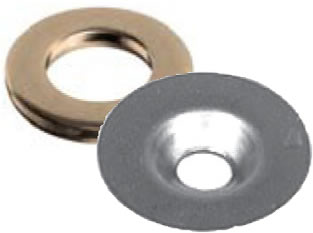
Washers by Monroe

Washers play an important role in many everyday products and assemblies. With their disc-like shape, they are able to distribute the load of threaded fasteners. You can drive a screw or bolt through the center of a washer. The head of the screw or bolt will then press against the washer, thereby distributing the fastener’s load. While washers are relatively easy and straightforward to use, however, there are several common mistakes you should avoid with them.

#1) Wrong Inner Diameter Size

You need to choose washers in the right size. If the inner diameter is too big or small, the washer may not fit properly. The inner diameter represents the width of the hole. If it’s too big, the head of the fastener may slip through the hole. If the inner diameter is too small, the shank of the fastener may not fit. The inner diameter should be slightly wider than the shank for a proper, secure fit.

#2) Using Standard Washers in High-Vibration Applications

If you’re planning to use them in machinery or appliances, you may want to avoid standard washers. Standard washers are susceptible to loosening when exposed to vibrations. It may not happen immediately, but constant exposure to vibrations can cause traditional washers and the threaded fasteners with which they are used to loosen. Fortunately, there are specialty washers available that can withstand vibrations, such as cupped, disc and split washers.

#3) Over-Tightening

Another common mistake to avoid when using washers is over-tightening. Torque is a rotational force. To install a washer, you’ll need to place a threaded fastener through the center of it, followed by turning the fastener (typically with a screwdriver). Using too much torque, though, may damage the washer. Most washers are thin. If you apply too much torque, you may crush and deform the washer or even the underlying part being fastened.

#4) Overlooking Material Compatibility

Pay close attention to the material when choosing washers. Washers are available in different materials. If you use a washer in a material different than that of the fastener, it may lead to corrosion. Galvanic corrosion, for instance, occurs when two dissimilar metals make contact in the presence of moisture. An aluminum washer and a stainless steel bolt can lead to this phenomenon.

#5) Assuming Spacers and Washers Are the Same

Spacers and washers aren’t the same. While they are both used in conjunction with threaded fasteners, they are used for different purposes. Spacers are used primarily to create space between the head of a threaded fastener and the part being fastened. Washers, on the other hand, are used primarily to distribute the fastener’s load.

source

FlyMarshall Newsroom
  • Website

Related Posts

Pros and Cons of Reverse-Flow Turboprop Engines

February 23, 2026

What Is a Thread-Cutting Tap and How Does It Work?

February 20, 2026

How Anti-Seize Lube Works for Airplane Spark Plugs

February 18, 2026

The Beginner’s Guide to Snap Rings

February 16, 2026
Add A Comment
Leave A Reply Cancel Reply

Latest Posts

Buy Virgin Atlantic Flying Club Points With 70% Bonus (1.20-1.48 Cents Each)

February 25, 2026

All Nippon Airways (ANA) appoints new CEO and President

February 25, 2026

5 Mistakes to Avoid When Using Washers

February 25, 2026

Bad Bunny Chartered A Qantas Airbus A380 For A 16.5-Hour Flight On His Tour

February 25, 2026

Subscribe to Updates

Please enable JavaScript in your browser to complete this form.
Loading
About Us

Welcome to FlyMarshall — where information meets altitude. We believe aviation isn’t just about aircraft and routes; it’s about stories in flight, innovations that propel us forward, and the people who make the skies safer, smarter, and more connected.


Useful Links
  • Business / Corporate Aviation
  • Cargo
  • Commercial Aviation
  • Defense News (Air)
  • Military / Defense Aviation
Quick Links
  • About Us
  • Contact Us
  • Disclaimer
  • Privacy Policy
  • Terms and Conditions

Subscribe to Updates

Please enable JavaScript in your browser to complete this form.
Loading
Copyright © 2026 Flymarshall.All Right Reserved
  • About Us
  • Contact Us
  • Disclaimer
  • Privacy Policy
  • Terms and Conditions

Type above and press Enter to search. Press Esc to cancel.

Go to mobile version