


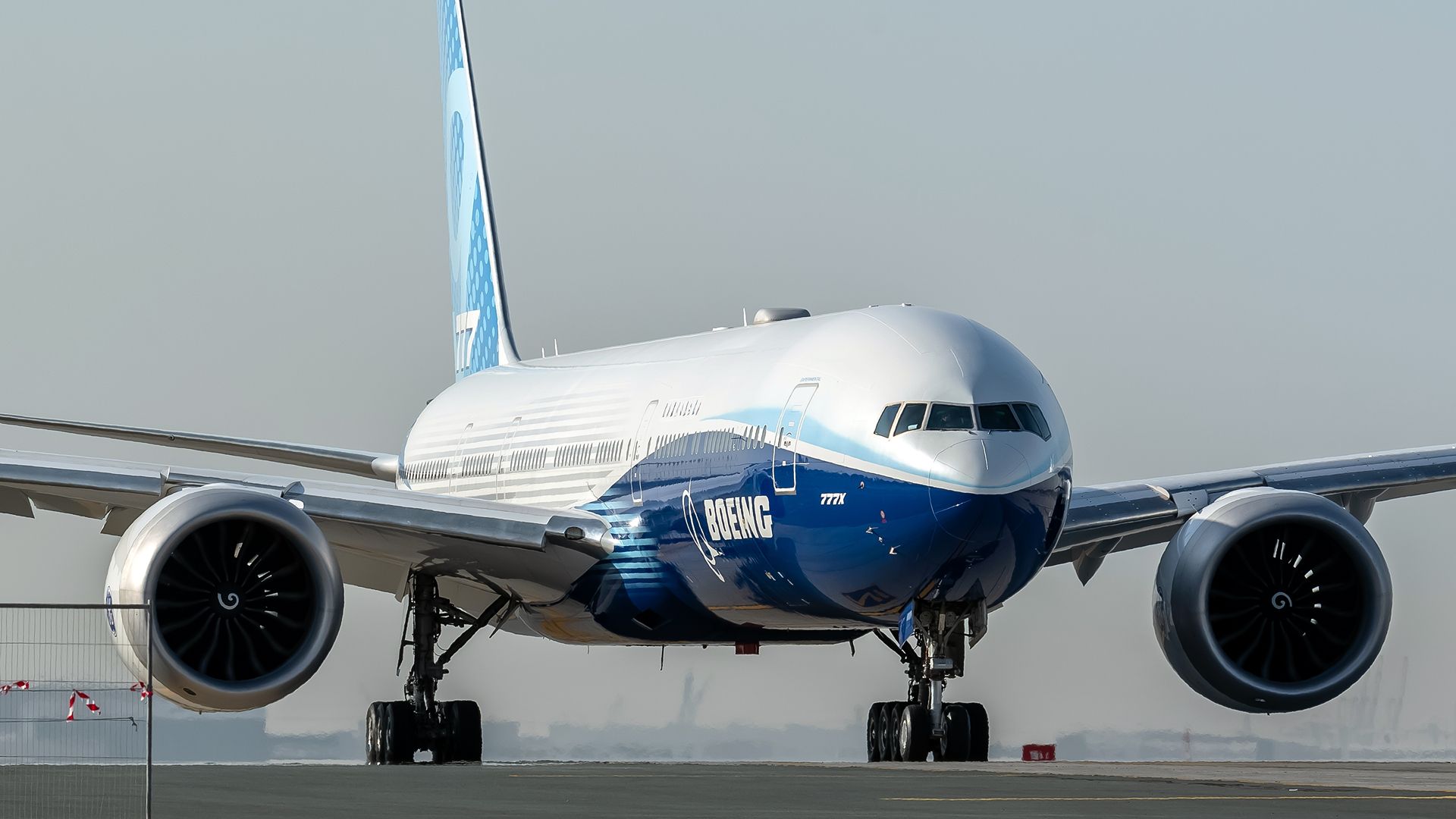
In the world of aviation, long delays are hardly unusual, but few programs have faced the scale and persistence of the Boeing 777X. Once heralded as the next leap in widebody twin-jet efficiency and capability, the 777X has repeatedly slipped its certification and delivery timelines.
In this article, we’ll dig into why the 777X is now widely considered among the most delayed commercial aircraft ever, what the latest certification challenges are, and what it all means for Boeing, its customers, and the broader aviation industry.
The Genesis And Evolution Of The 777X Program

The  Boeing 777X program was launched in 2013 as a natural evolution of the successful 777 family, promising enhanced fuel efficiency, an updated wing design, and new, larger engines. Its goal was clear: to give Boeing a better offering in the highly competitive long-haul twin-aisle market dominated by Airbus’s very successful Airbus A350, and to provide larger capacity and efficiency for airlines. Over time, Boeing aimed to incorporate folding wingtips (to reduce wingspan on the ground in order to fit into hangars), new GE9X engines, and modern aerodynamics to gain a structural and operational edge.
Yet from early on, the 777X was stretching the envelope of engineering and regulatory risk. It replaced a mature design with numerous innovations, and its timeline was ambitious. The first flight was delayed, then additional system-level problems emerged (avionics, control laws, structural tests). As summarized in Jalopnik magazine, even by 2025, the aircraft had still not been delivered to a customer, remaining mired in testing and regulatory limbo.
A key challenge has been the GE9X engine, designed to push efficiency boundaries. But that same drive for cutting-edge performance added complexity to certification, durability testing, and integration with the airframe. Over time, the target entry-into-service slipped repeatedly (originally targeted around 2020) to 2025, then 2026. In the face of repeated setbacks, the program has become a case study in “how not to manage expectations” and in the hazards of big-jet development in today’s regulatory climate.
The World’s Most-Delayed Commercial Aircraft?

To grasp the scale of the delay, it’s instructive to compare the 777X’s history with that of other major aircraft programs. The 787 Dreamliner, for example, also suffered a multi-year overrun but eventually entered service. The Airbus A380, Boeing 747-8, and others experienced delays too, but none to the same magnitude as the 777X is now enduring relative to its initial schedule.
As of 2025, Boeing is publicly targeting a 2026 certification and entry into service, placing the program a full six years behind schedule. Yet recent reporting by Bloomberg suggests the slip could extend even further, perhaps into 2027. Here are some comparative data points summarizing high-profile commercial aircraft delays:
|
Aircraft / Program |
Original Target EIS (Entry Into Service) |
Actual / Revised EIS |
Approximate Delay |
|---|---|---|---|
|
Boeing 787 Dreamliner |
2008 |
2011 |
3 years |
|
Airbus A380 |
2006 |
2007–2008 |
1–2 years |
|
Boeing 747-8 |
2009 |
2011 |
2 years |
|
Boeing 777X |
2020 |
2026 (or possibly 2027) |
6–7 years and counting. What makes the 777X’s delay especially stark is not just the number of years, but the scale of system complexity, regulatory scrutiny (especially following the 737 MAX crises), and Boeing’s financial exposure. Even a small schedule slip in this environment carries huge cost implications. |
By some measures, the 777X may now be the most delayed commercial twin-aisle program in history. While experimental or military aircraft sometimes suffer longer delays, for a mainstream passenger jet backed by orders and airline expectations, the 777X’s trajectory is exceptional. However, the frustration among airlines that ordered the 777X keeps growing, as described by Forbes.
The Latest Certification Hurdles: What’s Holding It Back

Regulatory Scrutiny and FAA Oversight: One of the central challenges is not a new technical flaw but rather the sheer magnitude of work left to satisfy regulators. Boeing CEO Kelly Ortberg recently acknowledged that Boeing is behind schedule and that a “mountain of work” remains before the FAA can grant certification.
He emphasized that while no brand-new technical issues have come to light, completing the certification program, documentation, tests, and regulatory validation is a massive undertaking. Complicating matters, in the wake of the 737 MAX crisis, regulators are more cautious, more demanding of transparency, and less tolerant of ambiguity.
The FAA now often insists on more rigorous oversight, the presence of independent test pilots, and a wider safety margin. This leaves Boeing with less room for iterative “fix later” adjustments. In some areas, Boeing is still awaiting key Type Inspection Authorizations (TIAs) or final regulatory sign-offs before proceeding to full certification flights.
Technical and Engineering Snags: Though Boeing claims no brand-new “showstopper” flaws, the program has had a long history of discovering issues under stress testing, structural fatigue, control systems, and component integration. The aircraft’s folding wingtips, for instance, impose additional mechanical and software control complexities.
Structural cracks found in engine-mounting hardware in August 2024 led to a grounding of test aircraft and delay in flight testing until January 2025. In another situation, uncommanded pitch behavior emerged in flight trials. Engine durability tests, especially under extreme conditions, remain critical when validating GE9X performance.
That engine itself had earlier delays in certification and integration testing due to a redesign of compressor stators and redline durability tests. Because the aircraft must satisfy both structural and system safety margins under a wide envelope of operating conditions, even relatively minor anomalies can cascade into program-wide schedule risk.
Supply Chain, Inflation, And Integration Challenges: Beyond pure technical risk, the broader ecosystem of parts, suppliers, and component subcontracts faces inflation, vendor delays, and quality control issues. Boeing’s supply chain has been strained by legacy quality lapses (made more visible after 737 MAX and other program breakdowns).
Integrating thousands of systems, such as complex avionics, flight control, actuation, hydraulics, software, and structural systems, means that aligning tolerances, verification, and validation across vendors is particularly vulnerable to delays. Furthermore, Boeing is reportedly being cautious about ramping up production rates.
Lower rate builds give more breathing room to resolve defects, but prolong the time before economies of scale kick in. Ortberg has emphasized “stability over rushing production” as a retry strategy.
Boeing’s Public Position And Market Reaction

Boeing’s leadership is in a precarious position, trying to project confidence while acknowledging the risks ahead. Officially, the company continues to insist that 2026 certification of the 777X remains on the table. Investors, however, have grown increasingly cautious.
Boeing’s share price has shown sensitivity to even modest hints of further slippage, reflecting profound fatigue with the company’s recent track record of delays and setbacks across multiple programs. Analysts stress that in Boeing’s current “reach-forward loss” accounting model, even a small extension of the schedule can dramatically worsen financial results.
Because the development costs cannot be easily spread across early deliveries, each additional year of delay compounds losses. Several economic analysts now warn that a full slip into 2027 could trigger additional non-cash charges ranging from $2.5 to $4 billion, deepening the strain on Boeing’s balance sheet and potentially limiting its ability to invest in other programs.
|
Factor |
Investor Reaction |
Potential Consequence |
|
Boeing maintains the 2026 target. |
Skepticism, stock volatility |
Pressure to show concrete progress |
|
Risk of 2027 delay |
Warnings from analysts |
Possible $2.5-4B in added charges |
|
Airline frustration |
Heightened scrutiny of Boeing’s execution |
Order cancellations or deferrals are possible. |
|
Regulatory “mountain of work” |
Seen as bottleneck |
Extended certification cycle and investor anxiety |
Meanwhile, airlines that placed early orders for the 777X, such as  Lufthansa ,
  Emirates ,
  Qatar Airways, and others, are growing impatient. Lufthansa, the launch customer, has already adjusted its fleet plans and removed the 777X from near-term deployment projections. Airlines face opportunity costs: continuing to invest in older-generation widebodies, potentially delaying modernization or route expansions.
What Happens If The Delay Extends Into 2027 Or Beyond?

For Boeing, a 2027 delivery would not only represent another lost year of revenue but also further erode trust among key customers. Airlines that have already waited nearly a decade for this aircraft are likely to demand compensation or consider deferring orders entirely.
Each delay magnifies the “cost of waiting”: carriers like Emirates and Lufthansa must continue operating older, less efficient 777 and A380 fleets while postponing their transition to more sustainable and fuel-efficient operations. That, in turn, disrupts route planning, cabin upgrade programs, and environmental targets.
For Boeing’s long-term business health, such a delay would also constrain future development plans. Resources locked into the 777X program limit capital available for the proposed New Mid-Market Airplane (NMA) or upgrades to the 787 line. If the company continues to fall behind, Airbus could widen its competitive lead with the A350-1000 and A350-900 ULR variants, strengthening its position in the widebody segment for the next decade.
What The 777X Saga Means For Boeing’s Future And For Aviation Itself

The 777X story extends far beyond one aircraft; it represents a broader turning point in how large passenger jets are designed, built, and certified. The program’s repeated delays have exposed the fragility of aerospace supply chains, the rising complexity of modern certification environments, and the reputational risks of over-promising in a post-MAX world.
For Boeing, the 777X may be the ultimate stress test of its ability to rebuild trust with regulators, customers, and the flying public. The company’s success in navigating the next 18 months will determine whether it can reclaim its reputation for engineering excellence or remain mired in a cycle of crisis management.
If Boeing successfully delivers the aircraft by 2026–27, it will still enter service as the most technologically advanced twin-engine widebody in history, with unmatched range and efficiency. However, if the delays persist, the 777X could be remembered as the jet that marked a permanent turning point in Boeing’s dominance of the commercial aviation industry.
Ultimately, the Boeing 777X embodies both the promise and peril of modern aerospace engineering, as it pushes the limits of technology while navigating regulatory, financial, and managerial challenges. The following two years will determine whether this jet becomes a redemption story, or a lasting cautionary tale in aviation history.
